THE NEW PHOTOS START AT 330.
THERE IS NO AUTOMATIC BUTTON TO TAKE YOU THERE.
YOU WILL HAVE TO SCROLL DOWN MANUALLY.
Background
Welcome to any new visitors and also welcome to those returning to the “Little World” of Altonia. I am sorry that you have had to wait so long for a new session but life intervened as usual.
This is recorded session 15. The AFK has taken an ”imaginary” battering in the last year. The old website, with much information, shut down and the back up files disappeared following my computer’s death. In reality this obviously has not physically affected the model railway but much of the theoretical background has been lost. Some of this has been restored by referring to what remains of the files and some of it has been placed back onto the computer using my memory. I also intend to keep a basic paper record in future to prevent a repeat. Dealing with these problems has tended to take priority over running sessions.
We also have the problem that computer operating systems are often (needlessly?) changing. The old ways and programmes that I used no longer work on the replacement computer. Apparently destroying things that worked well in the past is now called “progress”. After some time struggling to load photos, which now takes three times as long as it did, and edit them with a much more limited range of options than I had, I now have something halfway decent to present. If you have a good memory you will have to forgive some repetition in this account as most of the information went with the last computer. Never mind! “Onwards and upwards”, as they say.
Current session
Today is jaŭdo 26o juno, or Thursday 26th June. As we are near the Summer Solstice daylight hours are 04.00 to 21.30. There are no scheduled major events today but there is a small cattle fair at Ospicio d’Helcaraxë.
System diagram
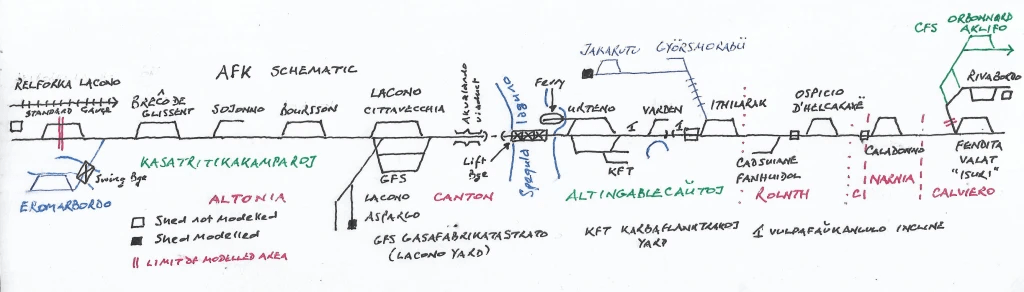
The system diagram is included to help readers identify locations as far as possible. As with everything else retrieved from the websites this is a copy because the original was lost. I also seem to have lost the paper original as well. Admin never was my strong point let alone computers!
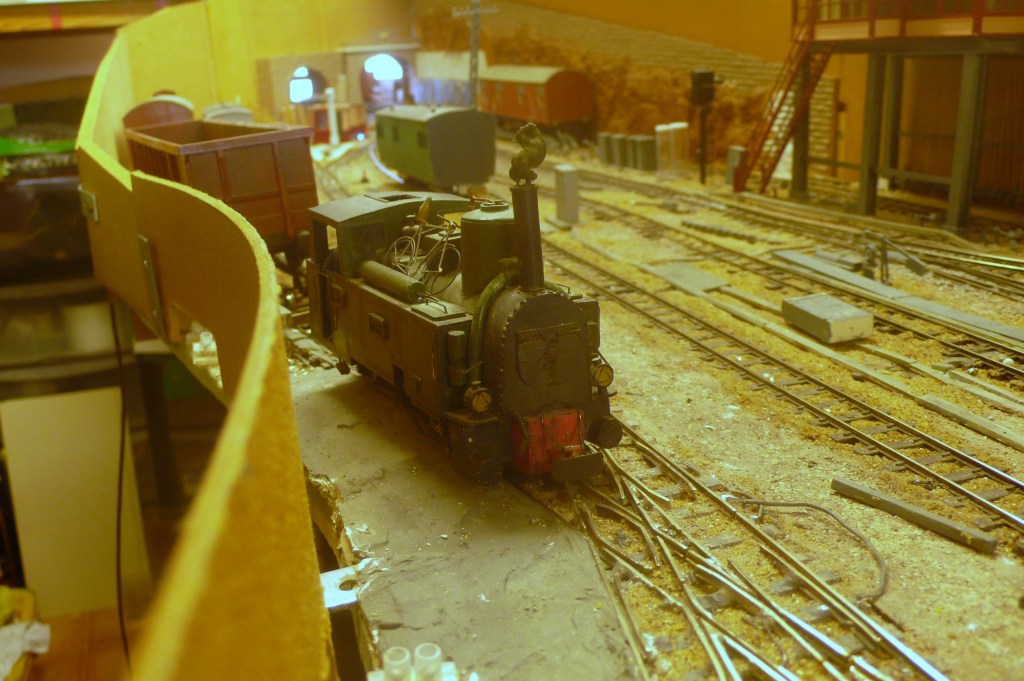
1. At 01.20 we witness the changing of the guard at Lacono. Yesterday’s session ended with “Sisyphus”, the 0-6-0 diesel shunter, pushing the SG bogie coal wagon to the unloading point for the gas works, as the unloading conveyor was set up across Gasafabrikatastrato (Gas Works Street). The role of Sisyphus has now returned to the more normal incumbent, the ancient 0-6-2T. You probably will not remember but this loco struggled with its quartering last time out and the cranks and rods ended up like discarded knitting. The wheels have been replaced, from a donor chassis, so I keep my fingers crossed that all goes well. (Addendum: Needless to say there have been teething troubles because I push the back to backs out slightly and forgot to do so. All seems well now. Pushing them out allows finer clearances of wing rails and guard rails, not that this is apparent from my track building, best described as “rustic” to quote one commentator!) If you want verisimilitude and accuracy turn away from the AFK now!
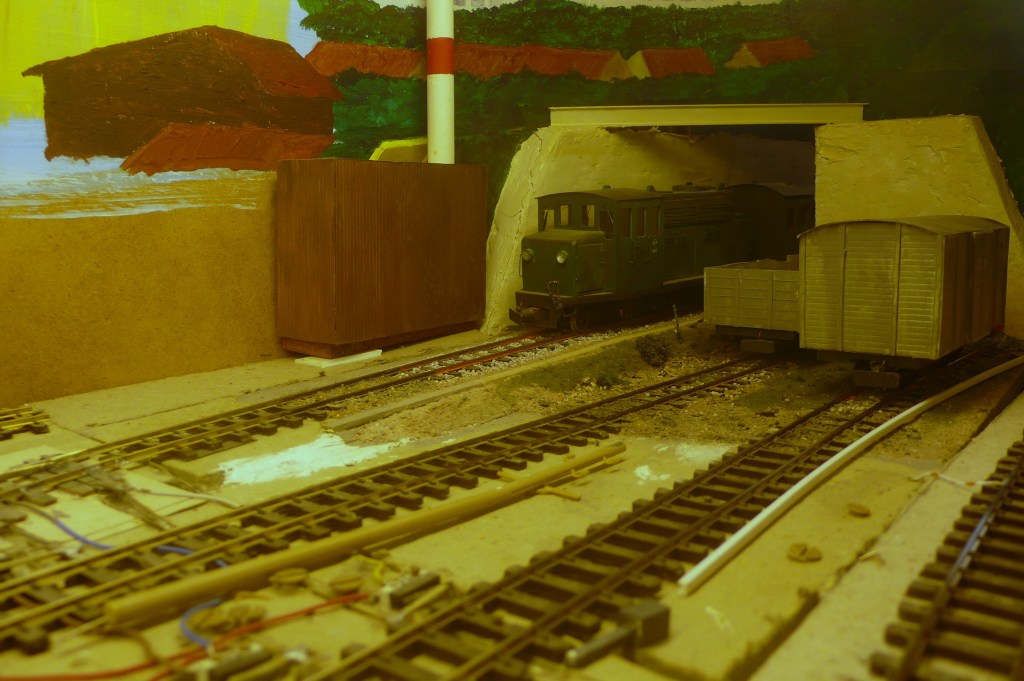
2. The cement train was left “in motion” on the vulpafaŭkangulo, the steep gradient leading into the Altingablecaŭtoj, The High Reaches. It is on the last chain (decakilometre?), or so, of the incline as it runs under the new by-pass bridge at Urteno. The gradient is clearly visible, starting off the platform ends. The Karbaflankoj, the Coal Sidings, are surprisingly empty today, with just a couple of wagons in residence. That will son change. The backscene is still incomplete.
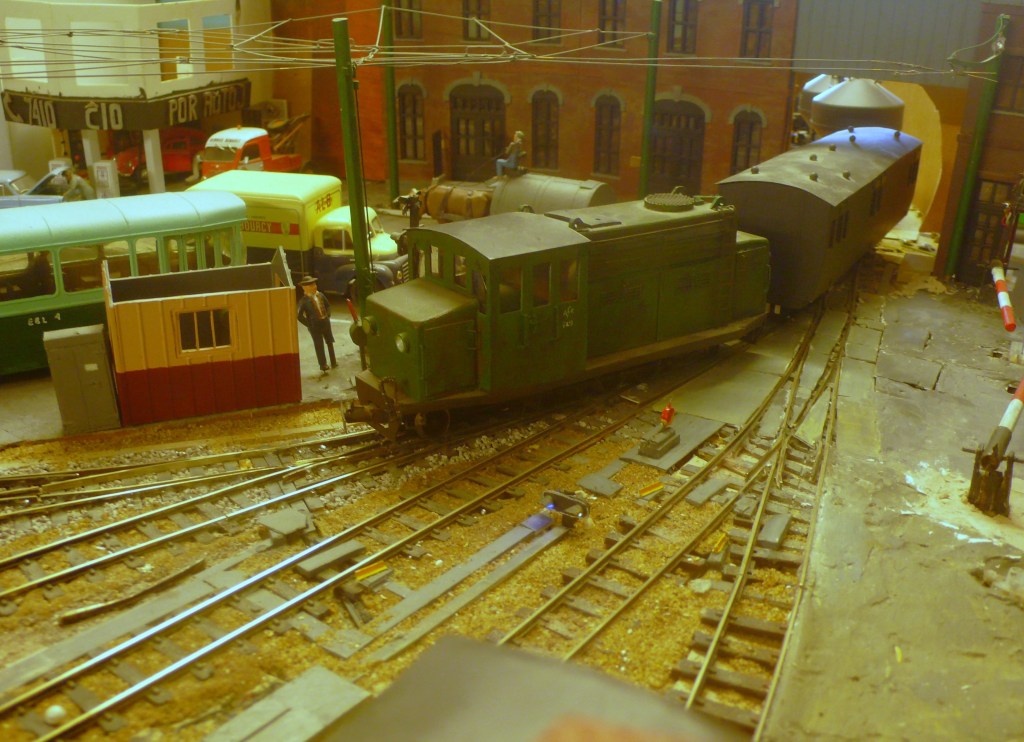
3. The cement train pulls across the Karushnastrato level crossing as it enters Lacono Cittavecchia. The busy crossing is manned 24/7 and one-legged Licamo, the crossing keeper, can be seen observing the train as it trundles past. There is way too much road traffic in the street for 01.30 in the morning but I am not going to remove it just for a photo! The train is running into Cittavecchia, the passenger station, so that the yard is kept clear for shunting. This train is booked to stand for some time and have a crew change.
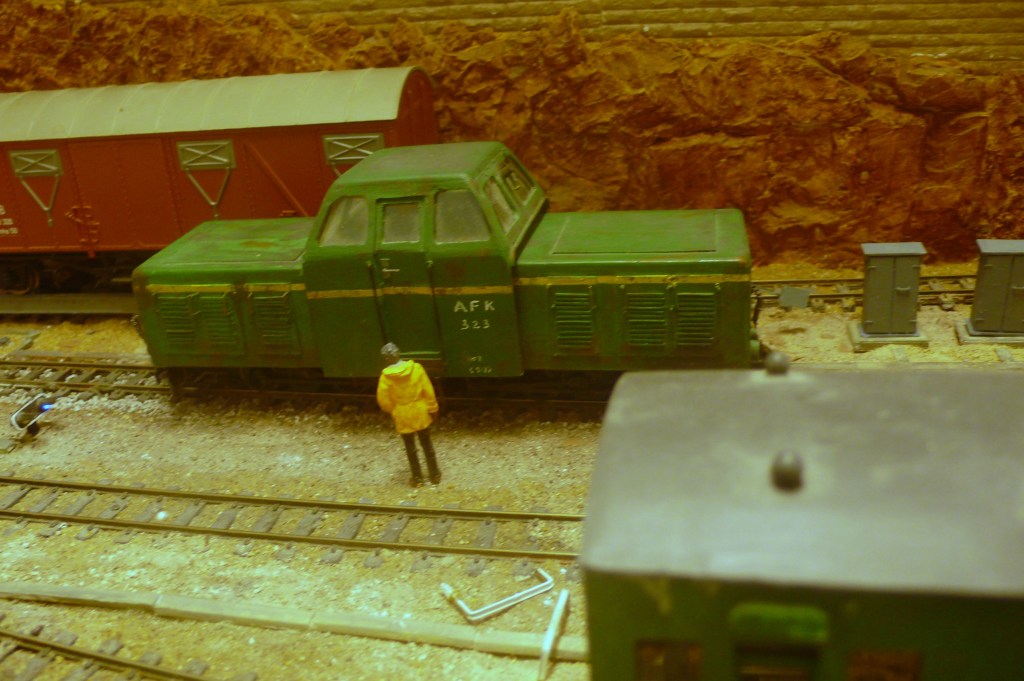
4. At just before 02.00 in the morning the “crocodile” turns up to work the paper train. It was swapped from its train “yesterday” as it was ‘misfiring’. The fitters at Aspargo shed have sorted it out. It is surprising what a big hammer can do! In reality it was not running consistently because one set of current collectors had become displaced. By the time that this minor problem was sorted out it was obviously more realistic for its assigned duty to be covered by the seconded loco which worked the train to Relforka. The yard foreman greets the crew and informs them of their loading, which has been faxed through from the Paper Mill. (Did they have faxes in the 60s?) This sort of early morning activity might seem to be at odds with the general concept of the narrow gauge but some European systems, such as the AFK, were effectively NG surrogates for the main lines. Operations are 24/7 in the yard with trains running across the lower section of the line throughout the night. although the upper section effectively closes for 6 hours. The yard is equipped with floodlights to assist shunting.
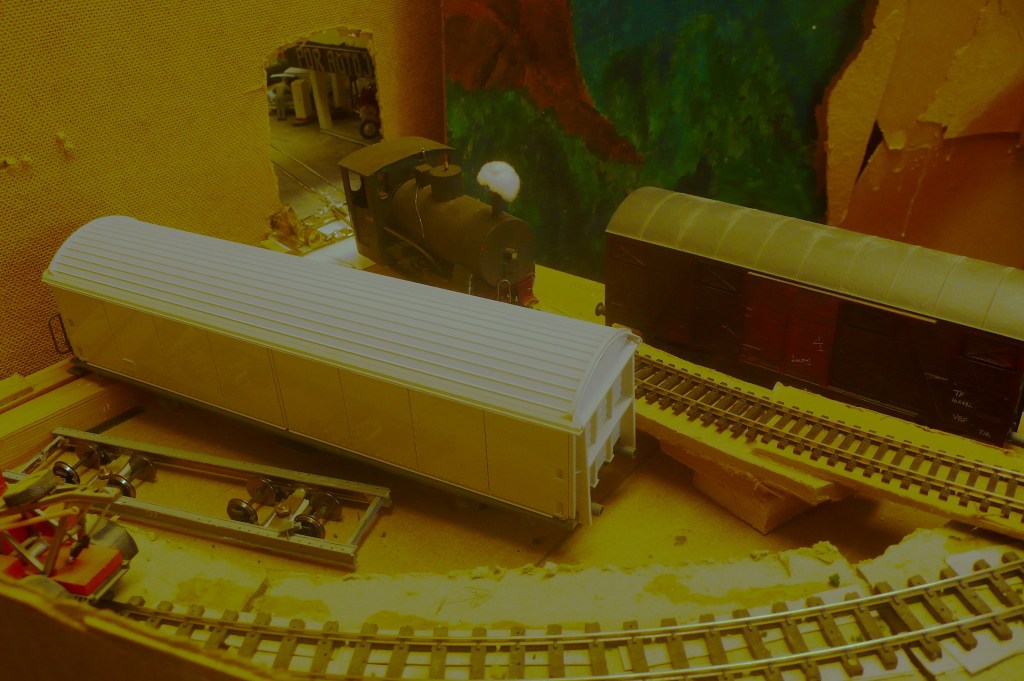
5. The reality of the Verdamőlln paper mill, and the Danulbo arrondismento, is this crude cassette, which blocks the mainline when in place. The Danulbo is the industrial quarter of Lacono which is accessed via the Kapra pordega, the Goat Pen. The scenery has been removed to make way for the cassette and the fireless loco that works the mill can be seen standing on it. By this stage in the “morning” there is a severe shortage of transporters for SG wagons. A round up has taken place and many SG wagons are now sitting on the ground. This happens every “morning”. I keep intending to augment the numbers but something always seems to intervene.
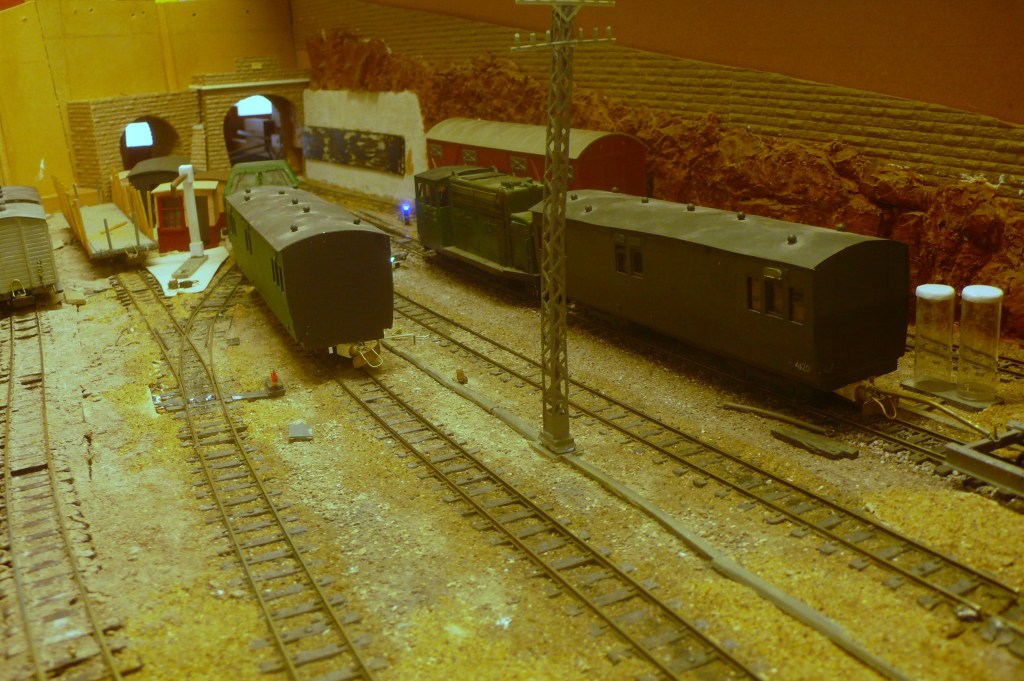
6. Having been re-crewed the cement train leaves, as booked, at 02.00, having collected the bogie SG wagon which brought the coal in. The authorising white signal can be seen alongside the loco. For those modellers who have never worked on the real thing this was the reality of railway life. It was not much fun getting up at Godforsaken o’clock but that was how one earned a wage .The paper mill train loco at the left has picked up its crew van (skipakamioneto) and is waiting to back down onto its train. The brake seems to have escaped an attempt to paint all the wagon and carriage underframes. The two clear cylinders at the right will eventually become Swiss style block bells.
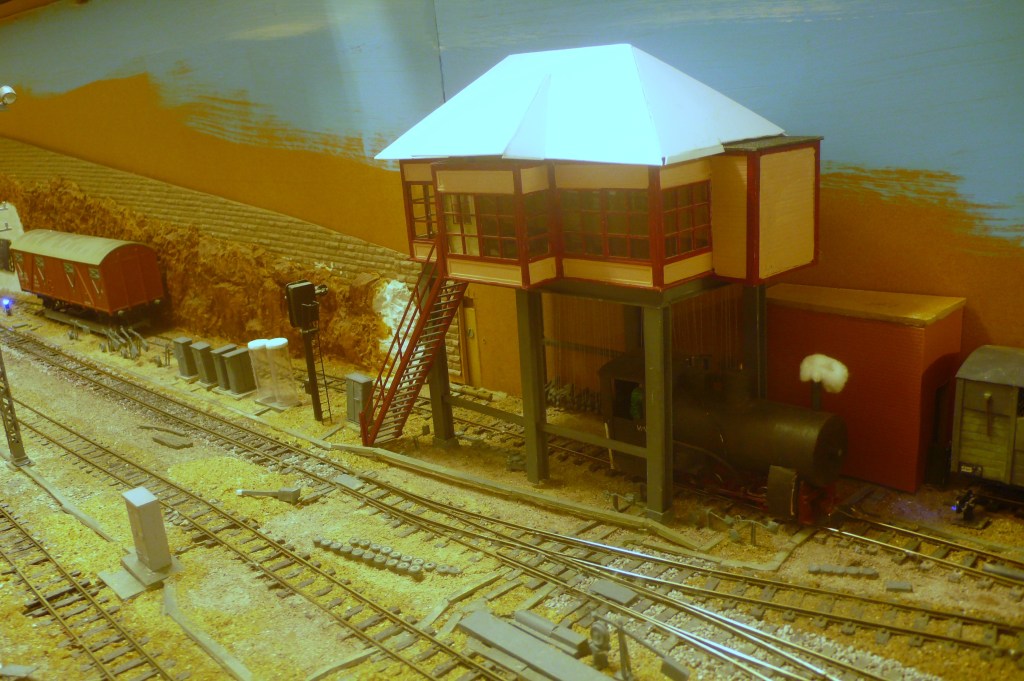
7. The fireless stands beneath the signal box before returning to the mill. This is as good a time as any for the factory worker tasked with running it to clear off to the station restaurant for a cup of coffee and a doze, on company time. This establishment is open throughout 24 hours and serves the whole arrondismento (city district) in addition to railway travellers. The picture was taken to show that there was some progress on the signal box during the long shut down. It looks quite impressive with the new roof, although this still needs completion, as does the relay room, and one day it may even receive an interior. A lot of work went into providing wire runs and counterbalances but these tend to skulk in the background. The box also needs a fractional lift. A SG chemical tanker belted it the last time it went by. I would not fancy being the signalman in a box that argued with chlorine tankers!
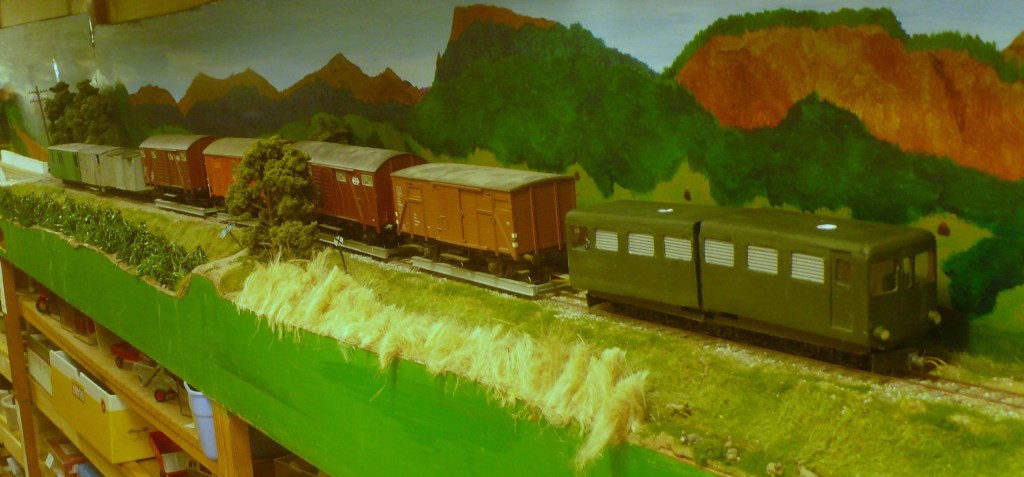
8. The Urteno early morning goods has crossed the cement train at Breĉo de Glissent and is running through the Kasatritikakamparoj in the darkness. As is usually the case, for this train, it is mainly composed of SG vehicles on transporters. These contain consolidated loads for Lacono, the provincial capital, and Urteno. These run directly from Sarip, the Thalnian capital and Nilam, another major city. (No prizes for getting the anagrams!) Ichdoclo, the foreman diesel fitter at Relforka is riding along with this new engine. Commissioning the loco, which first appeared some time ago, was supposed to be straightforward but it wasn’t! I am still not too happy about certain aspects of its behaviour so it is on trial. The white holes in the roof, for the fixing screws, will eventually be hidden by air intakes and silencers. One problem was that I did not realise that the prototypical base loco, an RhB Ge6/6 III, was only hinged in the vertical plane.
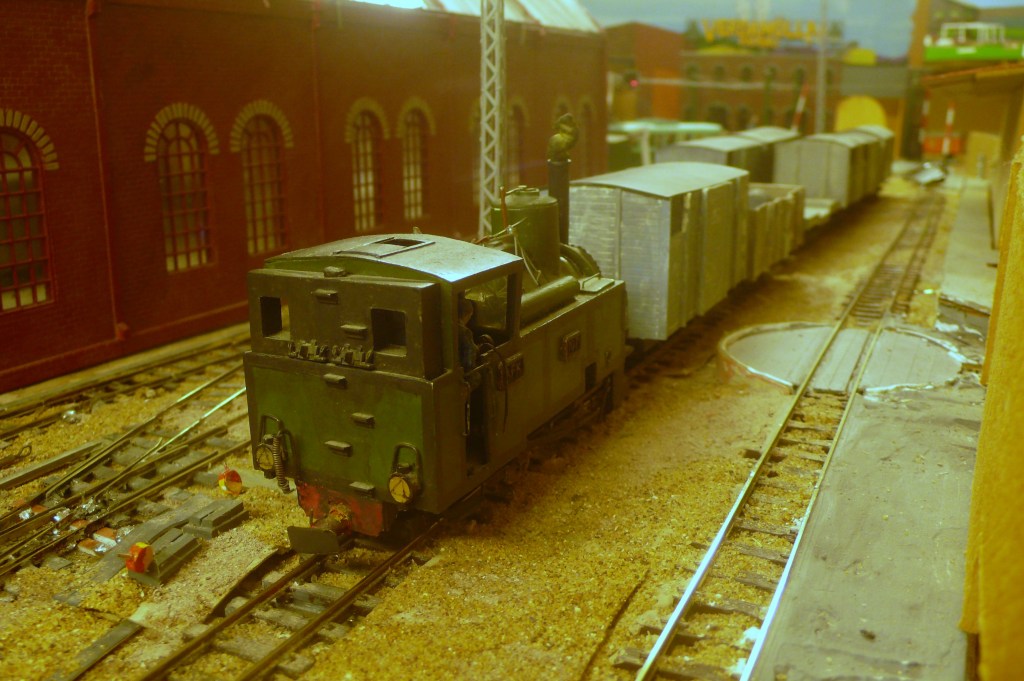
9. Lots of photos have been taken in Gasafabrikatastrato yard over the years but they have, of course, now disappeared into the ether. Sisyphus, the yard pilot, spends hours shuffling wagons around, apparently to no avail. This early morning scene shows it shunting wagons at the north end of the yard. These were pulled from the goods shed, the near road. There will soon be other stones to roll uphill. The yard could really do with finishing, yet another thing to attend to.
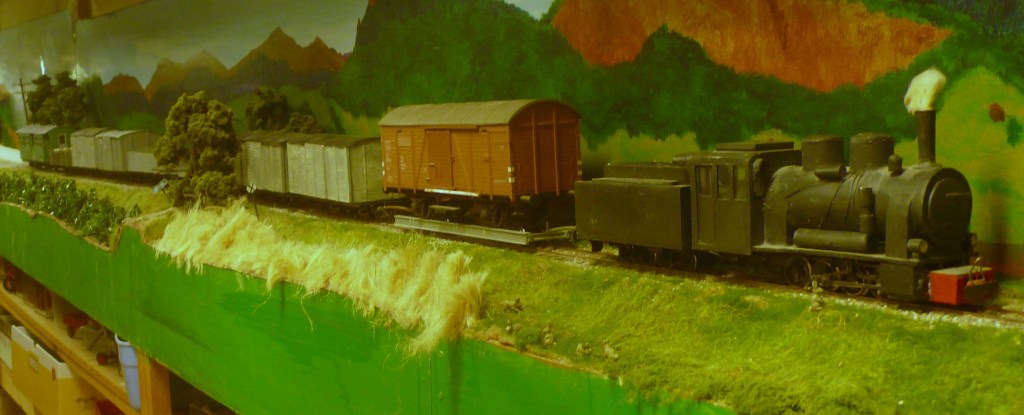
10. The Altingablecaŭtoj (High Reaches) goods follows the Urteno goods across the KTT. As per usual the consist is in a marked contrast to the previous train because it is mainly composed of NG wagons going to small remote communities. Some of these are empty wagons, such as the low sided gravel hopper, which are returning north for another load. The train is quite long for a model railway but would barely muster a second glance in reality. The loco was scheduled for finishing but….
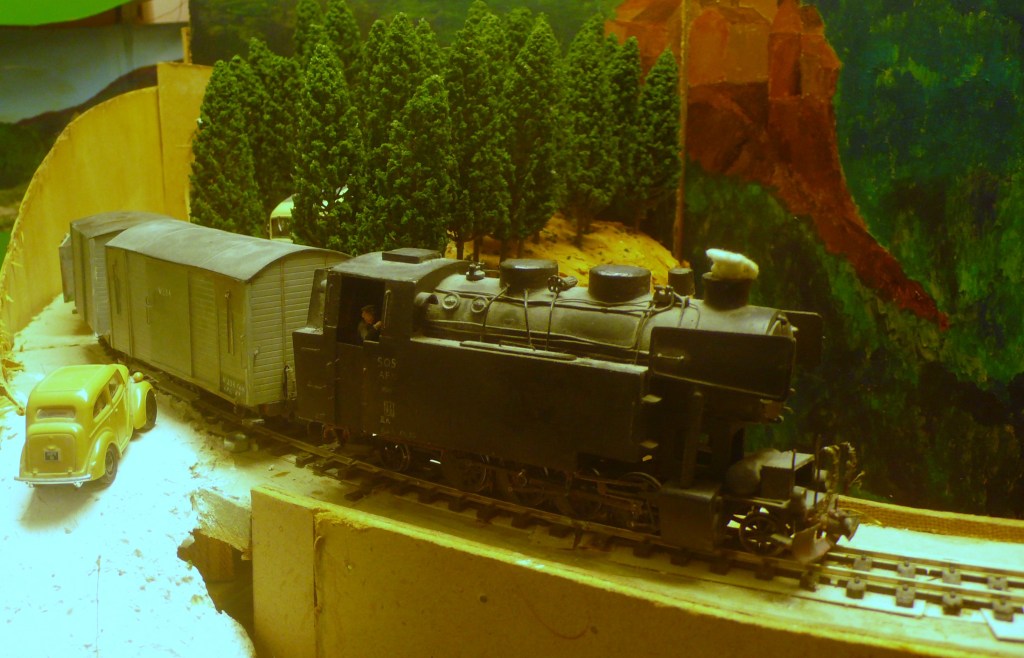
11. The 2-8-2T rumbles across Caramassco viaduct in the early hours of the morning to take up the Urteno pilot/banker duty. It is trailing a couple of vans bound for Fenditavalat and the CFS, partly to clear the yard at Lacono. One of these came from Eromarbordo yesterday evening, too late to go forward the whole way. If nothing else it shows that loads from previous sessions are not just annulled and forgotten about. The open on the rear is carrying empty beer barrels returning to Karamspur brewery. The duty loco is authorised to carry 80 tons without a brake. (Each axle, you might remember, counts as 10 tons.)
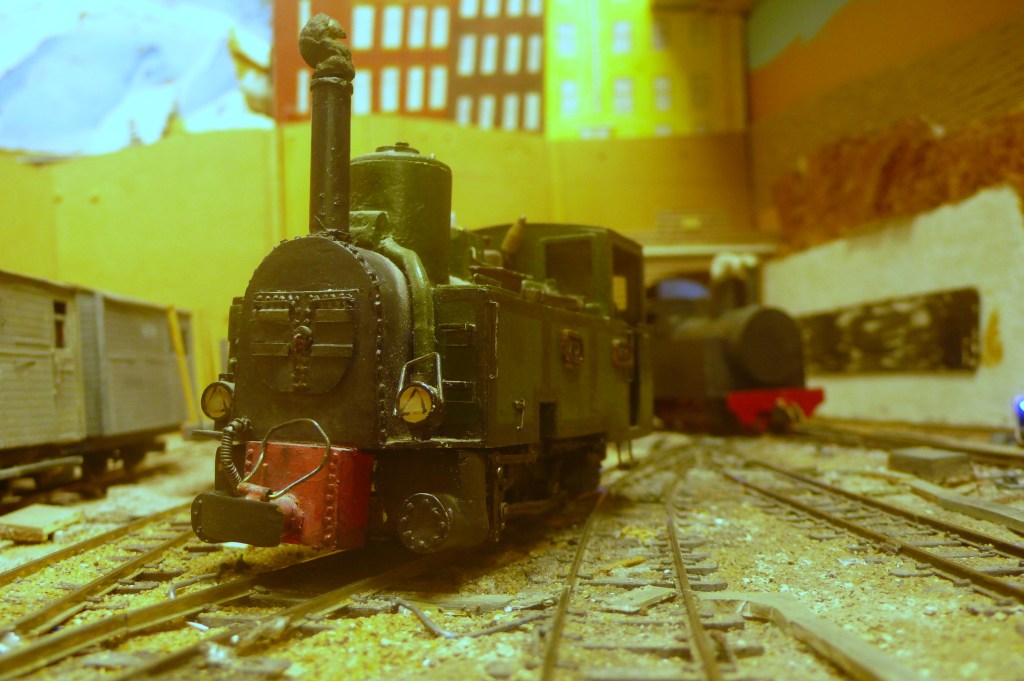
12. The diamond at the south end of Gasafabrikatastrato yard is a constant bane for the operating staff because of conflicting moves. The yard pilot waits for the 4-6-0T to pull out onto the mainline before it can continue shunting. The 4-6-0T is coming off shed to couple onto the Kasatritikakamparoj goods, a duty once the fiefdom of La Besto, the Creature from the Black Lagoon. As more locos have become available it is noticeable how many older, small locos are left sitting on the shelf, literally, after the shelf building exercise of a few years ago! I try to rotate them around the duties but the 4-6-0T is effectively on an extended trial. Hopefully its issues have been sorted out. It will then sit on the shelf itself.
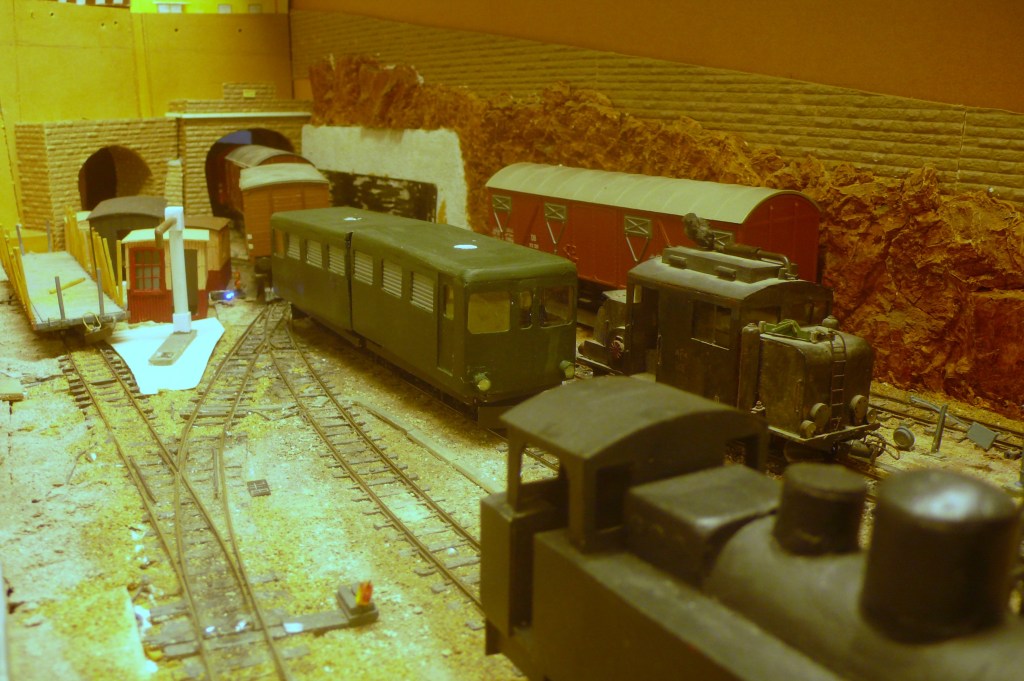
13. The fabled Besto has just come off shed, relegated nowadays to cover the Danulbo shunt. The Danulbo is the industrial district to the north east of the station. The shunt is a recent innovation and is taking place much earlier than yesterday as experience has shown that this seems a better time to do it. It also makes sense to roster a small diesel to this duty rather than fire up a steam loco. La Besto is the most appropriate choice from the current shed allocation. The 4-6-0T waits for the road and will leave, slightly early, once the goods pulls in. The bendy diesel is in the process of arriving but…
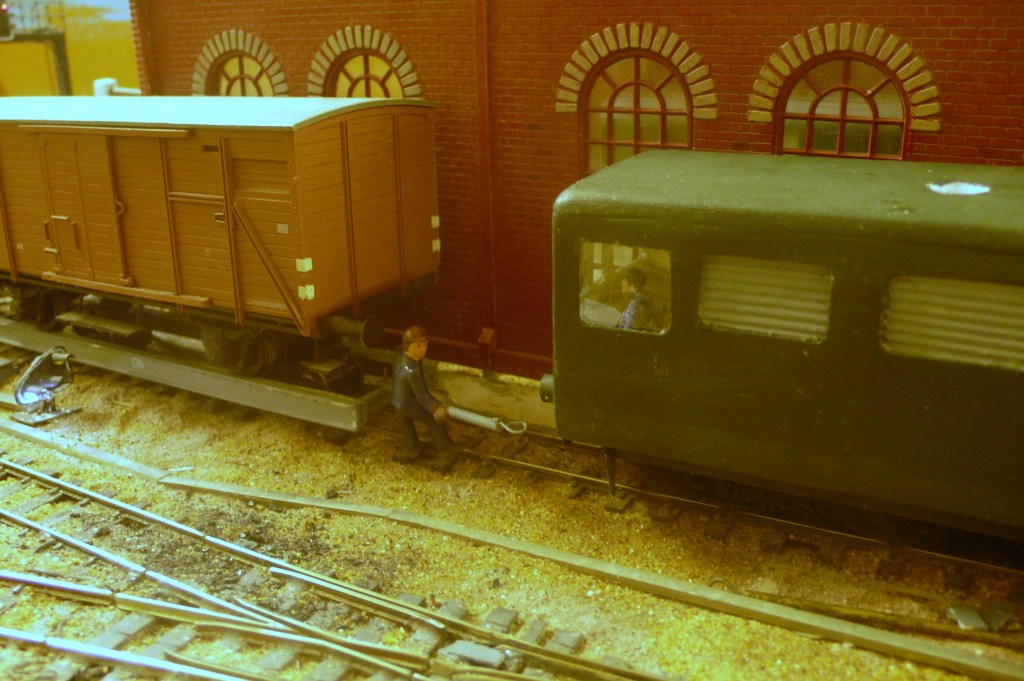
14. …..there is a problem. One of the loco’s two engines has shut down. Ichdoclo gets the shunter to uncouple the loco whilst he gets on the phone to Aspargo shed. Fortunately there is a ‘spare’ spare today which can substitute for the remainder of the run to Urteno. With a bit of luck the articulated diesel can resume its duty later this morning. The artic is already joining the ranks of the prima donnas and is giving the, now scrapped, 0-8-8-0T mallet a run for its money in the tantrum stakes.
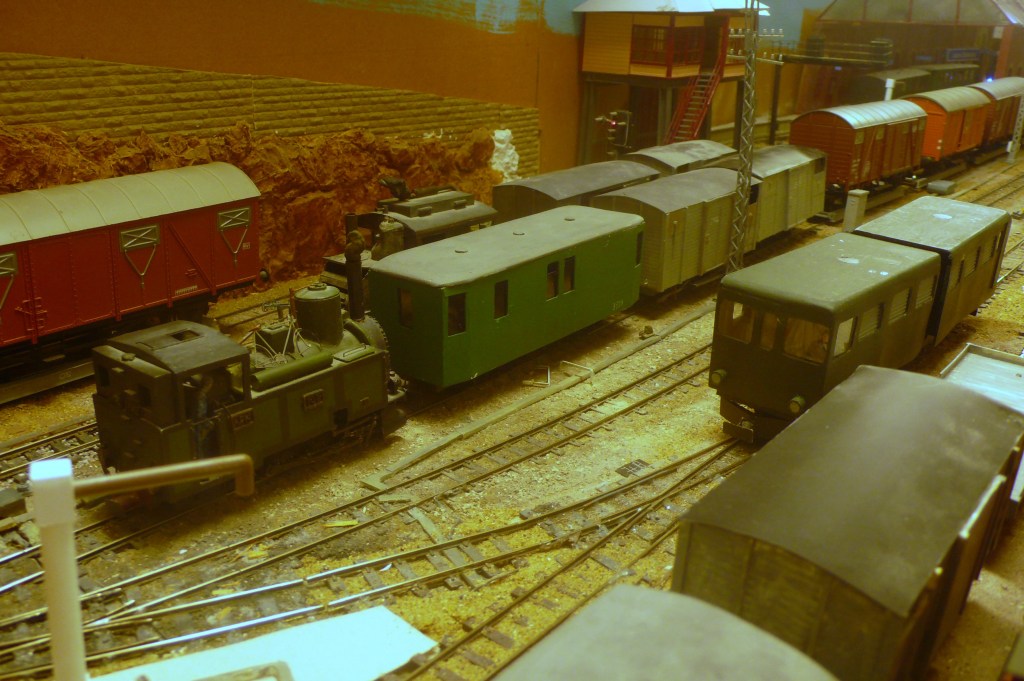
15. Ichdoclo is a fitter foreman more at home in a machine shop rather than a loco cab. His attempts to get the driver to take the recalcitrant loco to the shed are thwarted by operational needs of the yard foreman. For a start off, the pilot now needs to work the Urteno goods, which was marshalled so that the, now disabled, train engine could do this. Meanwhile “the Creature” has retrieved a couple of cattle wagons from the horse landing, which need to go into the yard. Ichdoclo is told where to go, literally, by the yard foreman when he demands a priority exit and is forced to tell the driver to reverse his “Flexseblamozulo” into the empty goods shed road. “Bendy bugger” seems quite a good nickname, although it is not quite an accurate translation, nor something that Ichdoclo likes.

16. The replacement train loco runs across the diamond as La Besto waits to get out. The failed diesel will follow. The yard pilot has re-assembled the Urteno train, and pulled it back, which will allow the replacement loco to use the mid yard crossover to get onto the point. It is coming up to five in the morning and the signalman will be glad to get off shift, at six, as he has had a busy night with less time than normal to doze off. Some of my erstwhile colleagues used to think that this was their right rather than a lucky and unofficial by-product of events. It was quite amusing, as a relief man, to gain a vicarious insight into their working methods, including the EMU shunt driver who was gobsmacked when I immediately agreed to his request for a shunt move as opposed to the ten minutes he usually spent arguing with “Pondlife” and another half hour making him wait! “Pondlife” was never happy about the latter development.

17. Time is moving on and other areas demand attention. The Urteno pilot is shunting the coal sidings and will shortly go to the Bevoliax carpet factory at the end of the near siding. Due to the problems at Lacono the incoming goods train will be 20 minutes late so the pilot is picking up some of its work. The decision to let the goods out was a close call because it will probably make the morning railcar slightly late but this was seen as the best option in a bad job.
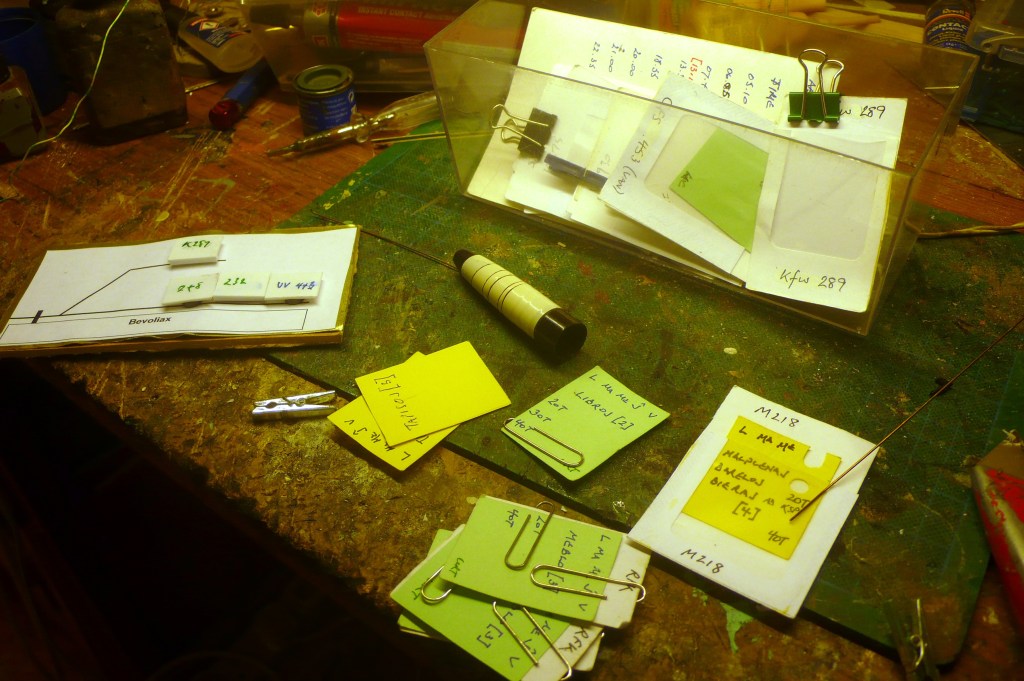
18. The consignment notes for Urteno are laid on the workbench as this is the most convenient place for them. The loads were generated using war-gaming dice and tables. The box behind the notes contains the wagon dockets into which the loads will be placed. Wagon M218 (open no 218) came in loaded with empty beer barrels for Karamspur. I have described the system in Narrow Lines but the website that explained it has now gone. If you look at the nearest green waybill you can see that it says “Meblo” (furniture). Clipped behind it is a destination card for RFK, i.e. Relforka, the standard gauge junction. There are six different types of these destination cards which, with space for four destinations, cover the entire system and allow bigger stations to have multiple cards. If the load can only go to one destination, as with the books (Libroj) on the card above, this card is omitted. Another paper clip shows that this particular furniture load is for 20 tons (that can be carried in a standard NG four wheel van). This is the basis of the entire system. It takes some time to set up initially, but it is printed onto card so it is quite durable. In the background, top left, there is the magnetic diagram for the factory, which is off scene. The wagon numbers are written onto styrene sheet with a magnet stuck underneath the ‘counter’. This is done with a water soluble pen so that they can easily be rubbed out. Each move takes three minutes, as it does on the main layout, so tabs can be kept on how much time elapses.
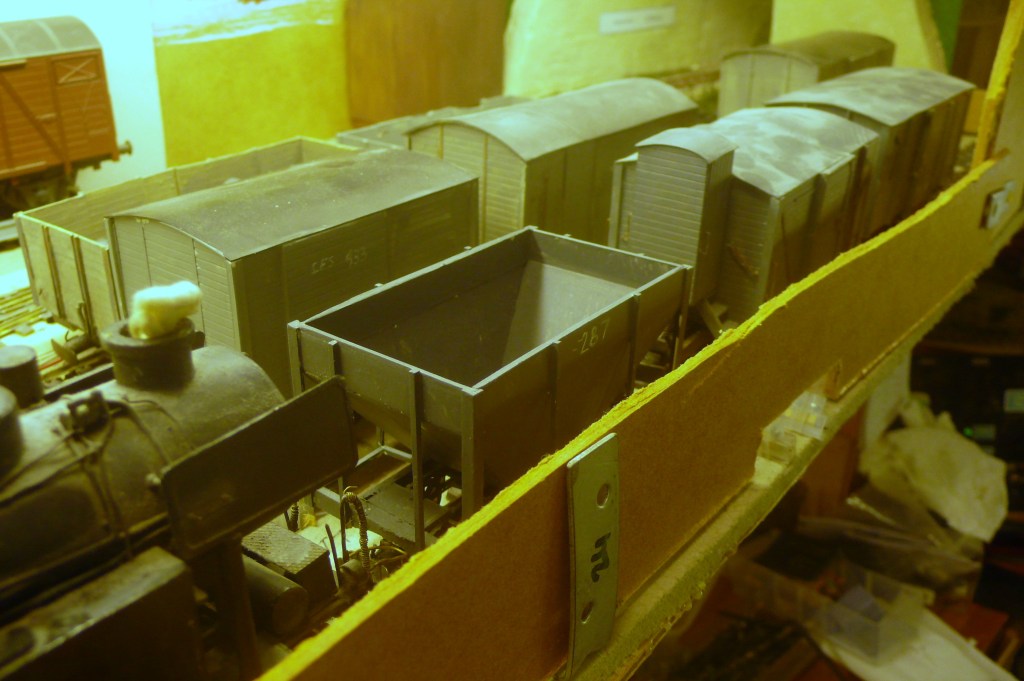
19. The shunt has returned from the factory, on the nearest road. The wagons are placed onto the layout in the correct order having been brought out of a nearby drawer. As predicted the coal sidings have not been quiet for long. The safety barrier at the front “isn’t there” but prevents stock from getting knocked onto the floor. It would be better in Perspex but I have a track record of smashing the stuff up!
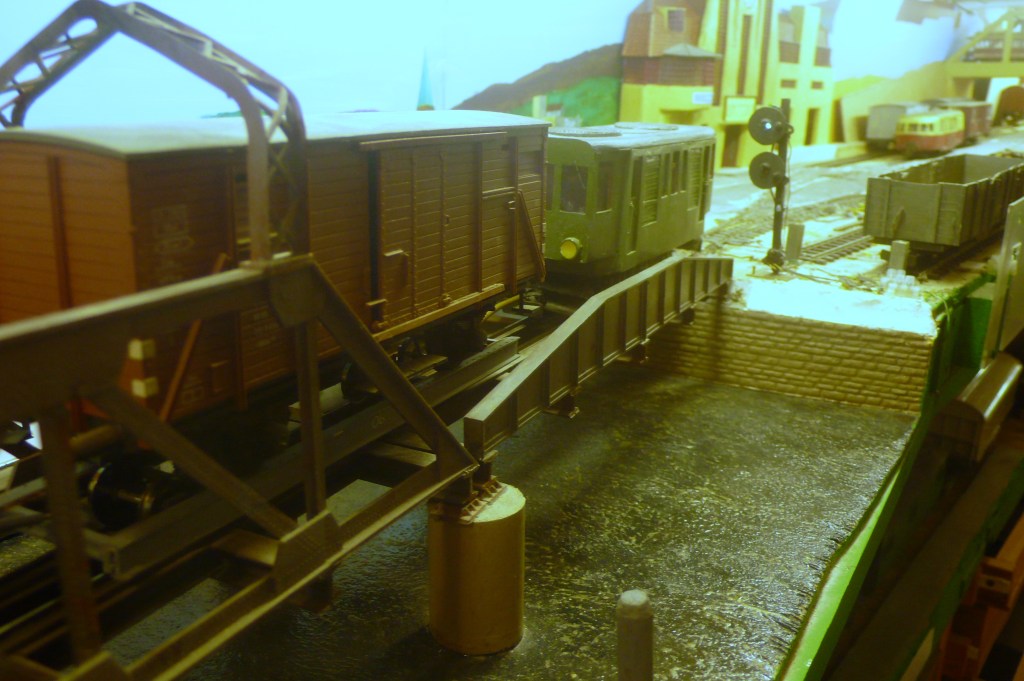
20. The goods train finally arrives at Urteno to see a single white aspect, “Proceed along RT” (RektaTrako, mainline). On the upper part of the system the French pre-WWII aspects apply where white is proceed, green is caution and red is stop, as they were in Victorian Britain. This searchlight signal has two heads, although only the top one is used for this aspect. Some French colour light signals had so many lights that they were nicknamed “totalisers” after the scoreboards used at greyhound tracks in the thirties, when dog racing was popular. The railcar, which has connected with the ferry, waits to depart in the background.
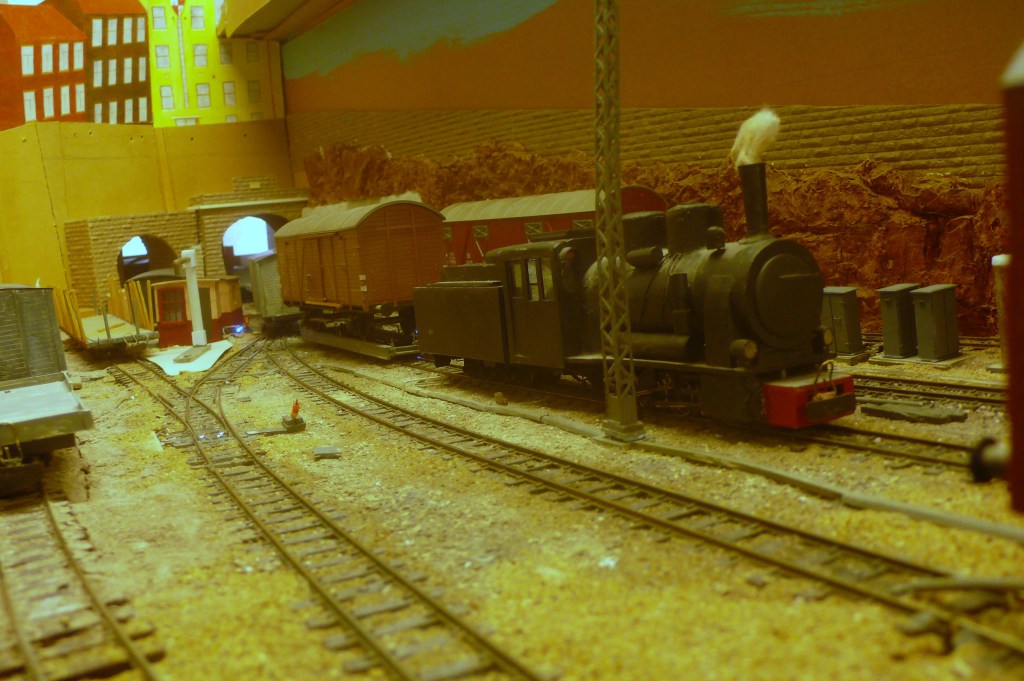
21. The Fenditavalat goods, or ABC goods, as in Altingablecaŭtoj, runs along the main reception loop in Gasafabrikatatsrato at 05.15. Technically it is early because it did not need to shunt at Boursson. It has been “standing on the mainline”, held at the outer home, waiting for the light engine movements to clear. In reality the “mainline” is the 180º curve that acts as the headshunt for both Lacono and Boursson and the train has been standing out of the way on an open piece of line. The minor problems continue. This train is marshalled to be shunted from the rear but the pilot has crossed to Cittavecchia to deal with empty coaching and Post vans, which it should have done earlier.
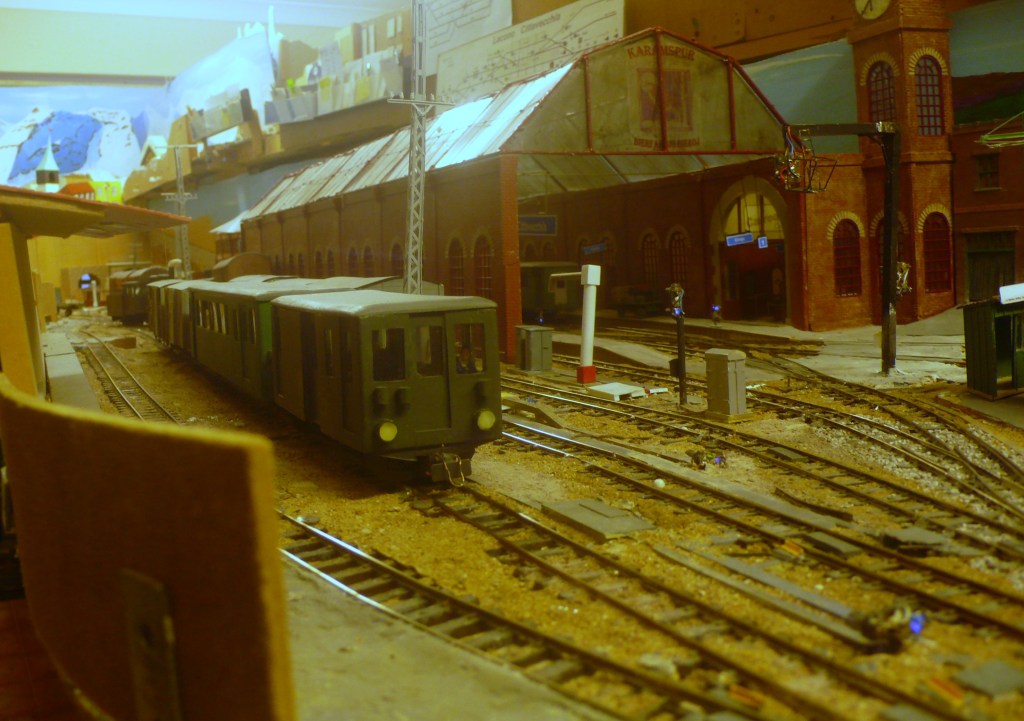
22. The goods train loco is seconded to carry out the pilot’s duties. After some shuffling the schools’ train, which is doubling as a market train, is now correctly marshalled and ready to leave. You might remember that it does not pick up schoolchildren until it reaches Ithilarak but the early shift workers at the Regional Hospital in Urteno use it. As per usual for this train, anyone travelling is expected to casually walk into the yard to board. None of your stuffy BoT requirements here! Mind you, there looks to be plenty of things to fall over. Been there, seen it, done it, got the T-shirt on nightshifts!
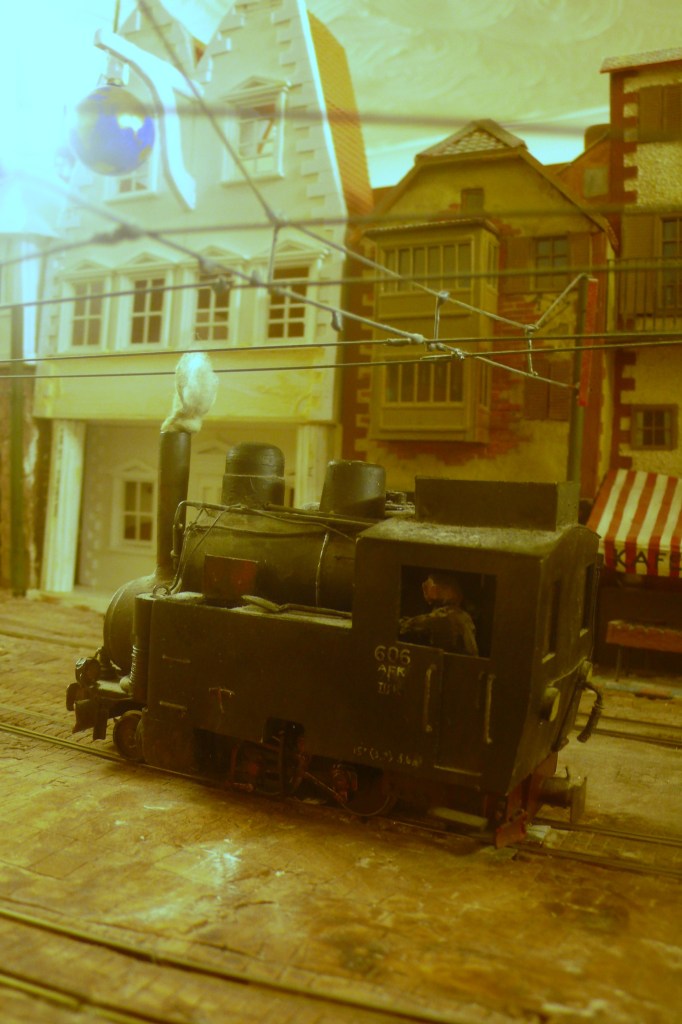
23. The AFK is gradually waking up. The Brotan boilered 2-4-0T monstrosity is today’s pilot and alarm clock for “Isuri”, otherwise known as Fenditavalat. The terra orbis, Isuri’s answer to the Mappa mundi, hangs outside Y Fako Erdkundo (the Geography department) malevolently surveys the merkatubaxu, as if searching for delinquent Scholari alumni (university students). If it is anything like the geography department that I studied in, during the seventies, it will not be waiting too long! The three phase wiring, and the “glass” insulators, shows up well. (It is not bad soldering technique, honestly!)
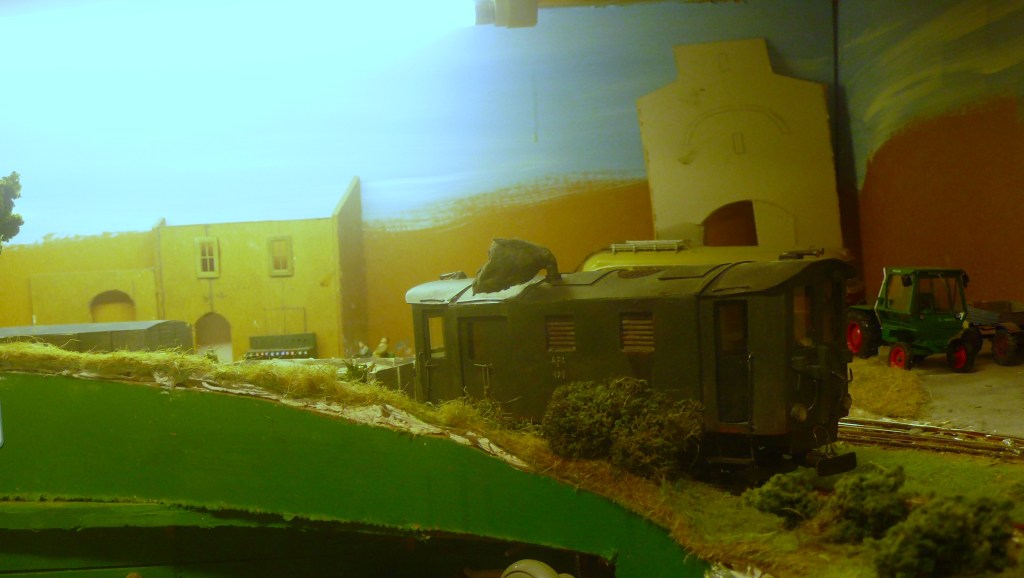
24. The 0-10-0T was pencilled in for the Eromarbordo goods but suffered a catastrophic failure before the session and smashed part of its valve gear. A replacement chassis has been obtained and as many bits as possible will be transferred. Until then the I-D-I fills in, uncouthly belching smoke from its exhaust stack as it pulls into Breĉo de Glissent. Like the Tractors (class 37) it has no silencer and is prone to setting fire to the oil that collects in the exhaust. A warm day is in prospect so the cab door is wide open. It is easy to see why no trajnaĉefo with any brain wishes to travel in the inbuilt guard’s van.
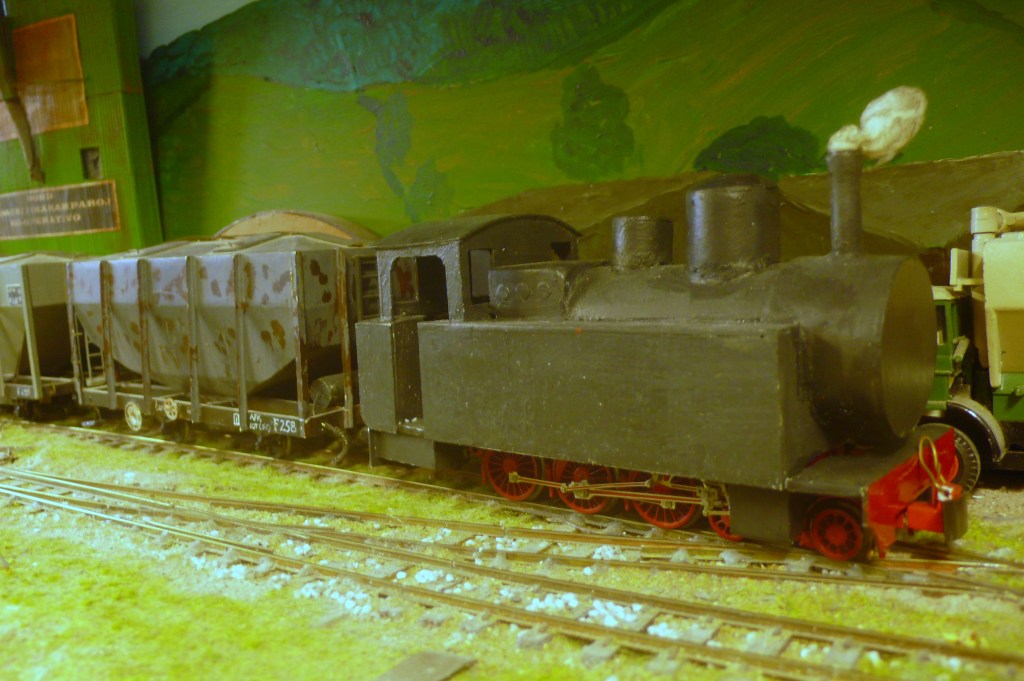
25. A cruel enlargement of a partially finished loco, not that it will improve that much when it is finished! You might remember the saga of this loco, which was meant to be inspired by a Reseau Breton prototype. A ‘leggy’ OO gauge chassis was bought and construction began. I chose OO for the relatively large wheels, of course, because these locos were couronieurs, fast runners. The Chinese built chassis was a complete wash out and fell apart. Its replacement with a “sawn off” BR78 from Fleischmann is much more robust and, after some tweaking, is proving to be a smooth reliable runner. Pity about the lost good looks! The loco is entering the Co-op siding at Boursson to fish out an empty open which needs to go to the cannery. The shunting here is relatively light today. Ironically the train is nicknamed “Erculio” or Hercules because of the heavy shunting requirements often placed on it.
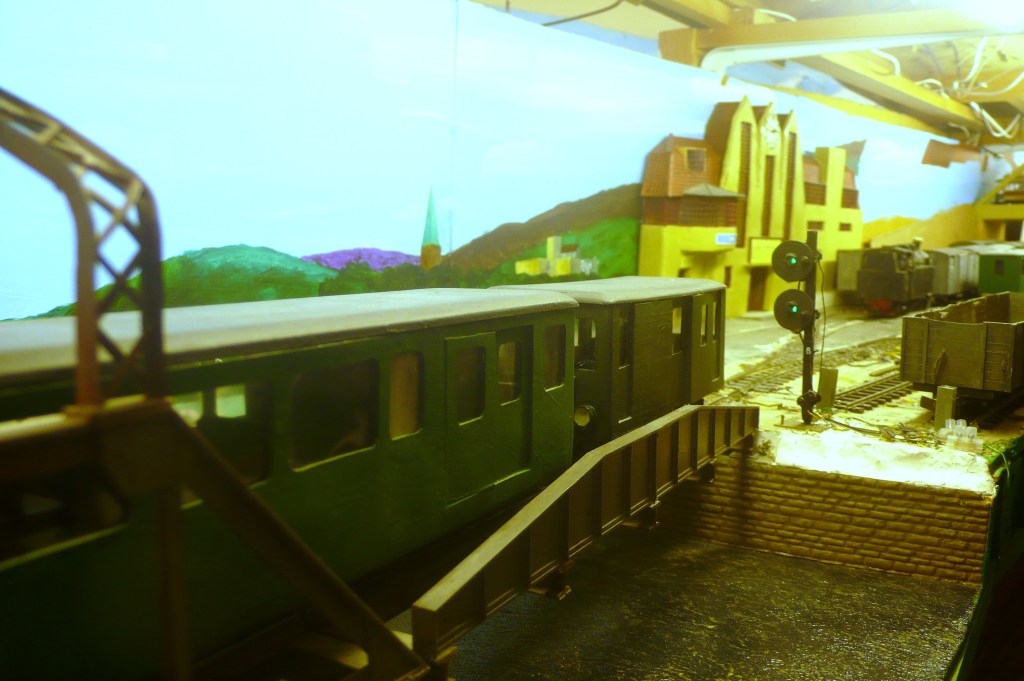
26. For a wonder the schools’ railcar gets a clear run into Urteno, albeit that the two greens indicate that it will be going into the goods loop, a very loose definition. The hospital workers will be able to take a relaxing stroll beside the lake in the early morning sunlight if they don’t fancy the tram. Trouble waits for the train crew in the background however.
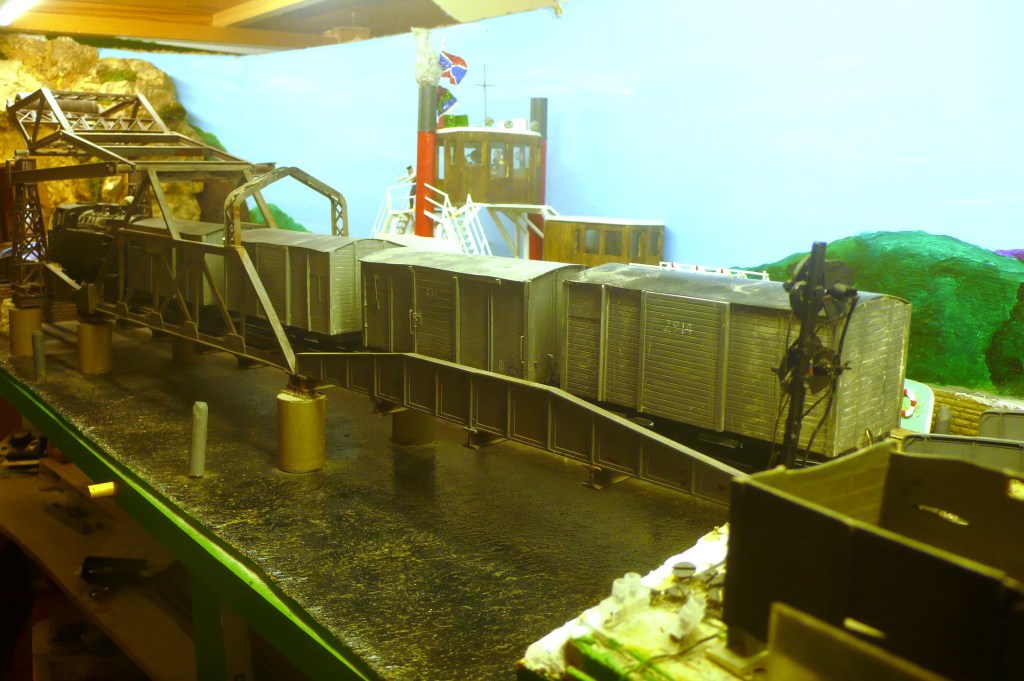
27. The ribbon lake is the Spegulalaguno, a name stolen from Tolkien but translated into “Thalnian”. It is also the name given to one of the two train ferries (although, obviously, only one is modelled). With the national and provincial flags flying from the flagstaff it has arrived with a full load of wagons (four) from Karamspur brewery. Normally this is not a problem but all four are due for northward destinations. Experience of working the AFK dictates that these wagons receive priority on the first sailing so that they can be promptly dealt with. They usually travel on the schools’ railcar which is restricted to a load of 60t. Today the “railcar” is a loco and driving trailer conveying traffic for Ospicio fair and it is known that another wagon of cattle will be attached at Ithilarak. The crew, the yard foreman and the pilot crew scratch their heads and try to estimate the permitted loading from the tables provided. The fly in the ointment is that the tables only make provision for a standard van rather than a driving trailer. Fortunately the fair only deals with cattle sales so there is little passenger traffic other than farmers and dealers. Eventually three brewery wagons are attached and the crew are assured that they can dump them where they wish provided that they take them up the vulpafaŭkangulo. They will not be Urteno’s problem by then and best of luck arguing with the staciaĉefinoj who are all formidable mountain women. I hope that the crew can speak fluent Marronĝacan!
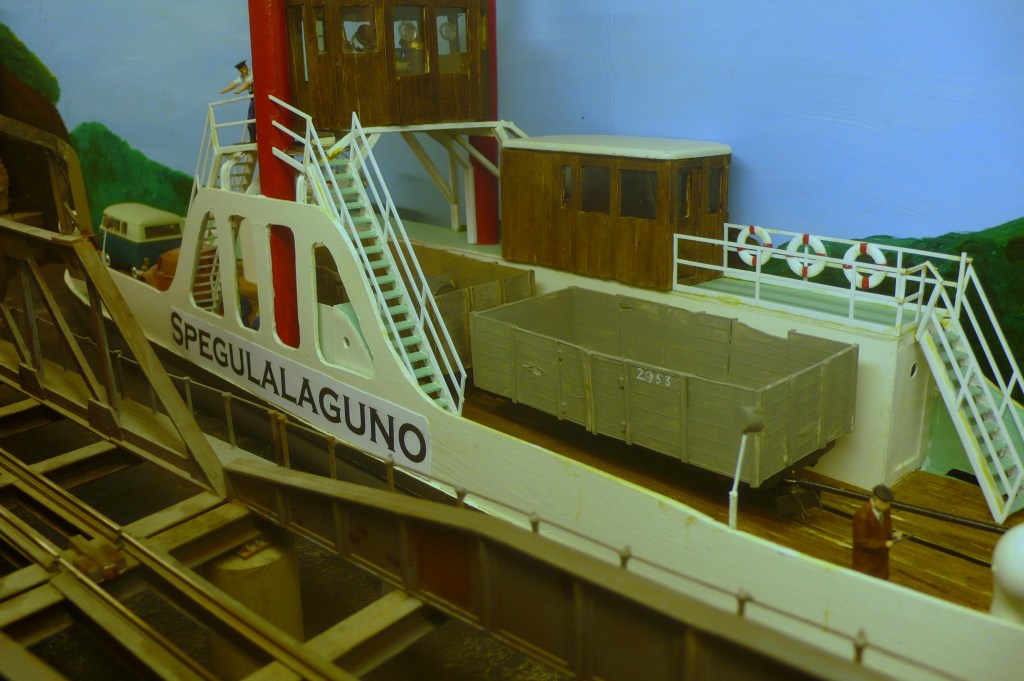
28. The train loco from the goods train leaves the others to it as it loads a couple of opens onto the ferry. The deckhand makes notes on his clipboard but there should be no problems this early in the morning as few road vehicles want to cross the lake. The only concern is to ensure that the ship is roughly balanced which is why the wagons are centred on the deck.
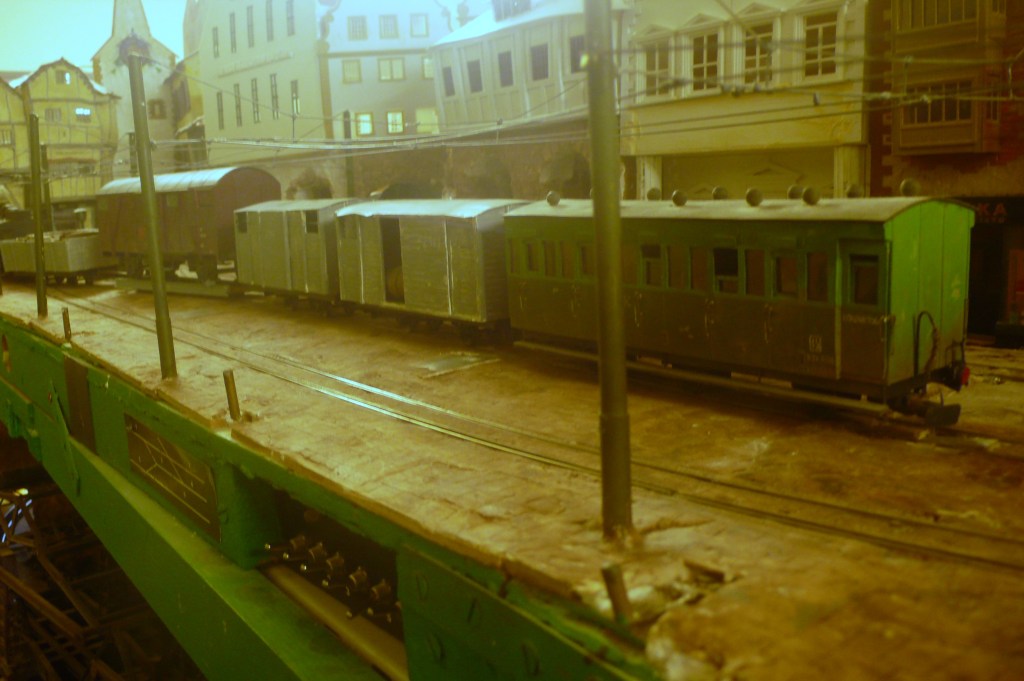
29. The outgoing goods at Fenditavalat has been marshalled quickly today and should, in theory, stand in the square for roughly another 45 minutes. The citizens are inured to such problems but it is AFK policy to avoid antagonising the locals. A call has already been made to Rivabordo to send the train engine up. If necessary the crew can sit in a loop somewhere in the Altingablecaŭtoj.
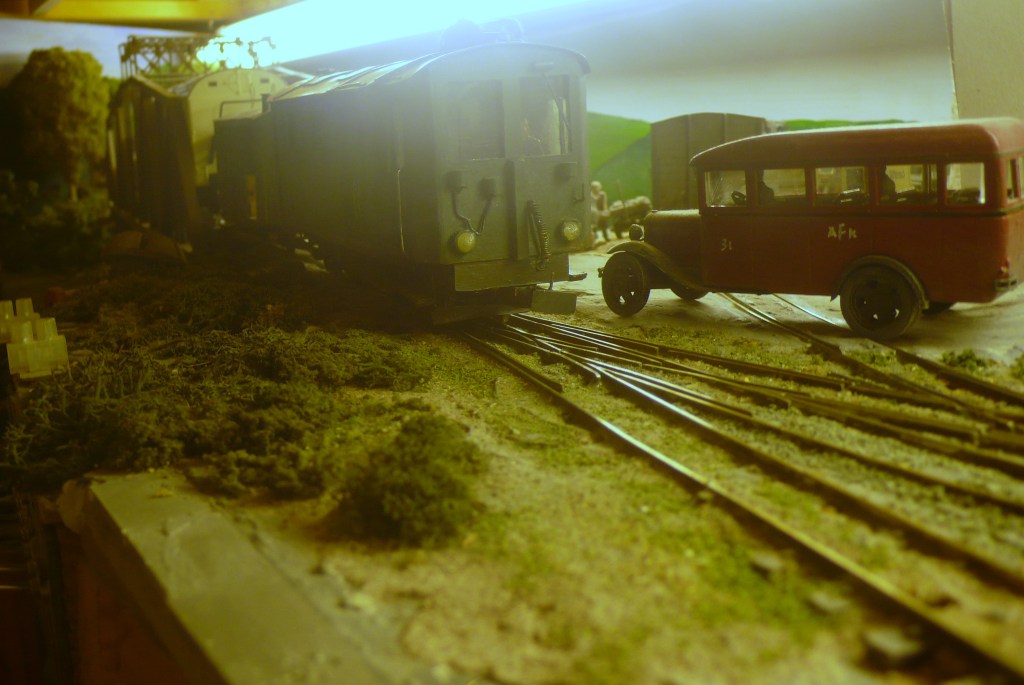
30. In the early morning light, at the other end of the system, the branch goods arrives at Eromarbordo, the ancient Roman port. The train is pulling off the bridge and running into the loop. The antediluvian railway bus has been palmed off to this remote garage to provide the services to Partanzaro, the nearest station on the FT’s Gascari branch. The FT is the national system (Ferovojoj Thalnia) and the branch makes a connection at the border with the Narnian Railways. As has often been noted it is difficult to take photos here because the lighting had to be installed at the back of the scene.
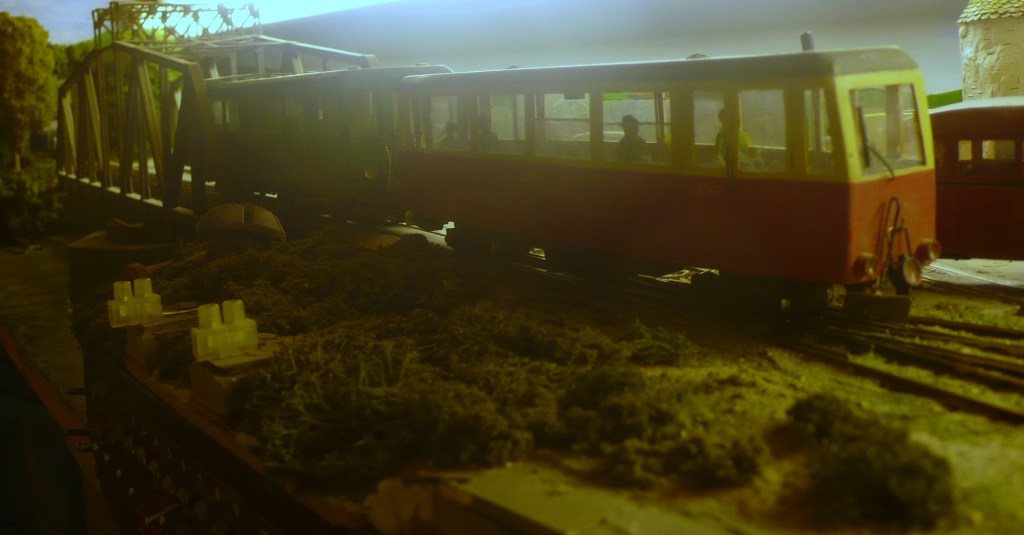
31. As soon as the goods train clears the single line the morning railcar departs, to clatter over the swing bridge. Despite the two railcars forming the service there is not much patronage over this stage of the journey. The rear railcar will be dropped off at Breĉo de Glissent to provide the branch services for the rest of the day and act as Glissent’s pilot. The front one will pick up more people as it nears Lacono.
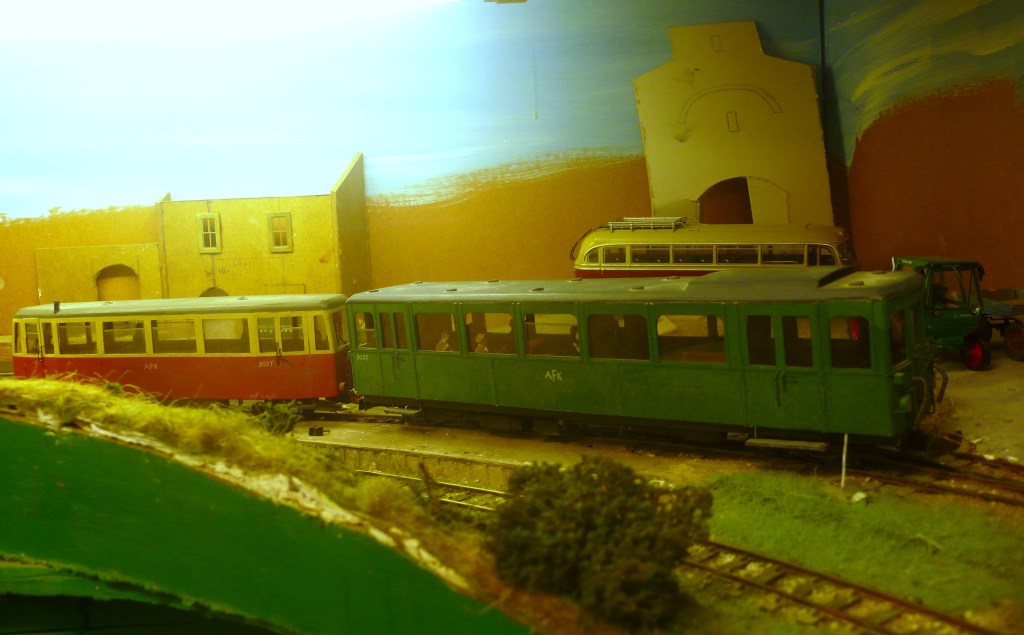
32. The pair have arrived at Breĉo de Glissent and the rear one has been uncoupled. The railway bus, in the background, has provided the connection from Bolzano, one of the outlying villages on the plain. The station building has remained untouched for years! One day, maybe…
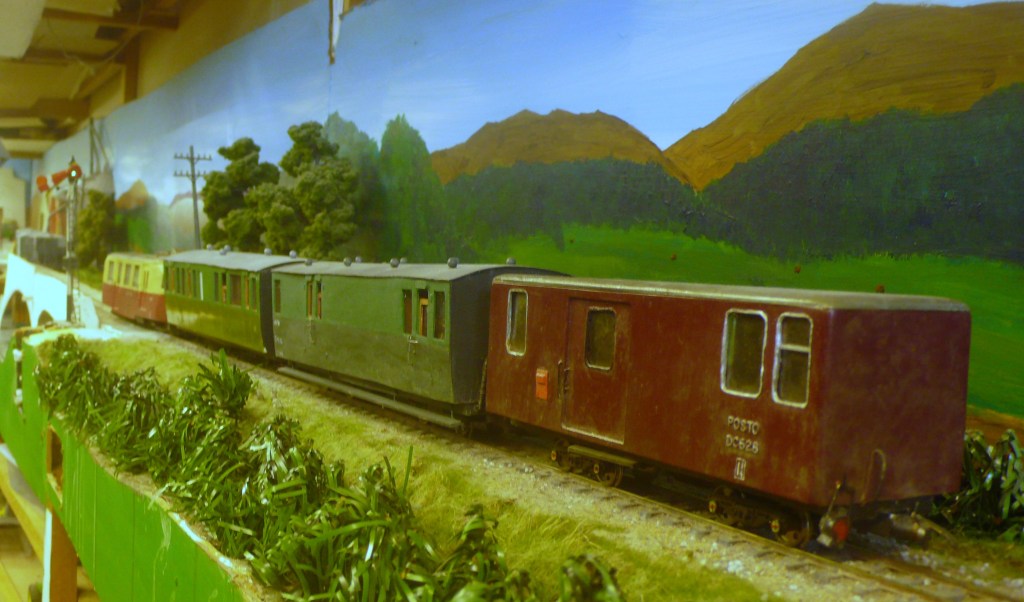
33. The two railcars from the port cross with the early morning service into Relforka from Urteno. This provides a connection with the first passenger trains on the SG branch allowing travellers to reach Sarip, the capital, by the early evening. The Billard railcar picked up an additional carriage and Post van at Lacono. In all honesty this would probably overpower the real thing but the model has no problems, especially after it was recently re-motored. The four aspect semaphore shows that the railcar will have a clear run along the RT, the main line.
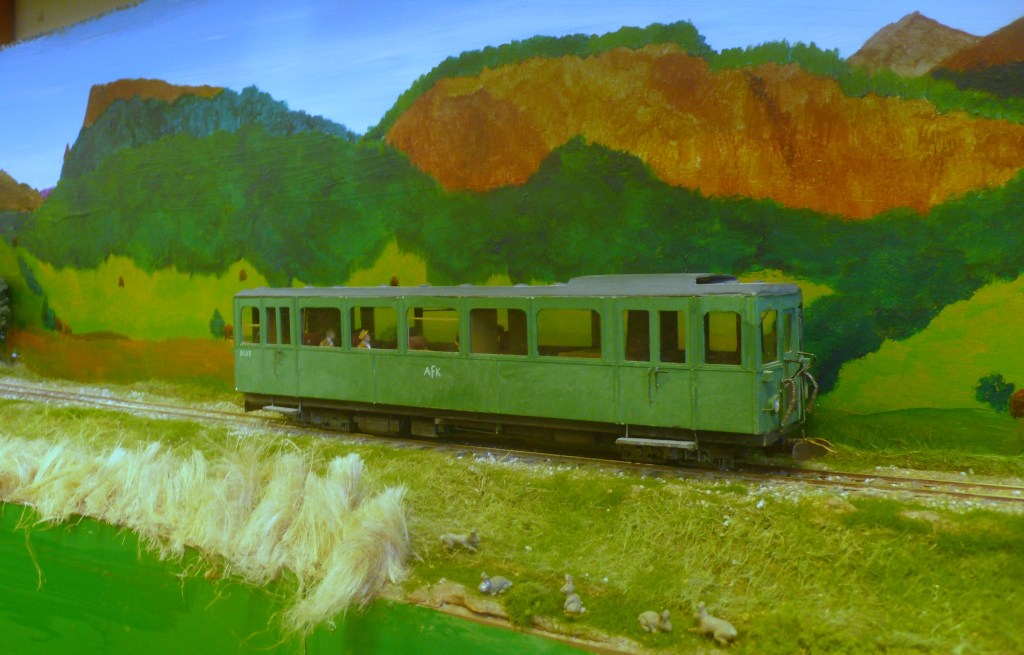
34. The Lacono bound railcar is an ancient Renault KF, of which only three were built. The photo was taken on an embankment out in the fields of the Kasatritikakamparoj, where the rabbits appear to be thriving. There is little space to model the fields but a token effort has been made. Although this appears to be a nondescript picture, showing nothing in particular, it highlights an important aspect of the AFK. Trains have sufficient space to leave the settlements behind and run out into the countryside as they go about their business of travelling between settlements. This, and the pervious picture show areas deliberately devoid of anything but plain track. I often feel that overcrowding spoils some of the US systems seen in Model Railroader, where the train engine is in one station whilst the caboose is in another.
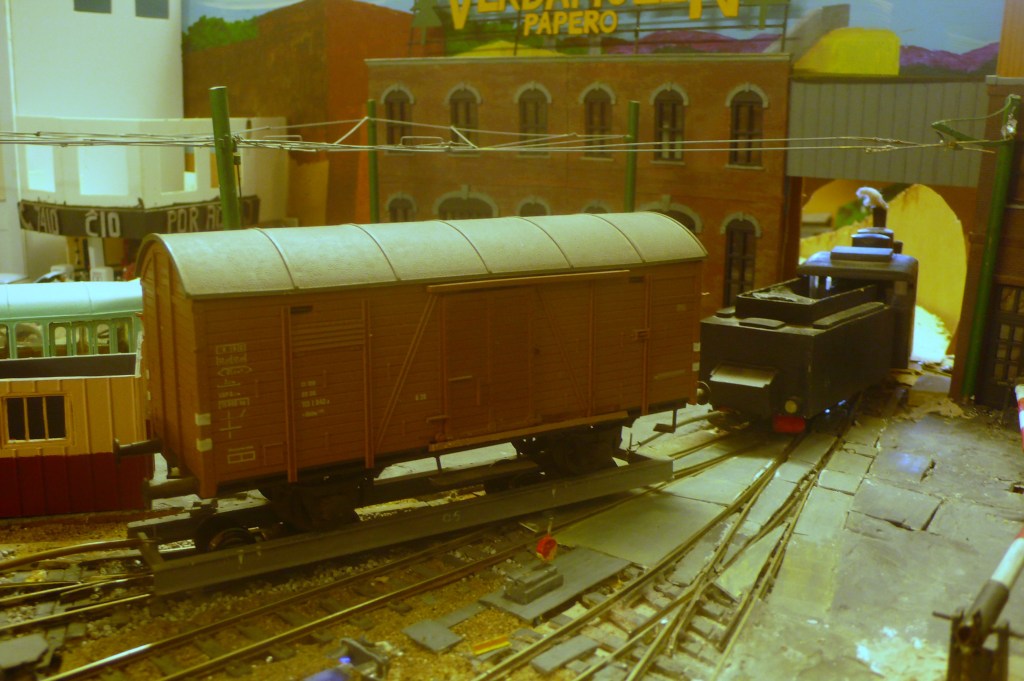
35. Back at Lacono the Fenditavalat goods is allowed to leave earlier than scheduled. This is normal practice as it frees up space in the yard. The train will stand outside Urteno until it is convenient to accept it. The bumpy level crossing is well known locally for testing car suspensions!
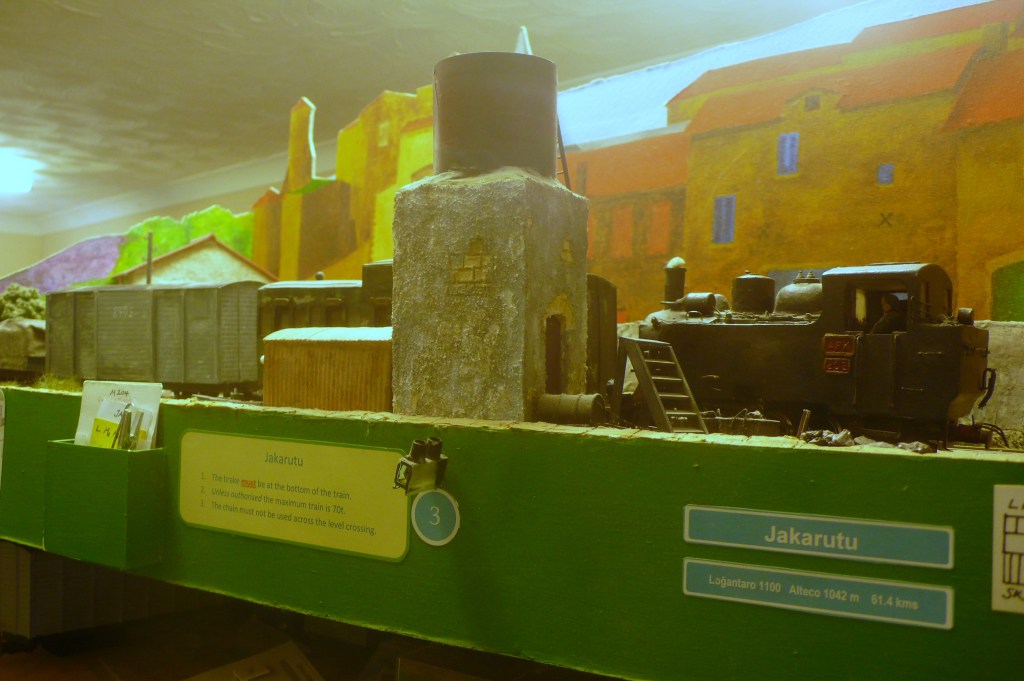
36. The mountain outpost of Jakarutu has an early start this morning because there is a van of cattle to go to Ithilarak fair. The timings of the normal morning service will be covered by a railway bus sent up the narrow winding roads especially. This view was taken standing in the aisle as the station is set at about eyelevel.

37. The early running goods, out of Fenditavalat, pulls into the wintry wilds of Caladonno in the Narnian enclave to be met by Urchyllu, the centaur and staciaĉefo. “Madume” or “morning”, he greets the crew, speaking in Narnian, as the crew respond with “Rekkel” in Marronĝacan. It is all a bit of banter because the AFK Rule Book insists that Thalnian is the only language to be used on the railway therefore the correct greeting should be “Mateno”. The centaur is half mad anyway, and who would not be when surrounded by trolls, elves and dwarves? Fortunately the Narnian legate, Lohrazzak the dragon, is not visiting today and Steinkastir the troll will not come out until after sundown. There is an empty van to drop off in the loop for loading with pharmaceuticals during the day. These are essentially magic potions and elixirs distilled by the local inhabitants. Unfortunately the middle layer of the layout impinges onto this, the upper layer.

38. The Jakarutu branch train makes a stop at Győrsmorabű high on the moors. The station stands in the middle of nowhere and is consequently named for the whole area. The shepherd tends his sheep in this pastoral scene but it will not be too long before winter returns. This is another scene where an attempt was made to show trains out in the countryside although, as is obvious from the point control knob, there is a remote siding here.
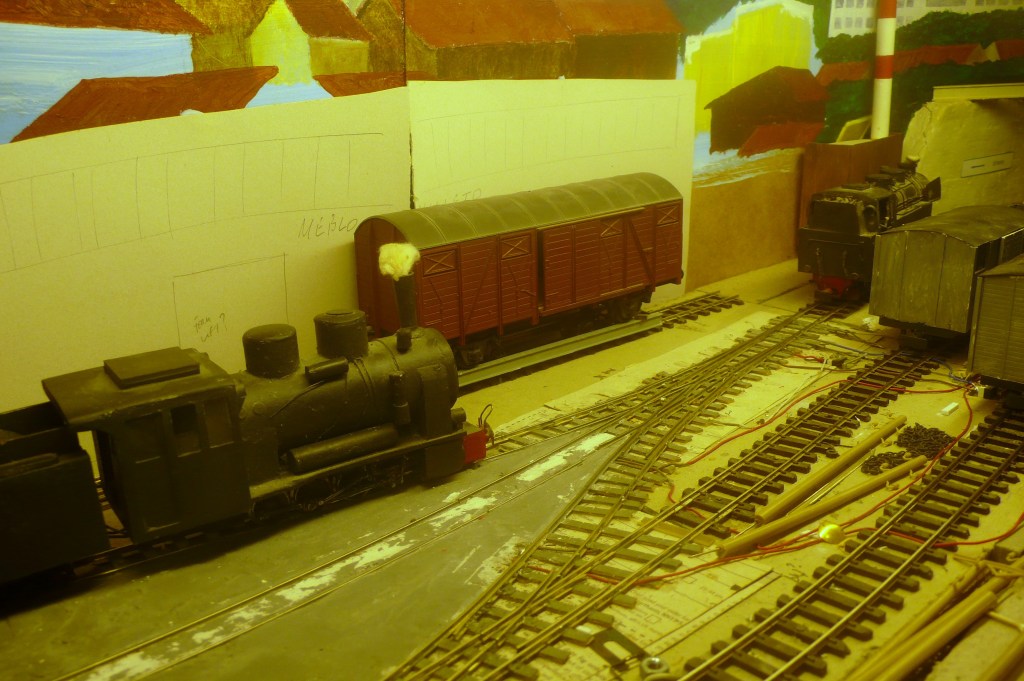
38. The goods train pulls into Urteno, on time, having been held, as expected, for shunting. The pilot/banker waits on the mainline to back down onto the train engine to assist from the front. This is standard practice when there is a SG wagon on a transporter in the train.
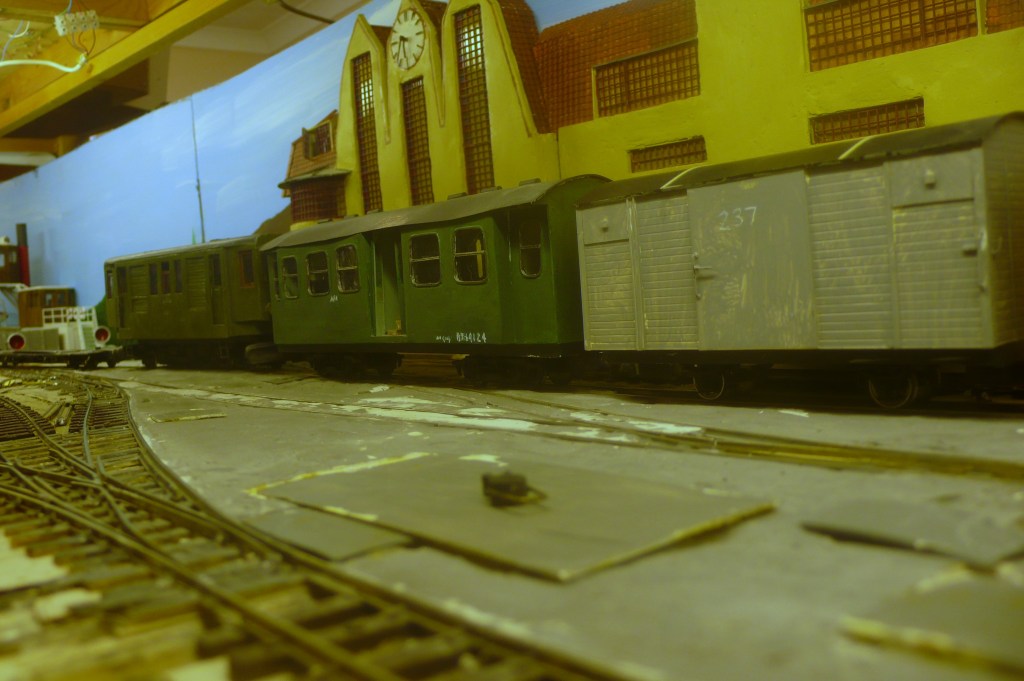
40. The shunting is carried out from the rear by the engine from the goods train which terminated here earlier. Things have become congested and the loco has not had time to jettison the ferry reach wagon. The tail light in the foreground somehow got onto the track and caused an “unexplained” derailment until I realised the cause. There used to be loads of these lamps but their numbers have declined recently for some reason. The Art-Deco building shows up well with signal box projecting forward for a good view.
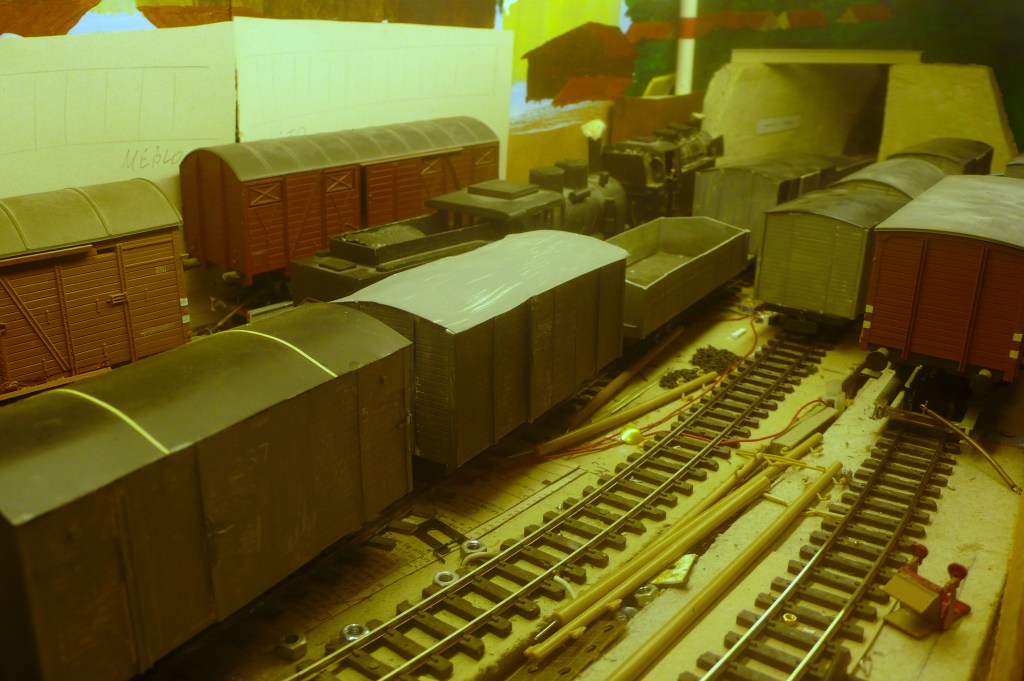
41. The shunting takes some time and the train is late departing. It is also loaded to capacity which is unusual. Unfortunately there was not time to shunt the pick ups into a block so this is now being done. The empty self unloading gravel wagon, which should go to Ospicio, is left behind as loads take priority. There should be plenty of opportunity to forward it later. There are, incidentally three of these wagons but one has currently “disappeared”. I have no idea where it is, having searched the obvious places, but it will turn up eventually. This is one of the problems of running a system. The Clogher Valley managed to “lose” a brake van for a month, I understand, and one of my father’s jobs, in the sixties, was to track down “lost wagons” on BR.

42. La Besto returns with the Danulbo shunt, running down the middle of the Kapra pordejo, or Goat Pen, a reminder of the pastoral scene that predominated before the industry moved in. The crew have spent over an hour scouring the remote byways for wagons that need to move on. The front SG wagon contains parts for irrigation machines whilst the wagon behind contains their chassis. The loco will need a second bite at the cherry because it has had to leave some wagons behind.
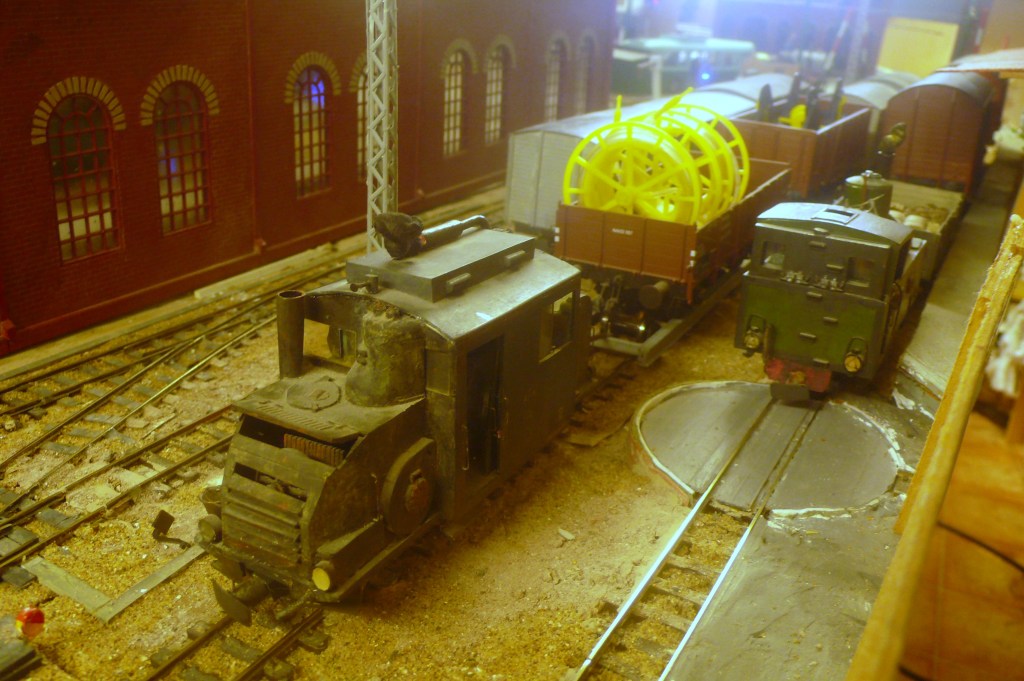
43. The pilot has finally found time to deliver the incoming wagons to the goods shed. These have been dropped off from the various through trains. The Creature meanwhile has brought the cut of wagons into the north end sidings. All the wagons here need to go forward to Relforka. Given that the chocolate factory has not yet been shunted it seems that these will overwhelm the southbound services and that an extra train may be needed. There is room for one in the timetable, as I recall, but it is some time since this was necessary.

44. The pilot takes a SG van of sugar across to the Carrodantis chocolate factory. This still awaits completion. The shunt has gone as far as it can because the siding beyond the Post Office ends here. The “shunt” will be done using magnets on a schematic board to calculate the timings. This short siding was also the state of play with the Goat Pen before it was extended through the backscene and a cassette added. There was insufficient room and too many difficulties to contemplate doing this for the factory. Given the mayhem that ensued when this section was dismantled it is not likely to ever happen again.
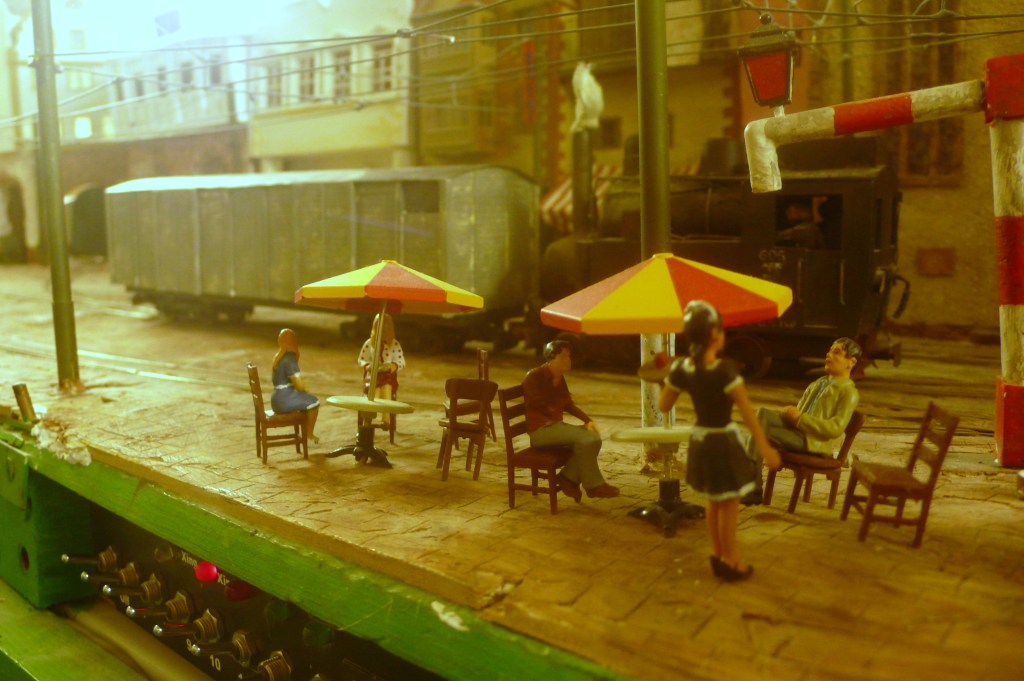
45. Although it is only 05.45 the café in Isuri is doing a brisk trade as people rise early in the mountains, especially in summer. The pilot shuffles a van past, on the way to the dairy. No sign of the alumni yet though!

46. The schools’ train pulls into Ithilarak trailing its load of vans. The branch train stands on the loop behind. The train is booked to stand for 30 minutes so it will be remarshalled to make working Ospicio easier. Sacansa, the staciaĉefino has already consulted with Quiona, her counterpart at Ospicio, and decided on a cunning plan of action. The branch engine’s crew have been given their orders, fairly respectfully as they are fluent Marronĝacan speakers. The station remains a bare board, although the north end did see some development years ago.
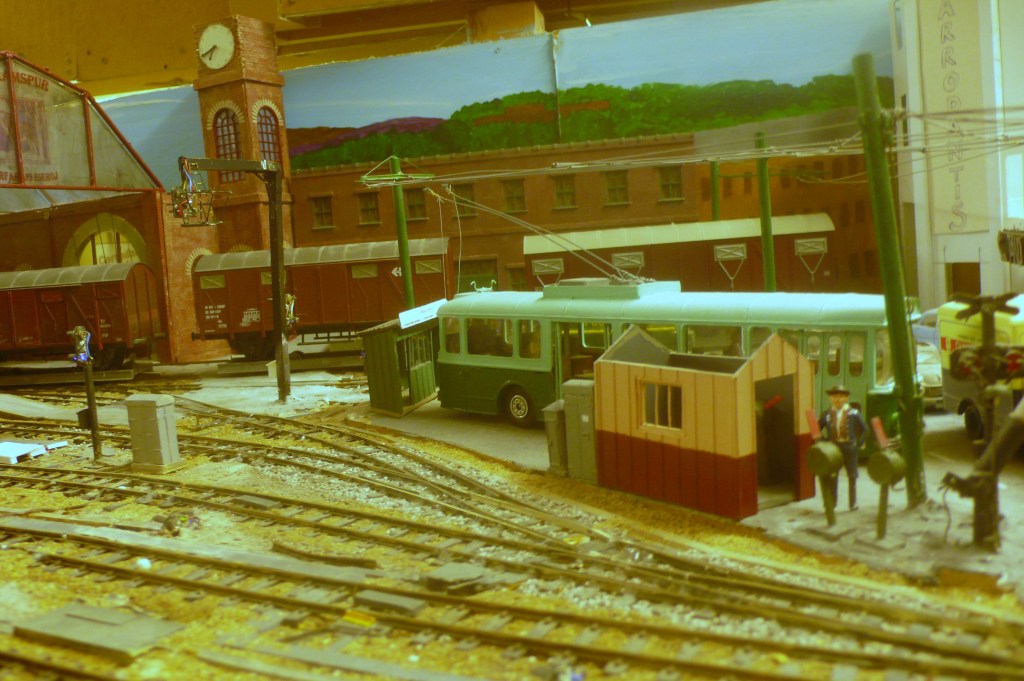
47. The shunt returns from the chocolate factory in the background. It is not a well composed photo but it was taken to emphasise the difficulties of reaching over all the paraphernalia in the foreground. The transporter bogies are difficult to get onto the rails and are prone to derailment if the SG wagons are not carefully loaded. In addition, as is apparent in this photo, the cut of wagons is already in the station when loaded up. There will be a second shunt this morning because of the number of loads.
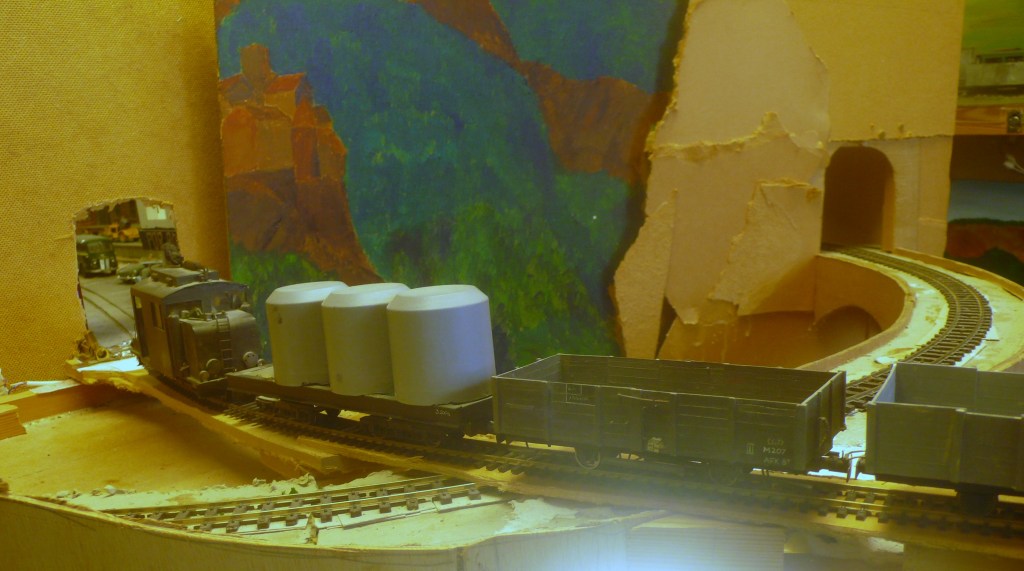
48. The wagons in the Danulbo area are loaded onto this cassette, which makes things easier. This was added a few years ago as an afterthought but, as can be seen, it is awkward to locate because it needs the backscene and foreground scenery removing. This is the remainder of the morning shunt waiting for the chocolate factory shunt to clear.
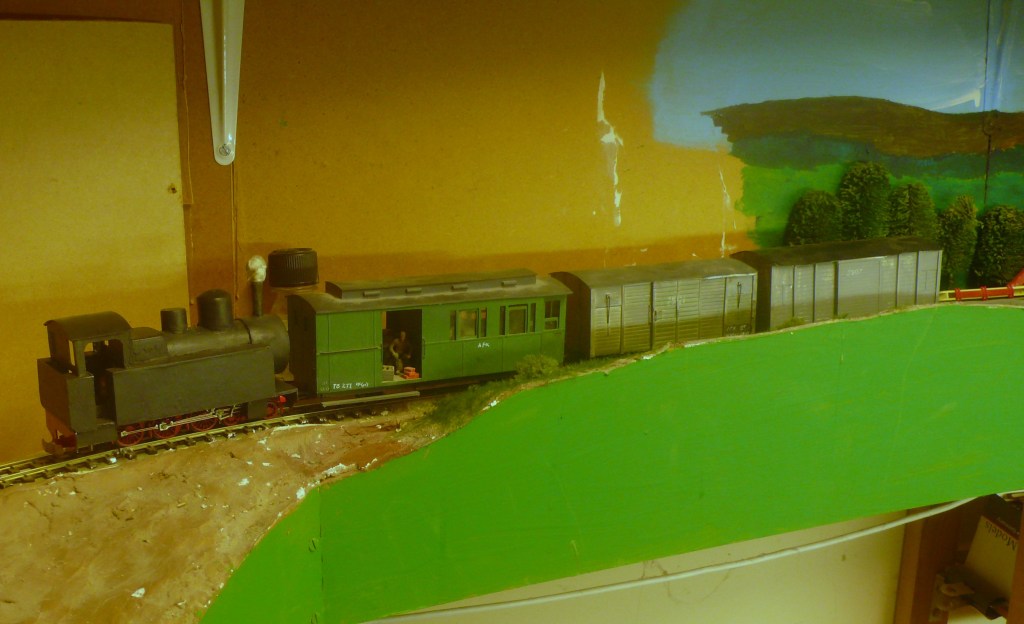
49. The down KTT goods crosses another area left “empty” to let the trains stretch their legs. It is literally empty because the scenery finishes here! The embankment in the foreground was the first area to receive scenic treatment as an experiment but it was then left in limbo. The scenic methods have moved on since then but a recent return was made and the landscape behind the train was partially roughed in. It isn’t visible because it is below track level.
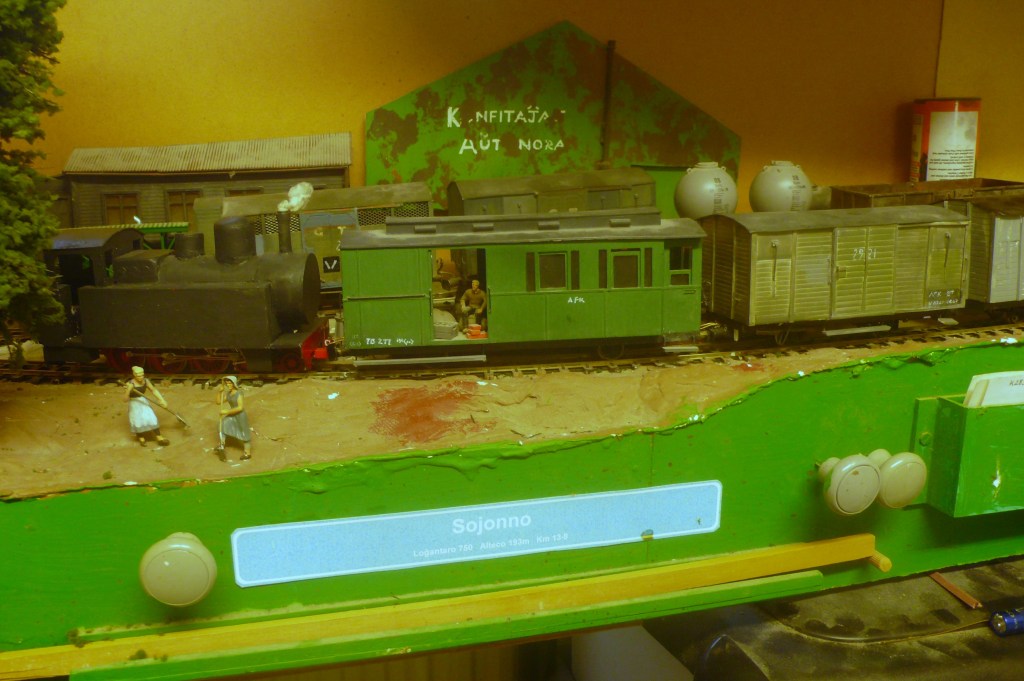
50. Sojonno has always been a bit of a scenic Cinderella and rarely featured so here is an attempt to redress matters. Two peasant women work in the field and a large tree can be seen beside the engine. The factory buildings were rescued years ago from discarded projects to form the canning factory but the green one needs reworking. The three knobs in the foreground control track brakes to prevent stock from running away. The siding is very steep and there are strict regulations about the loads as it is easy to overpower the loco. It is by no means an easy place to shunt.
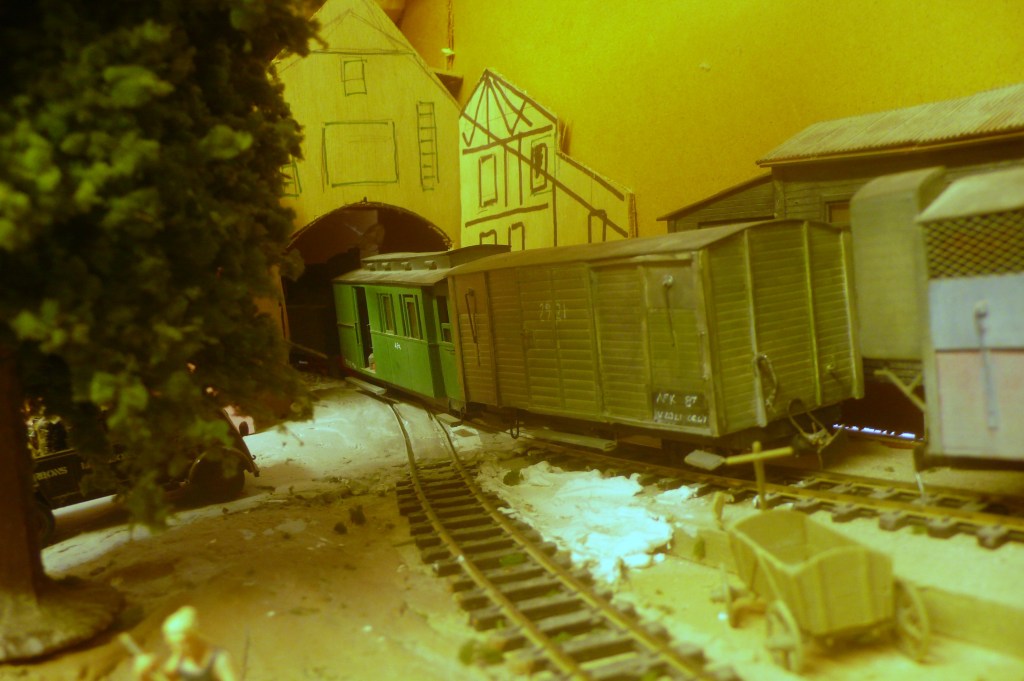
51. The size of the tree is apparent. It is a G gauge specimen and was meant to hide the “hole in the sky” but failed in its remit. A town gate was added to hide the hole. I am not over fond of the result but the fictional history can justify it and it is better than what went before. The rustic cart, made from a resin kit, needs painting and the “brake” can be seen acting on the wagon buffer at the right. It is supposed to act on the axle and effectively be invisible. As can be seen the loco has to enter the hidden part of the track and the control for the points passes through the main power distribution panel which complicates matters.
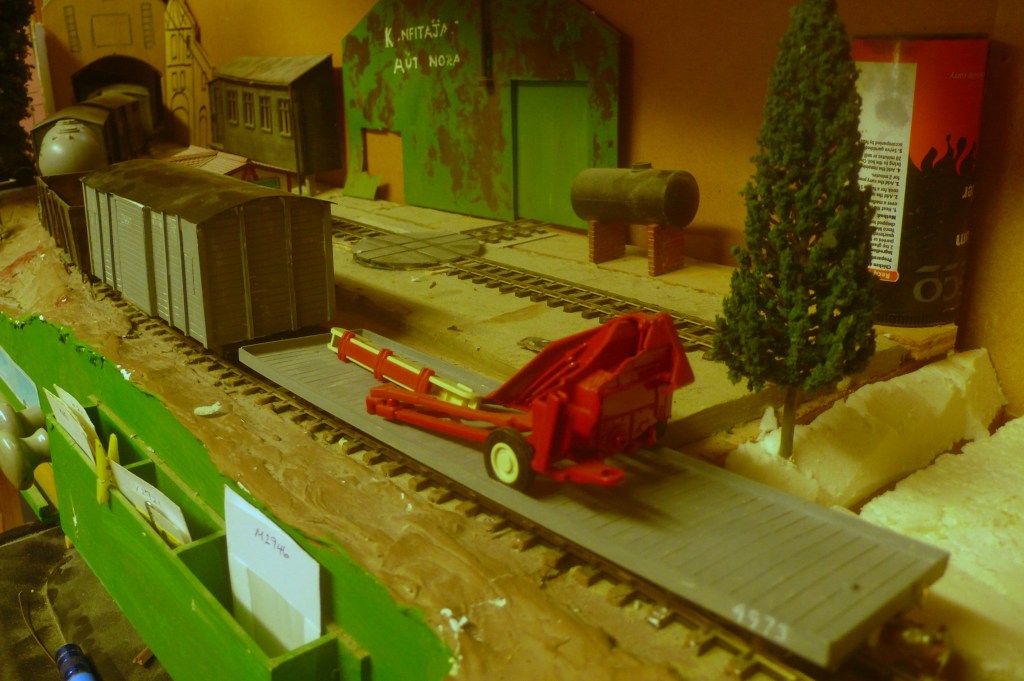
52. The landforms for the new scenery can be seen here, as can the factory yard. The crew know what they are doing as they push a cut of wagons onto the train. There is sufficient power to return the vans into the siding once the train is reformed. The machine on the wagon is an old Ertl model of something like a potato lifter. They come up occasionally on Flea-bay. It would not usually need a bogie wagon but this came into Boursson yesterday with a large load of machines.
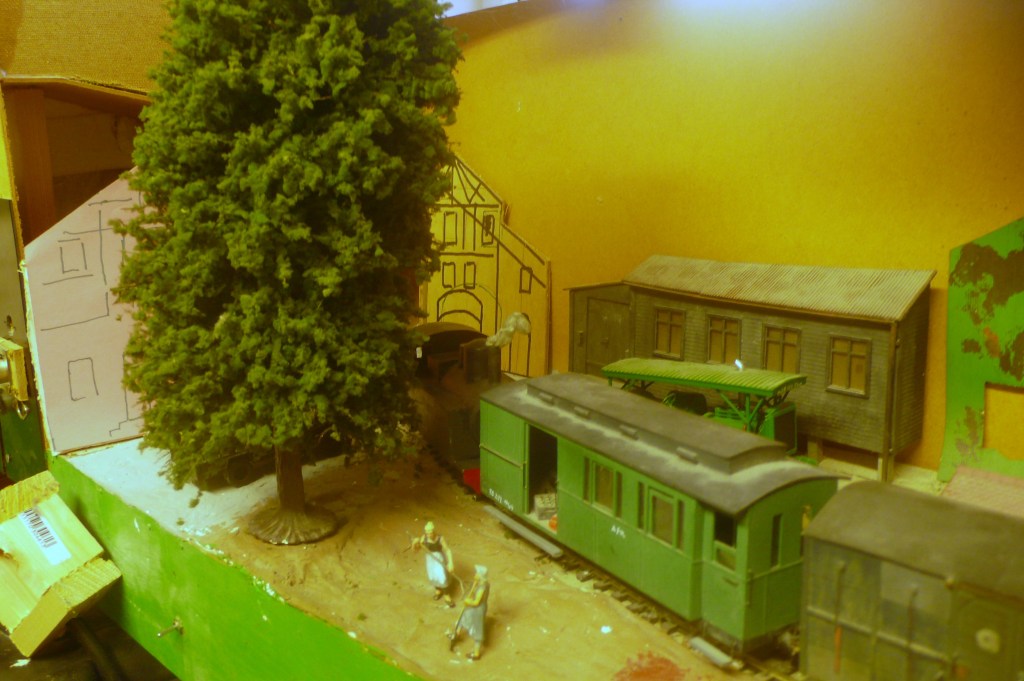
53. The train is ready to leave as the shunting tractor lumbers back into the factory yard. To the left can be seen the Tranquila virina, the Quiet Woman, the village bar/café. The name was “lifted” from Hardy’s “Far from the madding crowd” which I studied at A level. The original pub sign apparently read, “Now that the woman’s quiet, Let no man make a riot.”
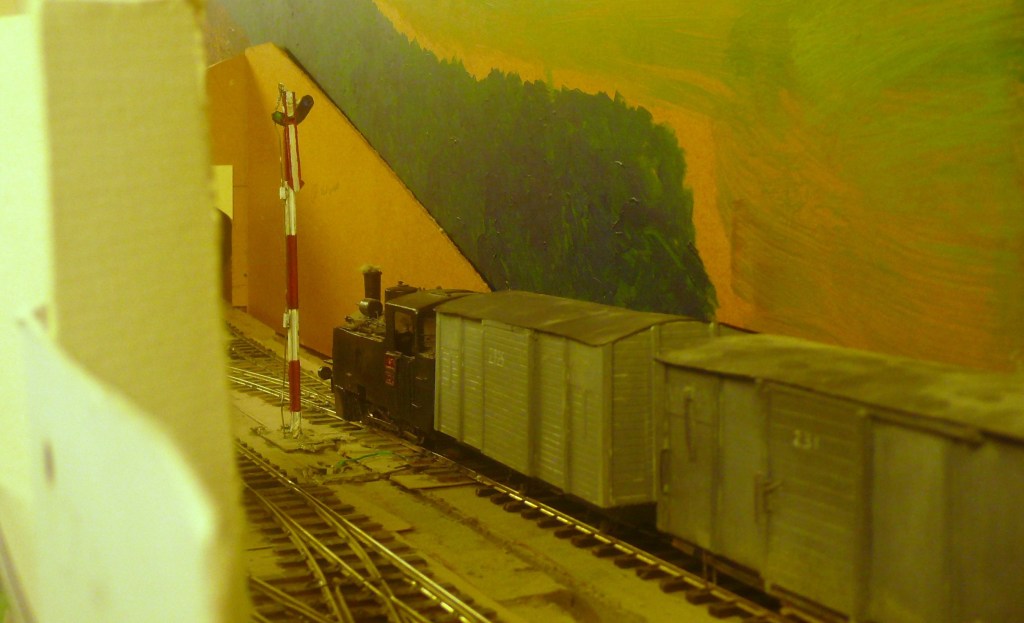
54. Meanwhile the branch loco shuffles wagons at Ithilarak. The Bavarian signal is in the “Ruhe” position indicating that the points are released for local control from the ground levers. The battered “stand in” station building at the left acts as a reproach for my snail’s pace approach of development.
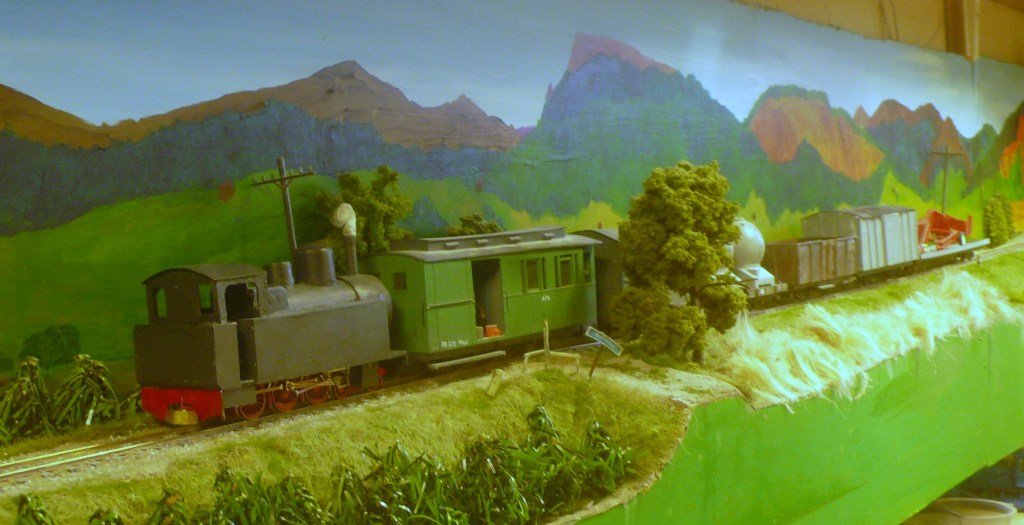
55. Over the years a photo of the down KTT morning goods crossing the fields became a staple of the photo-essay. I see no reason not to continue this despite 7 or 8 of them disappearing with the computer crash, so here is today’s train. The observant will notice, notwithstanding having earlier made the point that this is an “empty zone” between settlements, that there is a railcar halt at the level crossing as witnessed by the decrepit sign.
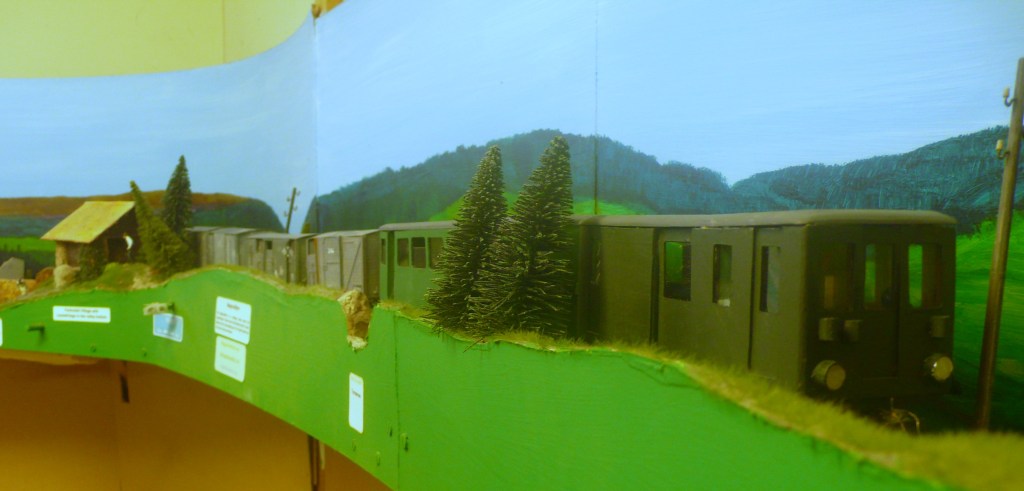
56. The Majeoroältyrn, the hanging valley leading to the snowsheds near the top of the Helcaraxë Pass, is another “empty zone” although, as can be seen here, a long train swamps it. The schools’ train crosses this area which is set at eye level. The line is still climbing here.
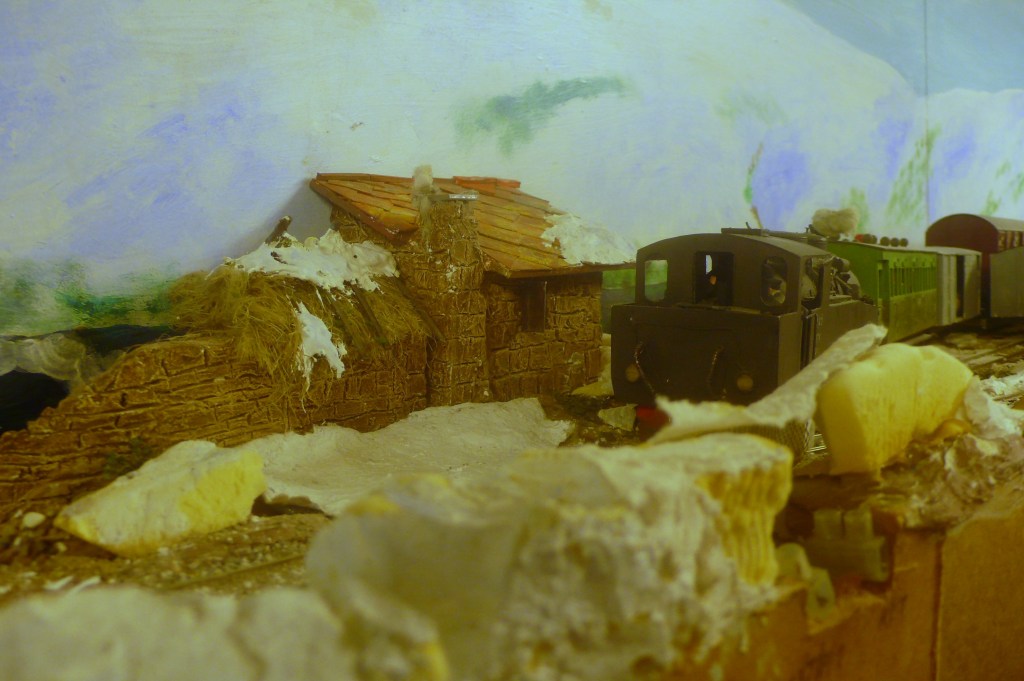
57. The schools’ train has arrived at Ospicio and the ABC goods immediately departs, passing the shieling beside the line. Ospicio d’Helcaraxë sits at the summit of the line and is set in the “melt” season, as the snows waste away. The crew, as expected, had little to do here today other than sit in the loop. The shepherds’ bothy, or shieling, slots out to allow access to the light switches. It has already been renovated once following a mishap.

58. The railcar acting as Glissent pilot rolls into the Co-op siding to pull out a couple of hoppers. Despite having eight wheel drive and two motors the railcar is a feeble power unit and its RP25 wheels (a fine scale American standard) can be prone to derailment. It was once a very early version of a small US shunter but the manufacturer’s mechanical specification was quickly changed to a central motor and gear towers.
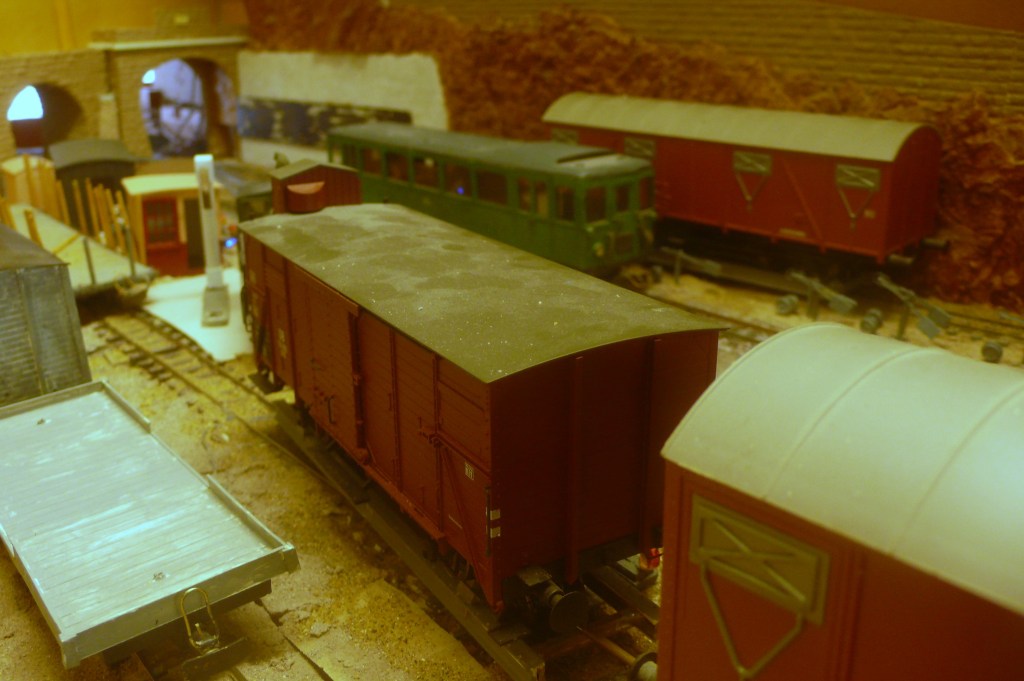
59. The early morning railcar heads for Cittavecchia station at Lacono as a cut of wagons waits in Gasafabrikatastrato to go to the chocolate factory. These have been rounded up with the help of La Besto which is waiting to go to Aspargo. The wagon in the background, a German Großraumwagen is likely to end up in the paper factory but is not a priority at the moment.
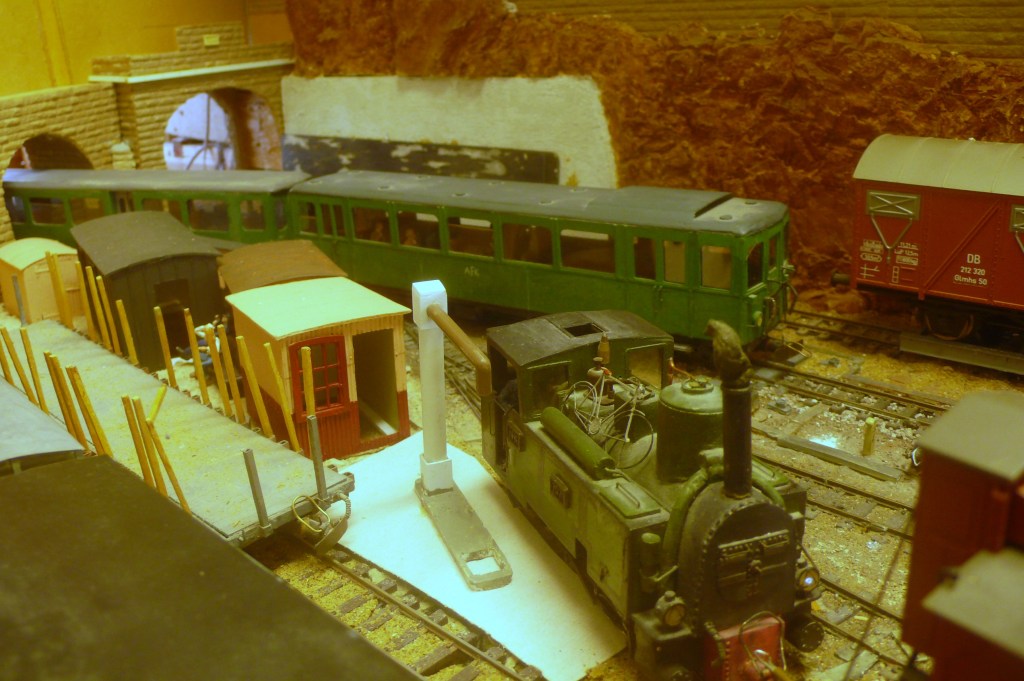
60. The railcar runs into the passenger side at Lacono and then reverses down to the shed, complete with passengers, to pick up a driving trailer. BoT regulations would not permit this but the continentals had a much more relaxed attitude. By the time that the railcar returns the platform will be jammed with hospital workers going to Urteno.

61. Things have got a little ahead of time on the upper level. The schools’ railcar follows Quiona’s plan and pushes the three cattle wagons into the loading dock. It will then recouple to the brewery wagons to continue its journey. The pupils of the twinned single sex Lyceoj will not mind as they will be able to swing the lead, within reason, about arriving on time. The Post bus brought in the pupils from the Spelcia valley. It won’t be too long, even now, before the snows stop this service and the pupils will return to boarding. This was once a common practice in rural state schools and was still going strong in the seventies when I did my teacher training in Bridlington, although numbers were augmented by the children of service personnel.
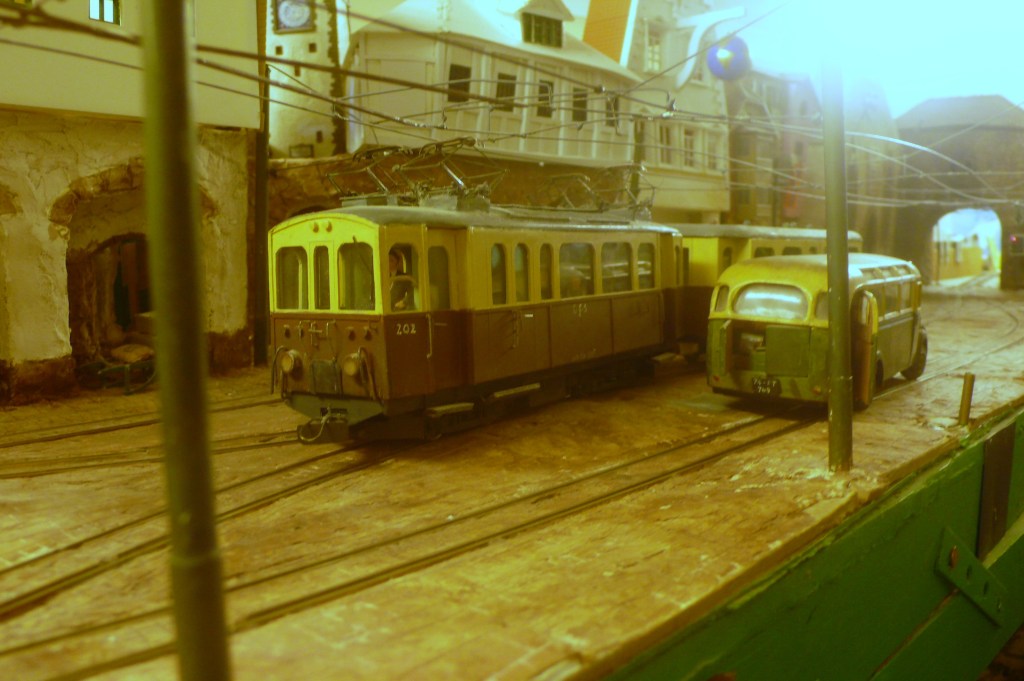
62. The equivalent CFS schools’ railcar pulls into the merkatubaxu at Isuritakaharano, or Fenditavalat if you prefer Thalnian. It brings in most of the Grammar School kids from southern Calviero canton and merits a trailer. Those pupils from northern Altonia are on the AFK train which arrives slightly later. The railcar will most likely be asked to pull forward, after unloading, to make space for the AFK train and its tail load. In case you are wondering those kids that do not make it to the Lyceo attend Gymnasio which are secondaries attached to selected Bazlernejo, or primary schools. One of the more interesting aspects of creating an imaginary country is that you can control all aspects of life for what you perceive as the better! Perhaps Thalnia should be renamed Nubakukalatero or Cloud Cuckoo Land!
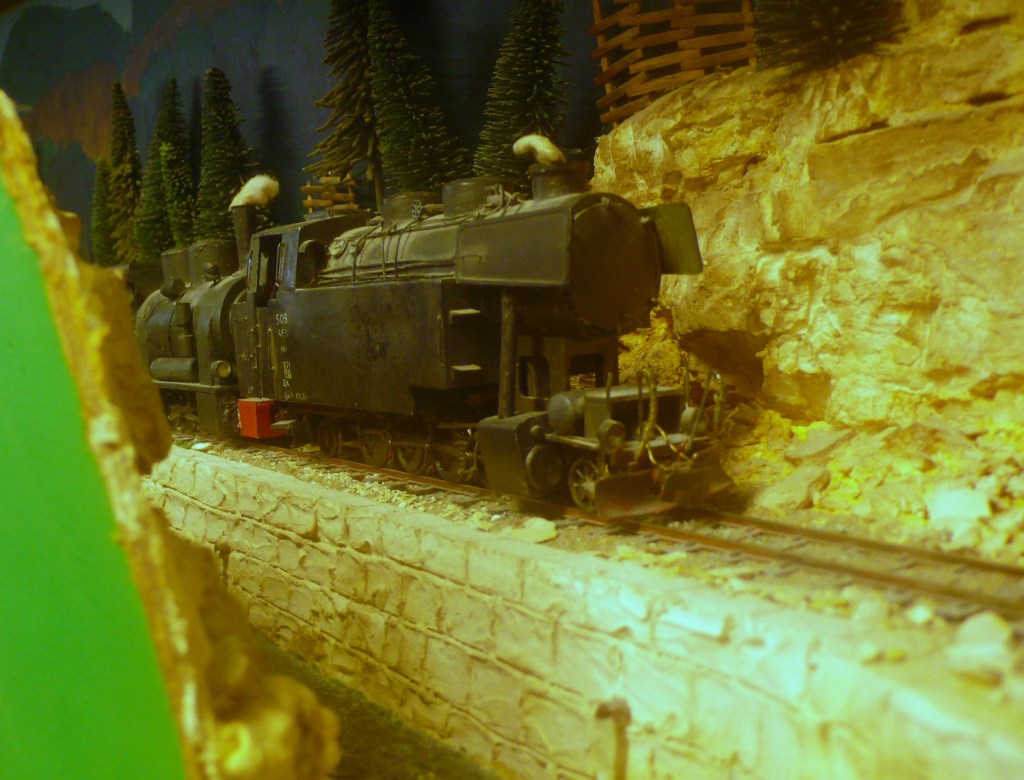
63. The 2-8-2T and the 0-8-0 slog up the vulpafaŭkangulo with the maximum permitted load. The photo was taken in the szurdokaepto, or Aepto Gorge, near the höggormshöfuðgöng, or Serpent‘s Head Tunnel. It would doubtless be a good place for a sound recording as the exhaust reverberates from the rock walls with both engines working hard.
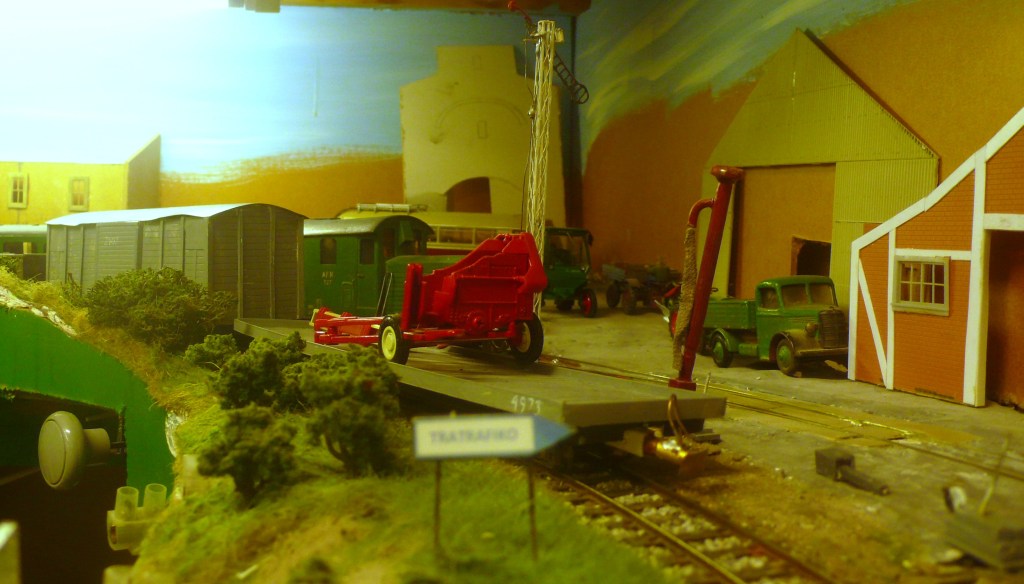
64. The loco hauling the Lacono schools’ train can just be seen behind the agricultural machine. The Lyceoj are restricted in numbers and quite elitist. There are only ten in the province, each of them twinned with one for the opposite sex. They take children from some distance and the boarding facilities are provided for those who find travel difficult. This train also takes a large number of commuters to the provincial offices in Lacono so the kids have to behave themselves, or else awkward questions are asked!
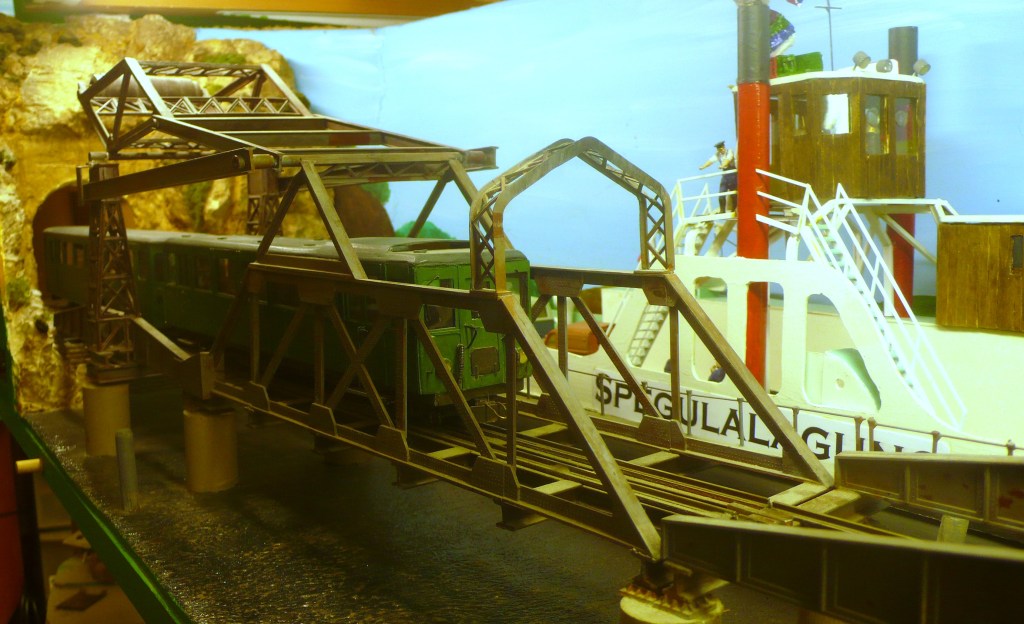
65. The railcar clatters across the Spegulalaguno bridge at Urteno before the ferry arrives, so this is an optical illusion! Obviously the ferry does not leave its berth in reality. There would be too much risk of damage and nowhere to store it anyway. Amazingly neither this or the preceding railcar were detained in the tunnel so there will also be the option of a pleasant stroll for the hospital workers or a tram ride on one of the antiques pressed into service in the rush hour.
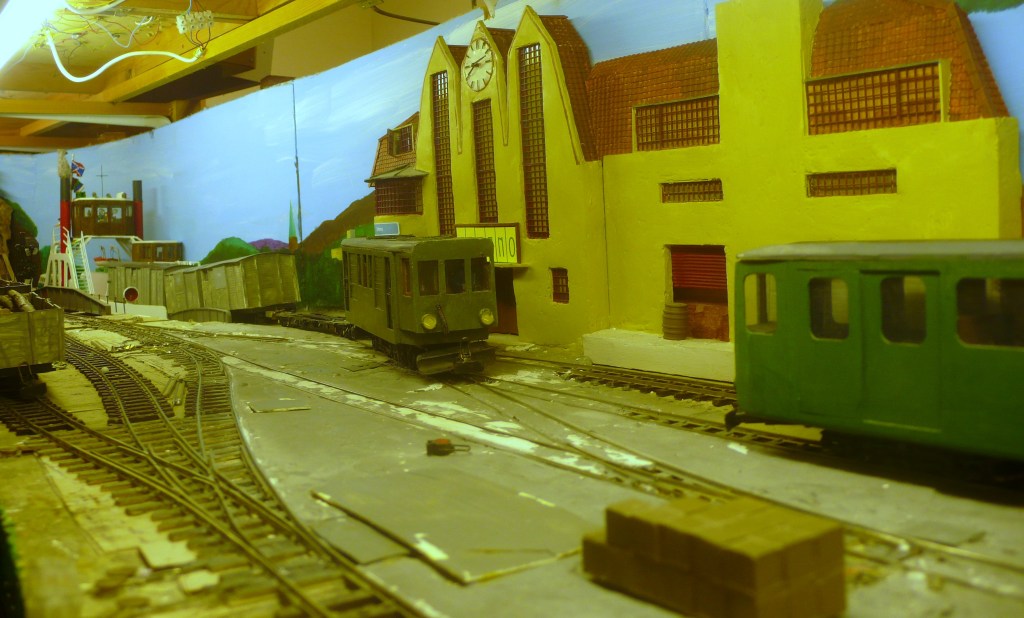
66. The train crew are supposed to give the ferry traffic priority but have erred today. The ferry will be late away and the returning railcar, which also provides a schools’ service may well be held up. This train is also used by the night shift workers from the hospital so they also will not tolerate boisterous behaviour! Urteno is an exclusive spa town and property is expensive, forcing essential workers to commute, to the benefit of the AFK. There will be no chance of loading the ferry which will displease the evening crew who will pick up the tab. Brewery traffic has been heavy today and there is still more to come. The day time sailings give preference to road vehicles although the ferry can be “commandeered” in an “emergency”.
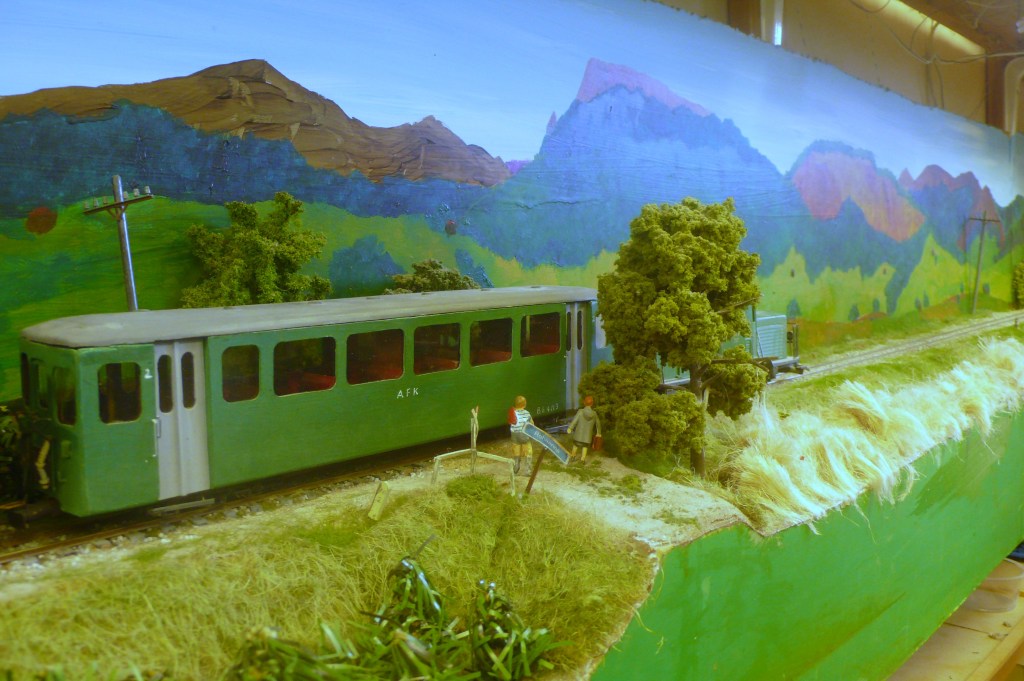
67. The schools’ train stops at Rhoeanna, that lowest form of railway life, the conditional halt. Two kids wait to board. This is the only train scheduled to stop here. Despite earlier comments about seeing trains out in the countryside I succumbed to adding the stop. Its visual and operational impact is minimal. The same train will later stop at Lamassco, a similar halt.
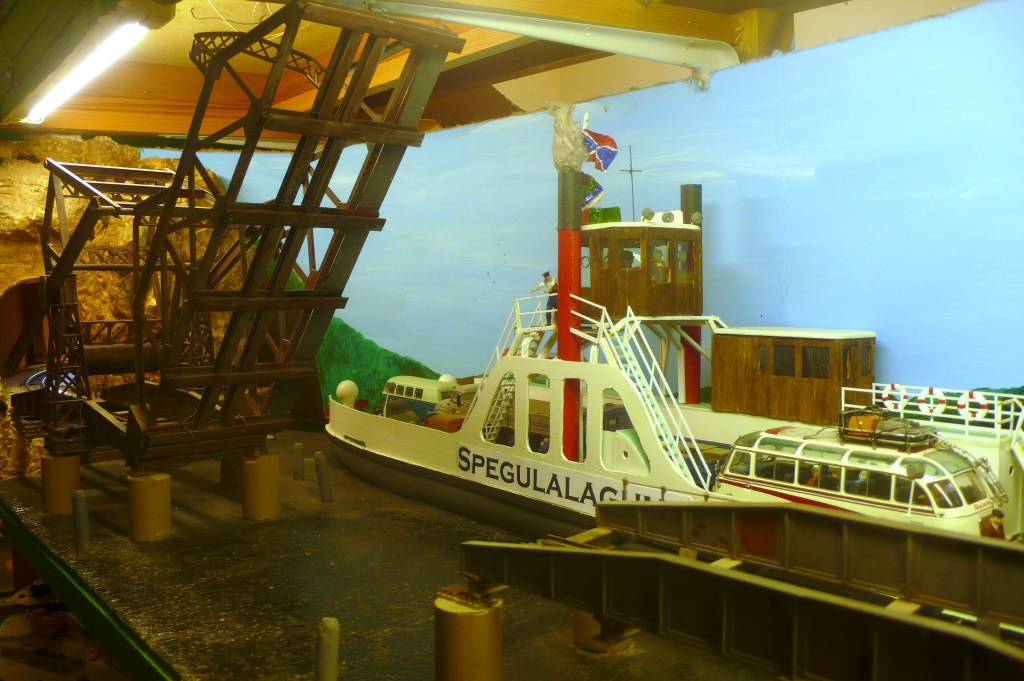
68. The Urteno schools’ train is delayed from departing by the bridge opening for the ferry which has now filled with road traffic. The ferry could not get through here even if I wanted it to. There would more than likely be a catastrophe if the ferry berth was placed so close to the bridge in reality! The bridge occasionally opens to allow the “water” to be dusted.
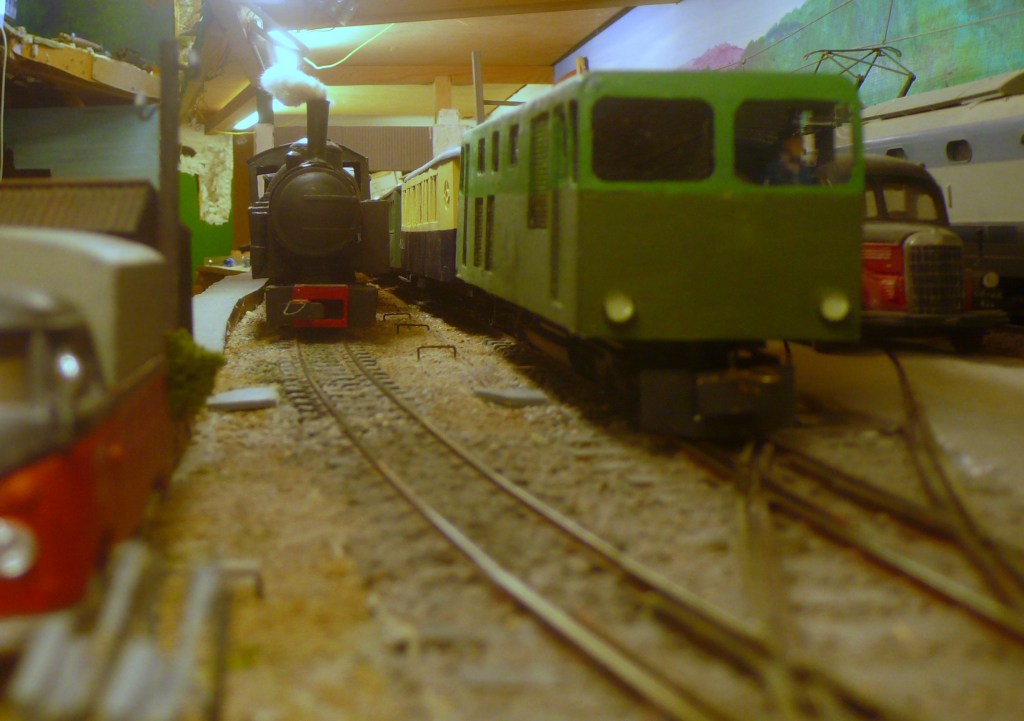
69. Meanwhile, at Relforka the two morning trains wait for the off. This is another “traditional” picture. The express, on the right, will leave first and run through to Fenditavalat, although the Pullman will come off Urteno. The all stations local, at the left, will follow and terminate at Urteno. The local’s loco is the 0-4-4-0T and the express is drawn by a new CoCo vaguely based on the Creusot locos used on the Majorcan Railways. The slightly out of focus mixed gauge crossing is evident in the foreground.
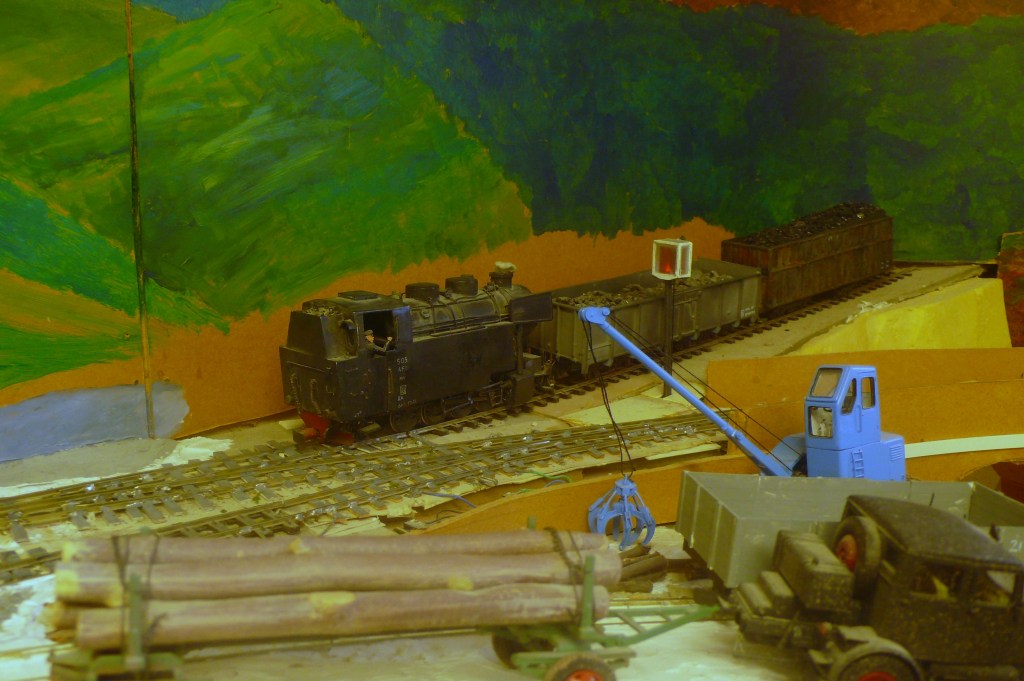
70. The banker runs to the mine at Ithilarak to collect loads. These should be “lifted” by either the express goods or the local but, as far as possible, they are taken down the bank by the pilot to assist with train loadings. The case for the signal is delicate as is the jib of the crane so care is needed here. I bought the crane from a German manufacturer as a kit, or so I thought. When I opened the box I was surprised to find a completed model! The signal is based on a PO Paul & Ducousso prototype. These were worked electromagnetically and the red panels, which fold like a butterfly’s wings at clear, were made of silk. You could not make it up! Soldering the frame for the case was a real swine.
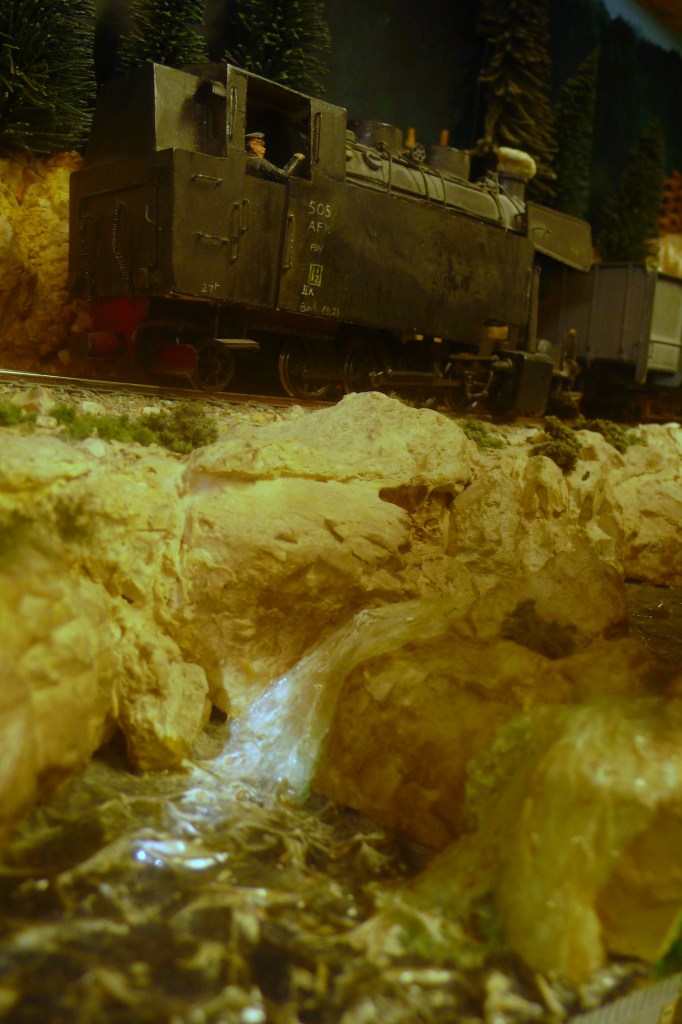
71. The pilot runs down the lower part of the Aepto Gorge beside the stream. The water looks okay here but I am a little sceptical of the overall effect in normal conditions given that it is static. At least it looks like a mountain stream in a photo.
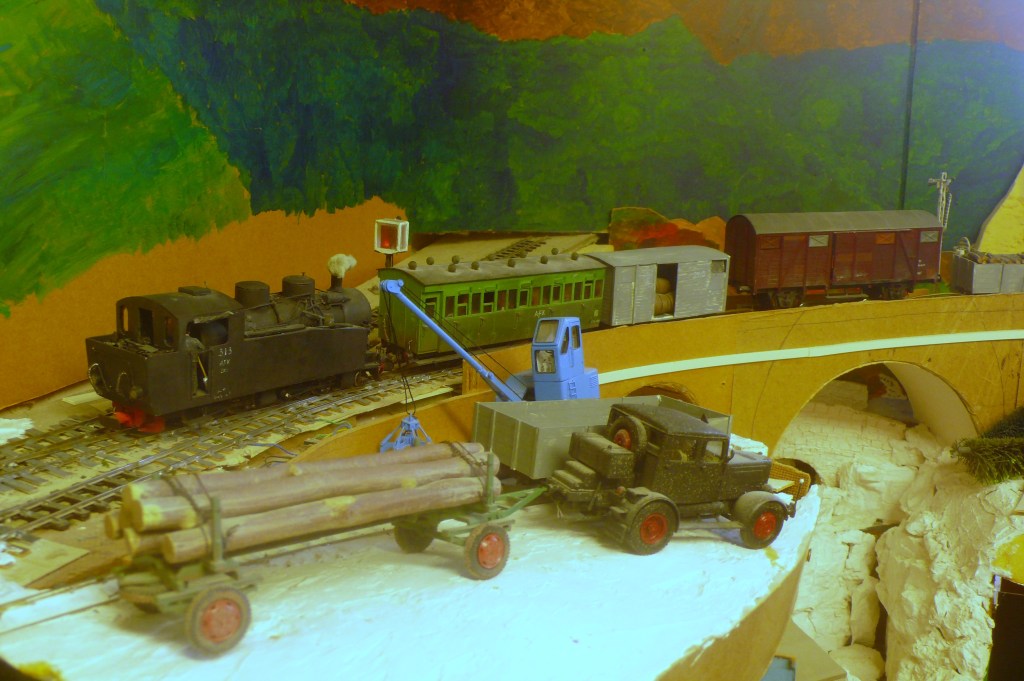
72. The down goods runs into Ithilarak, crossing the viaduct over the upper Aepto Gorge. This is the first time that the train has been in Altonia canton on its journey. It left Calviero, ran through the Narnian enclave, re-entered Calviero and then entered Rolnth canton before arriving in Altonia. The wood siding in the foreground dips steeply to towards the river.
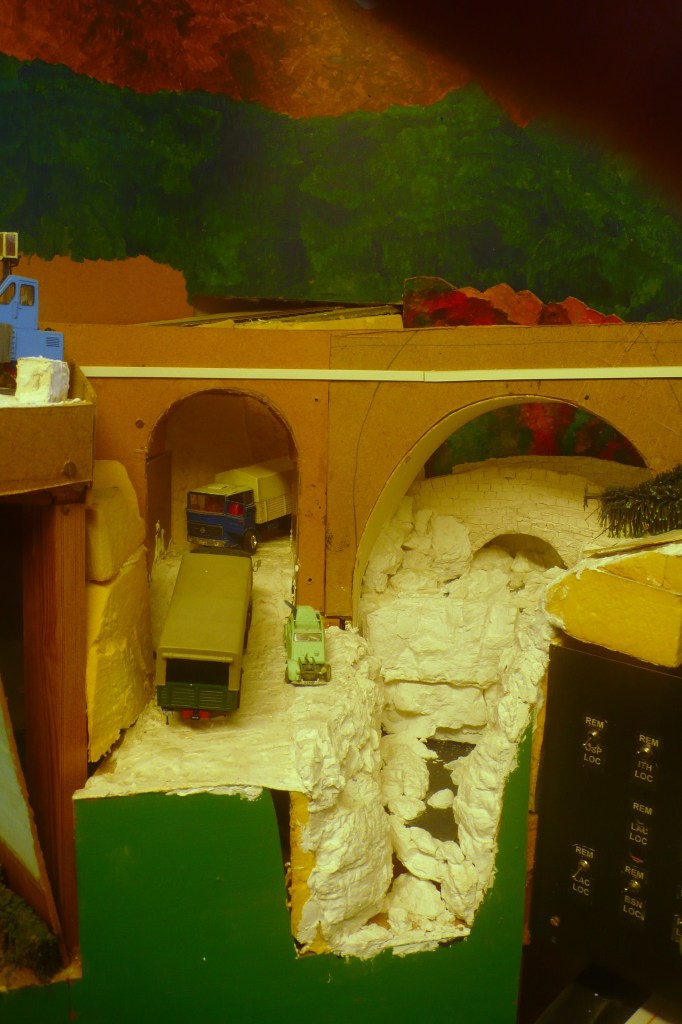
73. The river scene was partially finished but has been left for some time. The waterfall drops in front of the lower level here in a deliberate decision to accommodate the vertical dimensions of alpine scenery. The two lorries look to be having fun on the hairpin bend and the 2CV has obviously been involved in an altercation. Should have gone by train!
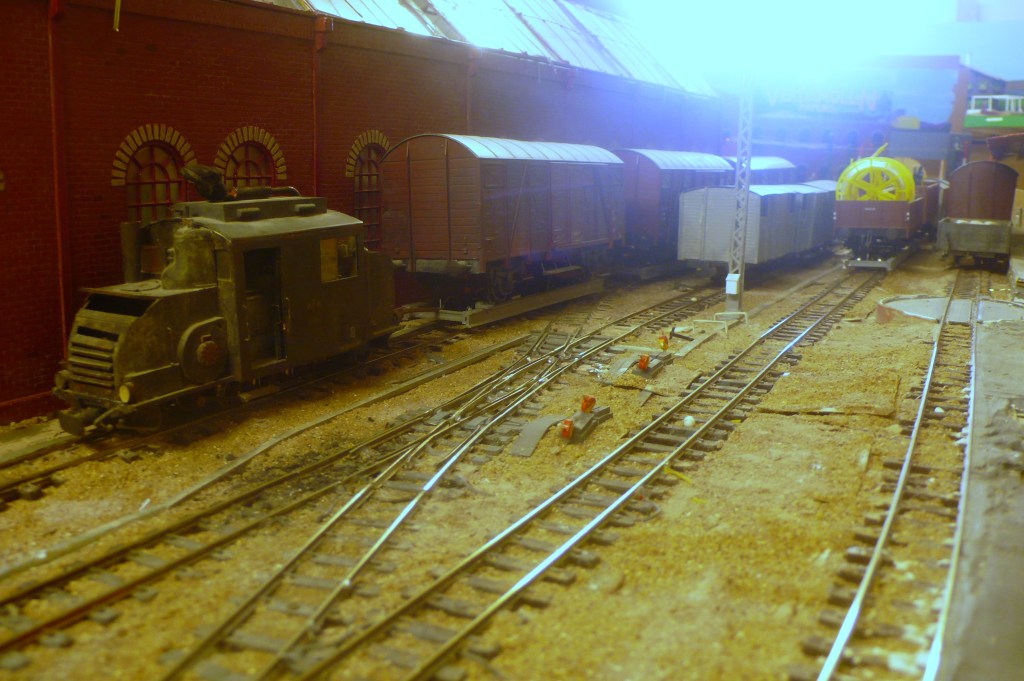
74. Lacono has fallen behind and needs to catch up. A mass of vehicles have accumulated in the north end sidings in Gasafabrikatastrato yard. The crew from La Besto has been seconded to help out the pilot, which has returned to the chocolate factory to continue shunting. A few years ago, before the rebuild, the yard would have struggled to cope.
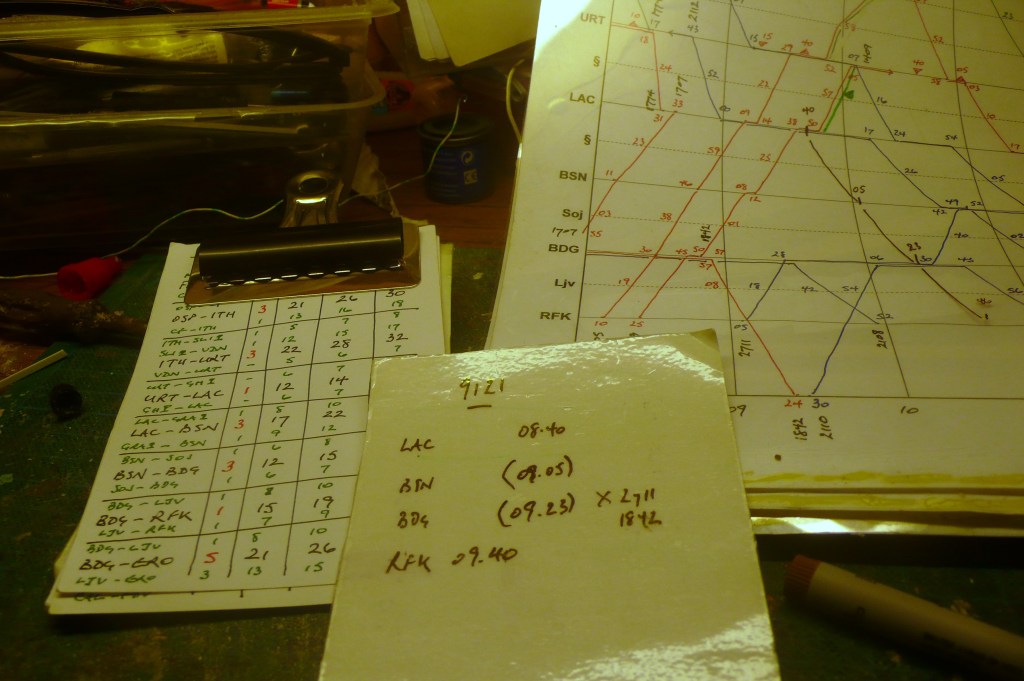
75. Trouble is brewing, however, because it looks as though the Urteno train will be loaded to capacity and unable to pick up much of the Lacono traffic. In Control a quick survey of the timetable shows a possible path for a relief goods. This is plotted in brown on the train graph. The timings are worked out using the running times (at left). The train is allocated the running number 9121, which shows that it is an extra running to Relforka, and the timings are written down. This process reflects the phone calls and teleprinted sheets that would have been exchanged between Urteno Coal Sidings, Control, Aspargo shed and the Yard Foreman’s Office.
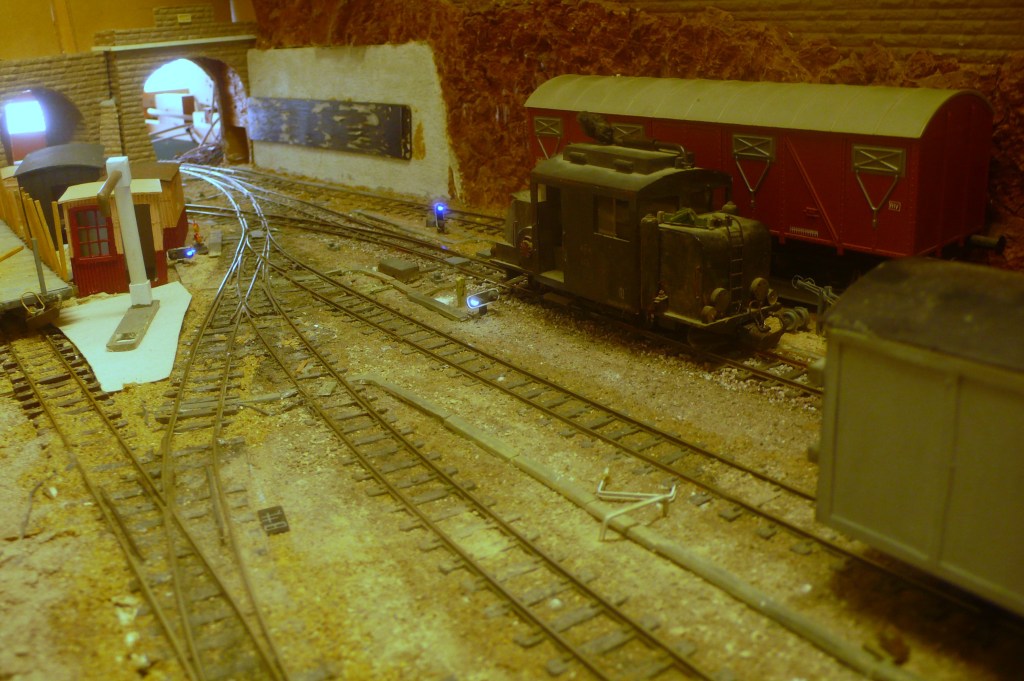
76. Finally, at 08.15, the Danulbo shunt crew return to Aspargo after 4 hours of duty. In theory they should return to shed duties but at least two extra locos are now booked to come off shed so it seems likely that they will pick up one of these duties, and some overtime to boot.
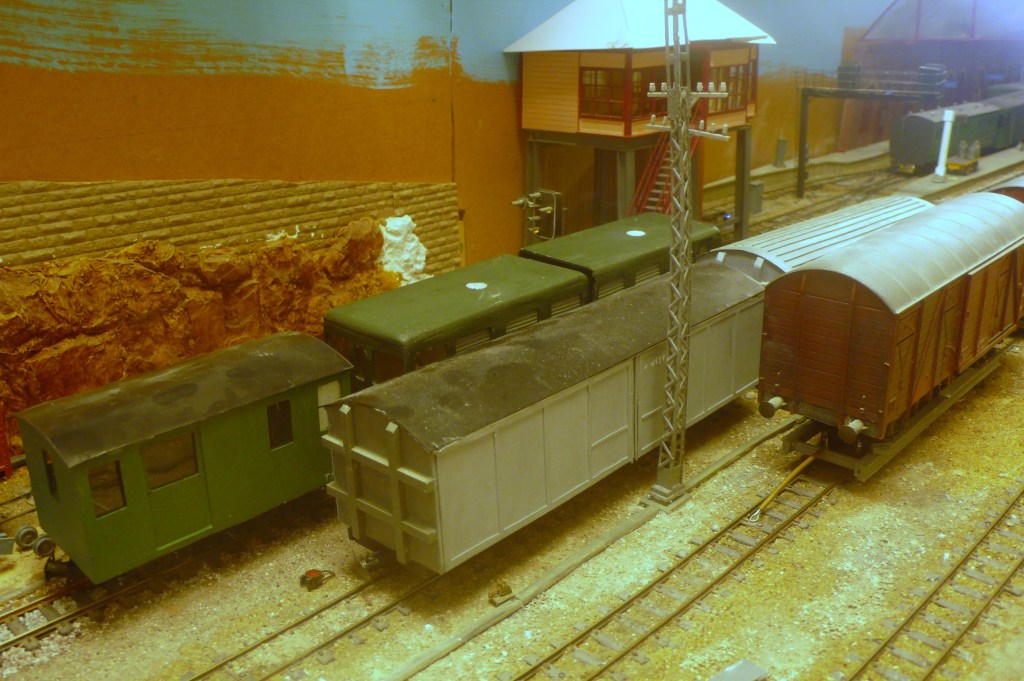
77. The Bo-Bo-Bo comes off shed to cover the extra down goods. It will use the middle crossover to get into the yard. It has had to wait until the KTT ‘railcar’ seen in the background, arrived. I am still not happy with its running but it is proving problematical to isolate the problem. Until it runs smoothly it will on trial. If it cannot be made to run smoothly it will be rendered down for parts. It will be removed from the layout and magically replaced by something else if problems persist in the short term.

78. As per usual there is conflict at the yard’s southern entrance. The pilot is about to back down onto a couple of vans whilst the Urteno railcar, at the right, waits to go to the shed.
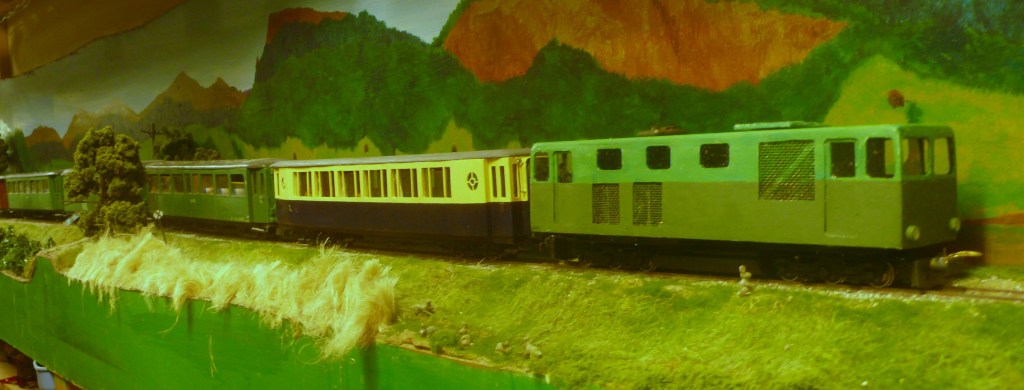
79. The express runs through the countryside. The new diesel, based on a modern US Co-Co mechanism, surprisingly seems to be struggling a little and might need weighting. This is a heavy train however as it runs to five coaches, the longest scheduled formation.

80. The following local pulls into Breĉo de Glissent behind the 0-4-4-0T mallet. The crew of the goods have had an easy ride this morning with little shunting at Boursson and none here. They will be at breakfast in the fabled Orapercido or Golden Perch, just inside the gate.
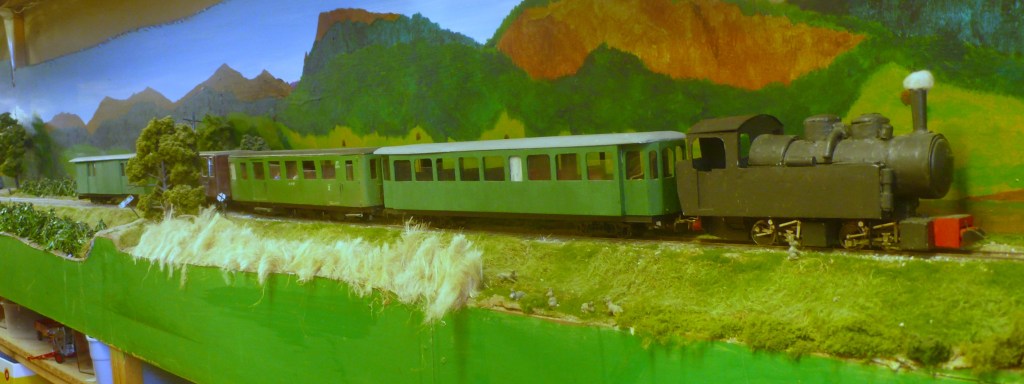
81. The local passenger train is soon on the way and out into the fields. After three unsuccessful attempts at building a small mallet tank this one finally seems to fit the bill. It is cobbled together from a pair of US “dockside switchers” and is technically a 4-4-0. There is enough power in the one motor remaining to be more than adequate. There are enough parts knocking around to make another, possibly 2-4-4-0T.
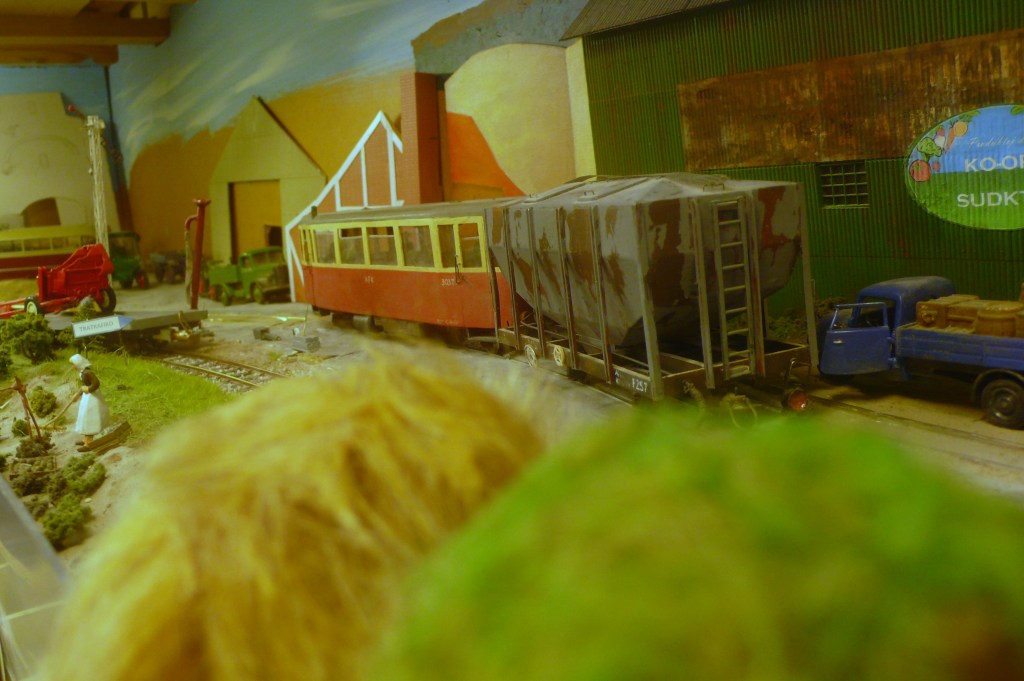
82. With the passenger having left Glissent the branch railcar backs out of the goods shed siding and prepares to leave for Eromarbordo. The grain hopper will be taken to the silos there and unloaded. It is easier to do it this way rather than have the goods train take it.
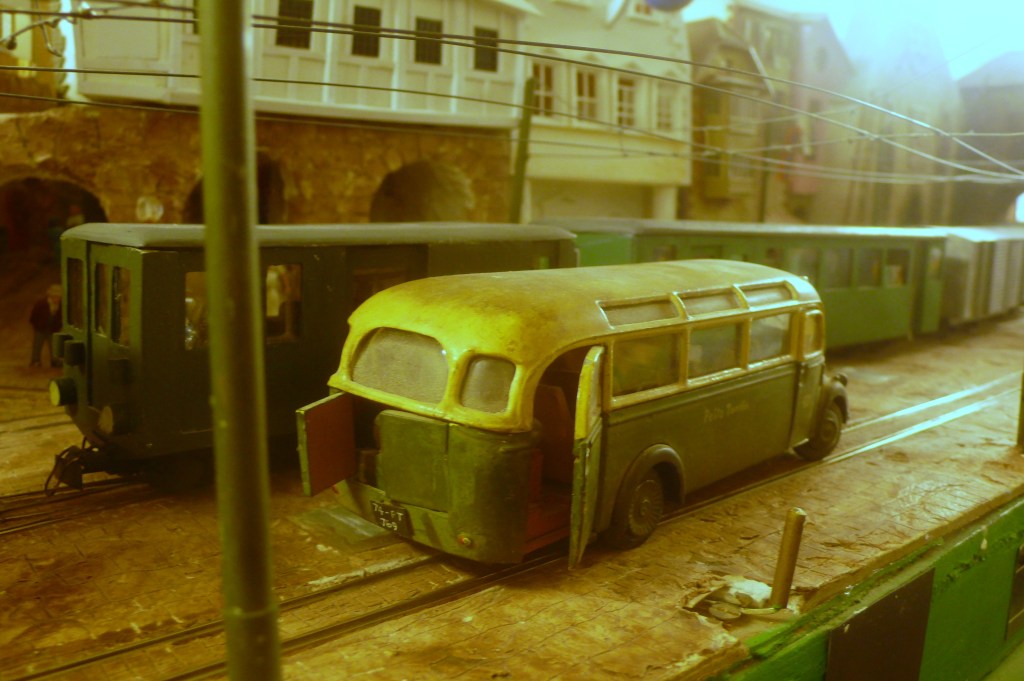
83. The schools’ train arrives at “Isuri” at 08.15 rather than 08.03. The problem is that it cannot access the yard with the tail load because of the CFS railcar and trailer. It is also getting close to the departure time for the first down train of the day.

84. After some shuffling the vans are dropped in Fenditavalat’s yard but this takes more time to organise. The pilot will take them round to Rivaborda when there is time. The electrical switches, which are never used nowadays, are a relic of the days when a small loco shed occupied part of the yard. One of the vans has had an argument somewhere with some vegetation. This was not immediately obvious because this side of the wagons is only visible at Fenditavalat and Eromarbordo.
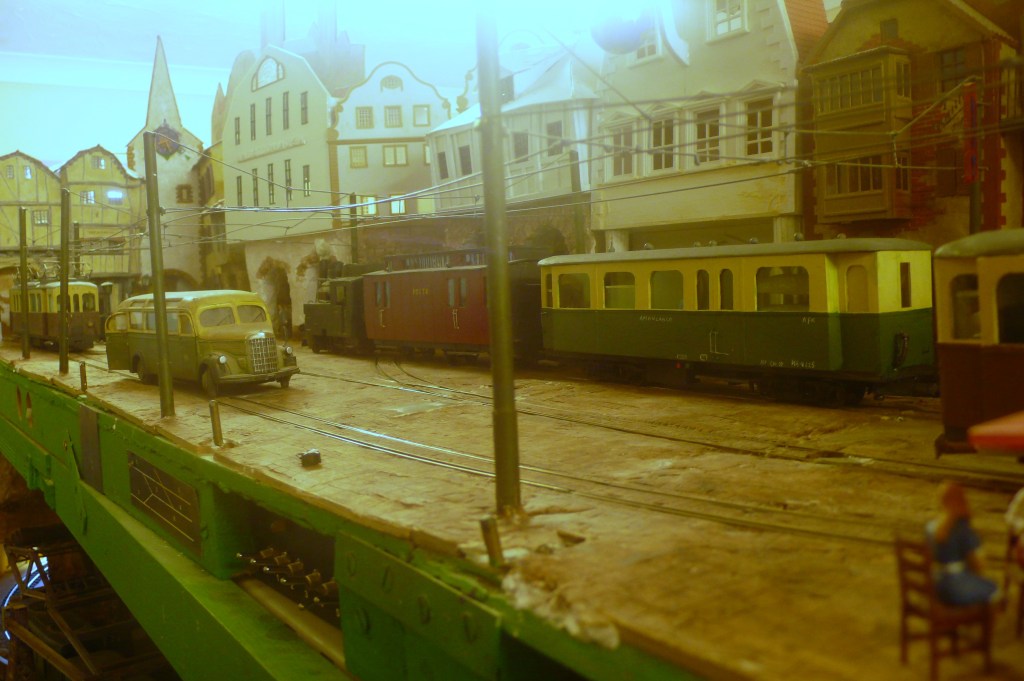
85. The Isuri pilot pulls in with the Post van and ambulance which will form the tail load for the railcar. The pilot would normally detach these and run to the yard but it cannot because the railcar is in there. The railcar will push the CFS trailer, just visible at the right, onto the electric railcar and wait for the empty long distance railcar to arrive before leaving for Rivabordo. Fortunately the CFS railcar timings to Krelm and a connection with the Ruritanian mainline are slack as I recall. Needless to say the timings were lost in the computer crash.
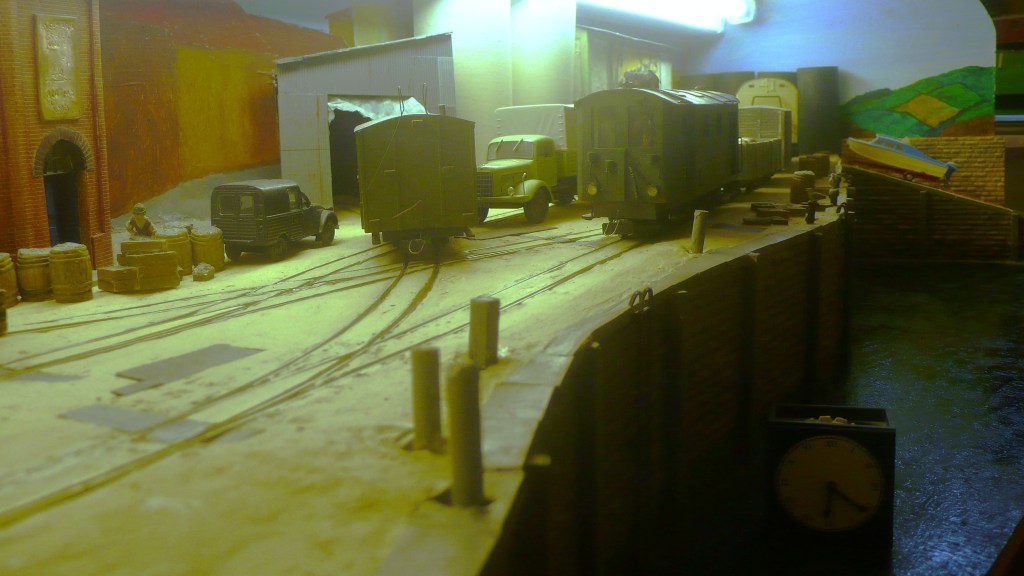
86. As per usual Eramarbordo has been forgotten about until the branch railcar needs to return. One of the pleasures of a system type layout is that shunting here is almost like operating an entirely different layout. The station could well be a “stand alone” but the “fiddleyard” is the rest of the layout. One slight catch is the complicated crossings. A “mystery short” was caused by parking the crew van on the diamonds but experience of these problems soon resolved it by poking it an inch further along! The spare SG refrigerator van is being left at the end of the headshunt where it will cause its usual problems.
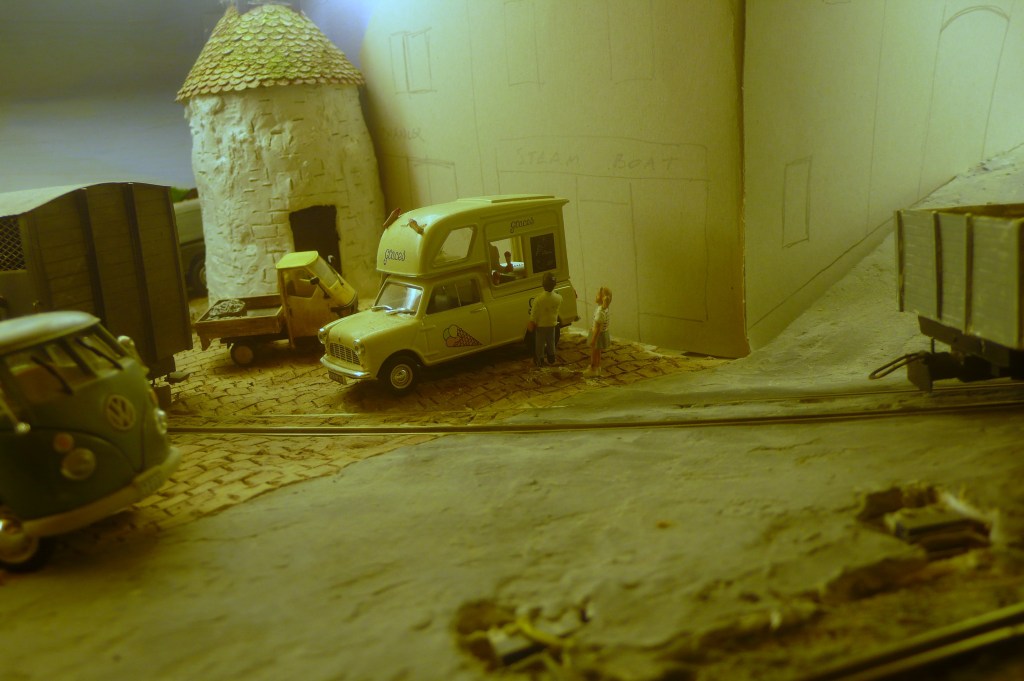
87. Shunting onto the Town Staithe finds the ice cream van parked in the way, rather unlikely at quarter to seven in the morning. The model is a French one obviously based on a Mini conversion. It is of limited use on continental roads for kerb side sales so I assume that they were parked up, as here, in a convenient place. Somewhat bizarrely the server was shown handing the cones to the kids outside the van and had to be placed inside it. I suppose that a Corgi/Dinky model could have sufficed but I opted for something less obvious.
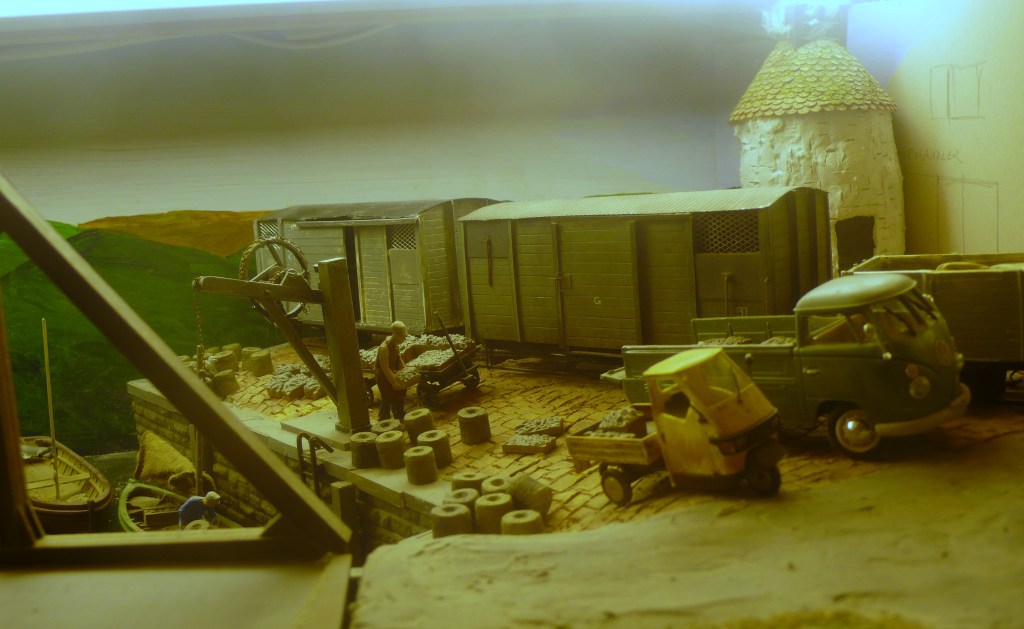
88. The difficulties of reaching into this tight location around the just visible swing bridge can be imagined. The smokehouse roughly reaches the underneath of the Lacono boards and there is only a narrow slit to work in. It is a marginal location but I am glad that I included it in the mix. The observant will notice that the tricycle has been moved between photos.
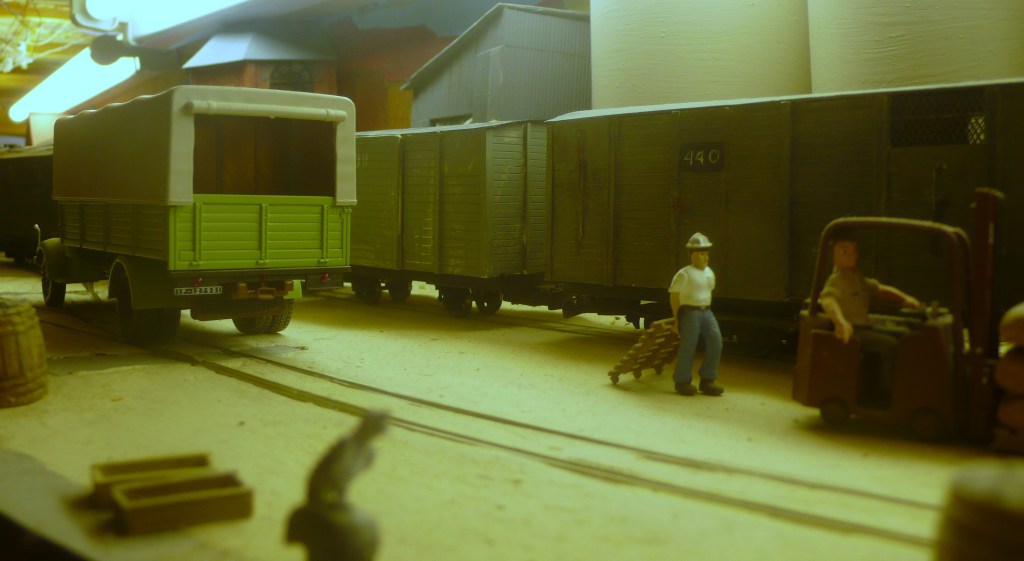
89. The other end of the layout is no easier to get at. The lorry had to be moved and another two are off scene. Reaching over the forklift and the bloke dragging the pallet outside the cocoa store to couple up vans is not easy either, especially with the fish boxes and barrels in the foreground. The beam trawler which usually stands here has been removed, partly to facilitate access, but also because it needs minor repairs. Shunting half a dozen wagons took almost 2 hours on the “click-clock” and almost 45 minutes in reality.
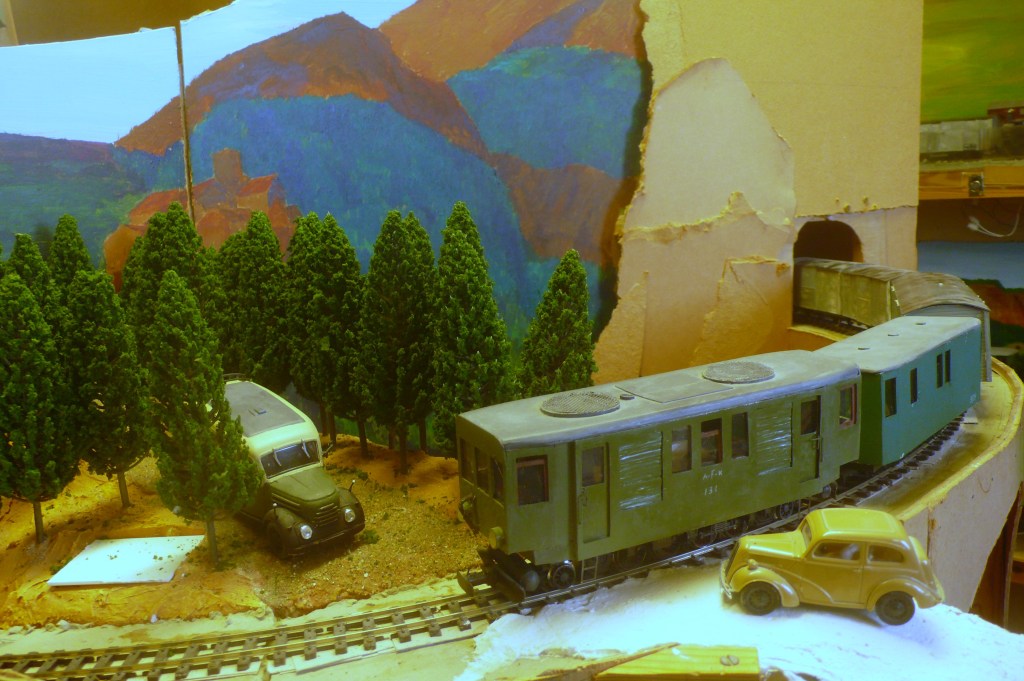
90. The returning Urteno goods passes the level crossing beside Ghealdaban station running with a 200 tons load. The limit is 220 tons indicating how much traffic the brewery and Urteno have put out this morning. I suppose that some could have been left for the afternoon trains but my preference is to deal with it as quickly as possible.
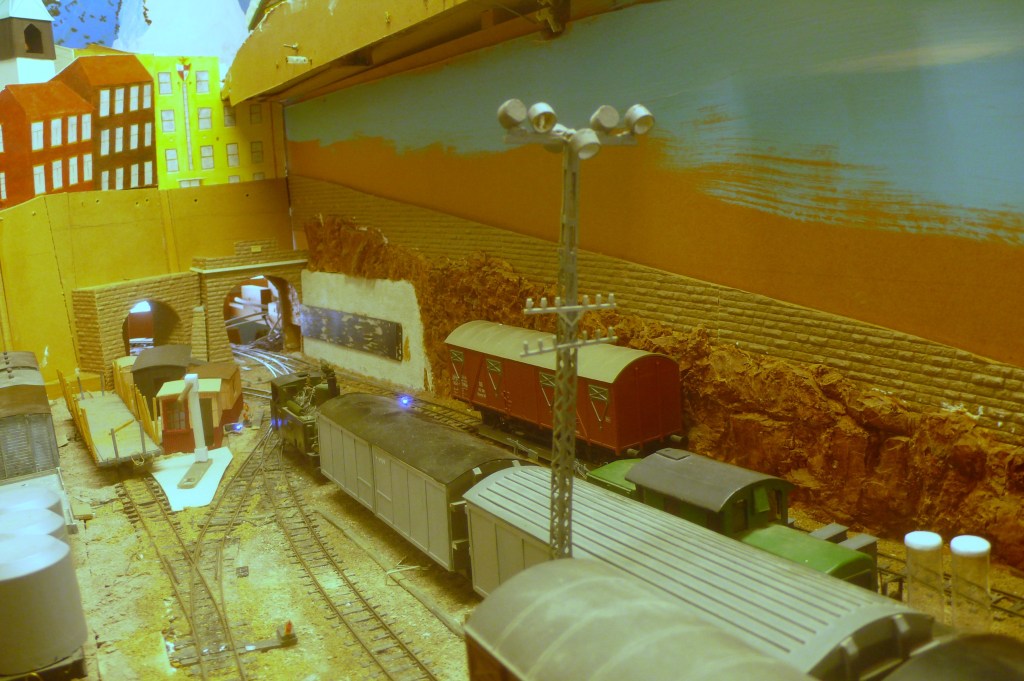
91. Lacono is congested, as usual. The pilot is trying to dispose of the two empty slidewall vans brought from the factory, whilst pushing the spare brake van onto the extra goods in the foreground. The I-B-I “railcar” is running round its train.

92. At 09.03 the service train and the extra line up in Gasafabrikatastrato yard alongside each other. “Flexseblamozulo” is still not behaving very well but is being allowed to continue. It looks as though it may need additional pick ups, at the prospect of a right pain in the rear. The next question is who goes out first once the local passenger gets in. It might well be the extra which is being crewed by the same men who drove La Besto for the Danulbo shunt although Ichdoclo is on board of course.
The operating session was paused at his point because I had to visit the Cotswolds for family reasons. This is a snapshot of the layout when the session was halted.

93. The down and up KTT local goods have crossed at Breĉo de Glissent as timetabled. The 2-8-2T on the up train will try to carry out the shunting as quickly as possible because of the extra goods now scheduled. In theory this local train provides a connection with the Eromarbordo goods so that fish can be taken straight to the Boursson cannery. There will be no need for that today as the fleet is still at sea. I am not too sure about the safety of the load in the open!
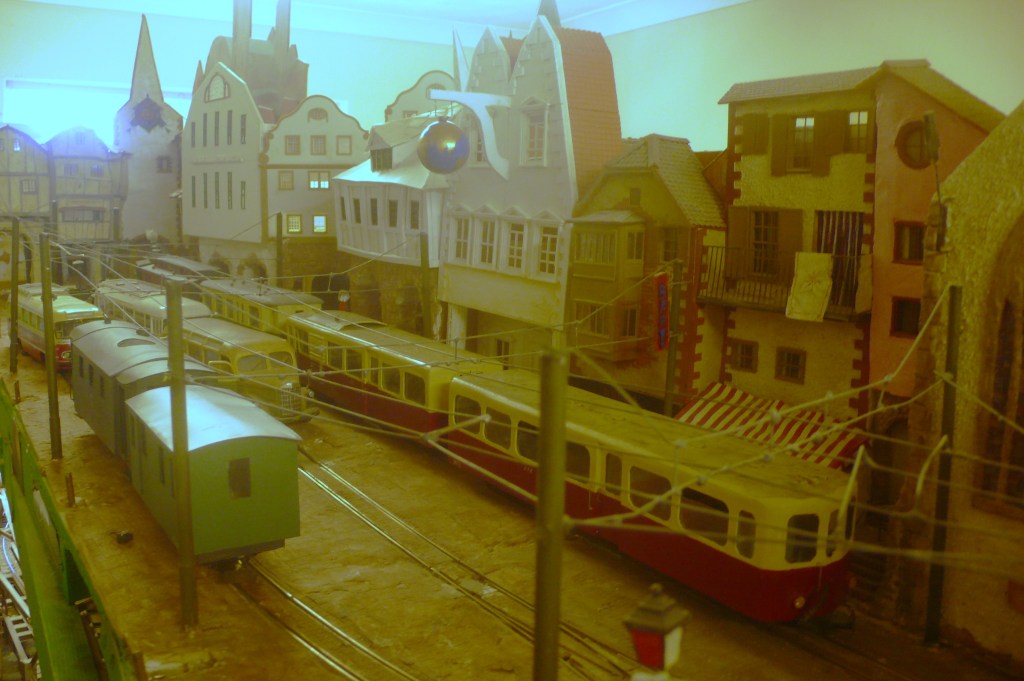
94. The down railcar is the first passenger train of the day to run all the way through to Relforka. Post buses and railway buses provide connections in the Basabazaro at Fenditavalat as the two car dmu couples onto the ambulance and Post vans. At the left the loco and van for the ABC local goods have come up from Rivaborda. The use of the 2-C-1 loco was an afterthought and may not have been the best choice.
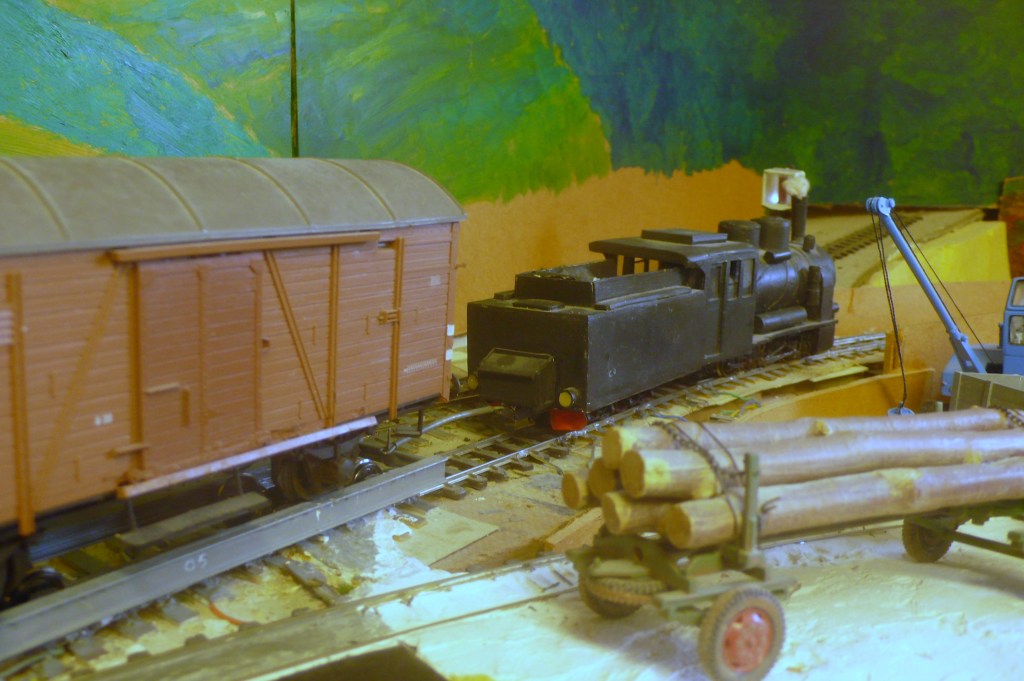
95. The PO forirasignalo has cleared at Ithilarak and the 0-8-0 pulls out onto the viaduct. As noted in photo 70 the silk vanes have folded back to leave a white light indicating clear. This should be a petrol lamp and by this time of day it should have been extinguished to save fuel. No doubt Sacansa will have a plausible excuse if news of this misdemeanour reaches the ears of Jasmond, the manager.
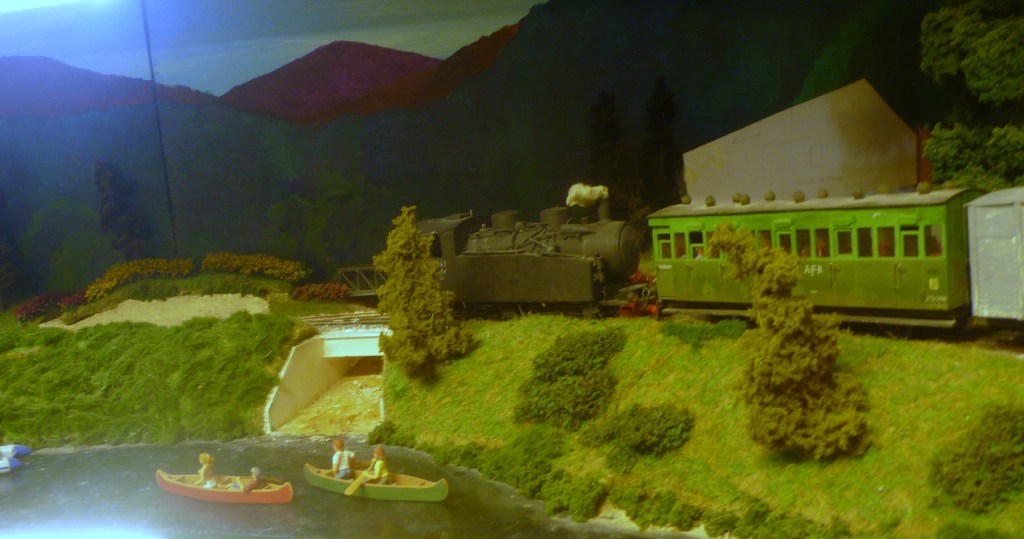
96. The crew of the Mallet have had an easy ride so far as they loop around the Vardenamero. This is perhaps a little more animated than might be expected for nine in the morning. The ski lift, still a shell I am afraid, sits in the background.
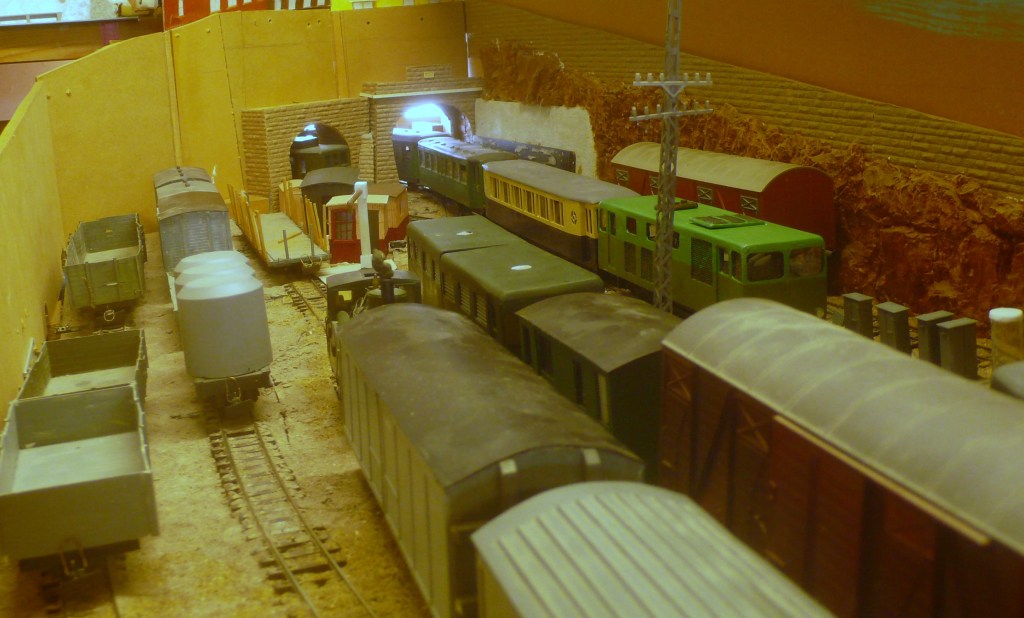
97. Lacono is hardly ever short of animation! The express pulls in as the Bo-Bo-Bo has pulled forward with its train. The pilot is still trying to stable the vans somewhere, although there should be plenty of room once the two goods have left.
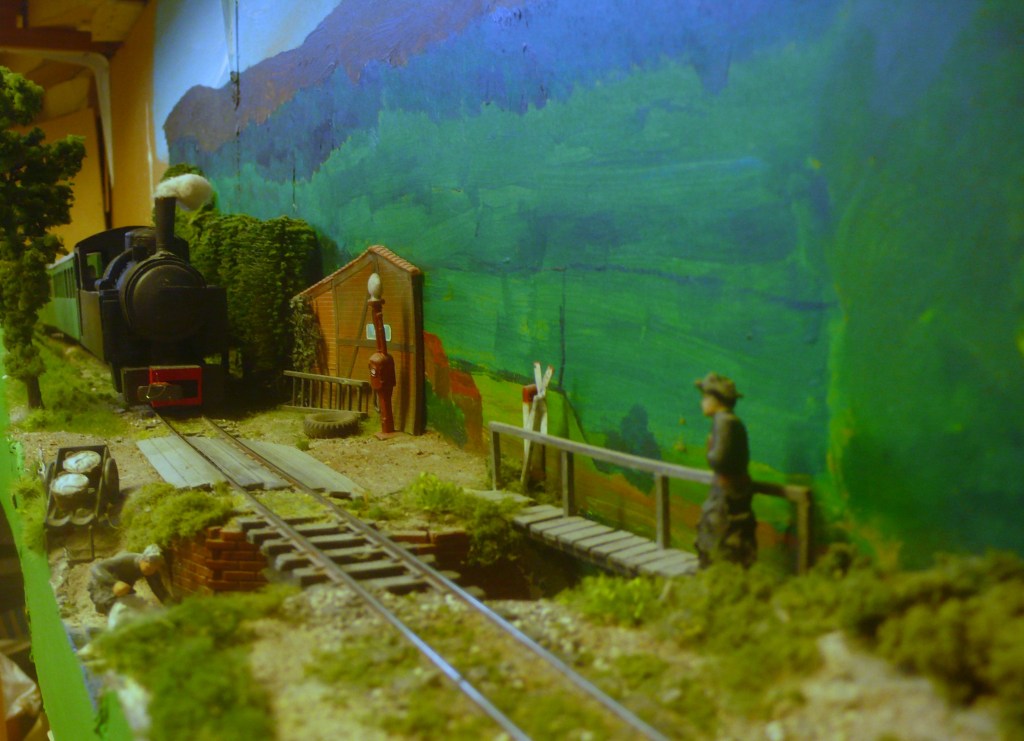
98. The local train following the express steams through Lamassco, one of the minor halts only used by school trains. The only facility is a faded tinplate sign attached to a barn. A woman is doing her washing in a stream whilst the elderly curate does his rounds. I hope that he is sure footed as that bridge looks rickety. Both figures were modified, by the way, to fit their new roles. Many rural European villages used streams for washing in the days before electricity and piped water.
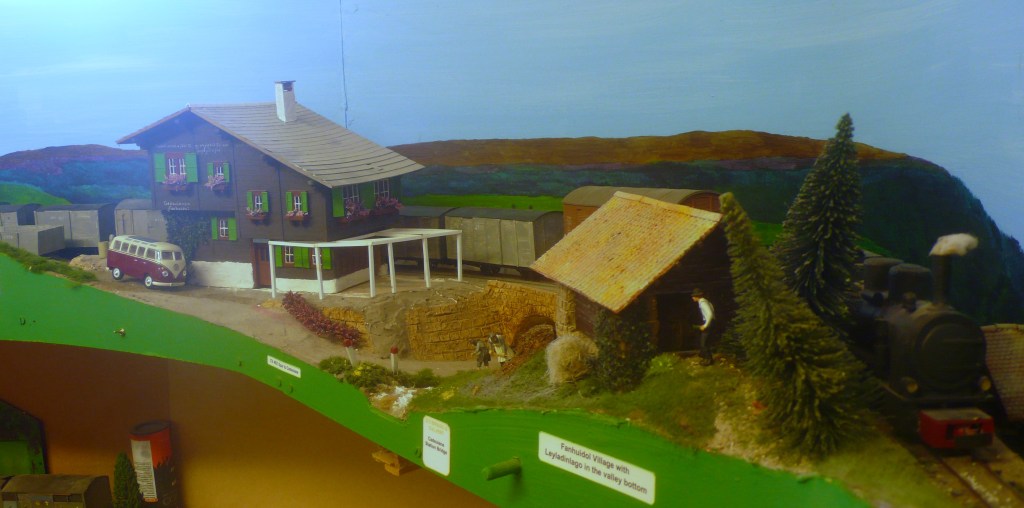
99. The ABC goods stops briefly at Cadsuiane-Fanhuidol so that PO traffic, pakeĵoj ordinaraj, or ordinary parcels sent at goods train rates, can be unloaded from the van. This is out of view at the left. The length of this train is going to cause problems as it will be too long for Fenditavalat and the loop siding at Caladonno is already occupied by a van. This train is also booked to cross the down local goods in the very short loop at Caladonno.
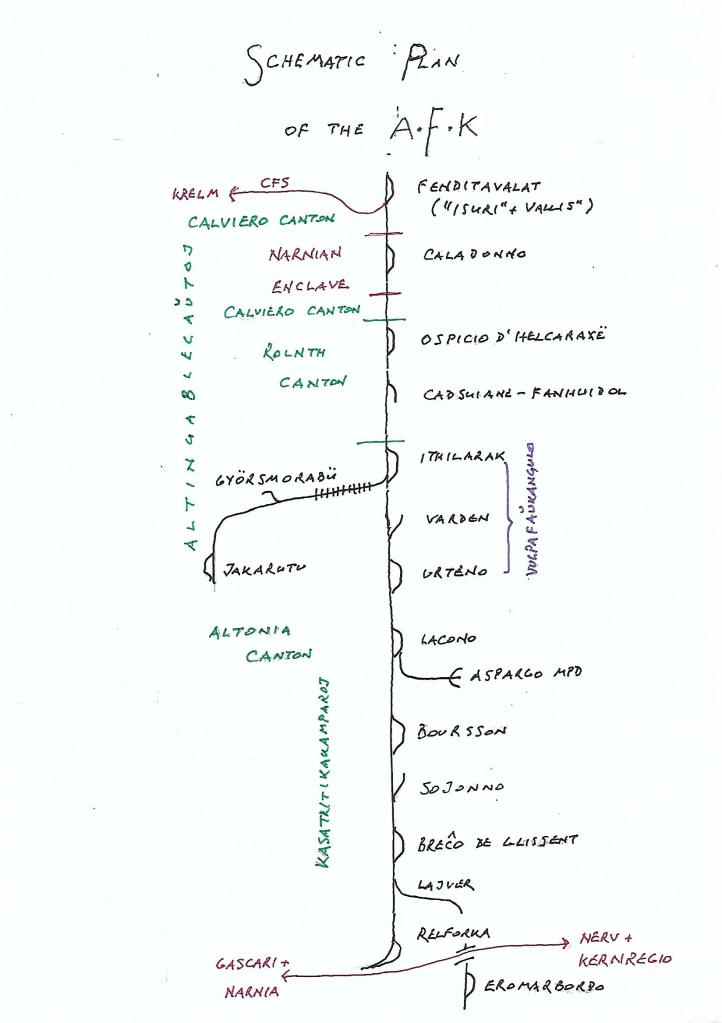
A new schematic plan has been prepared which some readers might find easier to read. The old one was probably too detailed and was lost with the last computer.
The session began again at this point.
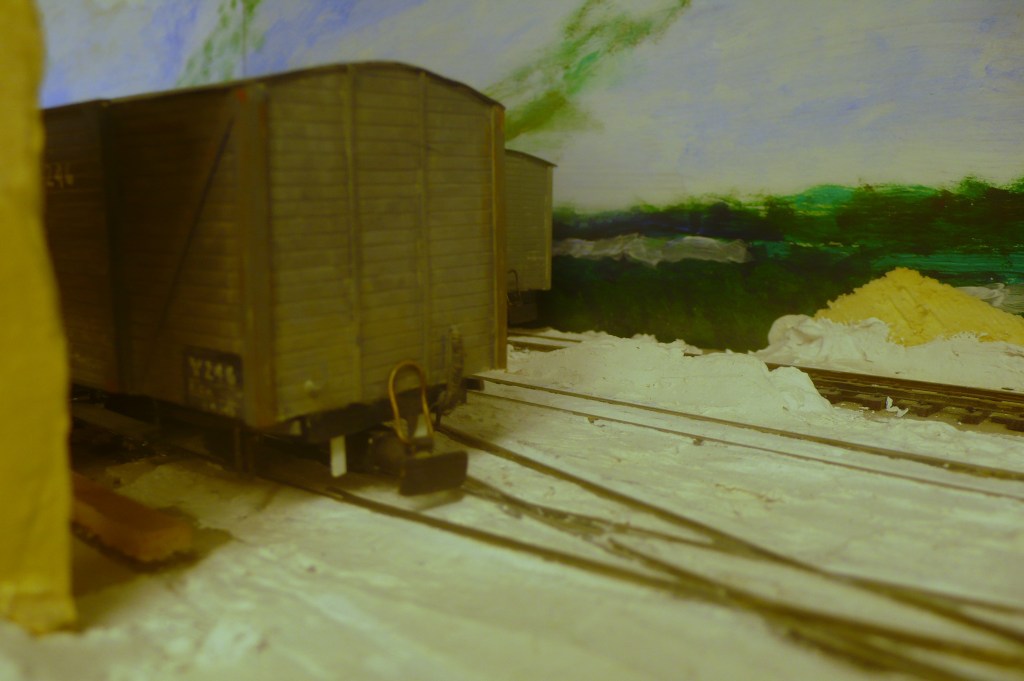
100. The Fenditavalat goods has arrived at Ospicio d’Helcaraxë having had a fairly easy ride today. There are now problems. The train is well over the tonnage limit for Fenditavalat and the loop at Caladonno, which was provided for such trains to jettison wagons close to Fendtvalat is blocked by a van. The relatively new ABC local is also now booked to cross there but none of this will happen. Various wagons will be left at Ospicio and tripped forward as convenient. The CFS wagons will take priority. There is also a problem here at Ospicio in that the cattle vans, for the local fair, are fully occupying the goods loop and are preventing access to the gravel siding, the only place where the excess wagons can go.
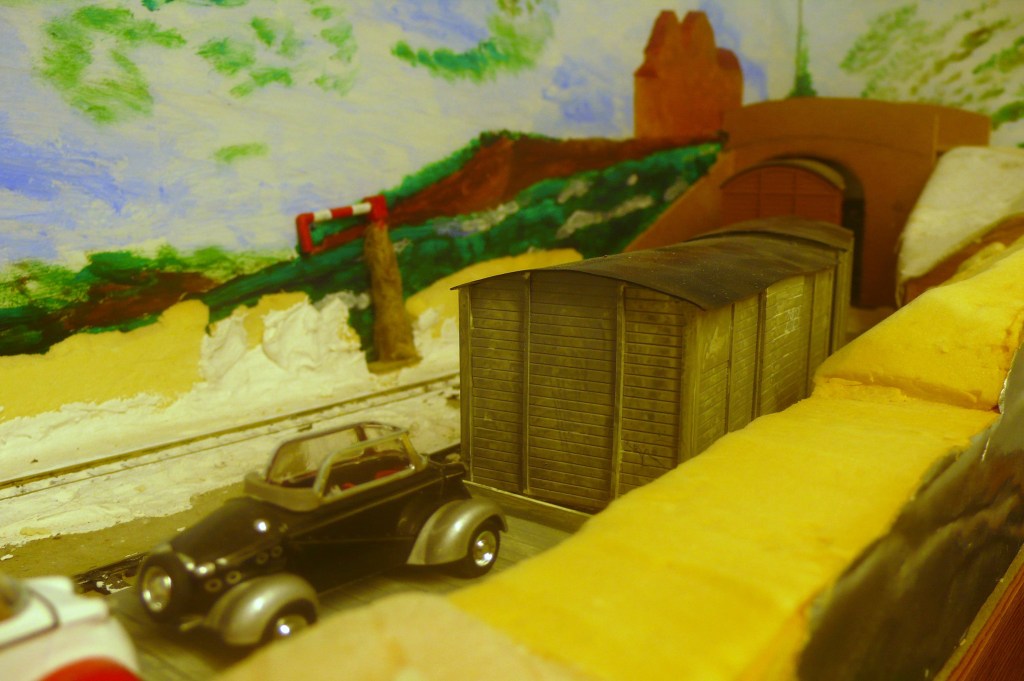
101. The train shunts into the gravel siding over the northern 3 way point. This has always had a somewhat “dodgy” reputation with derailments but everything passes off well today. This siding was obviously not designed for SG vans on transporters but the short wheelbase G20 just cleared the bridge arch. Administrative incompetence strikes again. There is no docket for the two Messerschmitt cars yet I am sure that one was prepared before the train left Relforka!
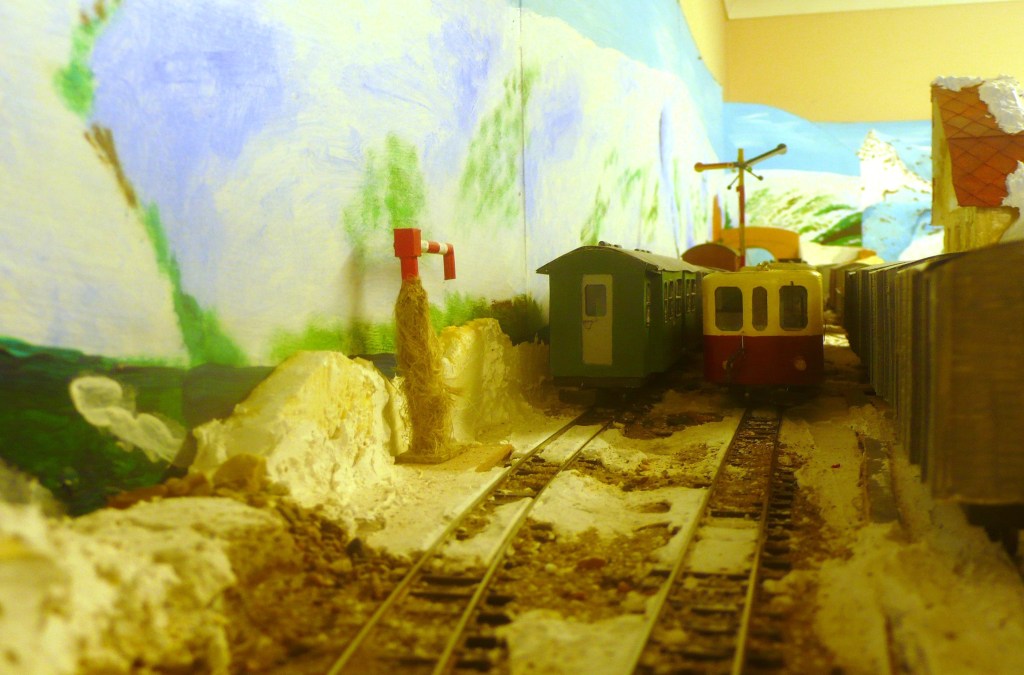
102. The shunting is completed well before the morning railcar arrives. The cattle vans stand on the right and the goods is in the loop at the left giving the railcar a clear run along the straighter mainline under clear signals.
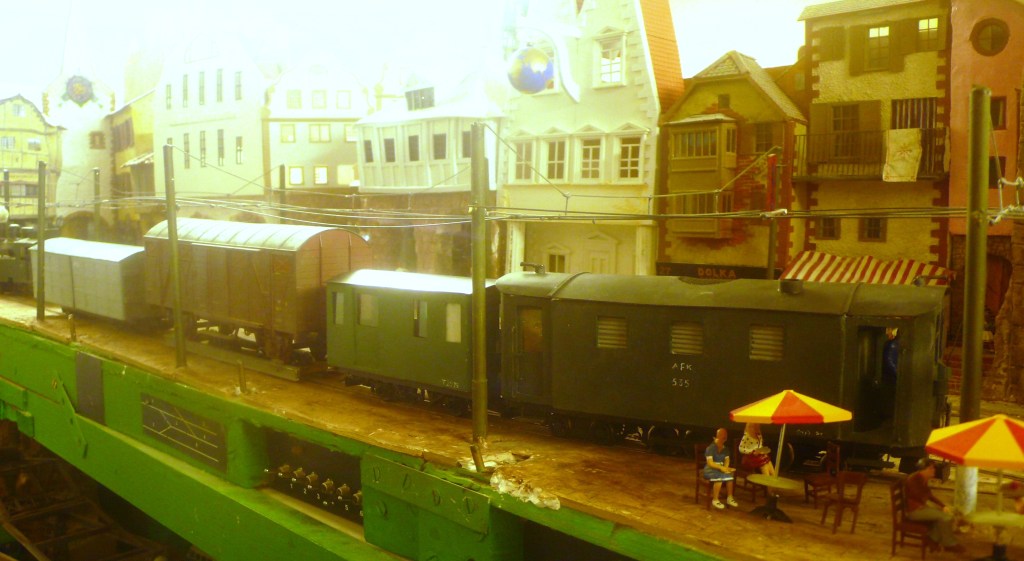
103. The morning local across the Altingablecaŭtoj (ABC) is, for a wonder of wonders ready to depart on time. It will not, however, because it will not fit into Caladonno loop. It will remain in Fenditavalat until the long distance goods arrives. The train was put on to serve the paper mill but today’s consist is an empty milk van and a stray SG van that will find a home somewhere before Relforka to serve one of the factories.
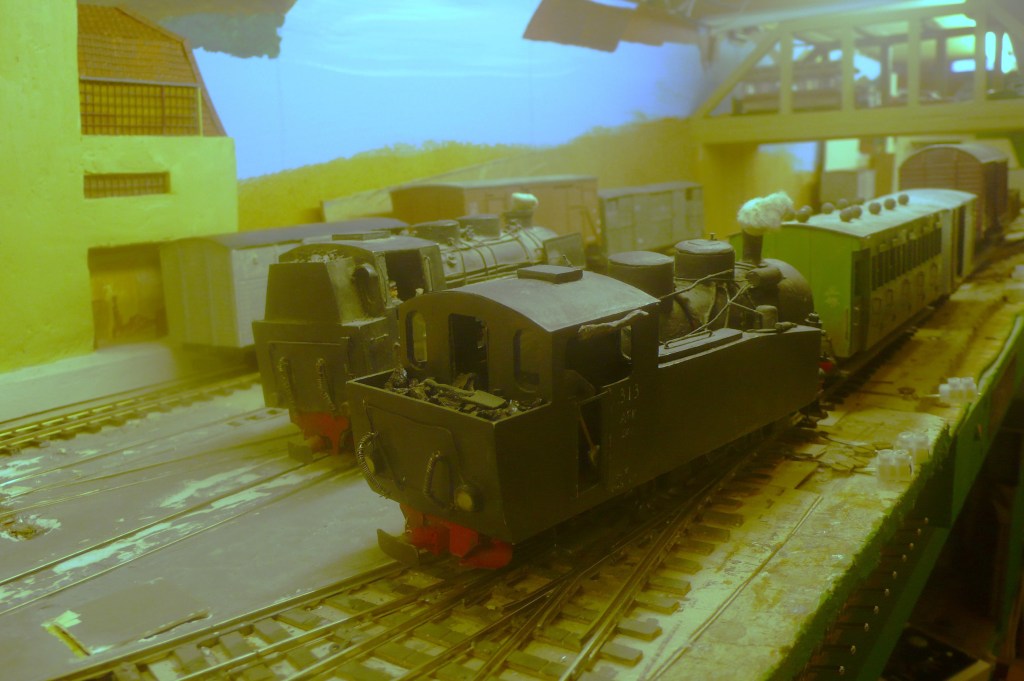
104. The FDV-RFK goods pulls into Urteno early. A couple of pick ups and one drop off will keep it moderately busy. It is booked to cross the express and the terminating local passenger so it is more than likely that the crew will find time for coffee at the café/bar in the station.
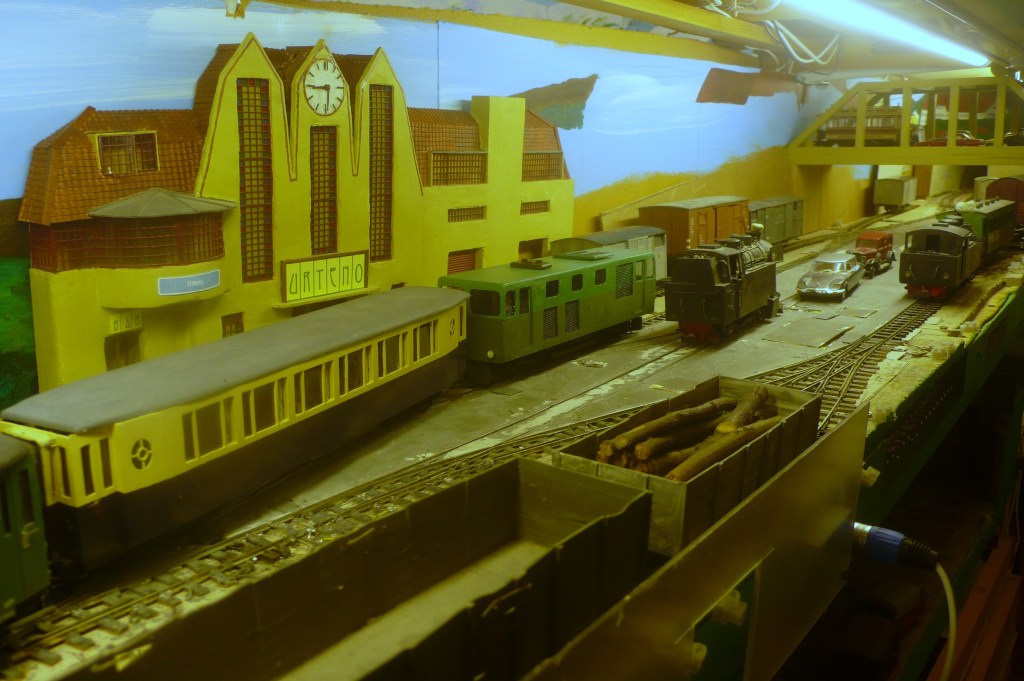
105. The express pulls into Urteno on time at 09.29. The banker waits in the middle road and the goods stands in the near loop, as is usually the case. The limos for the Pullman occupants wait on the platform.
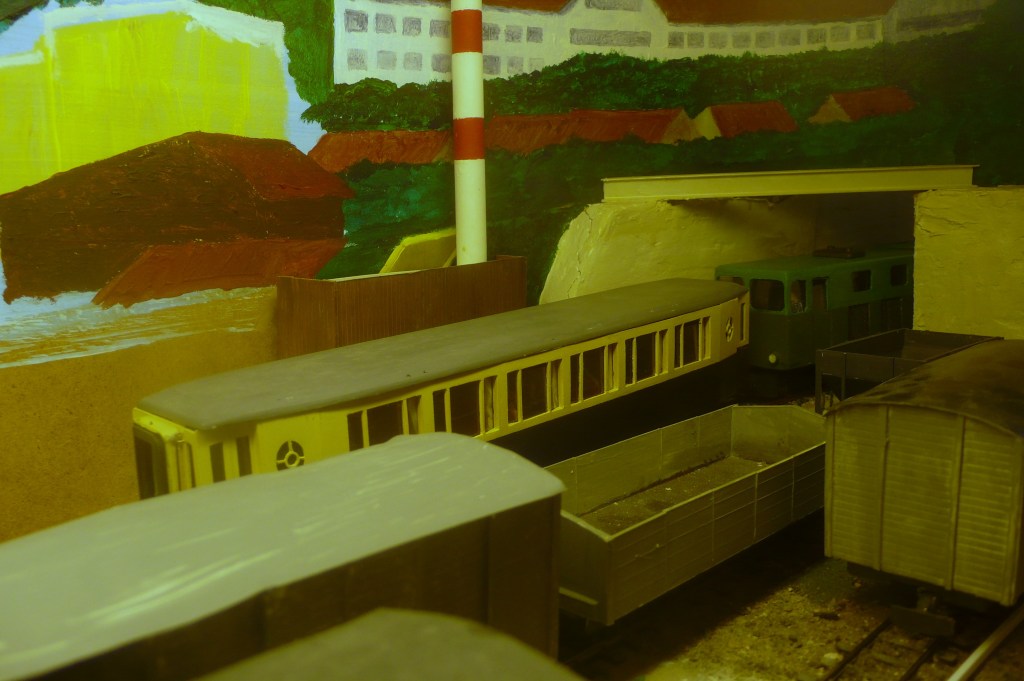
106. This is as far as the Pullman goes. The passengers are advised to stay on board until it has been shunted off the train. The connecting limousines have come from the upmarket hotels, such as that behind the chimney of the furniture factory.
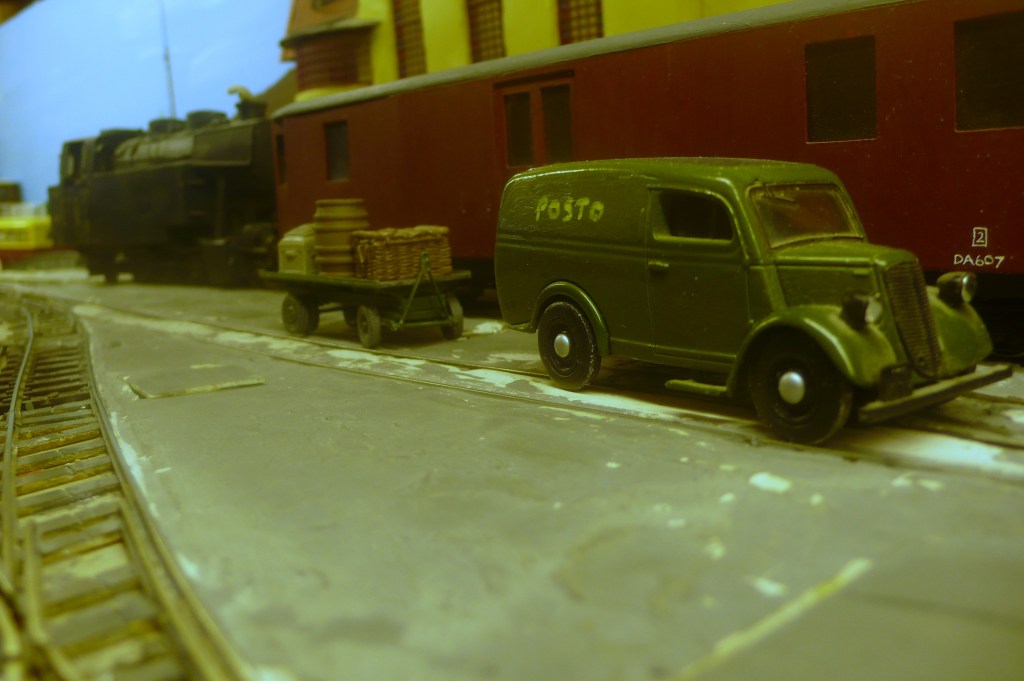
107. The banker wastes no time in running onto the rear of the train whilst the Post is attended to. Most of the Post traffic for Urteno comes in on the following local passenger. The sign writing on the road van could probably do with a revisit.
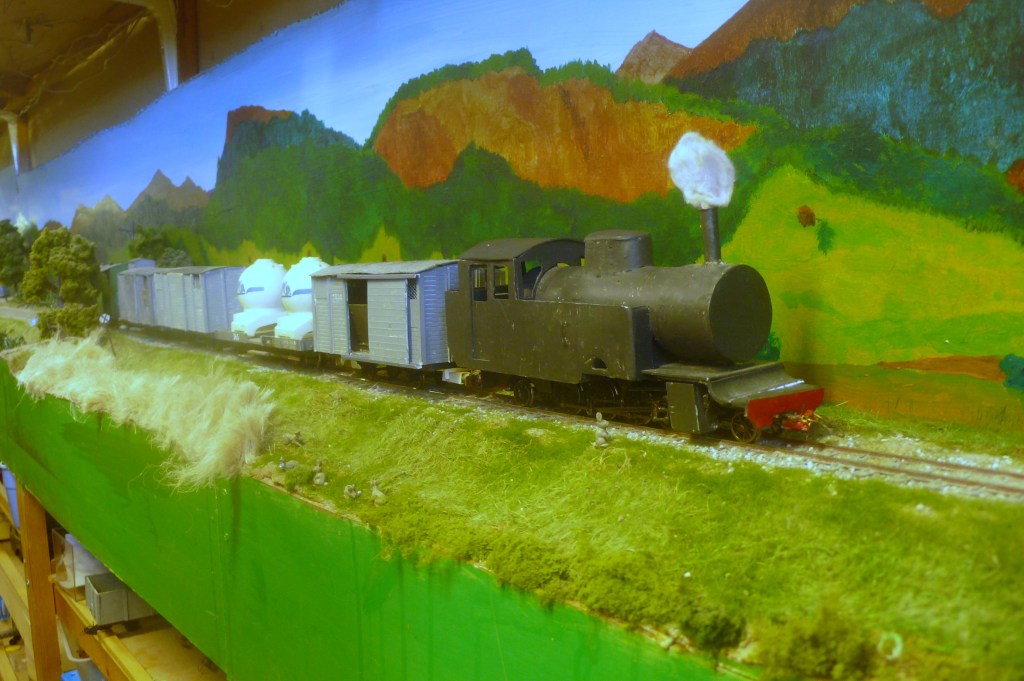
108. The up KTT goods has finished it shunting at Breĉo de Glissent and is pulling away from the river crossing. It is lightly loaded today. The first wagon is a converted van which has had a grain hopper placed inside. The doors open to reveal the hopper. There was once an unsatisfactory rendering of the load which was lost and needs replacing. The second wagon contains brine containers for Sojonno which will go through to Lacono. The wagons at Glissent are blocked for this train to pick up and it simply drops off any set outs for the branch railcar to sort out later in the morning. The train is running 35 minutes early which is quite common.
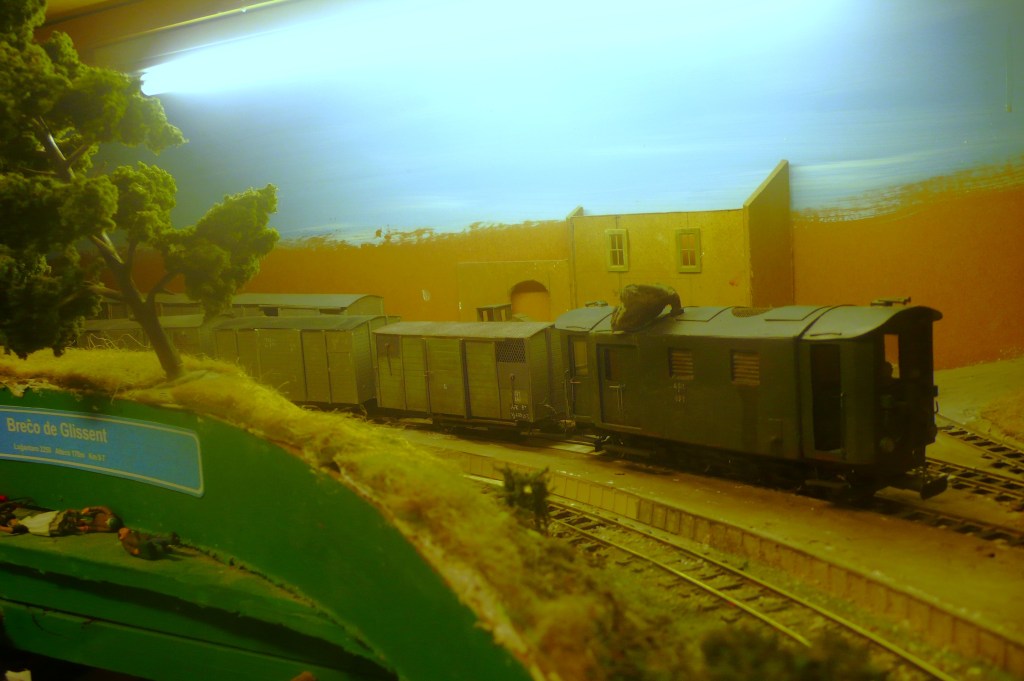
109. The Eromarbordo goods pulls into Glissent to find the KTT goods long gone. There is an official connection between the two trains, as noted in photo 93, but the KTT train is only held if there is a need to transfer fish.

110. The KTT passenger train pulls into Lacono. It is fairly full as it runs at a convenient time for country people to “come to town”. It will drop most of the passengers here although some will go through to Urteno for a pleasant day out. The mail van, carrying much correspondence for the University, will be dropped off here, although the sorting van will go to Urteno.
NEW PHOTOS
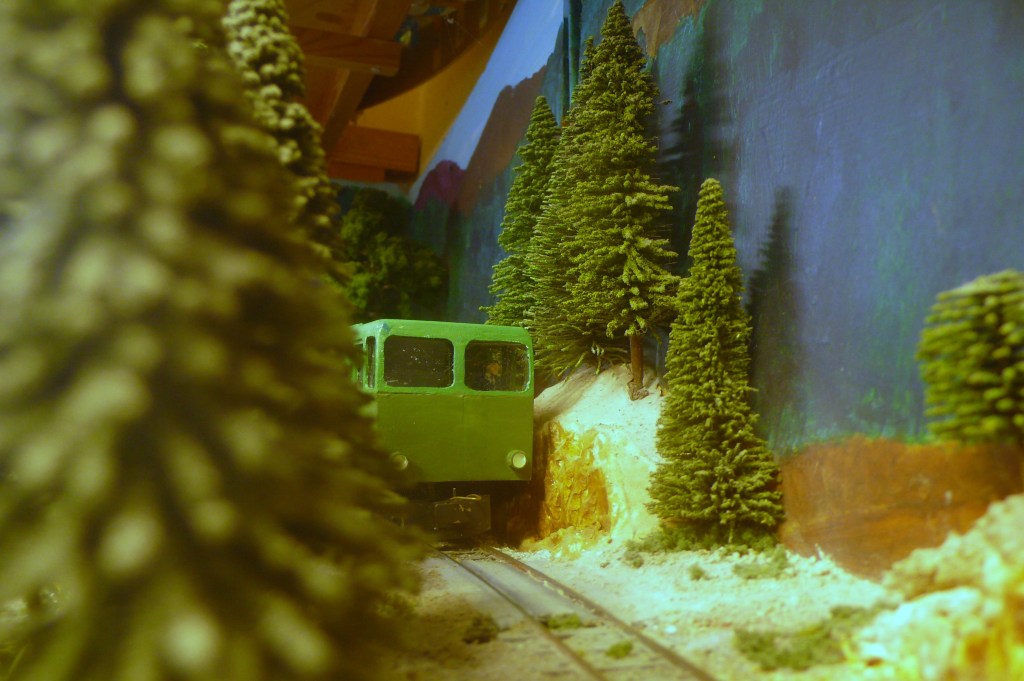
111. The new Co-Co slows to a halt with the express at Varden, just short of the forestry road. The loco is a little more sluggish than I expected and the banker is pushing hard on the rear as a result. This is one of the problems of using DC rather than DCC but I will happily remain in the dark ages.
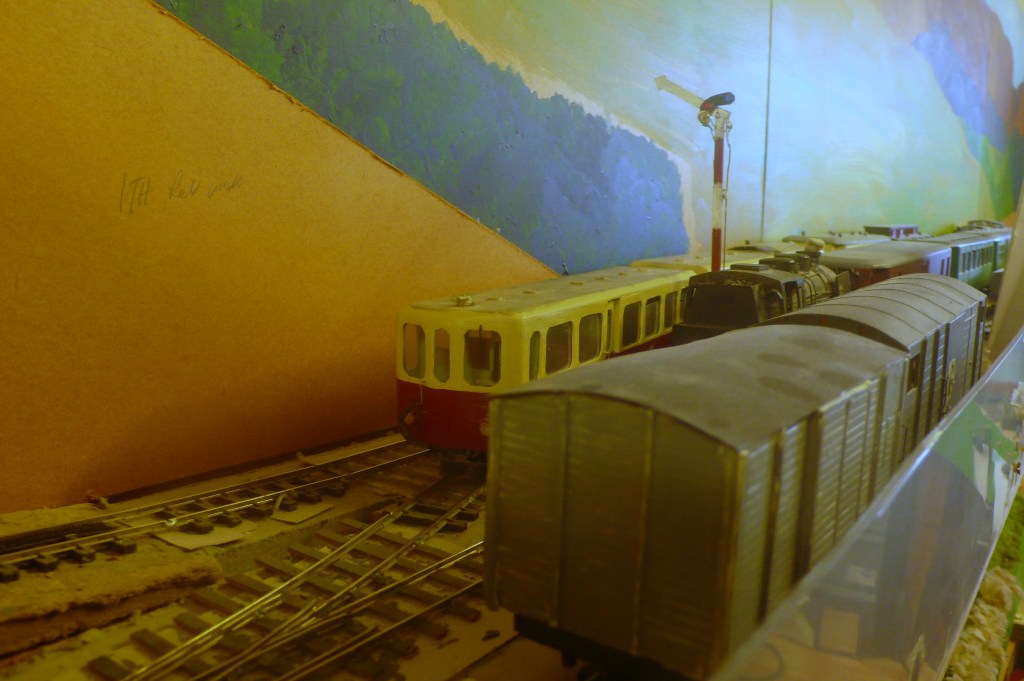
112. The two main morning passenger services cross at Ithilarak. The express in the last photo has climbed the vulpafaŭkangulo and pulled into the clear along the main line whilst the railcar gets the signal to depart and wastes no time in pulling out onto the main. The branch train is further down the loop, behind the railcar, as is normal.
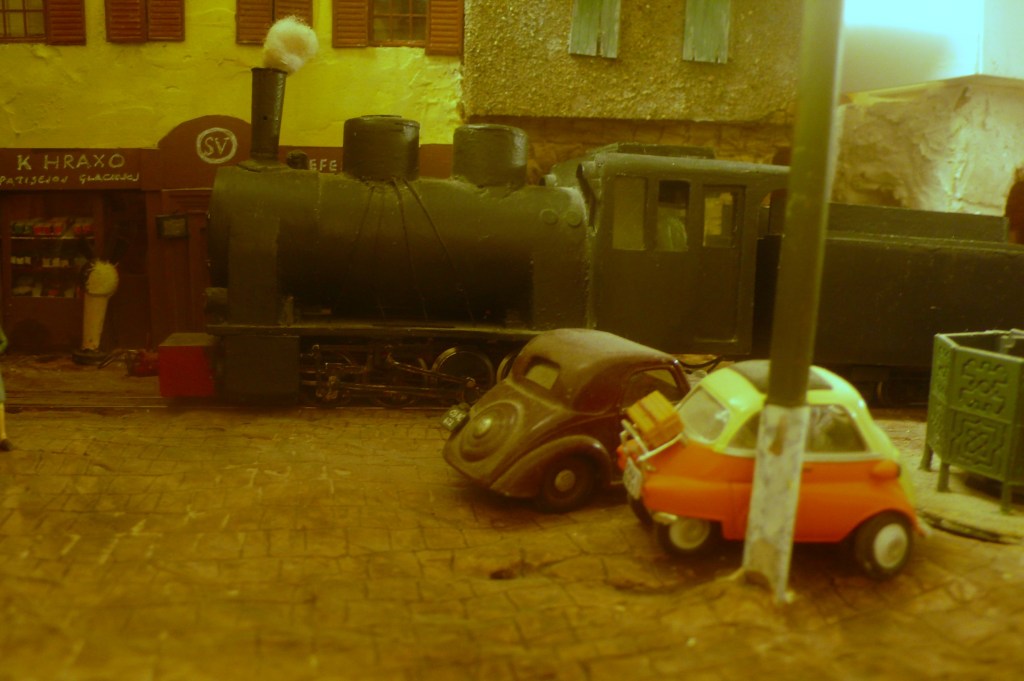
113. In the meantime the up goods has arrived at Fenditavalat where it has almost pulled up to the city gate guarding the Suprantaŭpordo or Upper Foregate. Once the local goods has left the loco will reverse the train into the goods yard to let the pilot deal with it. Whether the bubble car will clear the pissoir is a moot point. Of course they had no reverse gear!
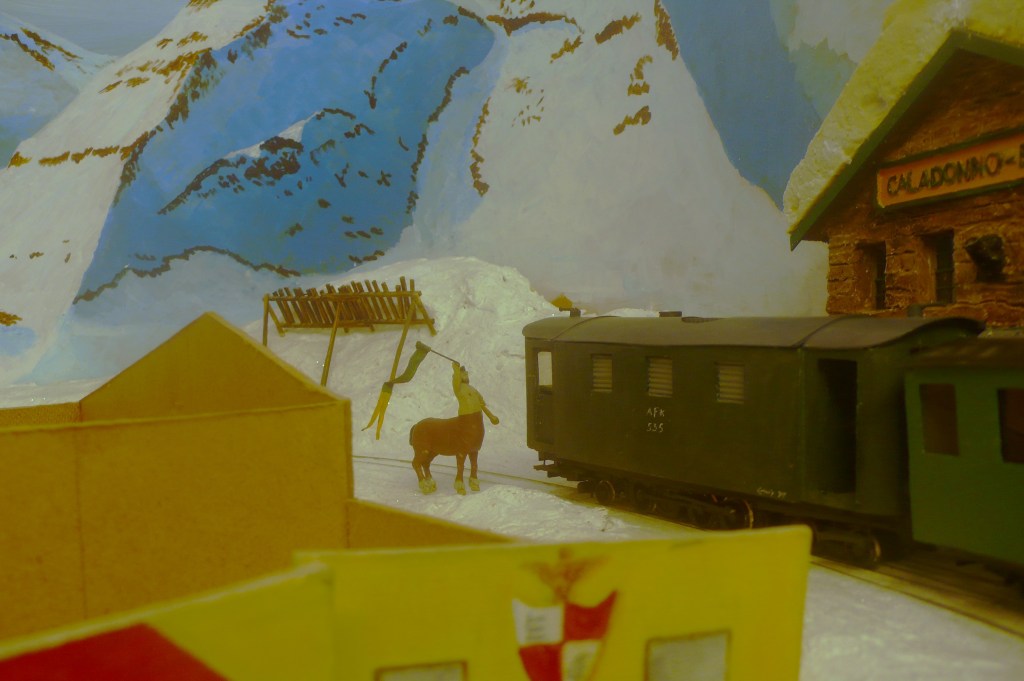
114. The local goods is running late when it makes the station stop at Caladonno, in the snowbound Narnian enclave. Urchylllu, the centaur, enquires about the possibility of picking up the van of pharmaceuticals, loaded as if by magic. He is told that there is no chance as the train needs to be in the clear at Ospicio for the express.

115. In a change from usual procedure the banker remains on the departing express at Ithilarak. It is running through to Ospicio to deal with the fair traffic. The climb over the viaduct is obvious and the wood siding, on the right, drops away precipitously. The signal lamp is still shining brightly!
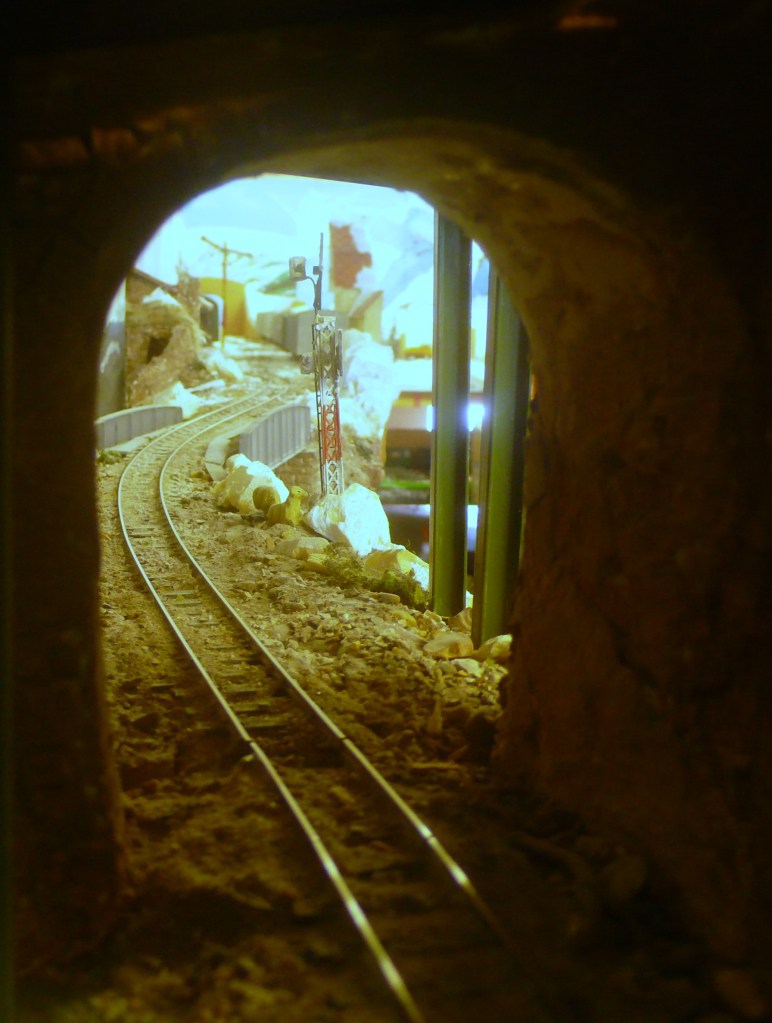
116. the driver’s eye view of what is known as “summit tunnel” but is more correctly, the Heldya Tunnel. “The Star”, beyond the snowshed, is virtually invisible apart from the red and white post, indicating “clear” and the section signal, in the distance, is off. French signalling practice did not give a positive indication, as such, for clear. Providing that there was no danger signal you were “good to go”. This was covered in detail on the now lost website. The signal is named for the “Star of Bethlehem”, the Ais Gill distant, which marked the end of the climb on the Settle & Carlisle. This is not quite the case on the AFK because the model still climbs whereas the theoretical route drops into the Orbon valley. Due to restricted space the signal has been placed on the wrong side of the line.
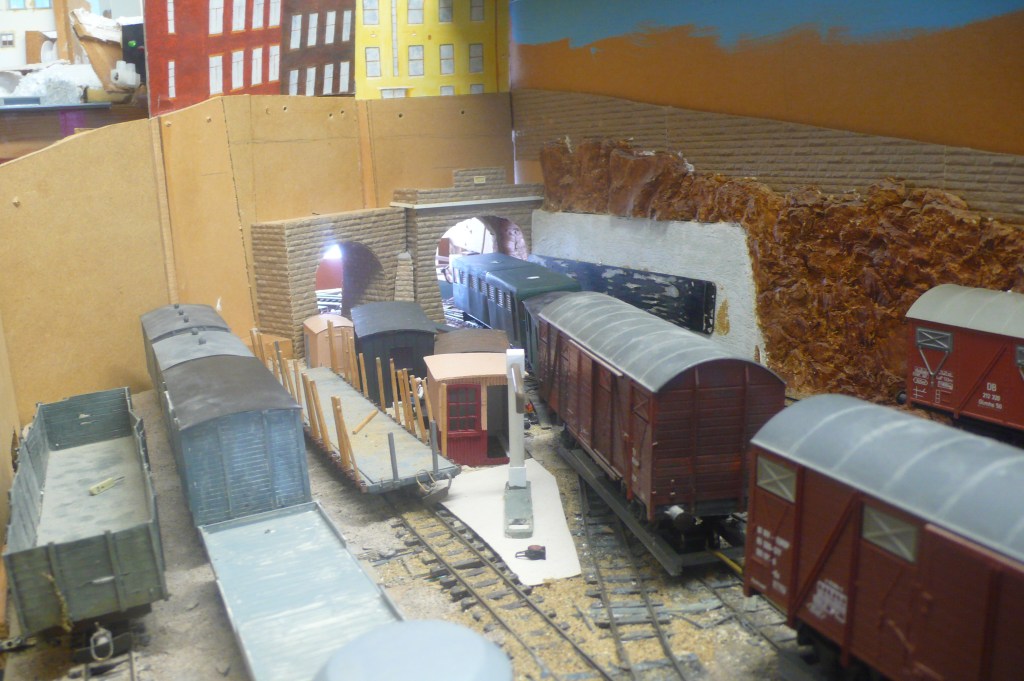
117. The nature of running a large system layout single-handedly means that attention becomes focussed in some areas to the detriment of others unless one is careful. The local passenger’s arrival was shown in photo 110 before other locations were dealt with. “A couple of minutes later”, but some time in reality, the extra goods train heads out of Gasafabrikatastrato to help relieve Lacono of the rush.
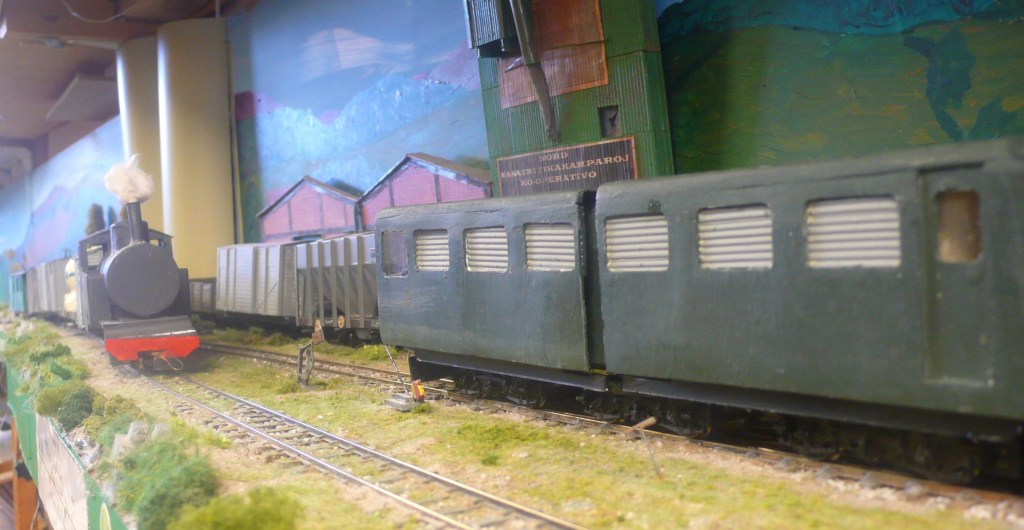
118. Contrary to the plans the extra is held at Boursson for the local goods, last seen in photo 108 running 35 minutes early. It seen here pulling into Boursson 15 minutes after the nominal departure time for the special. The truth is that this is a sanitised version of what occurred. The local ran into the loop before it was realised that it would arrive after the special. It was backed out to “wait its turn” before coming in again as shown here.
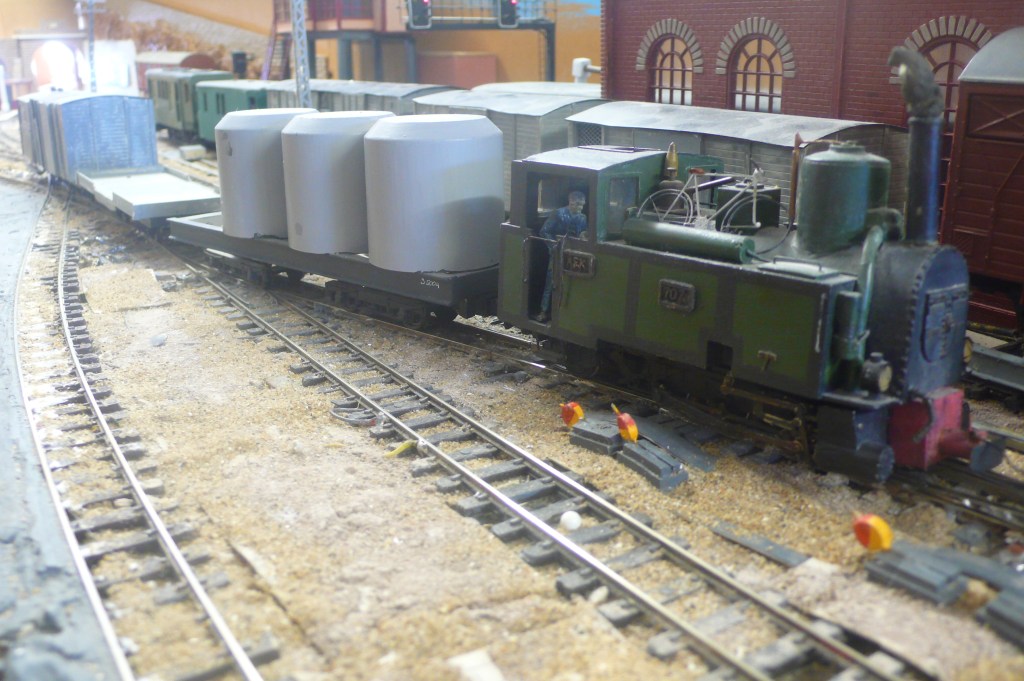
119. The Lacono yard foreman directs Sisyphus to retrieve a horse box from the sidings. Amongst other things this has been forgotten. There is a racehorse to go forward on the railcar and just about sufficient time to arrange for it.
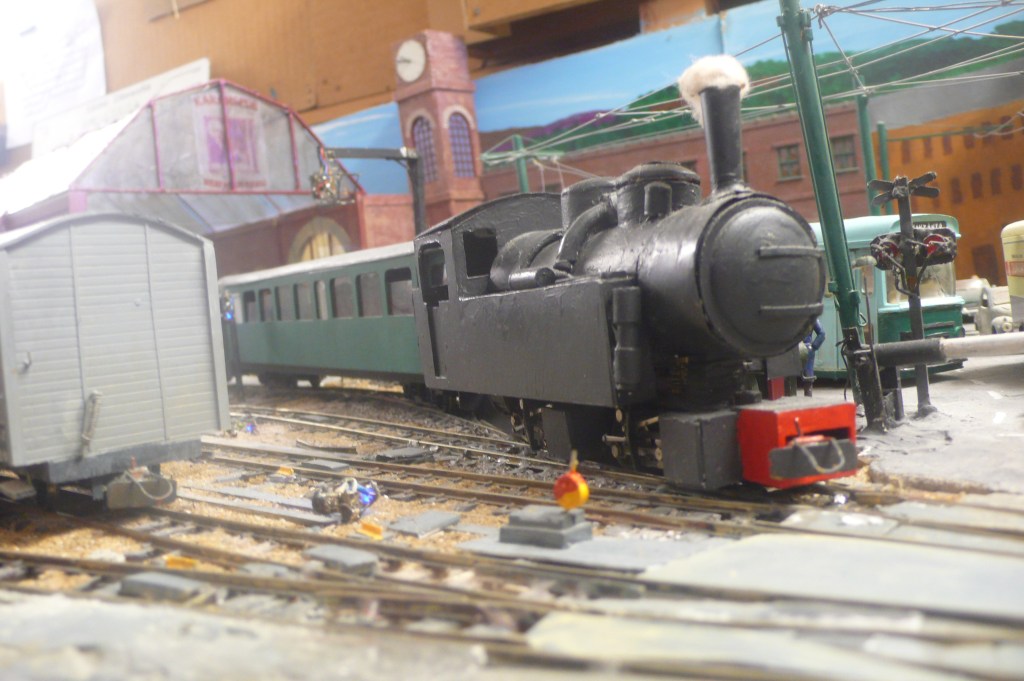
120. The mallet in charge of the local passenger sets out on the last leg of its journey. The train covers the lower section of the line and the express effectively runs “all stations” across the Altingablecaŭtoj. It has left one Post van behind for unloading but is carrying the TPO forward to Urteno.
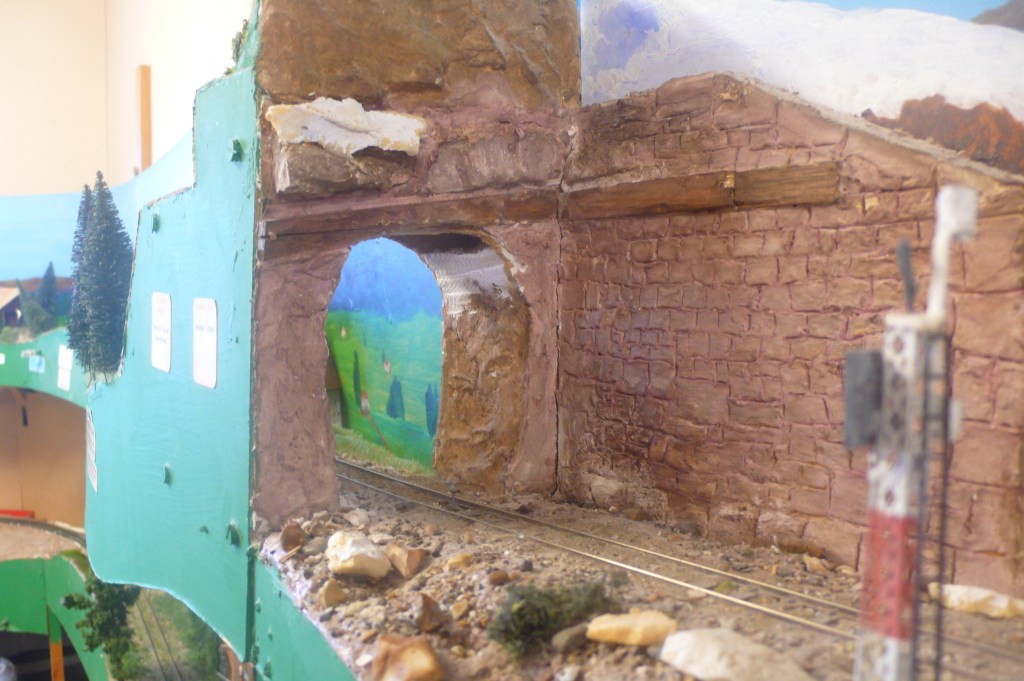
121. At this point the session was temporarily paused to attend to Heldya tunnel. It was a tight fit when built, many years ago and the roof had to be chiselled out to let certain SG vehicles pass. The transporters were recently retrofitted with my crude 3 point suspension system which has improved their track holding. Unfortunately this increased their ride height by around 1 mm causing certain items of SG stock to hit things. Most solutions were easy enough to engineer but this wasn’t quite so simple. This is a photo of the completed work. The snow shed has been removed and the head of the distant signal has been knocked off by accident. The gouging, the white in the tunnel, is obvious.
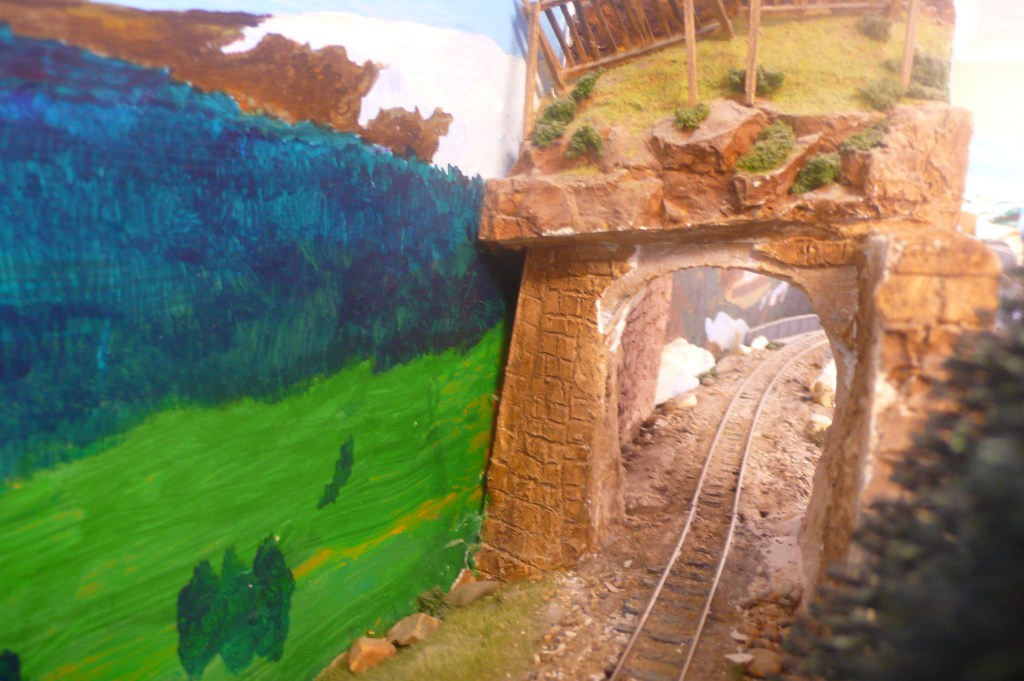
122. This is the southern aspect of the tunnel, again with the snow shed removed. The damage to the stonework is obvious. The tunnel acts as a scenic break and is meant to be around 500 metres long. If it really was so short there would be a significant discontinuity between the backscene paintings! Note the snow fences above the tunnel and the snow on the higher mountains, even in summer.
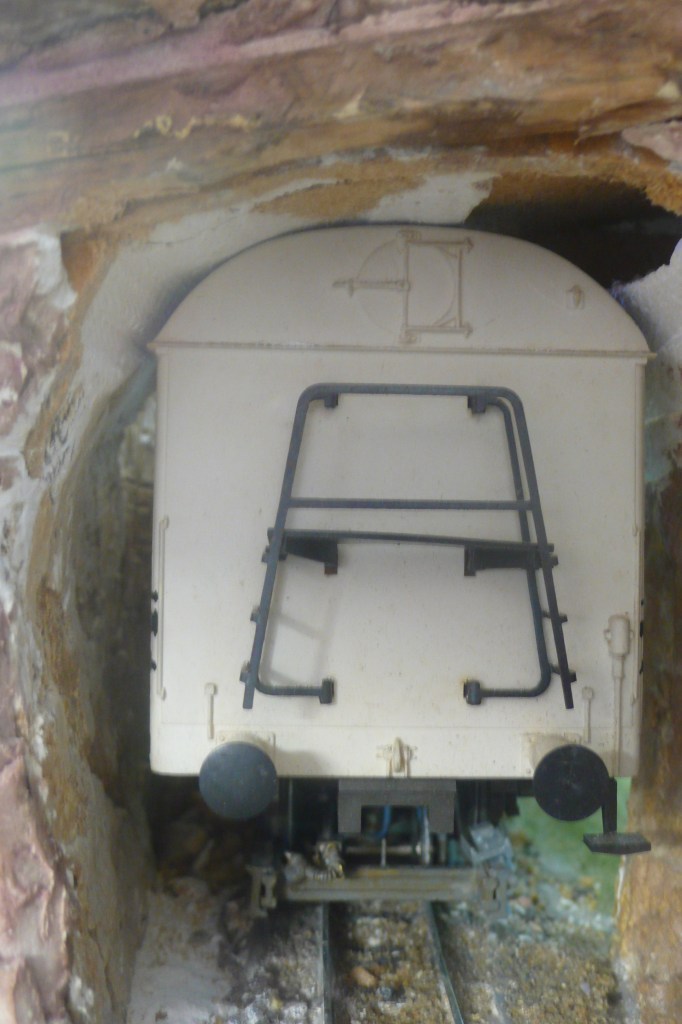
123. When I said clearances are tight I meant tight! This refrigerator van was used as a test vehicle, simply because it was available, longer and possibly higher than vehicles passed to go through the tunnel. Wagons such as the Großraumwagen are banned. Even this van had its ventilators removed some years ago. It will just squeeze through in this photo.
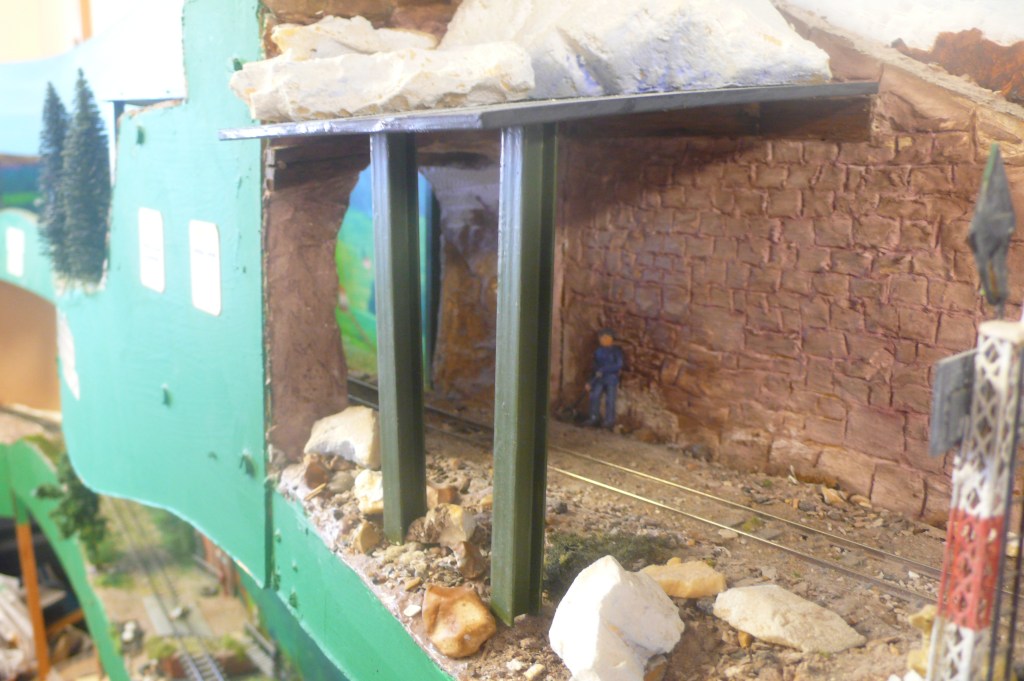
124. The snow shed has been re-instated and the debris cleaned up. I confidently expect the next vehicle through to clout the tunnel! Apart from the tunnel roof on the far side of this photo the damage is not too obvious and is hidden by the snow shed, as is that on the southern portal. As such it will probably be left alone. At some point wood dye will find its way onto the white patch. Various bits of melting snow were replaced and the signal head, top right, has been returned. These are stuck to small pieces of brass attached to the operating wires. The reason is simple. French signals have many different coloured segments that need be to neatly painted, unlike the simple British red with a white band. In addition these heads have had holes drilled into them to prevent the wind accidentally blowing them to the clear position. The local ganger has resumed duty alongside the track.
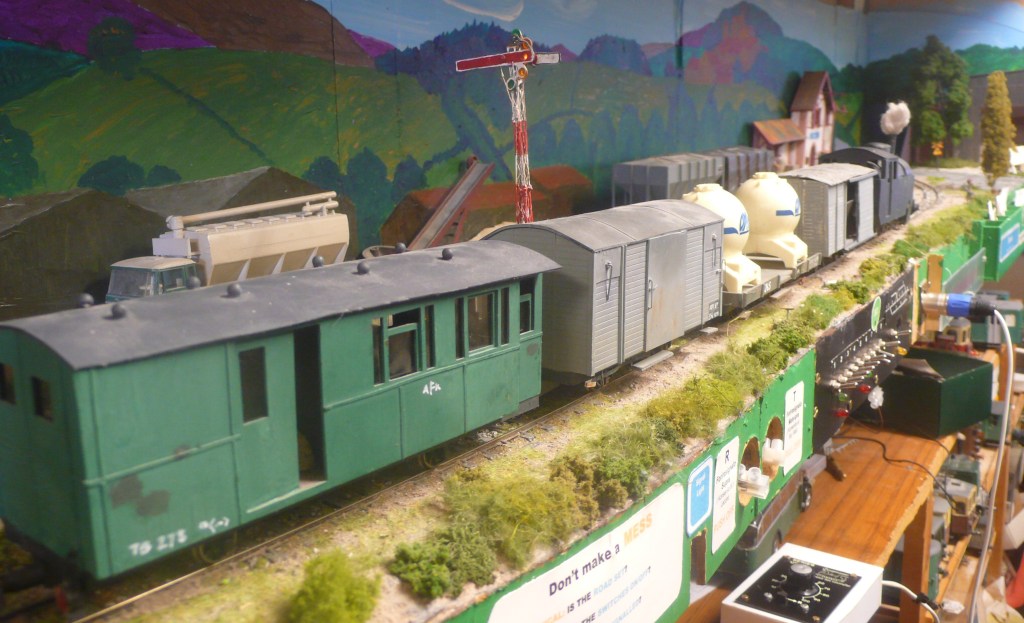
125. Due to a misreading of the train graph the sequence of events at Boursson has gone slightly awry. It is a little annoying but at the end of the day this is a model railway rather than something important. The up KTT local sits in the loop waiting for things to straighten out. If you want to look at the unsightly mess in the bottom right hand corner the controller, plugged into the local socket, sits on the shelf below. The Ospicio Post bus can just be seen whilst further along are the stock shelves representing Fenditavalat Rivabordo. I did consider blanking this “mess” out but that option seems to have been lost in the replacement photo editing software.
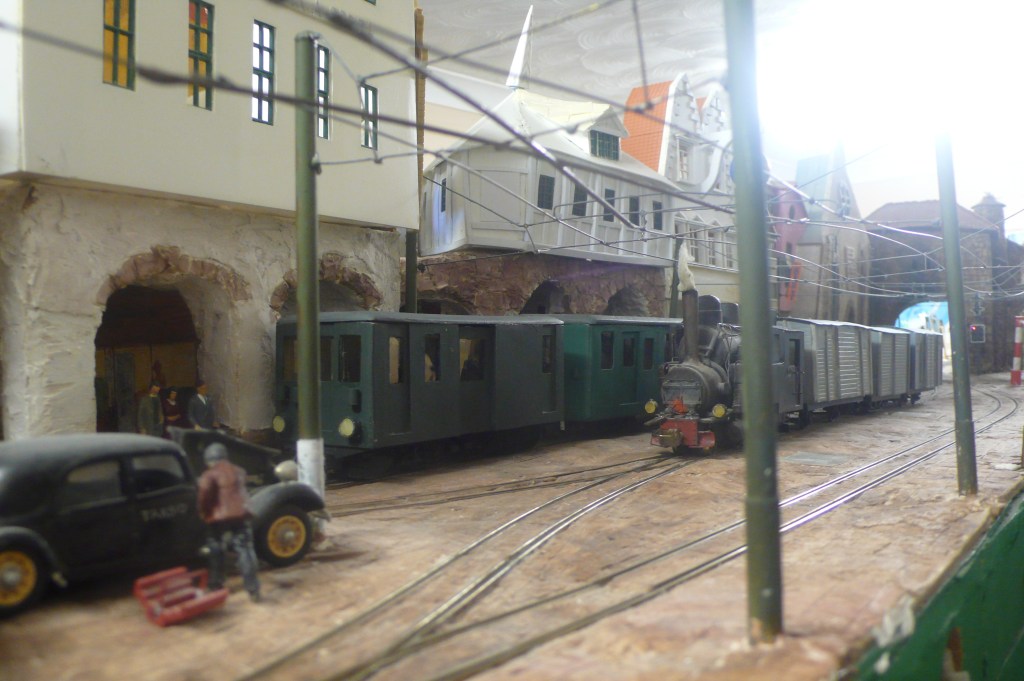
126. The pilot at Fenditavalat has shuffled the vans in the yard and is about to run round to take them to Rivabordo but unfortunately the market day special for Ospicio throws a spanner into the works. The schools’ ‘railcar’, which is a luggage railcar and trailer today, needs to be reformed before departure.
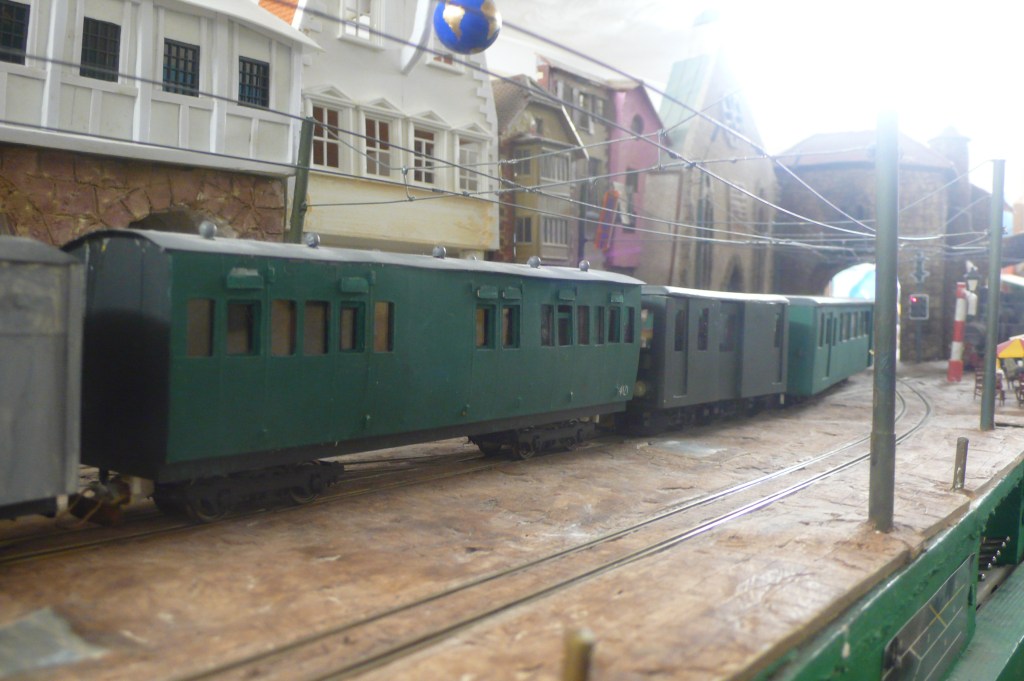
127. A spare carriage has had to be dug out to provide facilities for southbound passengers from the fair. This has now been placed on the rear end of the train which is about to depart Isuri 10 minutes behind the booked time. A surprisingly large number of scholari have unexpectedly joined the train but the word is out that an entertaining afternoon can be had at the talan and the station bar. The talan is the Marronĝaccan word for the Hospice or Ospicio in Thalnian. (And yes, if any one does want to know, it was taken directly from Tolkien’s Lord of the Rings.)
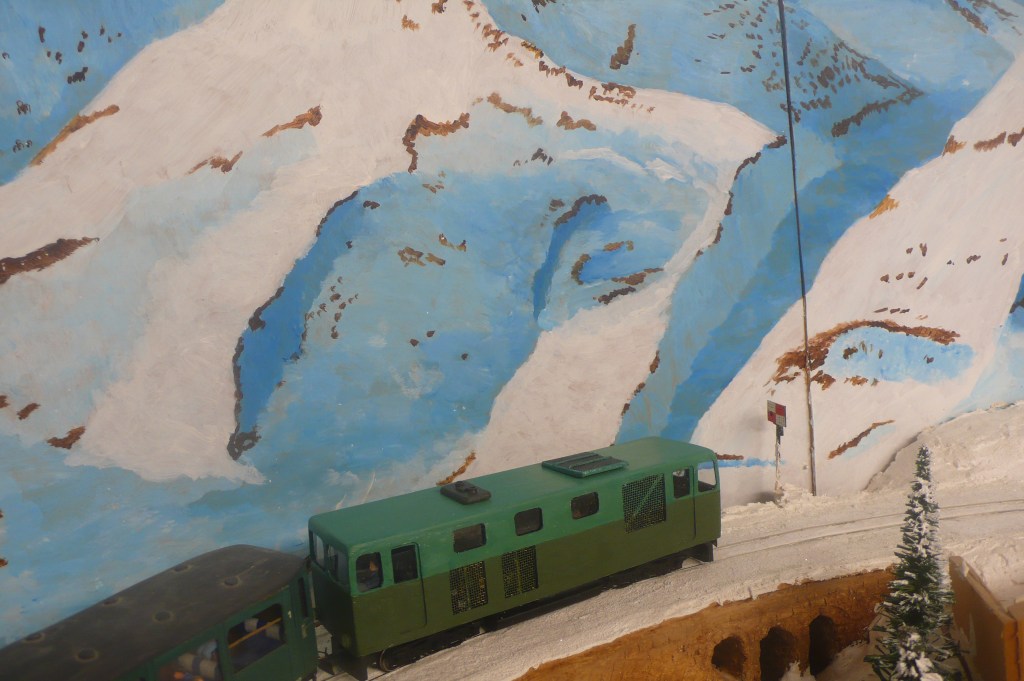
128. The special was booked to cross the express at Caladonno and should have been in the clear when it arrived. Instead the express sees Caladonno up home at “stop”. The crew blow the horn and curse the incompetent centaur, without cause, as it turns out, because the train has been correctly checked. It might have been better if the local goods had picked up the van. (Photo 114)

129. The errant railcar arrives to confront the problem of the pharmaceuticals van. It pulls into the ultra short loop and the express is given the road, as shown by the section signal. There are now a number of problems here which would not occur in reality. This area also represents the Rivaborda connections and various other trains need to arrive in Isuri before the express does. No doubt some legerdemain will be employed! As an aside this station was “accidentally” created when it was realised that the entry point at Fenditavalat, halfway along the boards, would restrict train lengths.
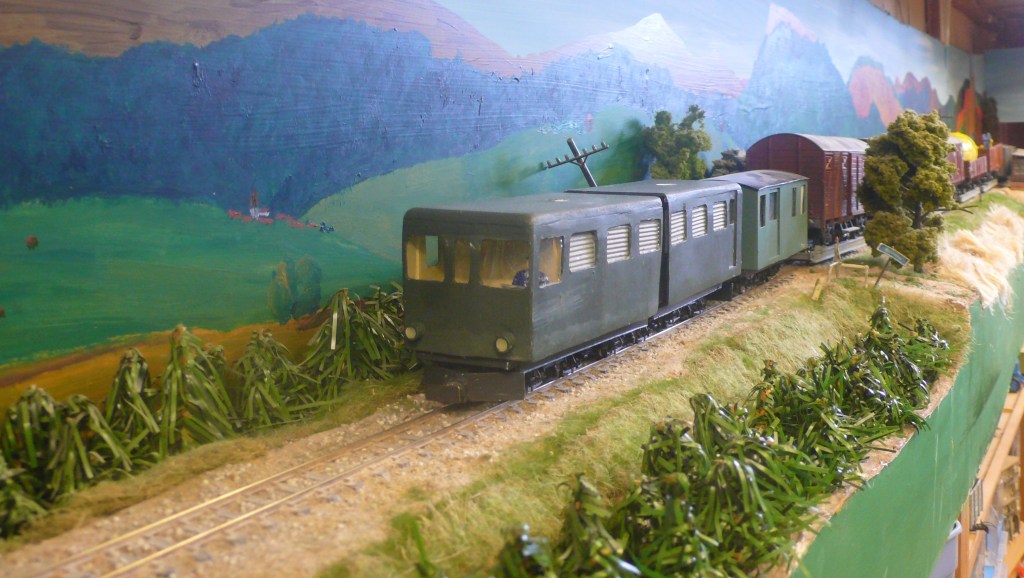
130. As has been noted, the layout is operated single-handedly which in effect means that trains run to a sequence. Often complex shunting sessions at various stations are followed by a short session of advancing trains towards their destinations over open line. The two photos above showed such procedures following the shunting at Isuri and Boursson. This one shows the extra goods in suspended animation on the lower part of the line in the KTT.
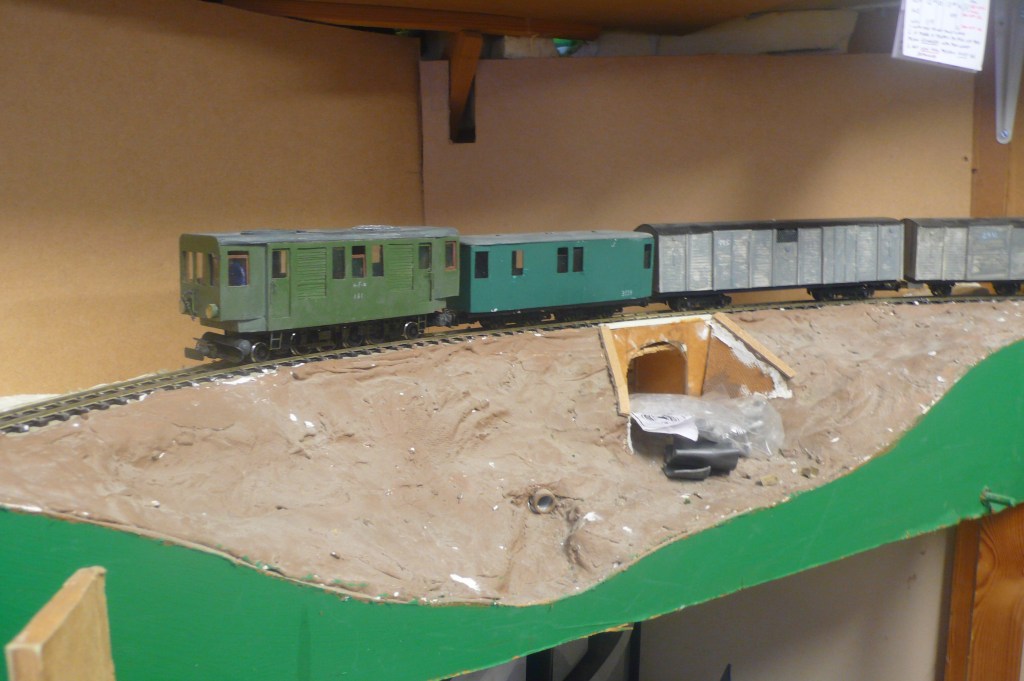
131. The regular goods is following the extra train and is temporarily parked just above Sojonno, on the same single line. There is an IBS at Sojonno to allow this. (IBS Intermediate Block Signal. They were the bane of my life in one box that I occasionally worked. It was easy to “put them back” unless you were careful!)
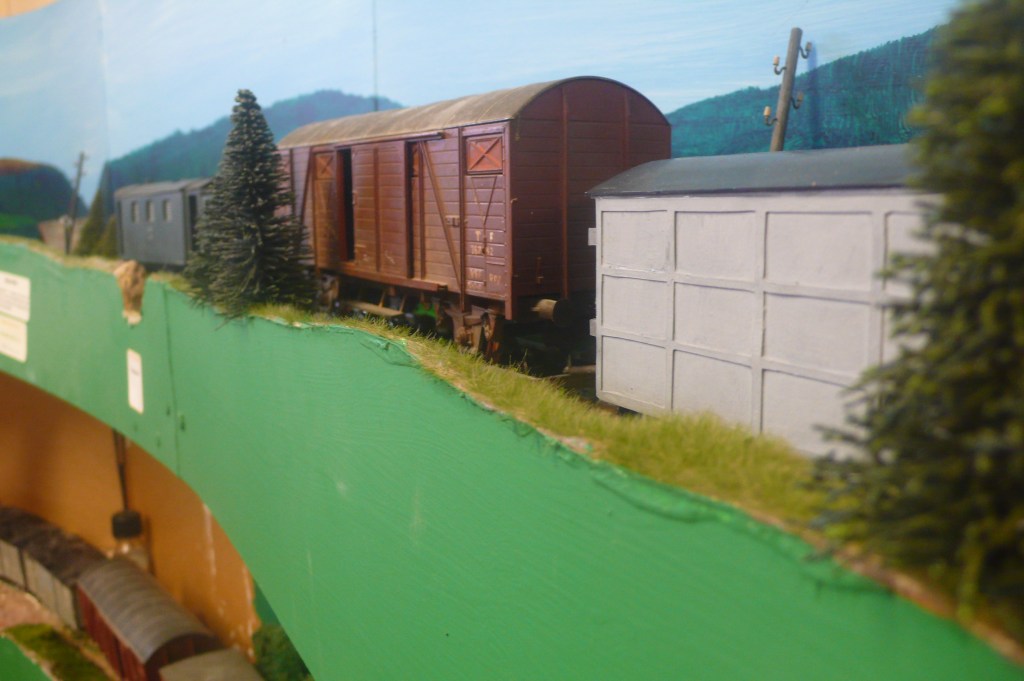
132. The down ABC local goods is sitting just outside Cadsuiane-Fanhuidol, the fixed distant of which can just be made out alongside the loco. (the black cross on a white ground, following German Kleinbahn practice.) The train in the previous photo shows up on the lower level. The SG van, on the transporter, negotiated summit tunnel without a problem.
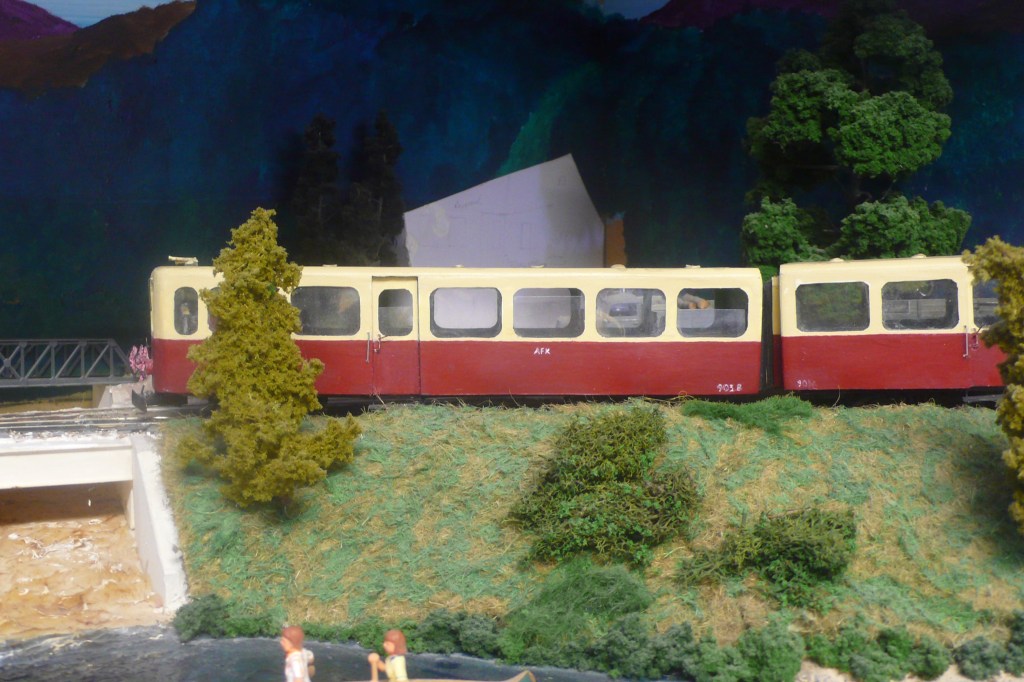
133. The down railcar re-awakes, having stood alongside the Vardenamero for some time, to make the short hop down to Urteno. Varden is an upper suburb of Urteno which is also served by the tramway system. The bridge over the water cascading into the mere crosses the end of the toboggan run in winter.
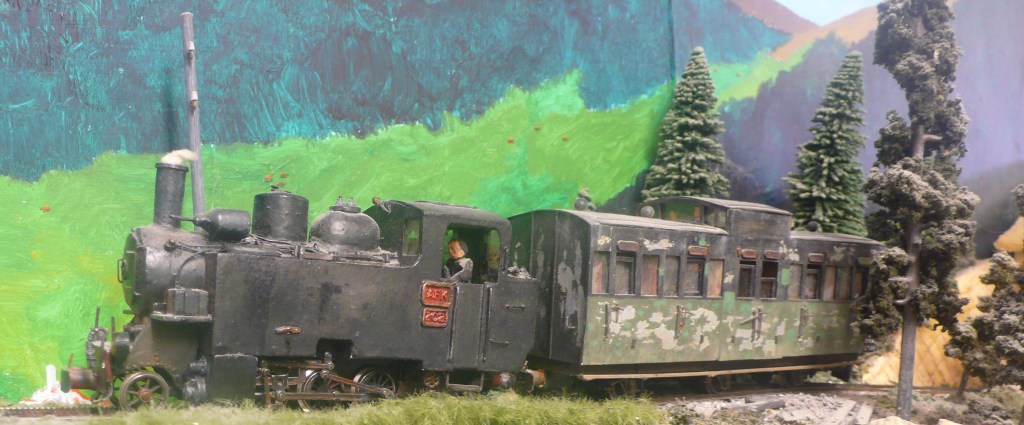
134. The Jakarutu train has finally taken its leave of Ithilarak to climb the rack. This will free up the line for the down ABC goods to enter the station. The train is just leaving the valley woodlands to enter the desolate moorland scene.

135. The FDV-RFK goods passes the level crossing at Ghealdaban as it runs from Urteno to Lacono. As per usual it will stand here for some time before continuing its journey. This is one of the electrical sections that can be switched between 3 control positions and is a favourite spot for parking trains.
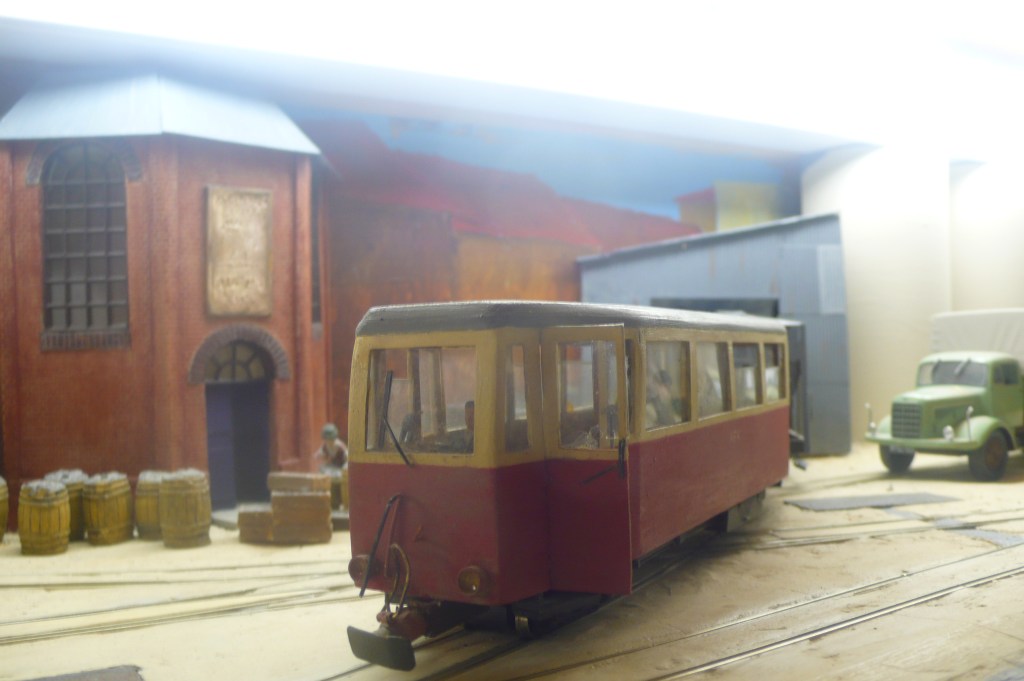
136. The railcar at Eromarbordo has not been forgotten about. It has run round the hopper and backed it into the unloading shed. I try to avoid pushing hoppers too far into this shed as the ratty tarpaulin on the entrance tends to grab the wagons on the way out and then fall over! The opening door looks good from this angle but I am not sure that I would bother with it nowadays. It was built well before the “system layout” was ever a likelihood and there was more time for such frivolities. I obviously forgot to paint the lamp interiors white but that will not change now.
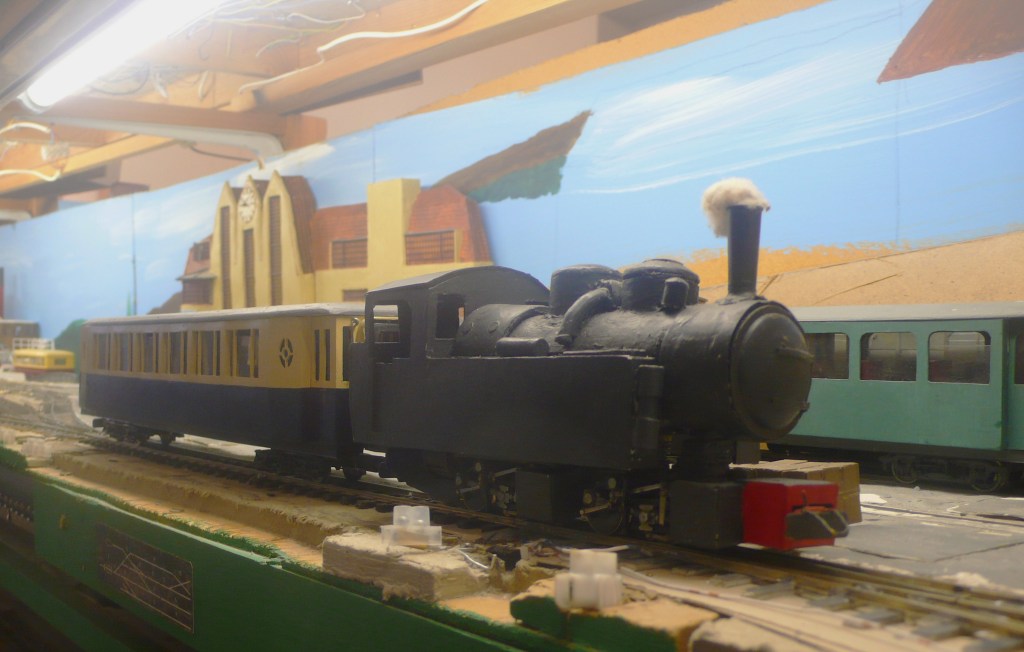
137. The 0-4-4-0T from the terminating passenger deals with the now empty Pullman at Urteno. It is reversed into its own siding for replenishment before the afternoon service. As has been speculated in the past, it is debatable how many of the fancy windows would survive in one piece when wood loading takes place on the adjacent siding.
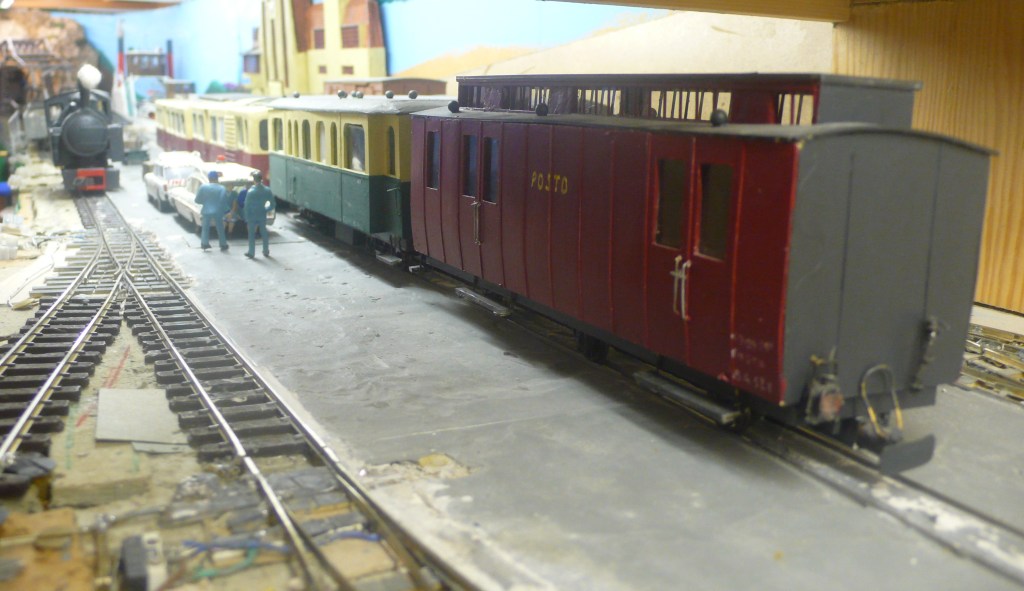
138. The railcar arrives at Urteno to be met by a reception committee from the hospital. This is a daily event and everyone is well versed in the procedures. The railcar will detach the ambulance and Post van to proceed forward as a two car unit. There will then be plenty of time to deal with patients and mail before the 0-4-4-0T remarshals the train. Hopefully this time I will remember to read the instructions!
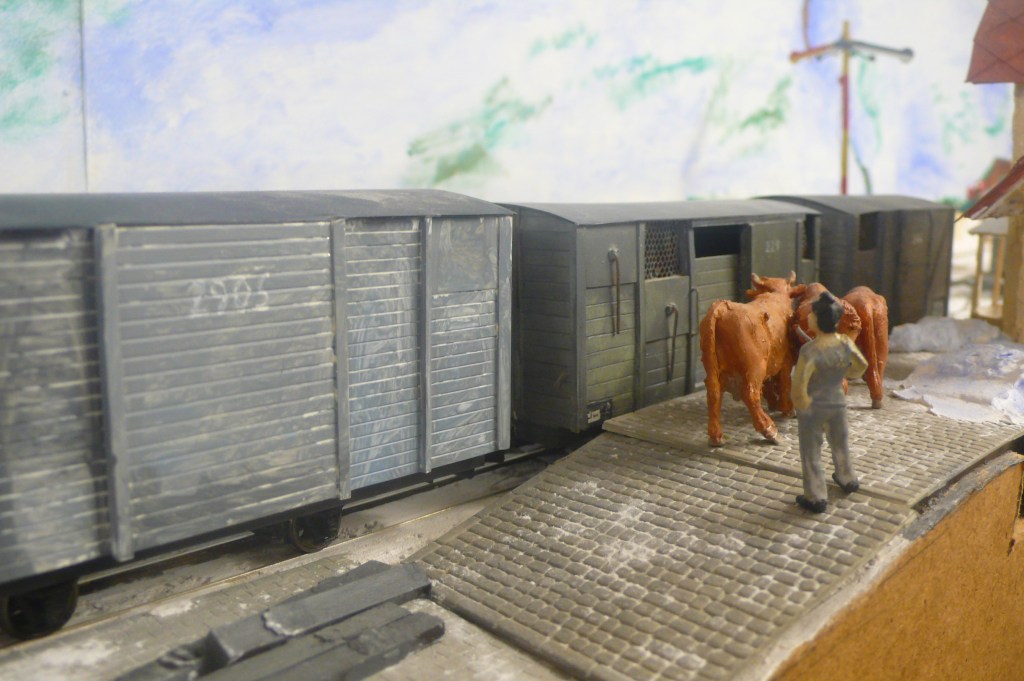
139. The cattle are being loaded following the Ospicio fair. Although this is a remote location it has generated four loads of cattle, which in terms of the model is quite a reasonable load. (You could perhaps multiply by three to get a more realistic number for most AFK freights.) Emmalia oversees the loading of the animals and keeps a watchful eye on the drovers. You might remember her travails a few sessions back (now lost unfortunately) in this endeavour. The station bar will be open all afternoon, as will the talan, and they can do as they please once the cattle have gone. More than one illiterate dealer will need telegrams sending so there is a potential source of income and “refreshment” for the scholari.
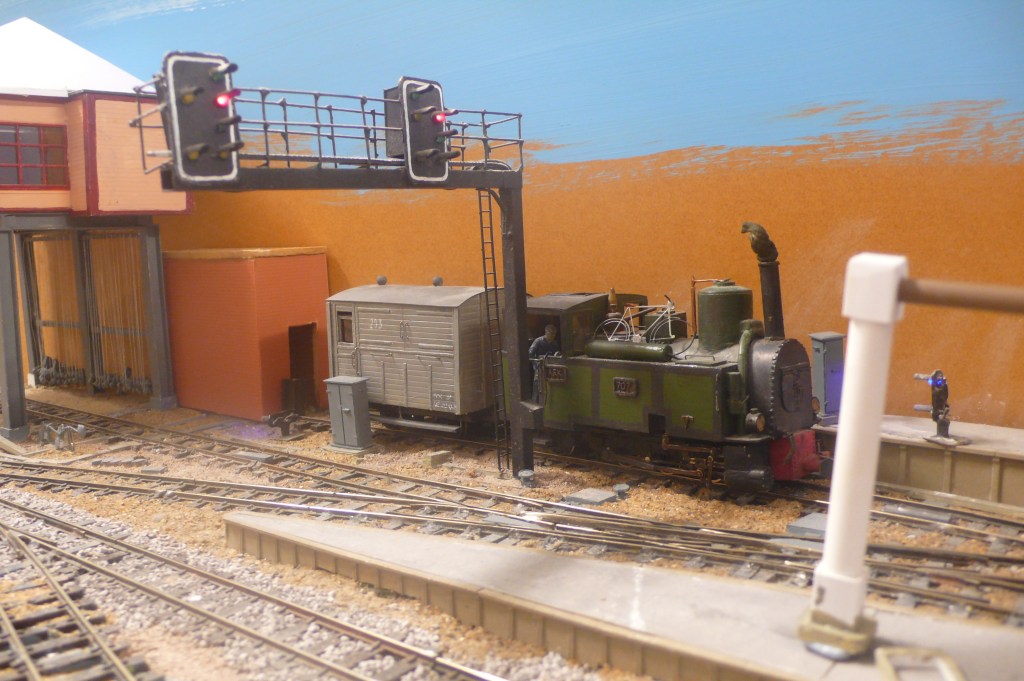
140. More sober considerations prevail at Lacono where the pilot shoves the horse box into the loading siding to receive the race horses. The relay room for the signal box shows up well and the weights and wires added below the box between sessions can actually be seen. There are fifty odd wires as I recall because the points work on the double wire system. Best you do not look too closely at the bodges, although I doubt that many understand the complexities of a German system. I believe that the GWR used it occasionally in South Wales.
NEW PHOTOS
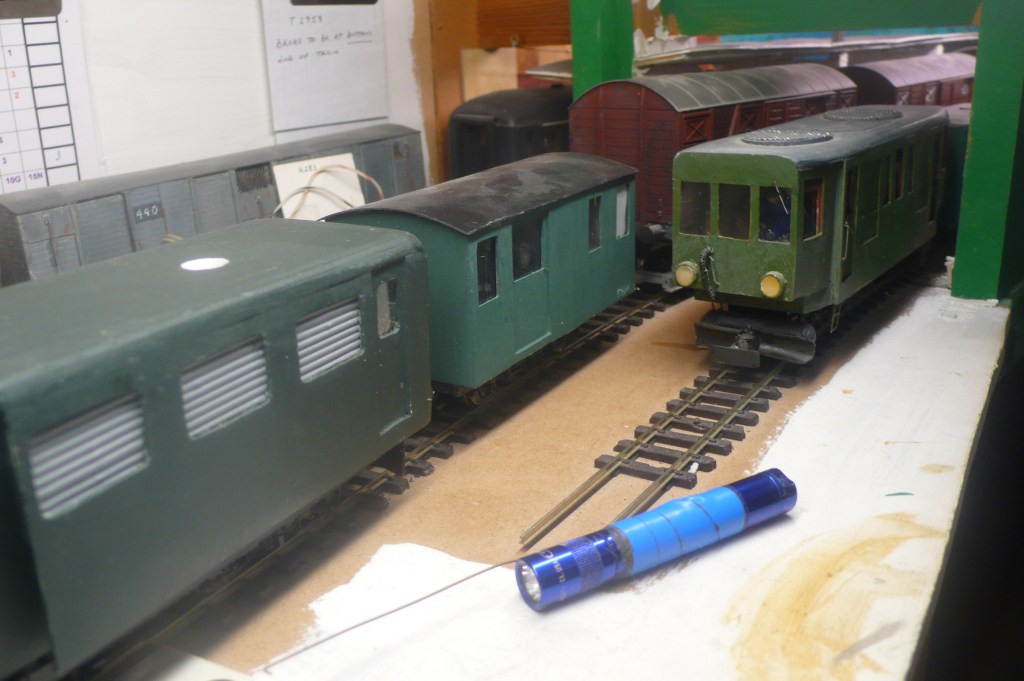
141. This shot shows the cubby hole beyond Relforka’s platforms which represents the AFK yards, workshops and loco shed. These were not modelled as they would dominate the layout. The two freights have arrived and the station, which is effectively a two track fiddleyard, is blocked. Both trains would have run straight through the platforms and gone into the yard in reality. Obviously this is not possible and the loco of the first train in, at the left, has been shoved up the rerailer to make space for the following train. The stock will be removed to nearby drawers before another train can enter or leave. Flexseblamozulo will now receive more attention. Go to jail. Do not pass Go.
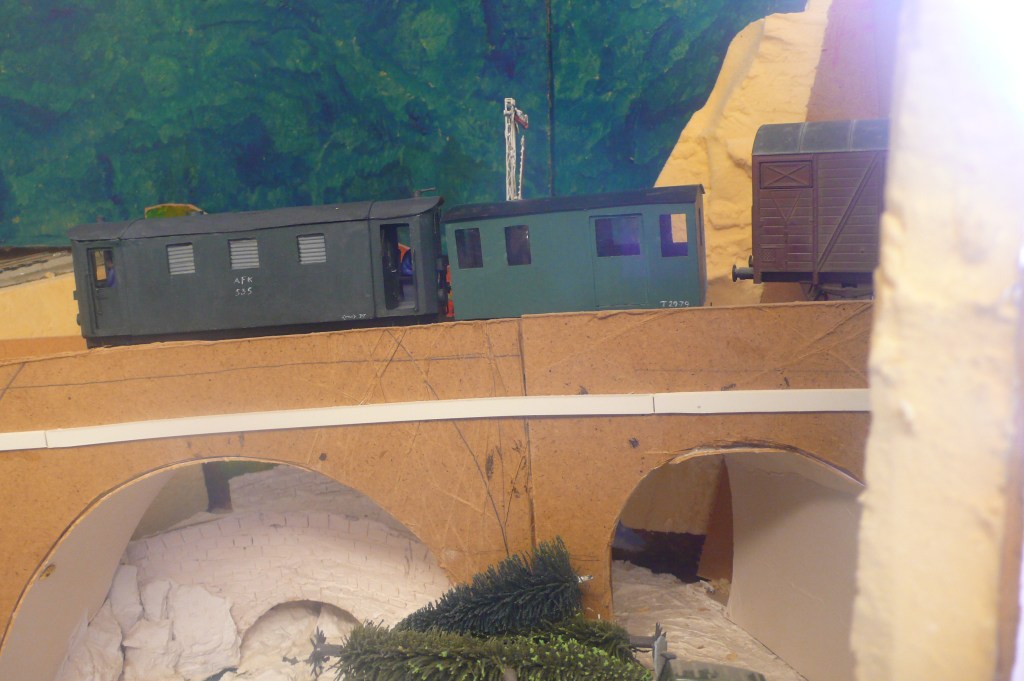
142. As the stored trains shuffle forward the ABC goods enters Altonia and crosses the Aepto viaduct. The enirasignalo used to work but was disconnected for repairs and simply clipped into place to allow scenic work to continue. This was some years ago! If I live long enough it will be reconnected.

143. The FDV-RFK goods crosses the RN424 at Boursson protected only by the flashing light. The lower half of the line has seen three consecutive down freights this morning and the next train will be a down passenger. The local goods will then be allowed to leave. This down train is lightly loaded as a result of the extra train but it could not have coped with the traffic on offer. The train enters the scene from behind the canning factory, the hole being hidden by the tree. It was originally intended to run down the village street but the positioning of the factory mitigated against this idea so the station was moved to a much more rural setting.
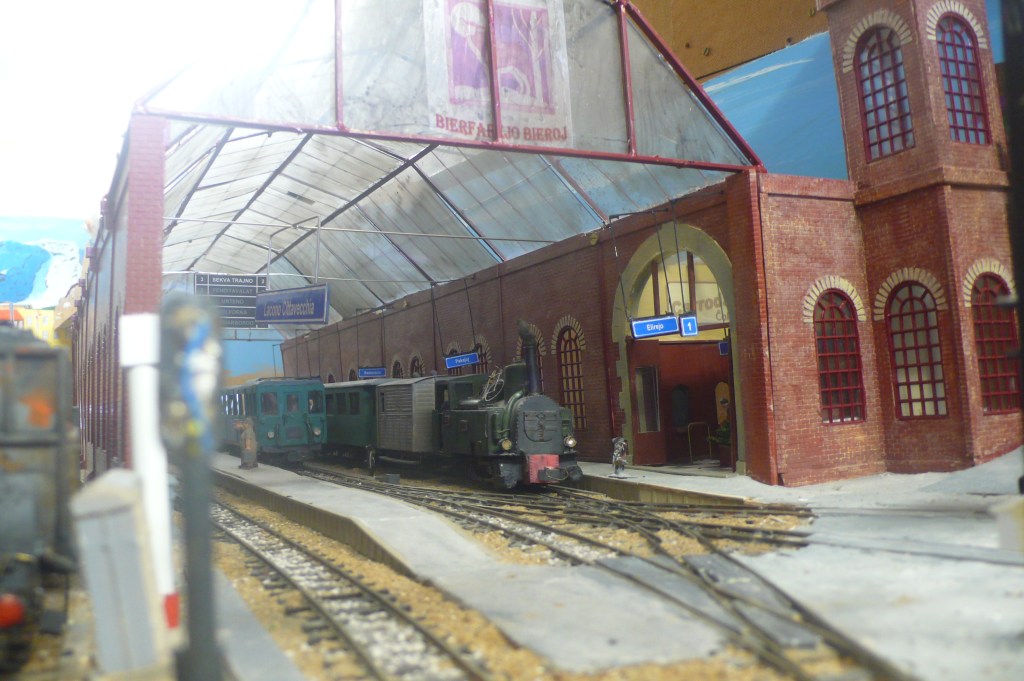
144. After spending some time in the yard the pilot has returned to the passenger side of the station to retrieve the horse box and to couple onto the strengthening carriage added for the last leg of the railcar journey. The Varden railcar waits in platform 2. It cannot pull forward as the shunt signal, just visible beside the horsebox, is standing at danger to allow the pilot to leave platform 1. The shunt signal for this move stands in front of the loco. The railcar will run into platform 3, nearest the wall. The 1950s style “Tube” indicator does not run to “Varden” so “Urteno” will be shown.
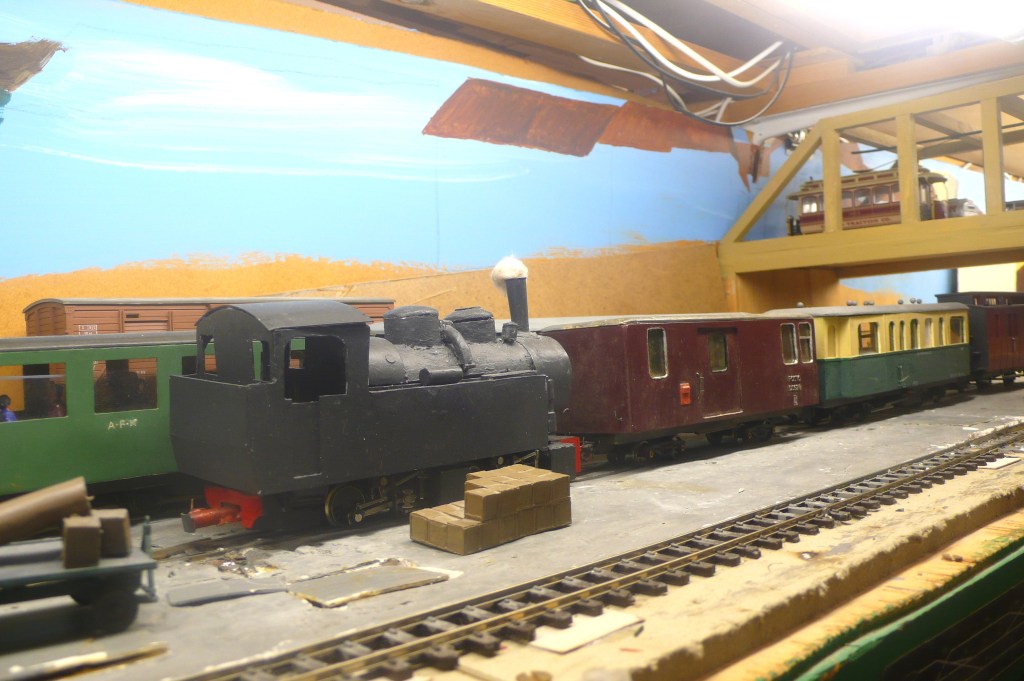
145. Operating the layout is like playing chess. The railcar was forced to stand at Urteno until the Lacono shunting was finished. With this completed the railcar can leave and the mallet can shunt the terminating passenger train. The Post vans and ambulance have to be marshalled in a specific order which is written onto the train schedule.
146. With the railcar having arrived at Lacono Cittavecchia the pilot pulls out across the Karushnastrato level crossing. This is one of the main thoroughfares of the city but the gates can remain down for ten to fifteen minutes at this busy time of day. There is much debate on the perplexing subject by the local politicians but no practical advice, or money (obviously!) available for a solution.

147. The ABC goods has no work to do at Ithilarak today. Sacansa, the staciaĉefino, has other ideas for the crew however. She wants various wagons shunting around the station and she is not the sort of person to be argued with! As she also runs the station buffet they are not going to get to lounge in there either!

148. Bl***y Sacansa! The train arrived on time but will leave 20 minutes late. It is surprising where the time goes when shuffling wagons. The last move drops an open into the wood loading siding, the steepest on the system, except for the mine lead, visible in the background. The top of the wagon already in the siding, next to the massive bufferstop alongside the tractor, is just about level with the leading pony truck of the loco. At least the signal lantern has been “removed”.
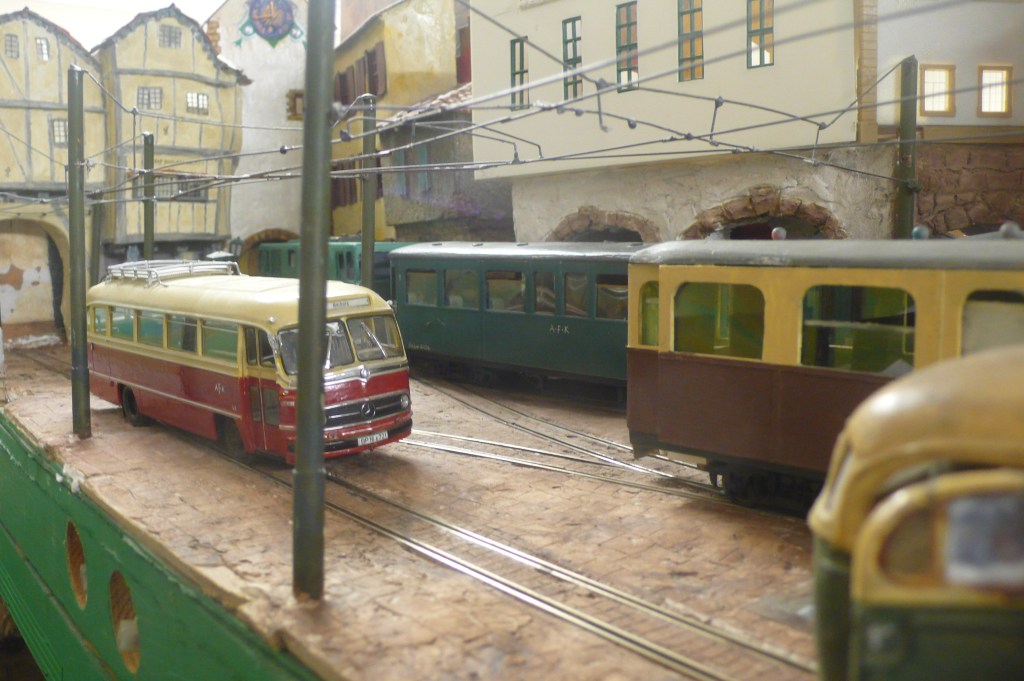
149. The connecting CFS train pulls into the merkatubaxu at Isuri to begin the midday congestion. The company bus stands alongside the train. The train was loaded onto the fiddle area with some difficulty due to the congestion at Caladonno. I once created all the connecting timetables, in skeletal form, and then the computer crashed. They were recreated in rough form during my recent stay in the Cotswolds but need finalising. This “connection” is effectively an ecs move from the Orbonafliko station across town. It is also the only passenger train to be loco hauled as I recall.
150 As the express arrives at Fenditavalat Basabazaro, to use the correct (supposedly mandatory Thalninan) name the Post bus and the AFK bus have also pulled in from their crossings of the remote mountain passes. The loco has pulled forward as far as possible and the clearances are much tighter than would be countenanced in reality, even before the safety elf came on the scene.
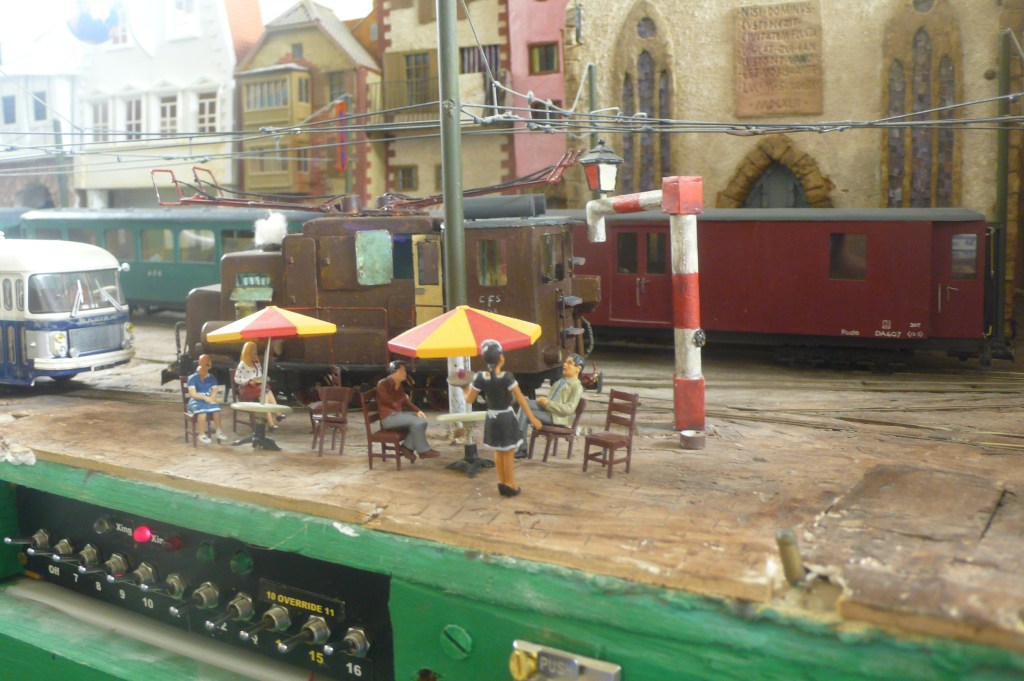
151. The patrons at the café enjoy their meals as the CFS electric loco takes a drink at the water column. In reality they would be more likely to be watered at their own station, as would the AFK locos at Rivabordo, so the crane is really an extravagance. The water was used in a chemical solution for the resistances on the three phase system and was evaporated, hence the steam coming out of the loco. The full length summer express blocks the middle road of the three way point and the pilot would usually stand where the electric is. It has taken the transfer traffic down to Rivabordo and will follow the express up from the junction. Quite what the red Led signifies has been lost in the mists of time, as have the two green ones!
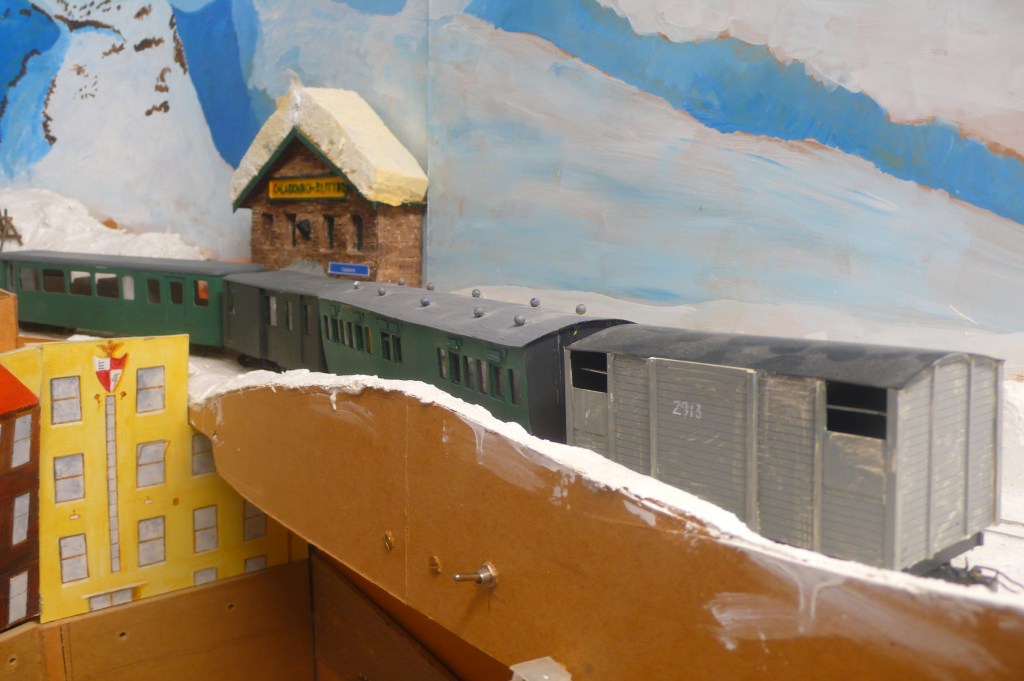
152. Now that the express has cleared Caladonno the market train reverses out of the loop and collects the van of pharmaceuticals from the loop. The clearances for the express were too tight for it to pass so the rear coach was lifted off the rails to let it through. It’s all Normal for Norfolk Narnia. The fascia could use some tidying up and the backscene needs finishing.
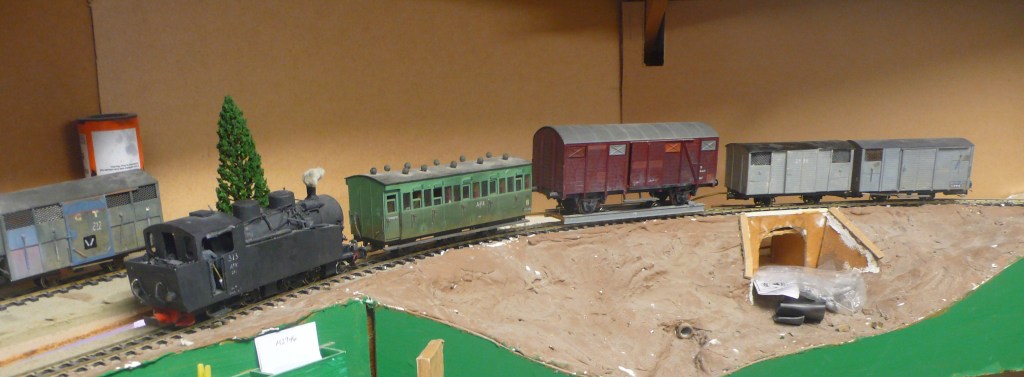
153. The FDV-RFK goods is woken up to resume its journey across the lower end of the KTT. As has been noted an extra train was run to deal with the traffic surge so this train is lightly loaded. I am not quite sure why a predominantly passenger vehicle is acting as the crew van on this train. The six wheeler will probably be removed for the balancing working.

154. The following railcar is seen leaving Lacono with the strengthening carriage and horsebox in tow. The carriage is a totally freelanced generic ne’er-do-well. It, and a companion, were never intended for frontline service.
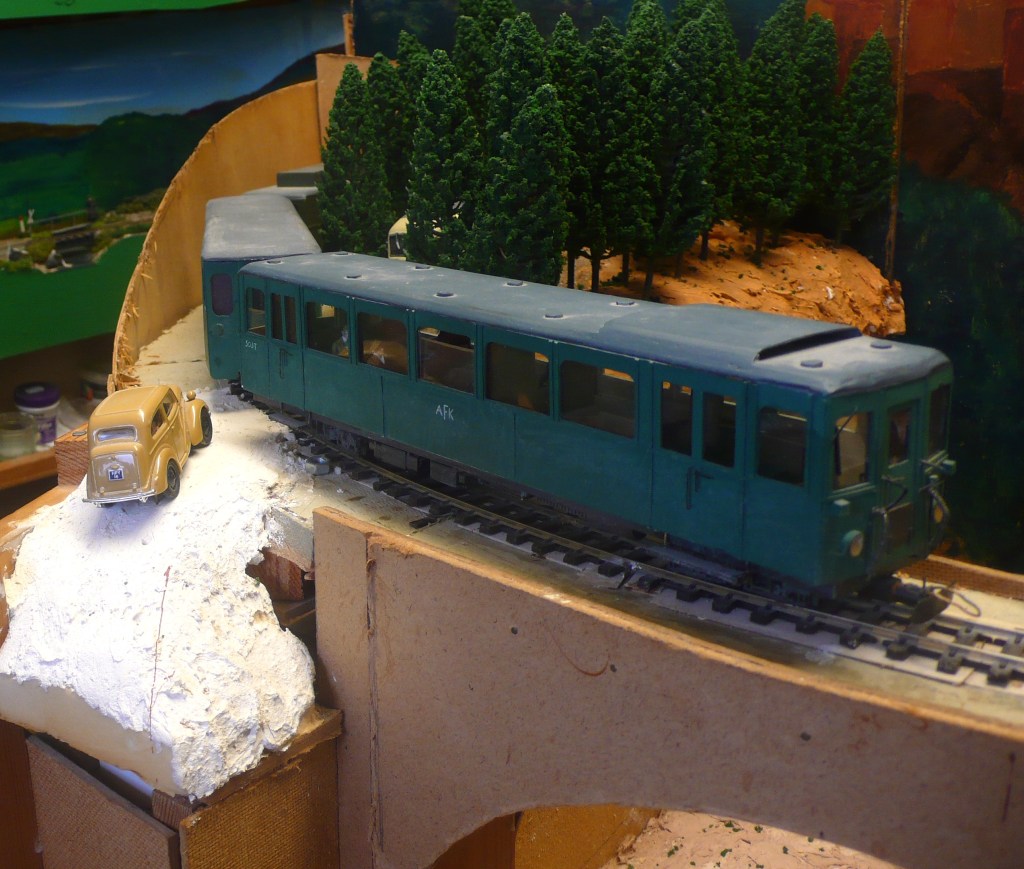
155. The Lacono-Urteno shuttle makes the only intermediate stop at Ghealdaban. As this is the high season it is hauling a driving trailer to deal with the demand for transport to the leisure facilities at the spa. Just visible behind the trailer is a temporary pilot for Urteno seeing as the designated loco has eloped.

156. The shuttle pulls into Urteno where the trailing loco will be detached. The mechanisms were well matched and there were no problems with the move, even on straight DC. The mallet has remashalled its train into the correct order for the short hop to Lacono. Both Post vehicles are sorting vans as opposed to storage tenders. I suppose that the six wheeled one, nearest the camera, could do to receive a Post box to match the newer vehicle.
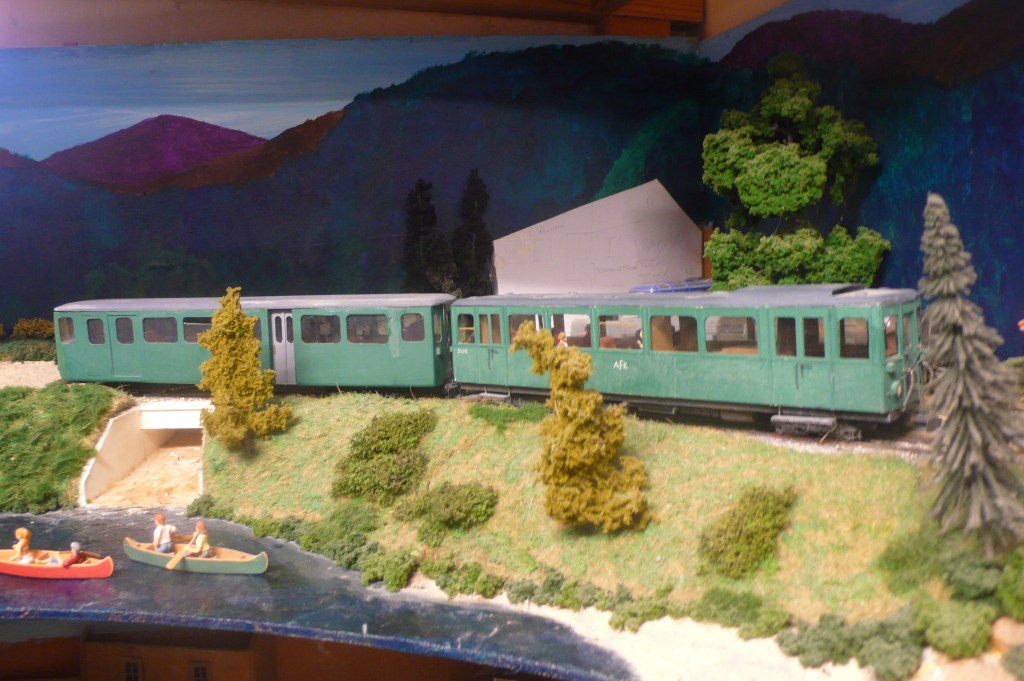
157. The railcar runs forward to Varden in the summer season. There are plenty of leisure options including swimming at the lido, boating on the mere, walking in the hills, or the gardens for the less active, and playing a round of golf. This move terminates on the single line and prevents the Altingablecaŭtoj goods from running early, hence Sacansa’s purloining of the loco for shunting at Ithilarak. The train is supposed to be protected by a searchlight signal but there is no sign of that yet!
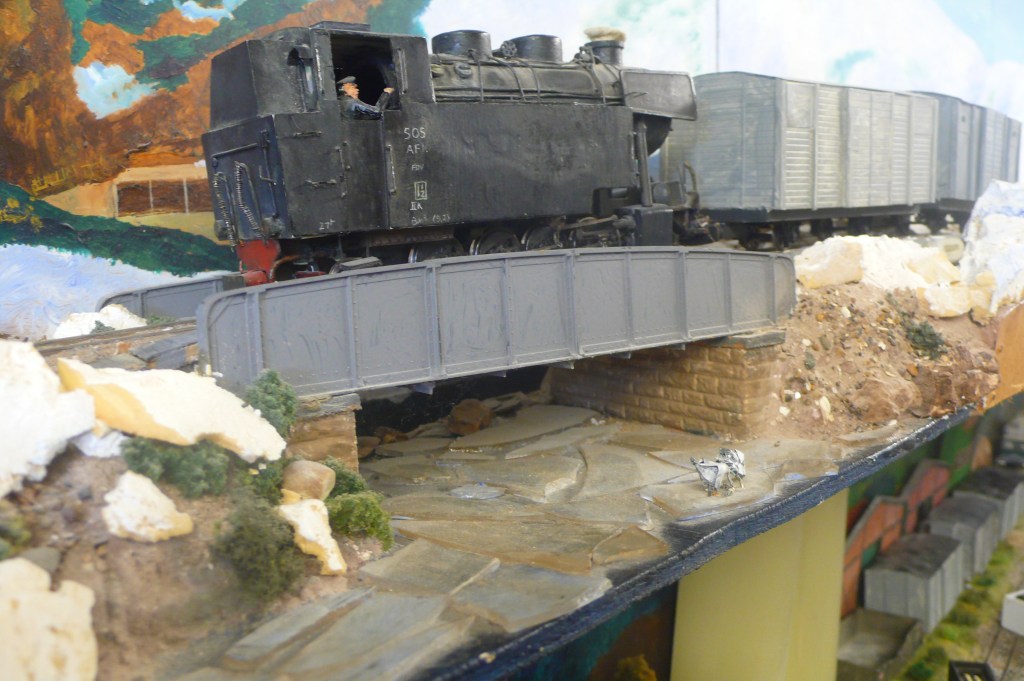
158. The Urteno pilot is enjoying its day out in the high country. We are supposed to be in summer so the ice and snow would have gone by now, even here. Those birds are still fighting over that fish as the 2-8-2T shunts the cattle loads for Fenditavalat onto the loop.

159. The service from Fenditavalat is, unsurprisingly, late in arriving. The steam loco’s crew return to the footplate from the buffet to remove their brake coach and the pharmaceuticals van from the rear of the “railcar”, actually a loco and driving trailer. They will then be ready to depart. Those scholari who have made the trip will be able to enjoy an afternoon of bacchanalian revels both here, and at the talan, in the sure knowledge that the mixto or the notoriously late running last train of the day will eventually round them up, if they can still stand up by then!
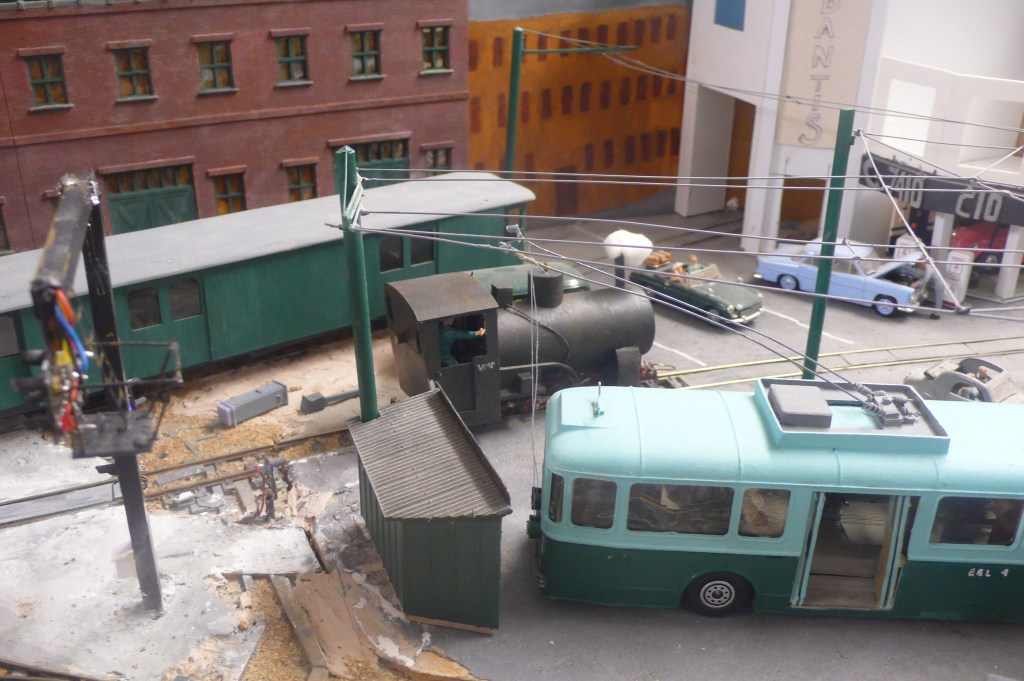
160. The “sausage warmer” has managed to sneak across the congestion in the Karushnastrato and waits beside the small bus station in Lacono. A phone call from the yard office has made sure that it is sent round in time. I used to sometimes get annoying phone calls from the foreman of an industrial customer wanting to know exactly where their train was and why it did not take precedence over any express nearby.

161. There really is not much traffic for the mill today. It has been brought down from the hills by the long distance goods rather than the local. It will be easier to deal with it now rather than the early afternoon when congestion starts to build up. This photo shows why there is a shortage of tail lamps. One has been left on the hopper and it is likely to get put into a drawer with the lamp still on. I suspect that there are half a dozen others in various hiding places.
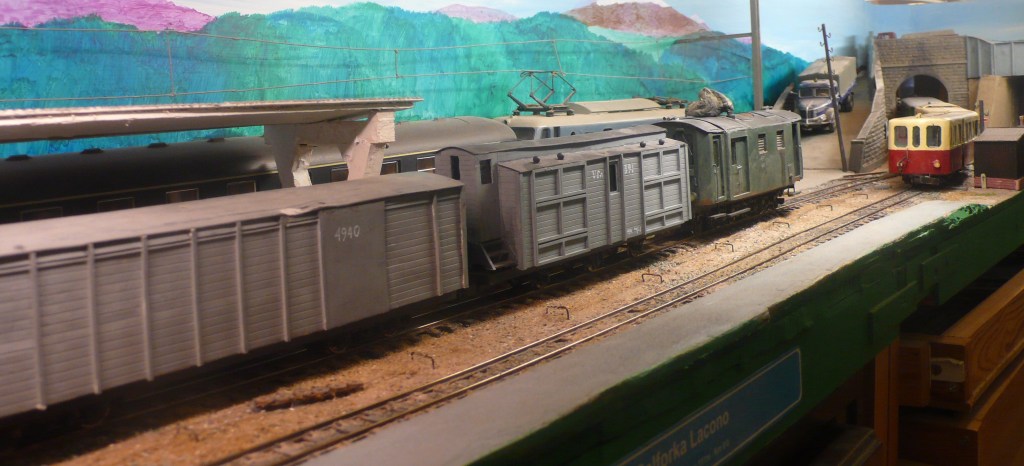
162. The morning railcar arrives at Relforka to find that the ongoing connections are on time. In its wisdom Relforka shed has altered the locos between diagrams to accommodate “Flexseblamozulo” which is supposed to have had its faults remedied. It has been allocated to the afternoon local goods as this often gets into some obscure corners along the way. As a result the dishevelled I-D-I, belching black smoke as usual, is turning out on one of the major passenger trains of the day. It hardly projects an ideal image of the AFK! The first vehicle is a six wheel double horse box. In case any one wonders there was no NG prototype and the model was based upon a Fleischmann model of a German SG wagon. I am not sure whether it is still in production but a quick look at the net failed to find one. It also appears that the train is wrongly marshalled so there could be repercussions somewhere in the mountains.
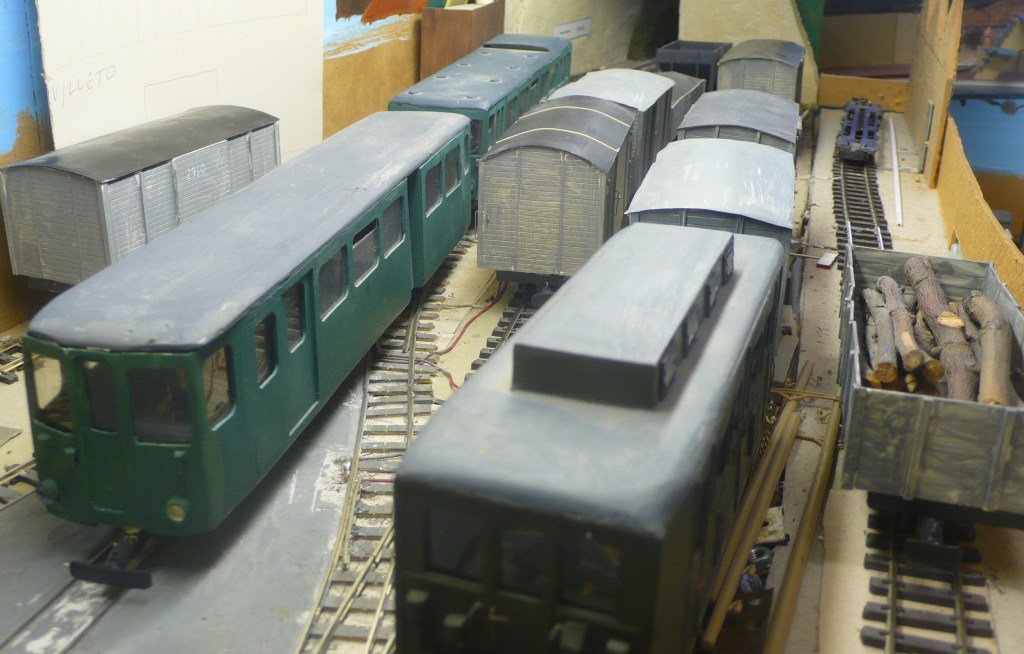
163. The railcar and trailer return from Varden to Urteno so that the line is clear for the, now late running, goods. The passenger train has left behind the mallet and the railcar will stand for roughly an hour to connect with the ferry services. There is unlikely to be any traffic from Varden at this time of day but the railcar will return walking wounded from the hospital to Lacono and also take those who have business or wish to go shopping in Lacono. The spare pilot is shuffling wagons in the karbaflanktrakoj into rakes for various destinations. It also needs to forward a van to Varden.
NEW PHOTOS
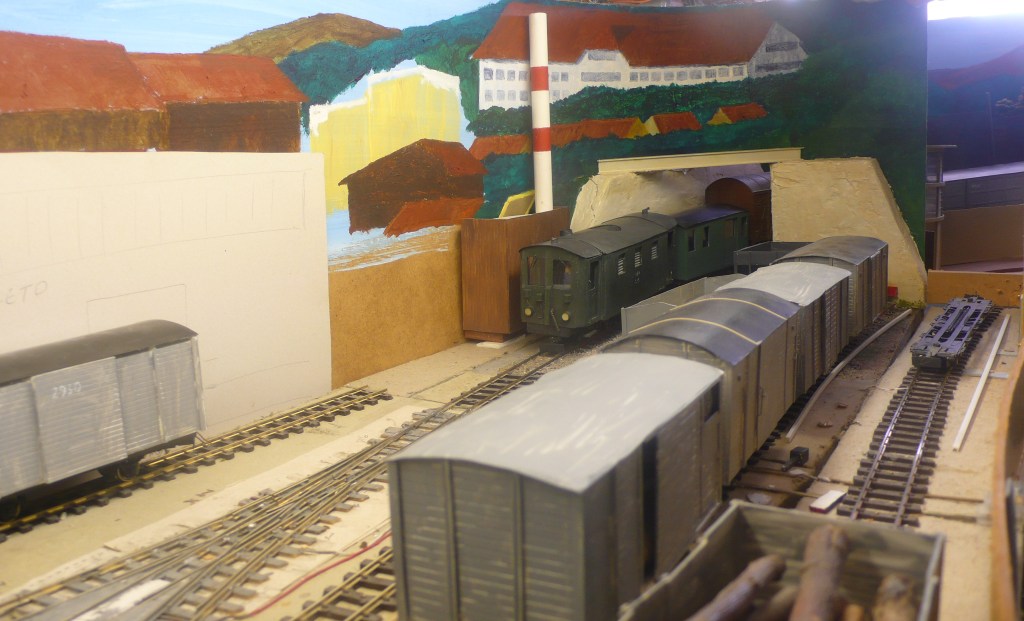
164. The late running goods pulls into Urteno. There is little traffic to go forward and the SG van will be left for the furniture factory. It is nice, sometimes, to have a quiet day rather than scrambling to deal with heavy traffic. On a large system type of layout a quiet day in one place is usually counterbalanced by a busy day elsewhere, as was the case at Lacono earlier this morning.
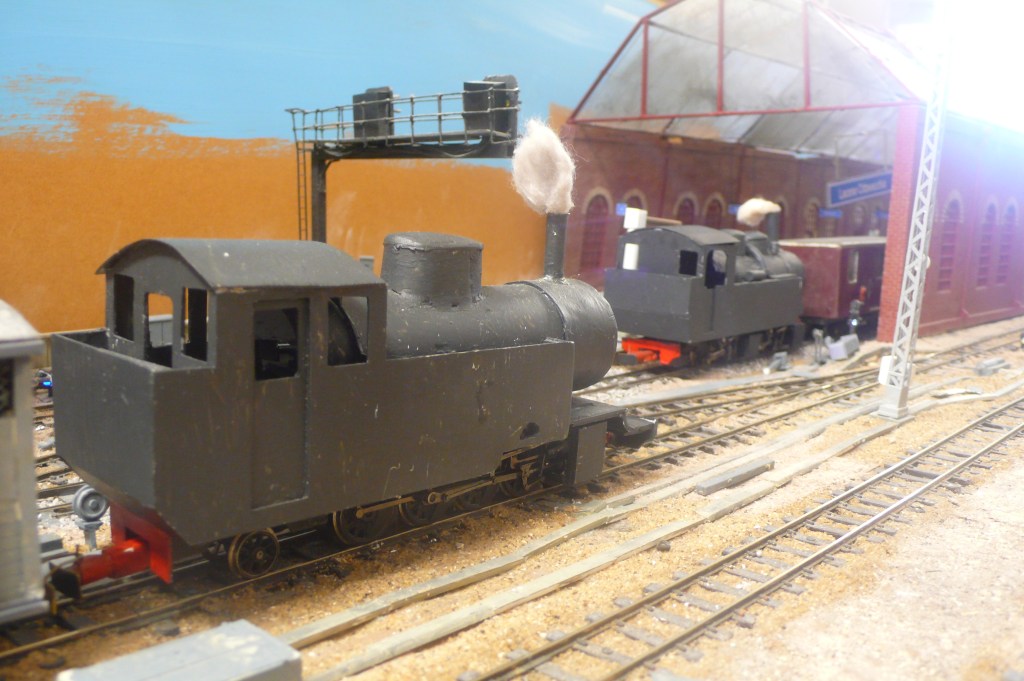
165. The KTT goods pulls into Lacono Gasafabrikatastrato whilst the mallet arrives with the Post vans and passenger at Cittavecchia. The passenger train should take part in a complex choreographed set of shunting moves. Some time back, before the paper mill was added, everything was quite simple. The Post tender at the Post Office was left on the lead into the Kapra pordeĵo and the two TPOs shunted next to the PO platform. This is not a tenable solution now because the Kapra pordeĵo is often used by paper mill trains, although ironically it will remain idle today. Attempts to store the carriages in the yard were a failure because they added to the congestion more than anticipated and the latest idea is to store the carriages on the spare road beneath the signal box. With this in mind it might have been better if the train had arrived in platform 2 rather than in platform3.
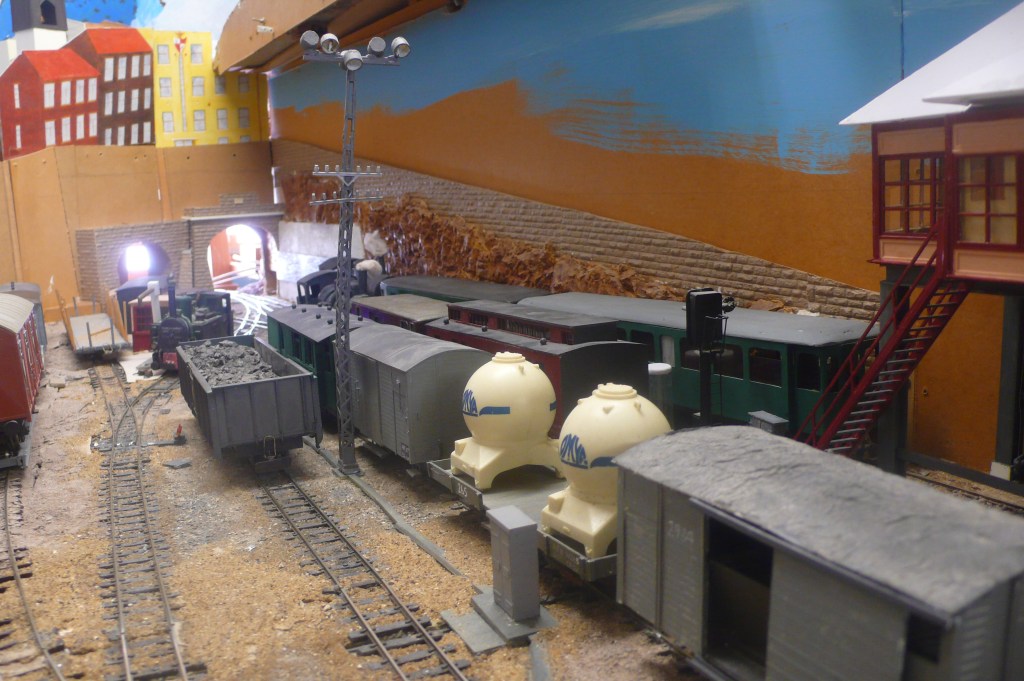
166. The complex shunting manoeuvres are taking place. The ambulance has been left in platform 1 and the train loco and the Post vans wait on the main for the goods loco, now attached to the carriages, to run through platform 2 to the PO to collect the loaded Post van. The yard pilot is stranded, unable to access the goods train which has arrived in the south end of the yard.
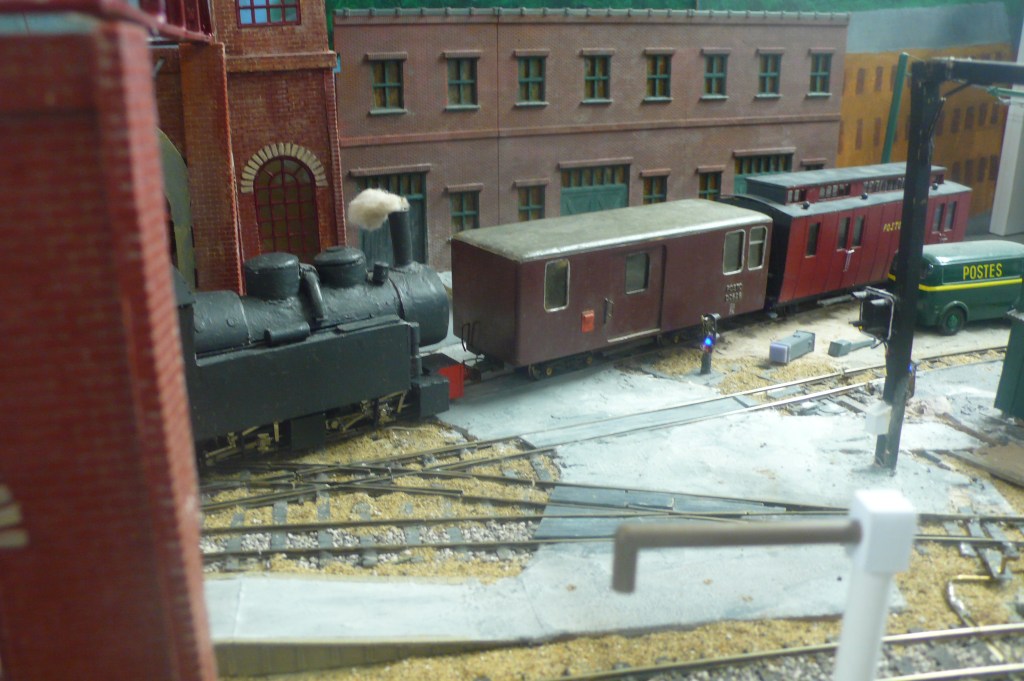
167. The two TPOs are finally shunted into position at the Post Office for loading and unloading. Much of the traffic is correspondence between the three University sites. The Post vans follow rigid schedules and the shunting ensures that the six wheeler returns north in the evening.
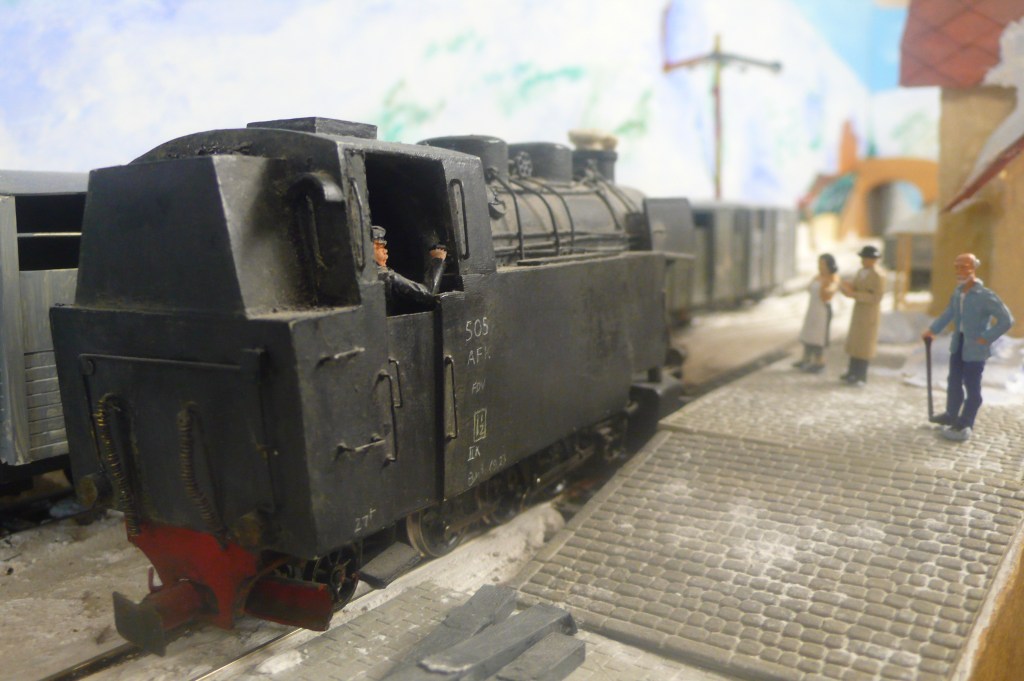
168. The upper end of the line has been neglected for some time and now receives attention. The time allowed for the shunting of the market specials at Ospicio was a bit optimistic. By the time that 505 has finished shuffling vans around it is twenty minutes behind the booked departure time. Quionamerasta has been on the ‘blower’ to Control and has come out onto the goods platform to urge the crew to get on with it. The loco is running through the goods loop watched by Quiona, one of the buyers and a farmer. The station buffet bar is doing a roaring trade by now and these trains are just an inconvenience!
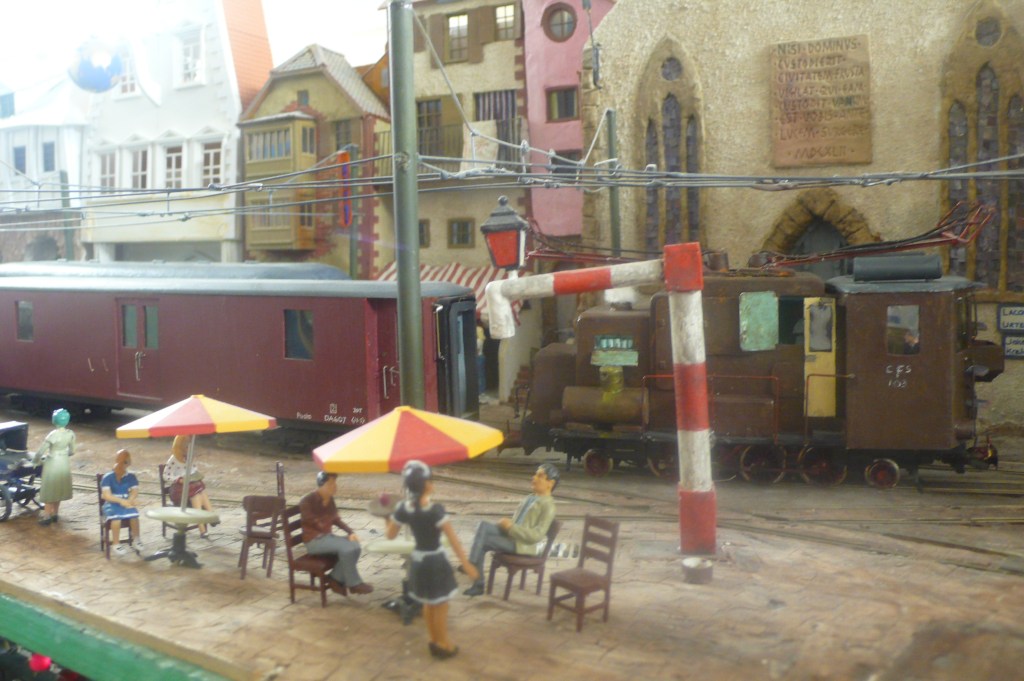
169. The appropriate shunting moves having been made at Fenditavalat, the CFS loco prepares to depart for “Nordaflanko” as the locals call it, with the Post van and the through coach. It is a pleasant day and many passengers have opted to make the pasealeku, the traditional walk from the Basabazaro to Orbonanordaklifo, the correct name for the CFS station across the city. There are plenty of shops and bars catering for the passing trade. The walk is around 1¼ miles and the departure time for Krelm is 14.00. It is now 12.25.
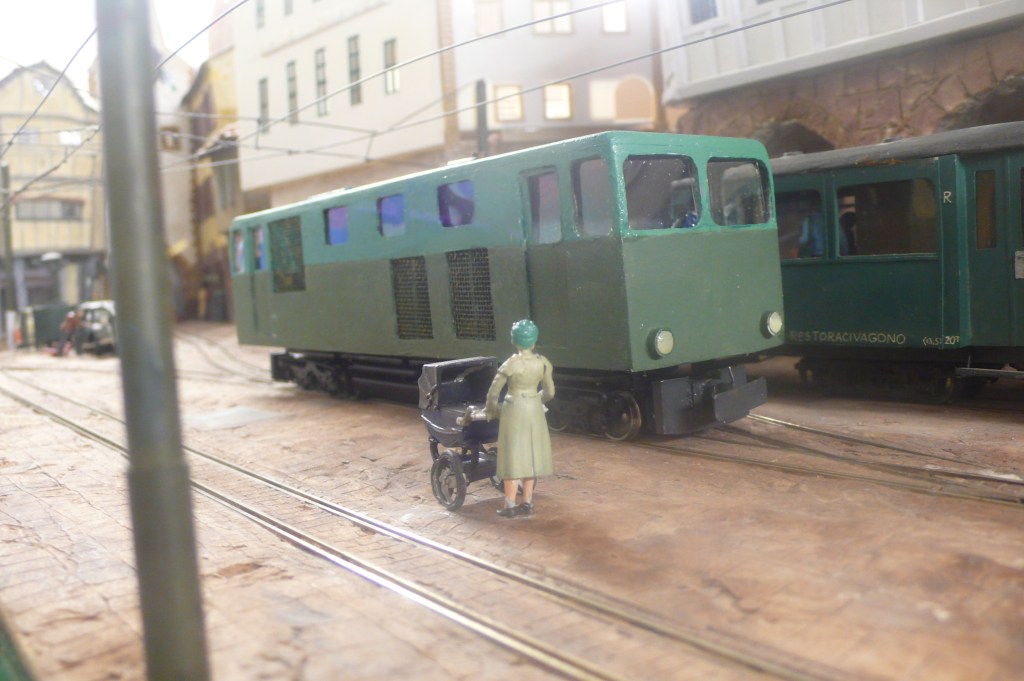
170. The train loco has left the coaches in the RT and stands in the middle of the merkatubaxu, as is normal when a diesel pulls the express. At least the doors are closed today so a cab visit by the scholari is less likely. Most of the likely offenders are currently in Ospicio. Modern students seem to be a lot more staid than we were in the seventies but I suppose that having to pay tuition fees makes them more serious. The matron, one of the self appointed guardians of morals, watches approvingly. The unfinished model, which is on a rather more successful test run than Flexseblamozulo, was based on a modern US diesel chassis which has, surprisingly, proved to be a little underpowered. What the town would make of having the access road into the city’s interior blocked by coaching stock for some time is open to speculation!
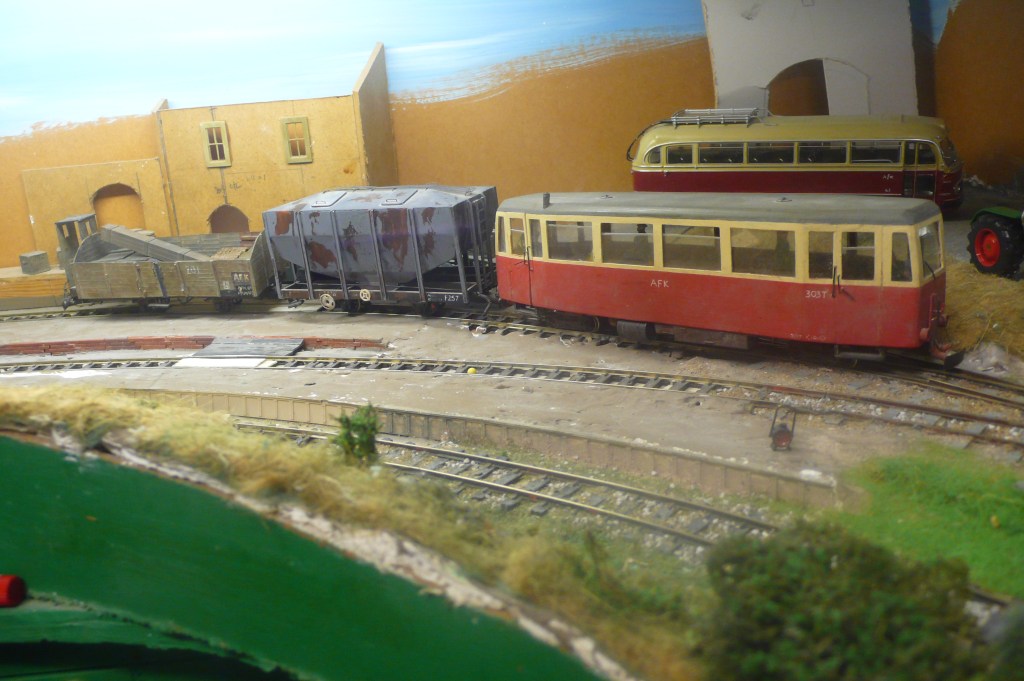
171. Dinner time, or what people outside the North refer to as “lunchtime”, is a fairly quiet period on the AFK. It is the point at which things left in abeyance are caught up with. The railcar from the Eromarbordo shuttle picks up the open wagon of agricultural supplies left by the KTT goods earlier in the morning. This will be taken to the Co-op along with the now empty grain hopper.
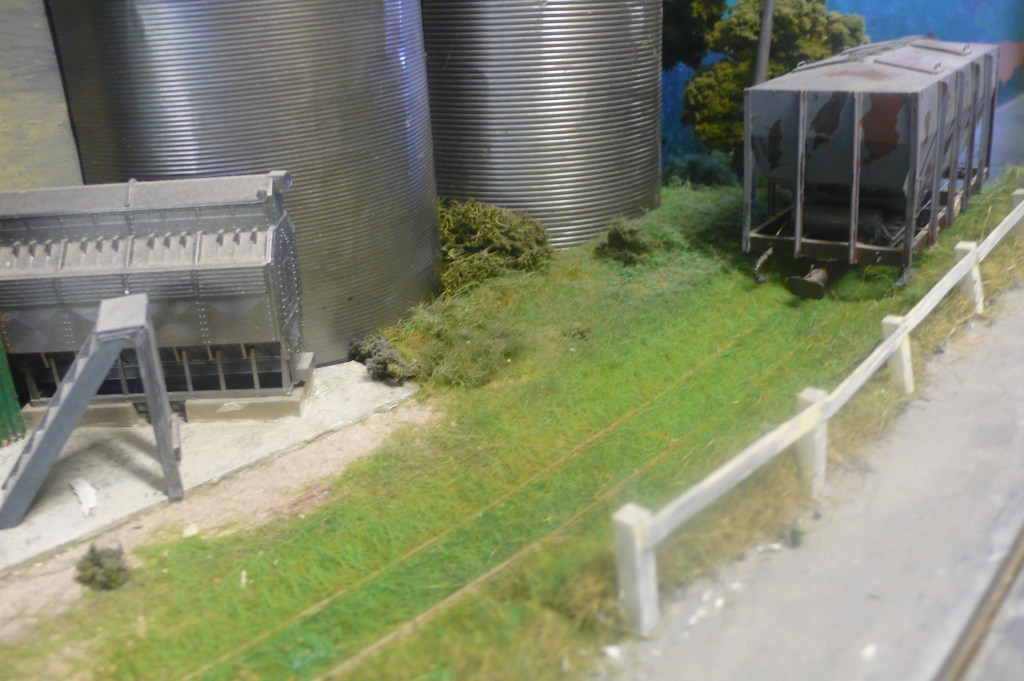
172. The Co-op siding is one of the few places on the layout deemed to be “finished”. The rails dip towards the river as the road, and the rustic fencing, climb to the bridge over the Ero. There is no bufferstop at the end of the siding, just a couple of bent rails. This is all that stands between stock and a quick dip in the river. It might not appear so on first view but there actually are rails in there! Stock is pushed in by hand, as appropriate, to save straining loco mechanisms and, in any case, I doubt that any AFK loco would reach the hopper at the far end. I suppose that a “dead rail” battery loco might. (Quick! Where’s the Billerbahn loco, clockwork or battery?) The hopper has been resident for some time and could stay there for months, or at least until harvest time. It is a prime example of first in last out! Perhaps I should model some greenery encroaching on to it.
173. In a similar “catching up” mode the van left at Urteno for Varden is taken up the vulpafaŭkangulo by the temporary Urteno pilot. A telephone will eventually be provided here so that drivers can contact the signalman for release of the points onto local control. The diving board was an interesting self-designed scratchbuilding exercise in an attempt to capture an Art-Deco style.
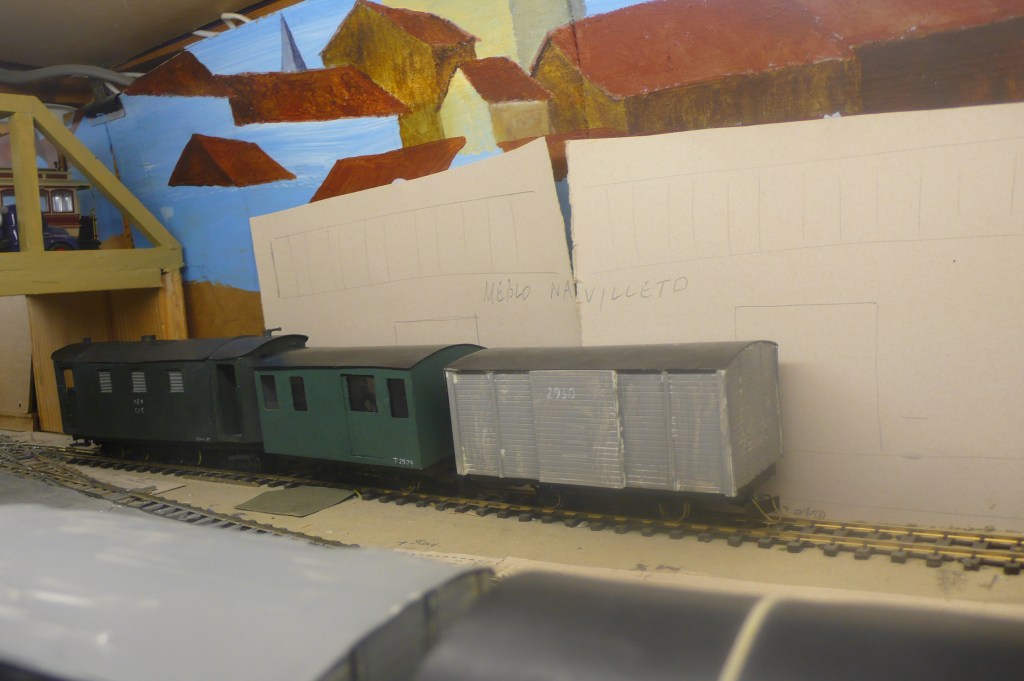
174. The Altingablecaŭtoj goods pulls a van of furniture from the factory at Urteno. The empty SG van trailed across the High Reaches will find a home here, although that will be left to the pilot to sort out. The furniture factory has been a cardboard place marker for far too long and I have no idea when the half finished backscene was last touched.
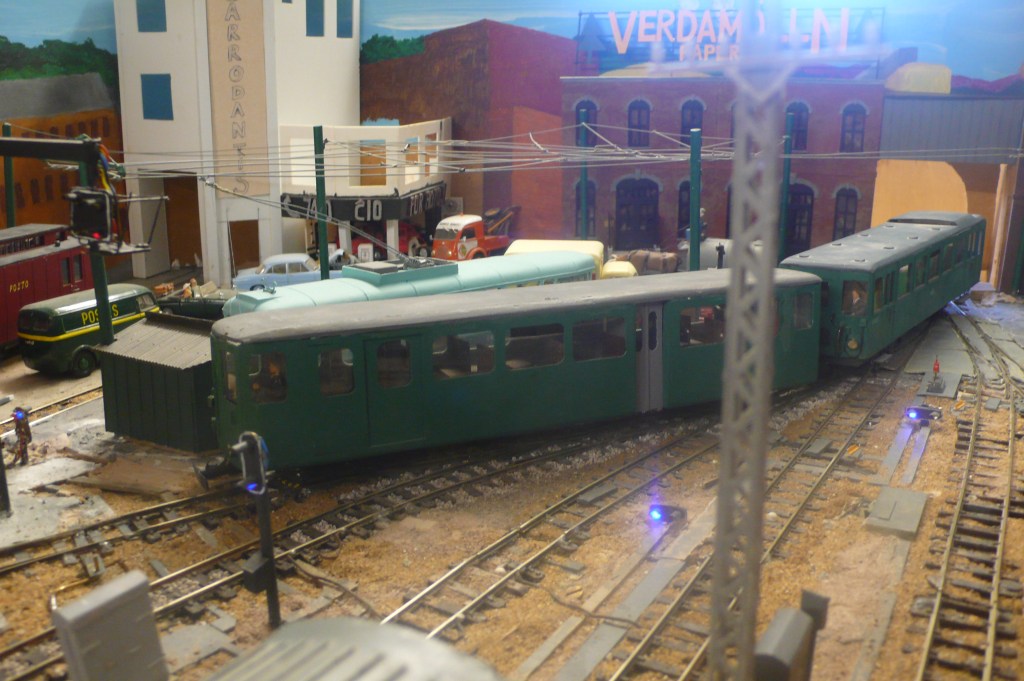
175. A nip into the railway room, between other activities, sees the shuttle arriving at Lacono from Urteno. Unfortunately the trailer has difficulty keeping on the rails. This location is the layout’s Achilles heel. Four roads spring from the 24 inch radius curve and, unless everything is perfect, vertically and horizontally, a propelled trailer will find faults because it is pushed against the outside rail. To add to the fun the trailer has just entered a reverse curve and there is an oblique angle rail joint between two baseboards just in front of the leading bogie. A couple of minor track faults are sorted out and the wheels are checked for gauge but there is still no luck. In the end the bogie pivot holes were found to be slightly too slack and were allowing the bogies to slew across the body. They were replaced and the trailer then ran through the approaches without falling off. It is just an everyday experience for a bodger with scratchbuilt stock and track. There are often a number of variables that have to be investigated before the real culprit can be found. At well over a foot long the vehicle is probably pushing the envelope in any case. The Swiss prototype inspiration had internal solebars so the body is close to the ground making rerailing difficult, just to add to the fun!
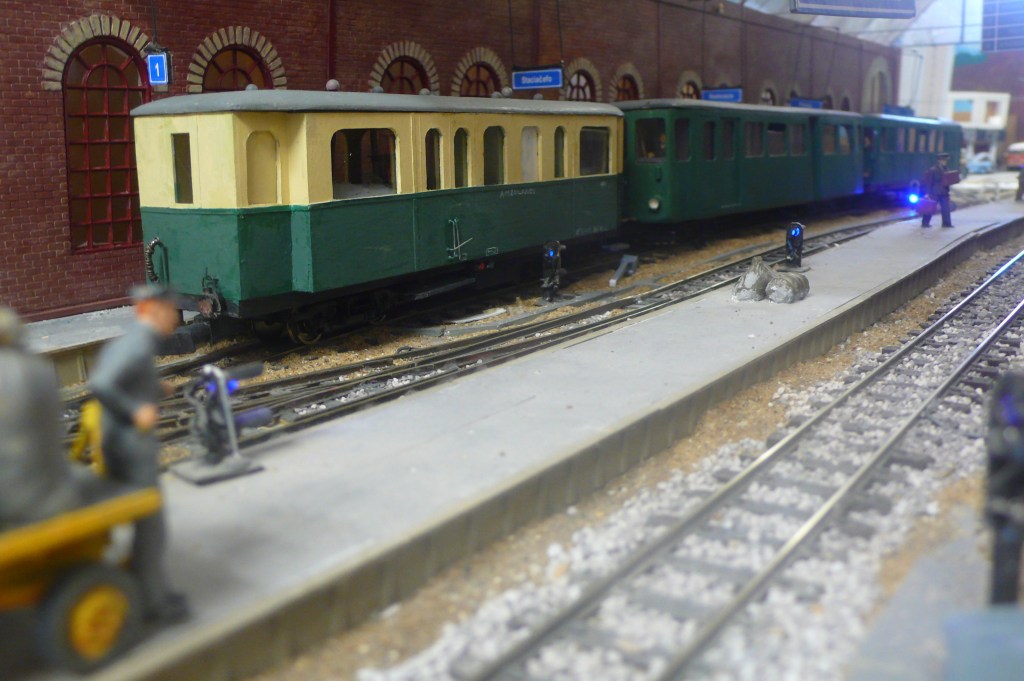
176. The incoming railcar is one of the few trains scheduled to use platform 1, which functions as a carriage siding for much of the day. It couples onto the ambulance which has been loaded with patients travelling from the provincial capital to the medical hub of the province. Many of the passengers in the railcar and trailer will be going onto the afternoon shift at the hospital.
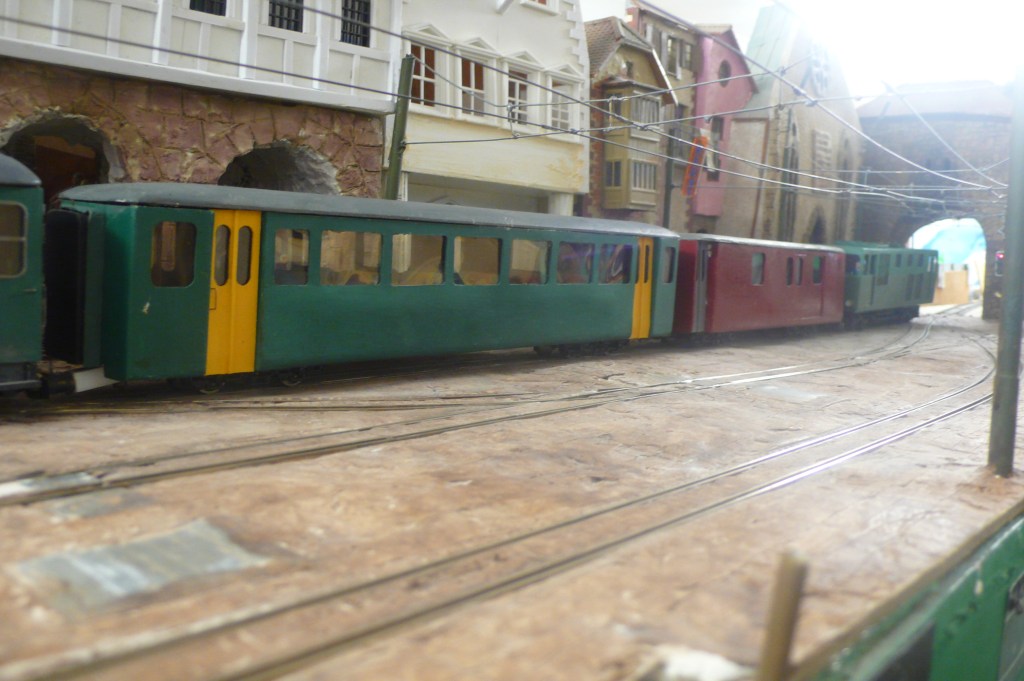
177. There is action in other places too. The CFS railcar has brought the through carriages round to Isuri’s merkatubaxu and the train loco has positioned them on the front of the express for the return journey. The coach with the yellow doors is the longest ever built for the layout. It was built very early in its history and languished in a drawer, incomplete, for years before being finished to a basic standard. To accommodate its length the Post van is shorter than the other vehicles so that the pair match the other vehicles in the set.
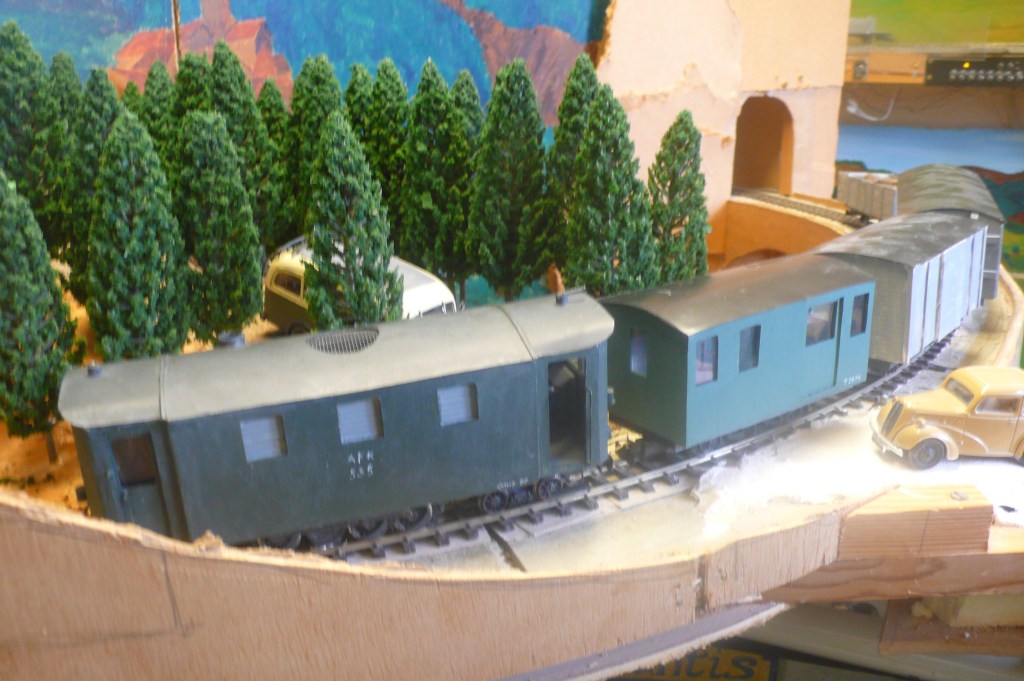
178. The Altingablecaŭtoj local goods makes the short hop from Urteno to Lacono, running slightly behind time. This is a busy stretch of line on a summer afternoon with railcar shuttles, excursions and goods trains, not to mention the market special, running to and fro.
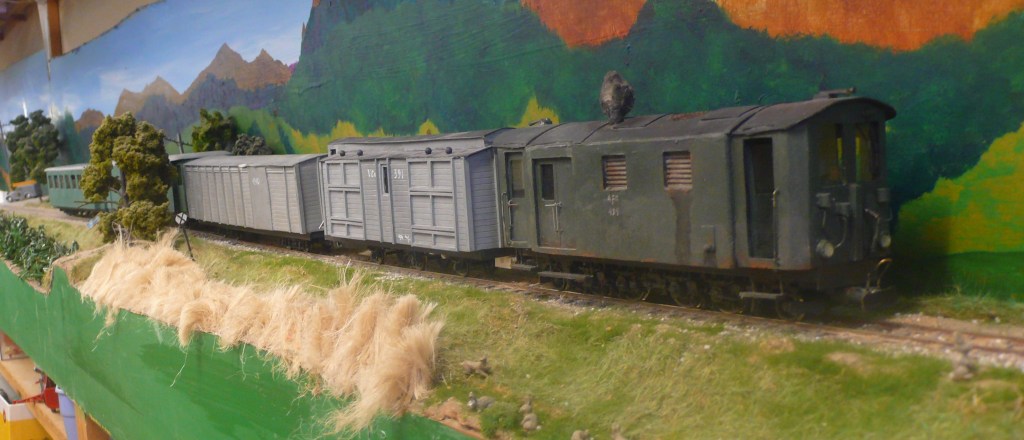
179. The mixto has left Glissent behind and is running through the fields in the valley bottom. The unintended warping of the horsebox clerestory adds a little character. The loco door is wide open on this warm summer afternoon, although the dishevelled loco is a less than alluring advert for the NG system.
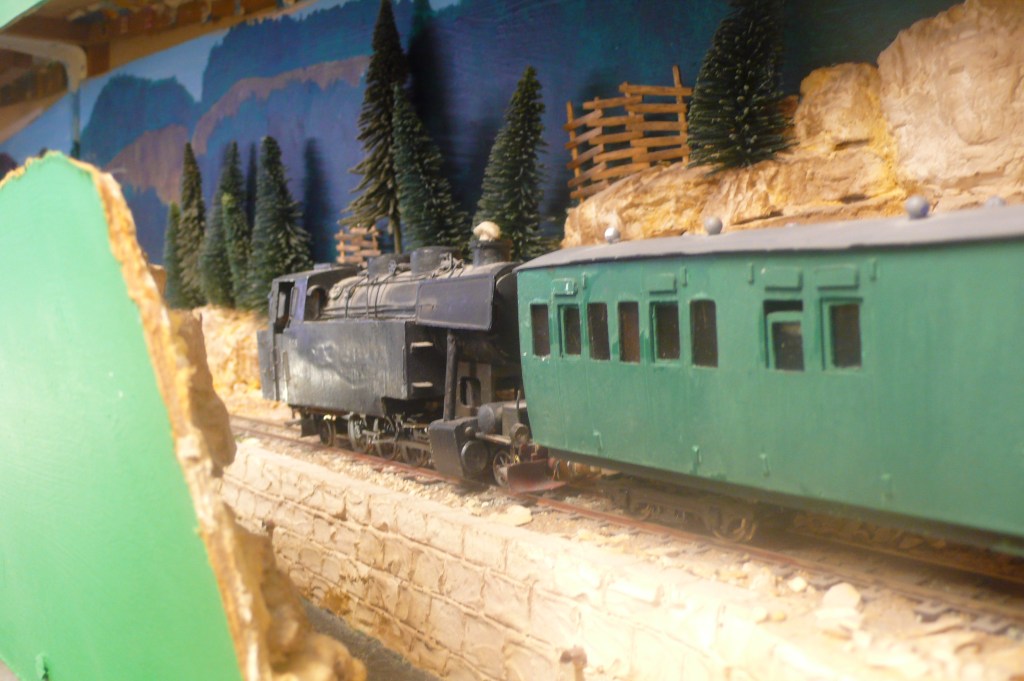
180. The southbound cattle special, from Ospicio market, runs through the Aepto Gorge. It has already unloaded most of the cattle but, rather than shunt wagons at wayside stations, the whole train will run through to Lacono. This is necessary because of the tight timings. The four compartment brake is probably overkill for the number of likely passengers but it is what was to hand at the time.
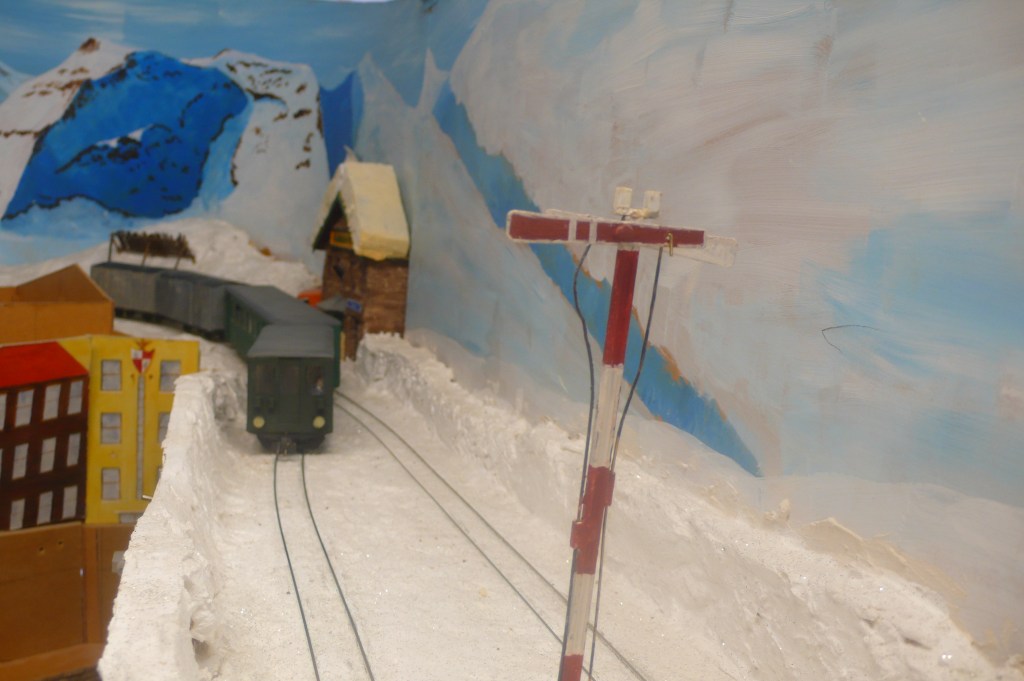
181. Having been checked by the home signal the northbound market special slowly runs into the snowbound Caladonno loop. The short train will just fit into the loop, which was added to the layout as an afterthought. It is obvious where the backscene painting stopped!
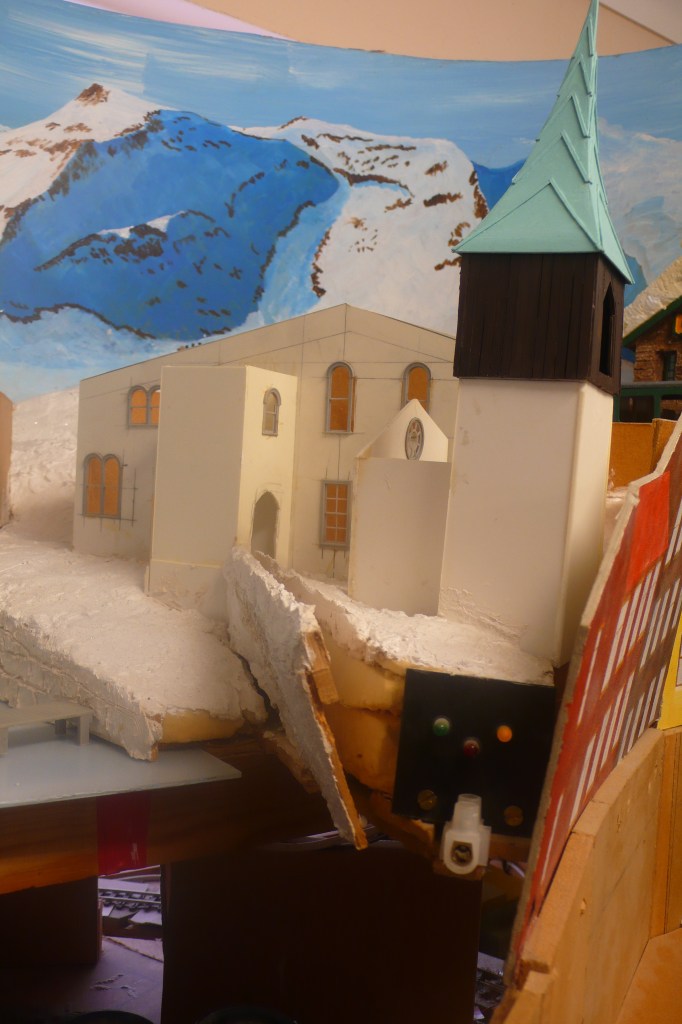
182. The entry point to the Caladonno loop is at eye level and is embedded in the snow. As a result it is almost impossible to see which way the points are set when standing in the aisle. The operating rod is also quite flexible at this length, especially with the bends incorporated to fit it to the much lower operating elevation than the trackwork. A detector has been installed, as at other similar places, to show the route setting. The yellow LED indicates that they are set to lead into the loop. Note that there is a red for “Wrong”, which is detected by wiring two microswitches across one another to make sure that the points are positively home. The crooked spire of St. Anaktix shows up well, although the church yard wall persists in falling over. For those of you that have forgotten it allegedly was so surprised by a virgin getting married that it turned round to look. As at Chesterfield, it is said that if another virgin gets married it will straighten out.
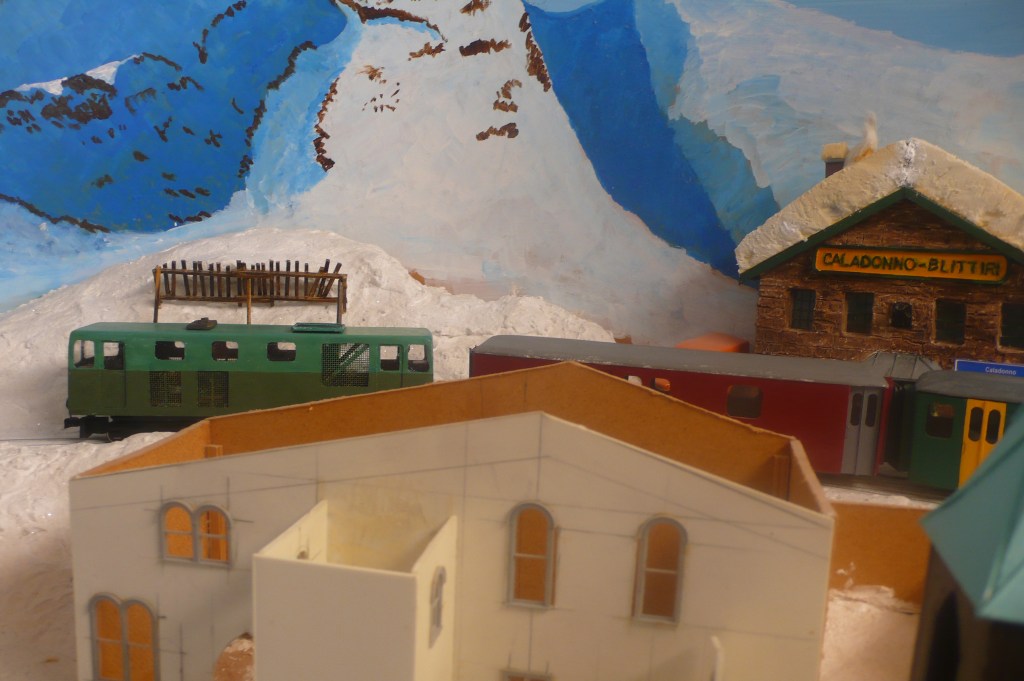
183. The express passes the special and pulls to a stand with the Post van in front of the station, whilst blocking the road to Blittiri. The station sign, in Narnian colours, names the station for both villages whereas the official AFK sign, just visible at the bottom right in blue enamel, does not. There is usually little passenger traffic from the Narnian enclave but if there is any today the front carriage door is available. The other doors are inaccessible due to the snowdrifts (see picture 181) unless the passengers have already gone onto the island platform. The snow fence behind the loco shows up well.
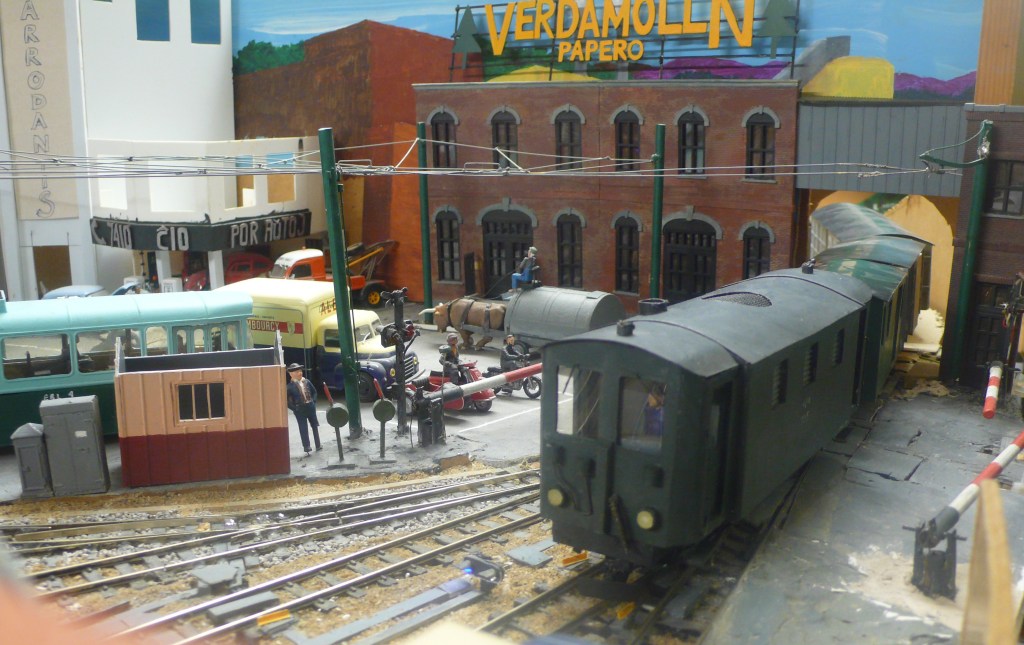
184. The Altingablecaŭtoj goods runs into Lacono Gasafabrikatastrato slightly behind time. The consist today is unusual in that there is no traffic to go forward to the paper mill, thereby removing one source of congestion. Its journey has been rather trying as the pick up skates have needed a lot of attention. Hopefully they are now correctly adjusted. They seem to be more bother than they are worth but the original chassis is a Roco 1-C electric shunter which suffers from effectively only collecting off four wheels when the traction tyre set are discounted.
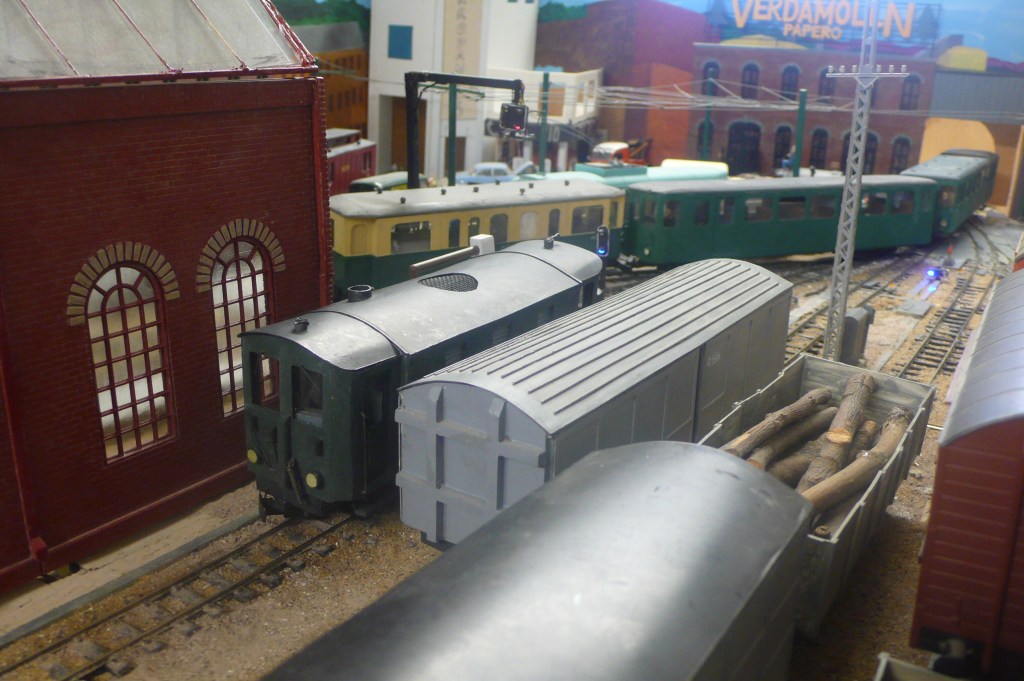
185. A few minutes later the railcar shuttle leaves for Urteno with the ambulance attached. There were no problems with this move as the power unit is at the front. The 2-C-1 loco has been sent to the north end of the goods loop where it is currently idling without a crew. It has been decided to replace its sister, the untidy 1-D-1 on the mixto, one of the most important trains of the day. The usual game is taking place in Control, namely ringing Nerv control to ascertain who is in the Beruna Control room.
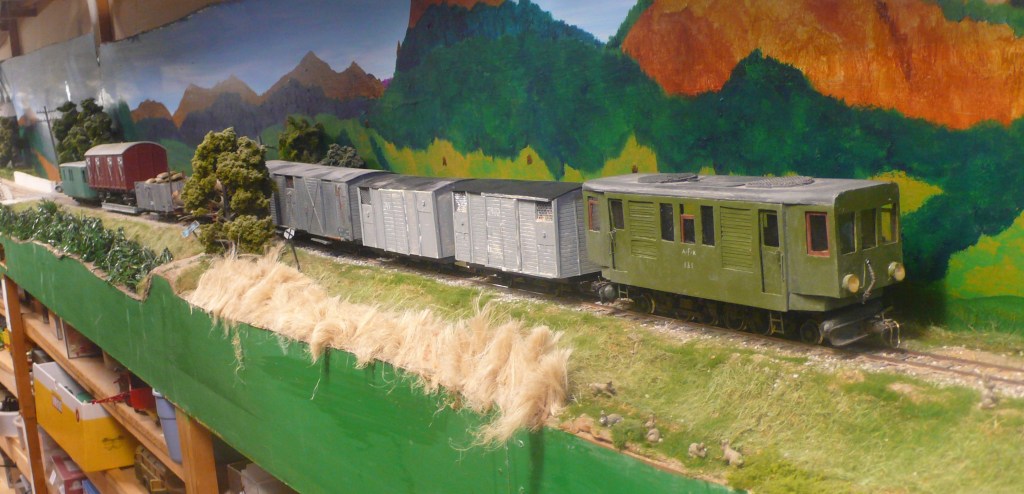
186. The early afternoon timetable lists “flights” of trains, all travelling in the same direction, rather like the SNCF used to do during the 1960s. The RFK-FDV goods is following the mixto, as planned, and is on the same piece of single line. The IBS at Sojonno allows for this situation which reduces congestion. The train today is mostly composed of empties, including the SG van on the tail, which will be dropped off along the way as needed.
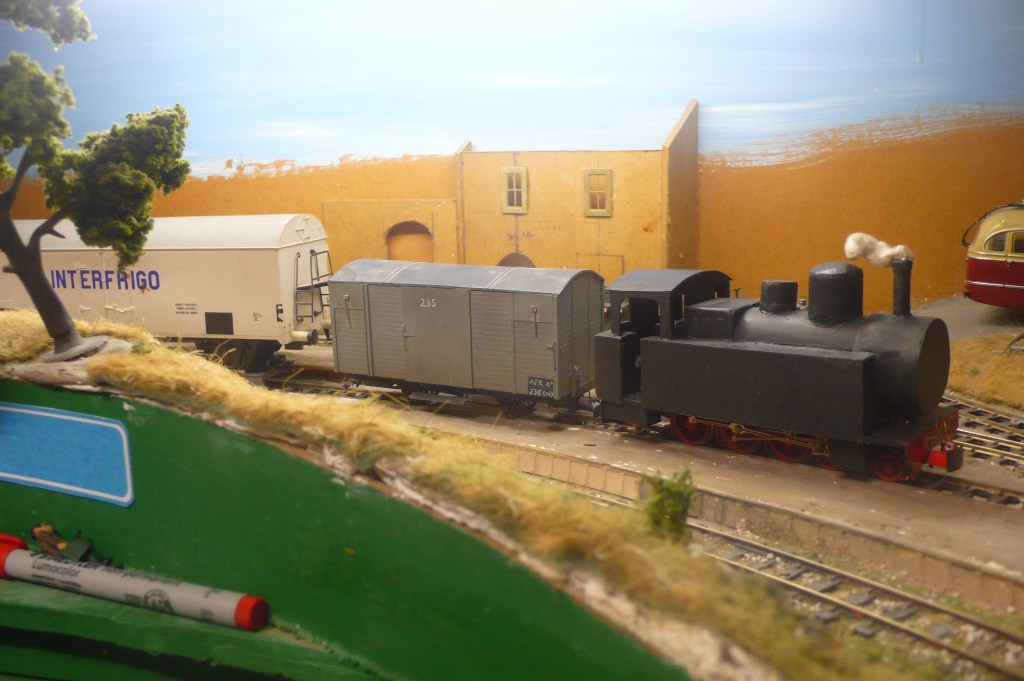
187. Hot on the heels of the Fenditavalat train the Eromarbordo branch train pulls into Breĉo de Glissent. It will run round here before returning to Lajver and taking the branch. The fish loadings are known and the SG refrigerator wagon will not be needed today but it is being taken in for tomorrow. The leading van contains fishing equipment. The 4-6-0T loco is performing well after its initial trials and tribulations with this chassis. The previous one, you might remember, belonged to a “Shelf Queen” and was bl**dy useless! The loco should have worked the returning KTT goods but a three way swap took place to allow the Bo-Bo-Bo to work that train.
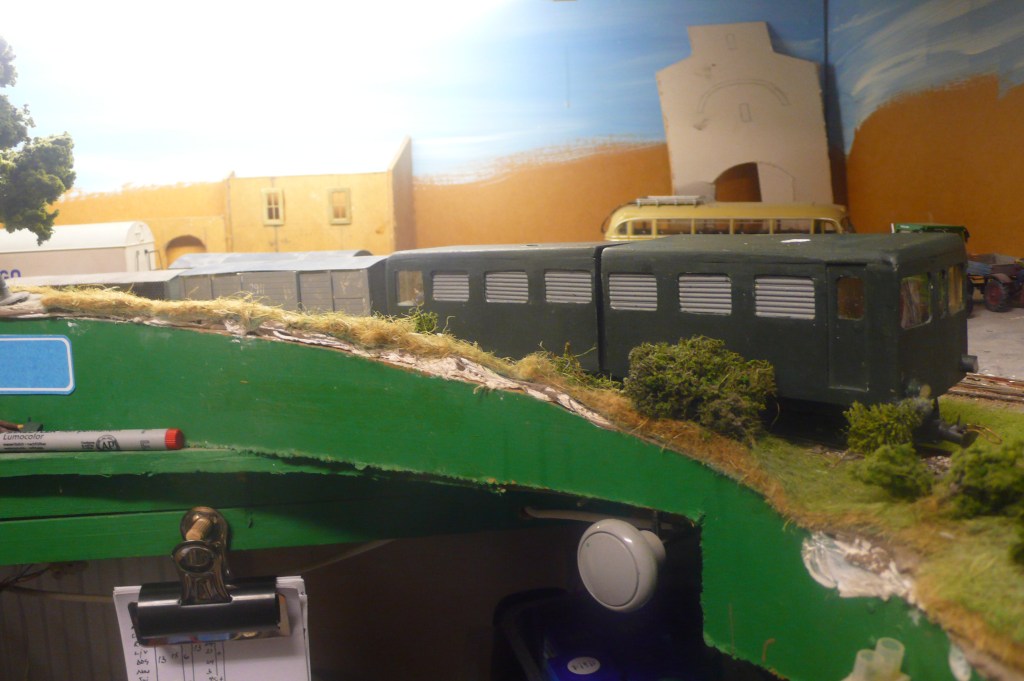
188. Speaking of the Devil, the KTT local goods, allocated to “Flexseblamozulo” has arrived on the RT (main line), without incident this time around, and will shunt the yard. The loco of the branch train has run round and the train is just visible in the background, standing on the PFT (loop). It will depart immediately.
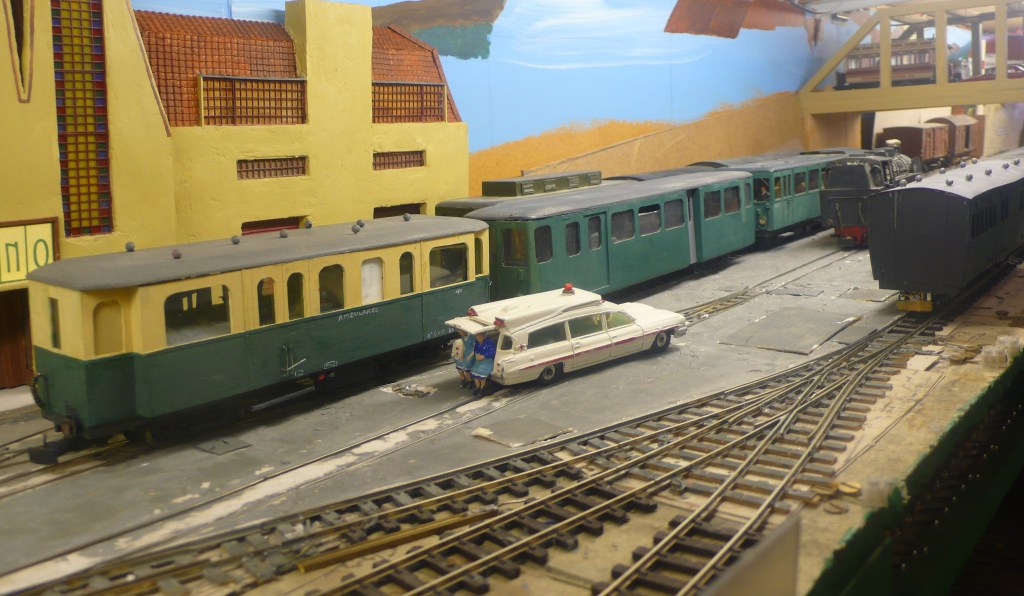
189. The day out for the banking crew has ended as the cattle special arrives in Urteno, 20 minutes behind the booked time. The banker just has time to pull off the train and get into the loop before the railcar shuttle arrives, towing the ambulance. The medical staff are waiting but, as the cattle are being unloaded, they have decided to wait for things to calm down before dealing with the patients. The shuttle will run to Varden and there will be plenty of time to do this before it returns. The road ambulance is an ancient repainted Corgi toy.
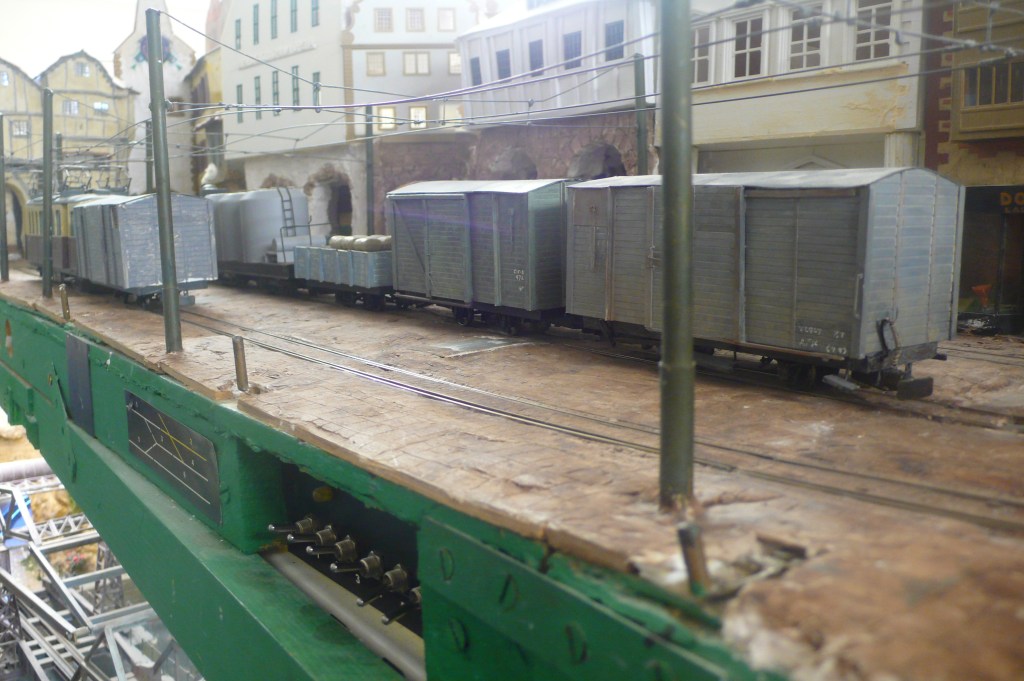
190. The pilot brings up the transfer goods from the CFS into Fenditavalat Basabazaro. This was exchanged with the electric railway at Rivabordo. Unfortunately the brake was left in the goods yard after the morning service arrived. This will cause minor problems in that it needs retrieving but the road van, behind the electric railcar, also needs to be in the consist. As per usual there is time pressure and the cattle special, which crossed the express at Caladonno is also due to arrive shortly. The road van contains shipments for various stations to Lacono.
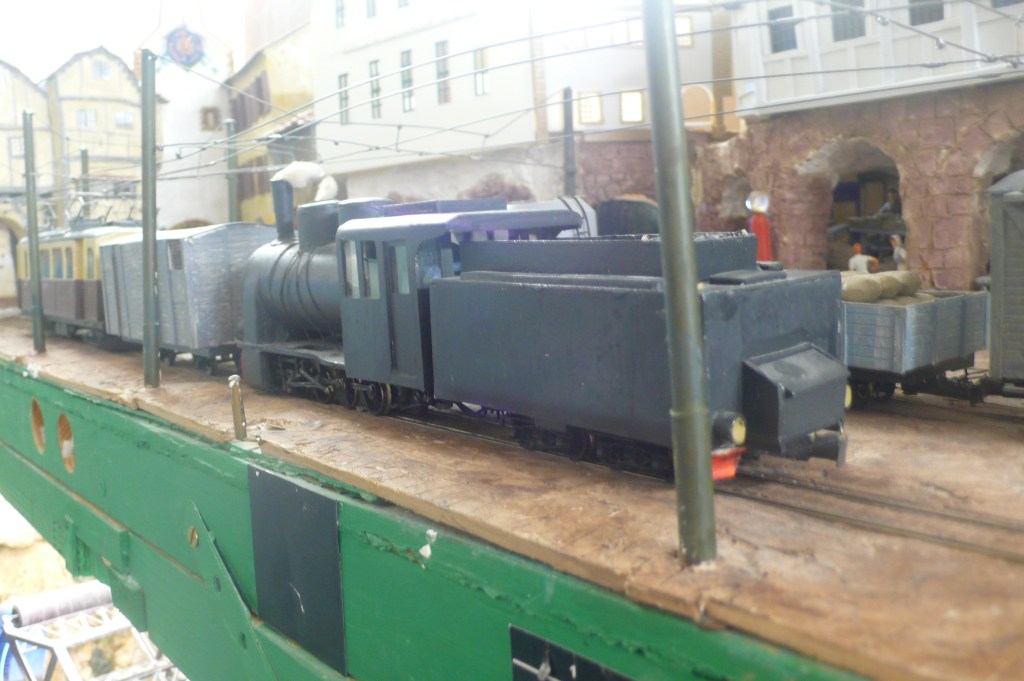
191. The 0-8-0 has come into the square, directly behind the pilot as it has “run on sight”. It has been diverted onto the road van which has trapped the railcar for some time.
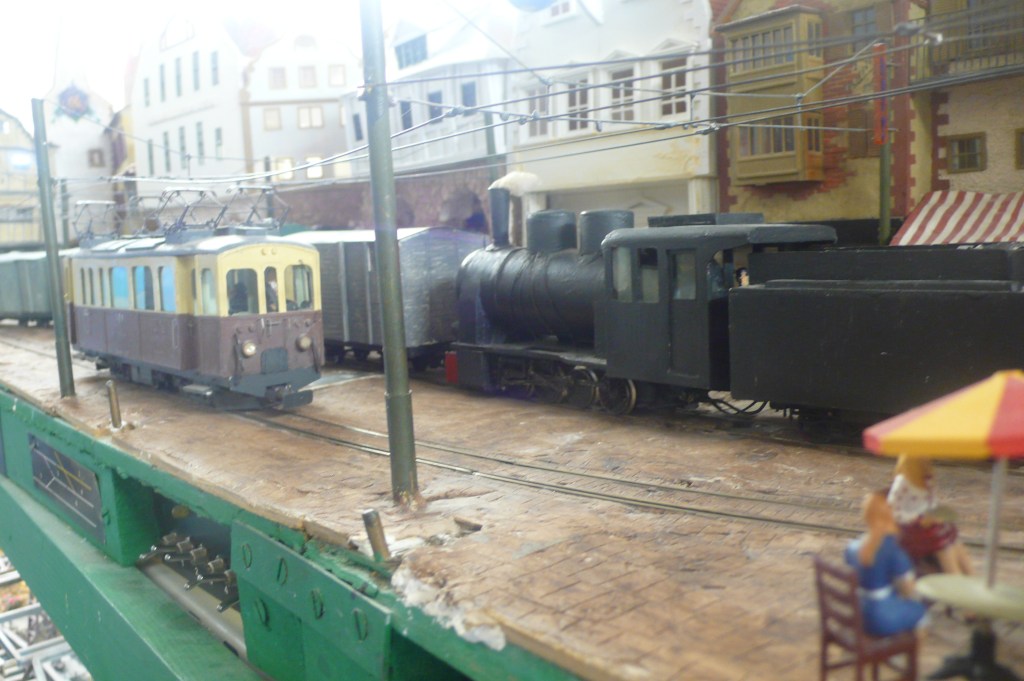
192. The loco attaches the road van to the train in front of the brake, contrary to instructions. We are out in the boondocks here so it will not likely come to the notice of “officialdom” provided that it is correctly remarshalled before it gets nearer to Lacono. The railcar has moved along the loop in the hopes of returning “home”.
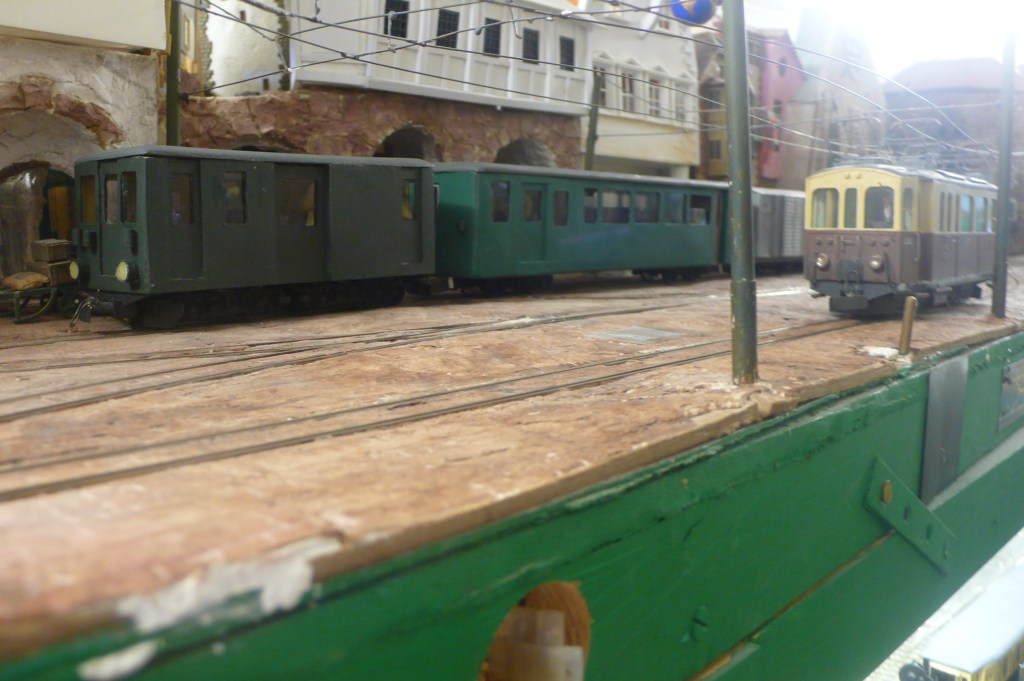
194. The CFS crew don’t have much luck in this venture because the cattle special from Ospicio fair day pulls in and the goods immediately leaves. This is going to create more work for the pilot because the loco and driving trailer are working as one unit and the cables will not be disconnected for a mere shunt.
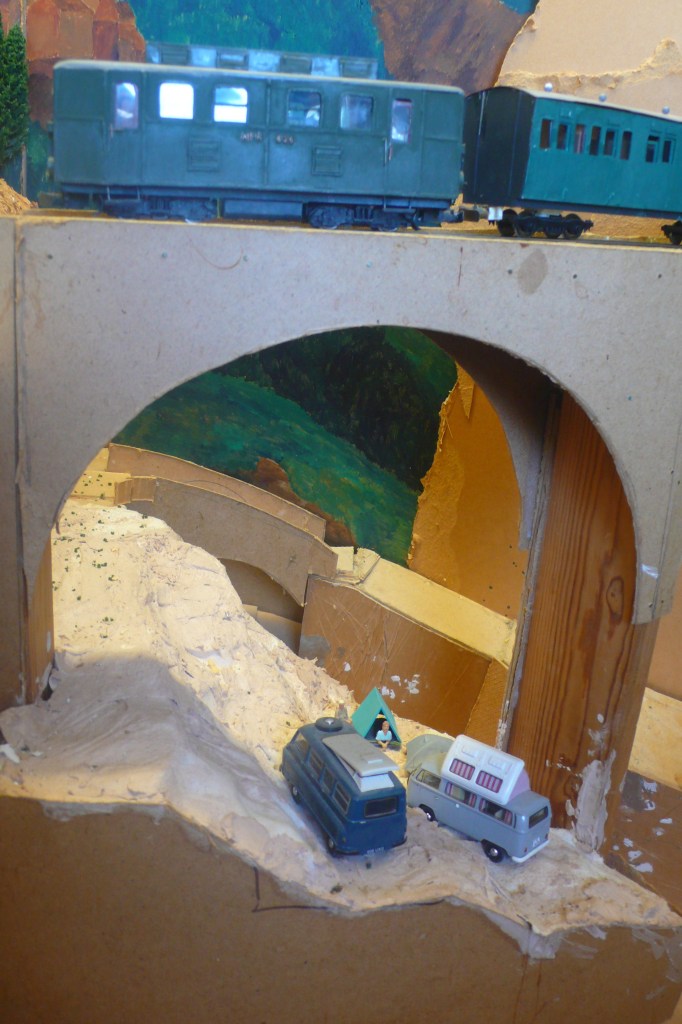
195. The other special has left Urteno and is crossing Akvalando viaduct. It must be a noisy place to camp on a busy afternoon such as this. It is a good spot for enthusiasts, however!
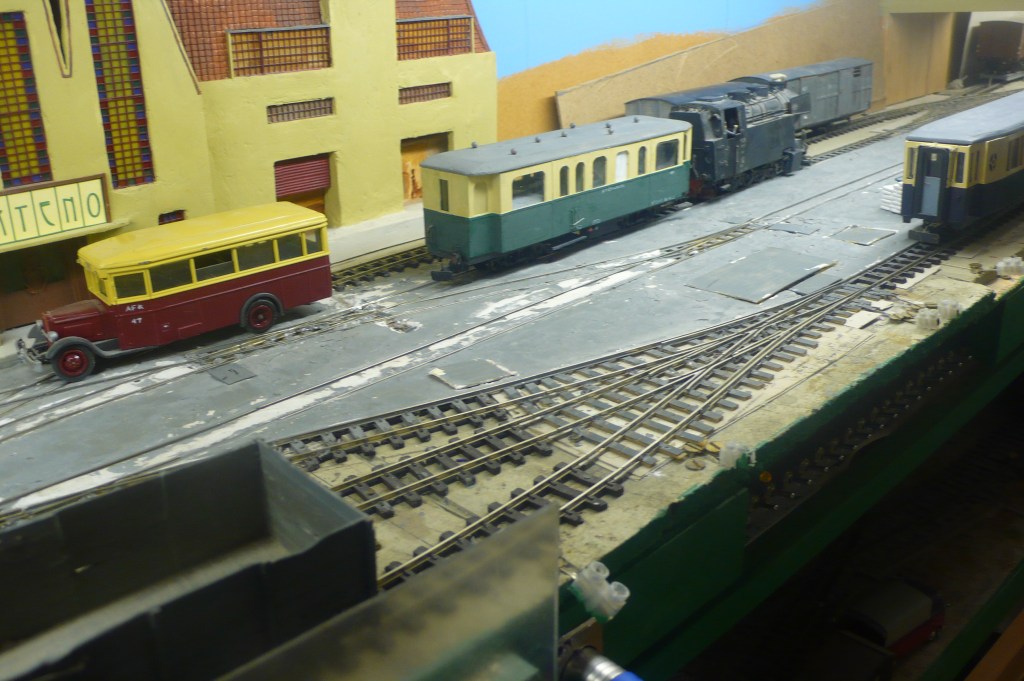
196. Urteno dozes in the sun for a few brief quiet minutes. The Pullman has been pulled out of its siding for loading and the loco stands behind the now empty ambulance. The railway bus waits for the next ferry arrival.
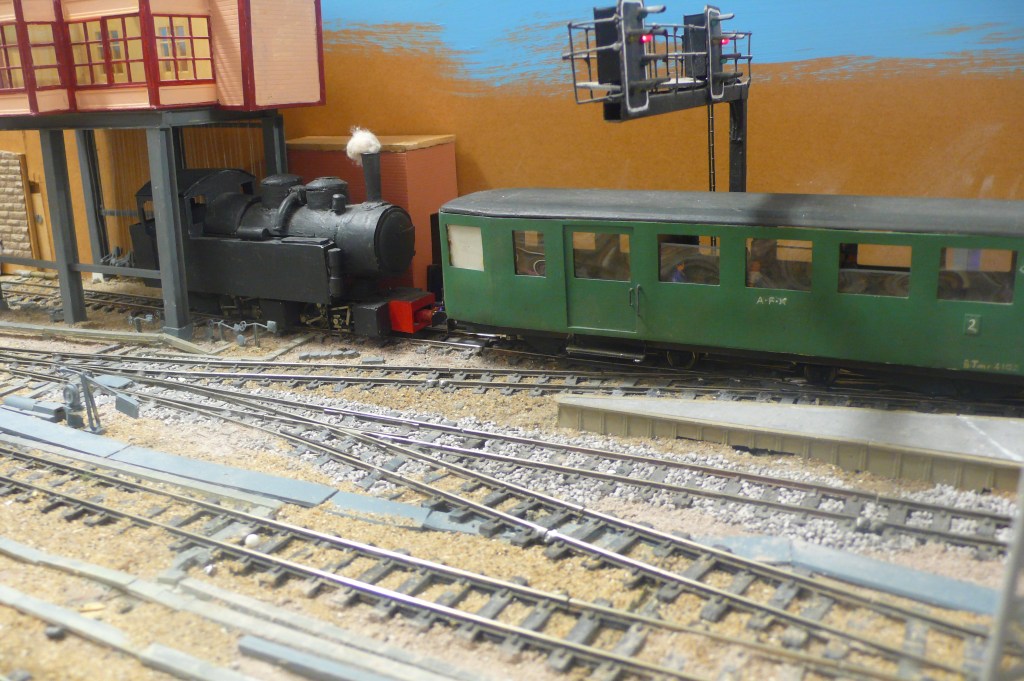
197. The 0-4-4-0T has been brought out of Aspargo shed early to shunt the passenger stock at Lacono for the KTT local. More thought is going to have to be given to the remarshalling that took place at Urteno and the shunting at Lacono. The loco and the radial axle coach look as though they are departing but they are not. They have pulled forward to couple and uncouple Post vans. I remember being briefed once on a “near miss” at Selby. I knew the railways there fairly well as I often sang in the Abbey at the time. To get round an operational problem with a failed train the signalman put a Hull train on the Leeds down (?) line onto the Leeds up in the knowledge that the move could be signalled and that the train could cross from the up (ex ECML) main to down main beyond the junction but before the platform. Unfortunately the road was set into platform 3, the bay, but the shunt signal controlling the move cleared, and the train nearly rammed the Leeds shuttle train. It was emphasised to the assembled throng, at the briefing, that shunt signals should not be used to authorise running moves because the locking was not as rigorous as with the main signals. The KTT passenger will not depart via the “spare loop” as a consequence.
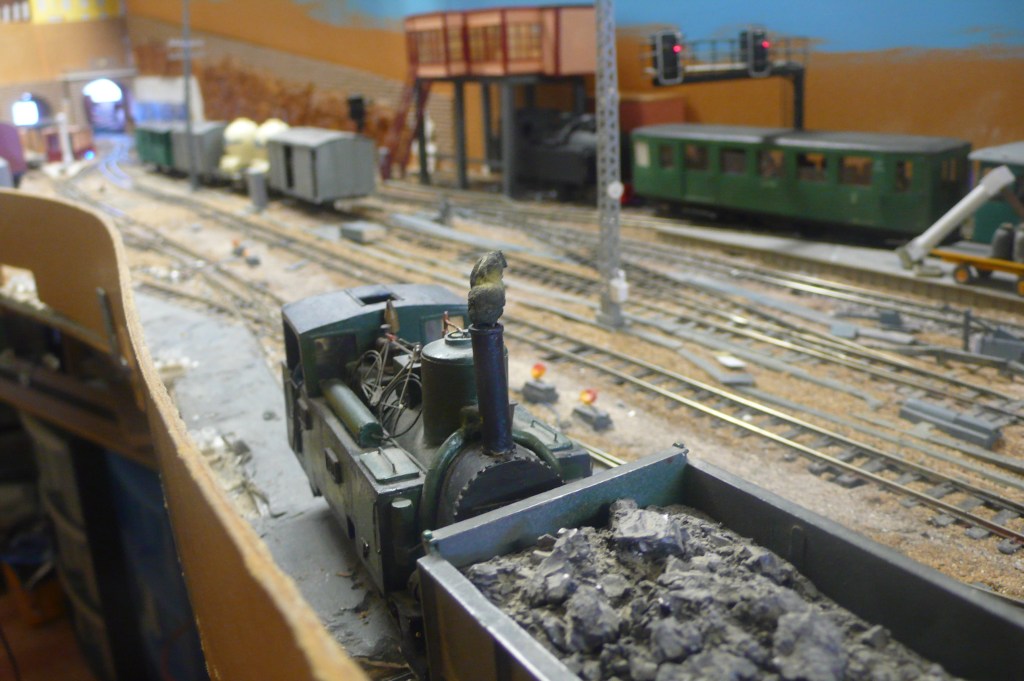
198. Sisyphus is having a busy day as well. The KTT local train in the background has not yet been touched as the priority is to make space for the incoming special. The ABC train has been moved but the traffic has not been shunted for ongoing destinations.
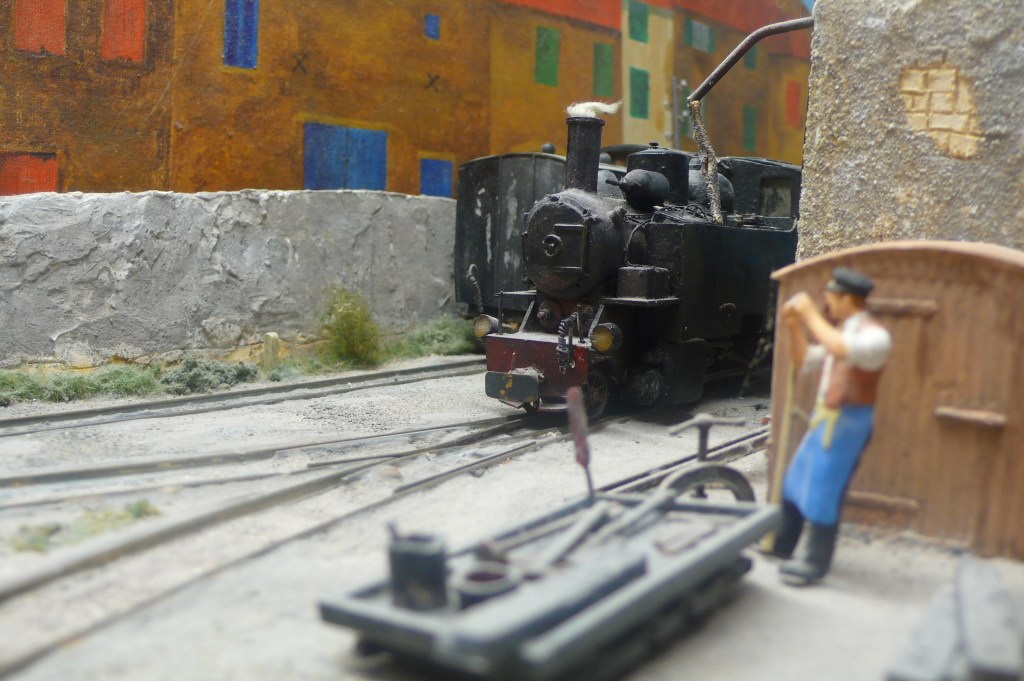
199. Jakarutu provides a relaxed counterpoint to the bustle elsewhere. The local ganger sharpens his scythe as the branch loco takes water from the tower. The ganger sets snares for the local wildlife to supplement his income and sometimes works an exchange with the loco crew whereby they swap the grouse that they have shot with their rifle. It all adds to the pot and supplements the income.
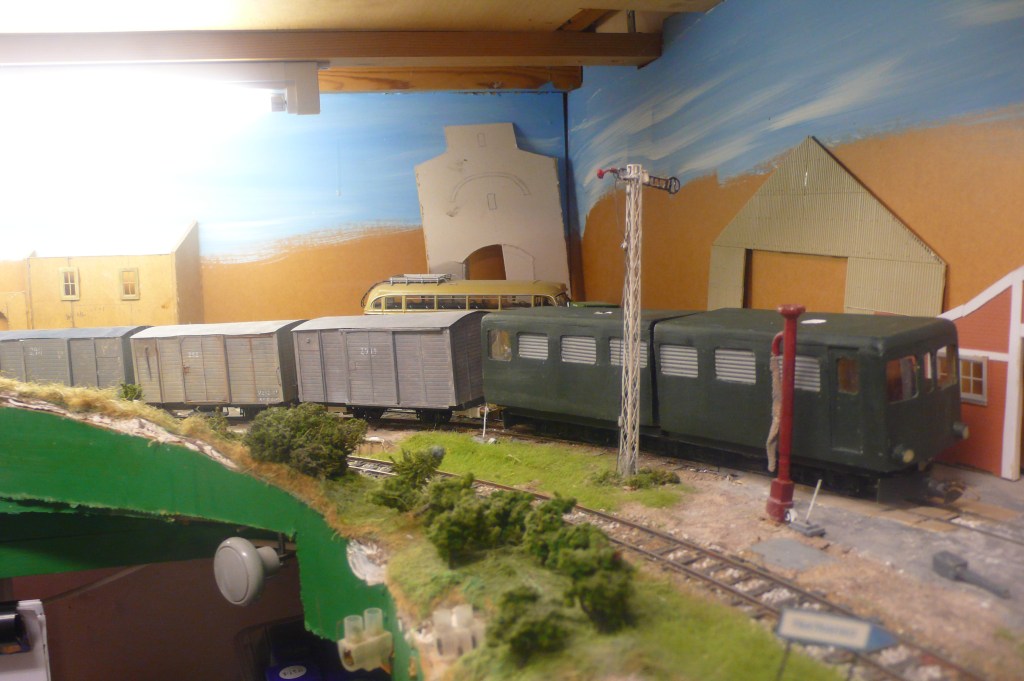
200. The Kasatritikakamparoj goods has been thrown together any old how in Relforka yards. Obviously the yard foreman had other priorities at the time. In actuality the consignment notes were placed into the incorrect wagons. It would be easy to change the wagon documents around to make life simpler but the prototype had to deal with problems such as ‘rough’ marshalling. Flexseblamozulo has taken the entire train “across the road” to deal with the shunting at Glissent. Often the branch railcar sorts things out but this has not happened today. At least the loco is performing much better.
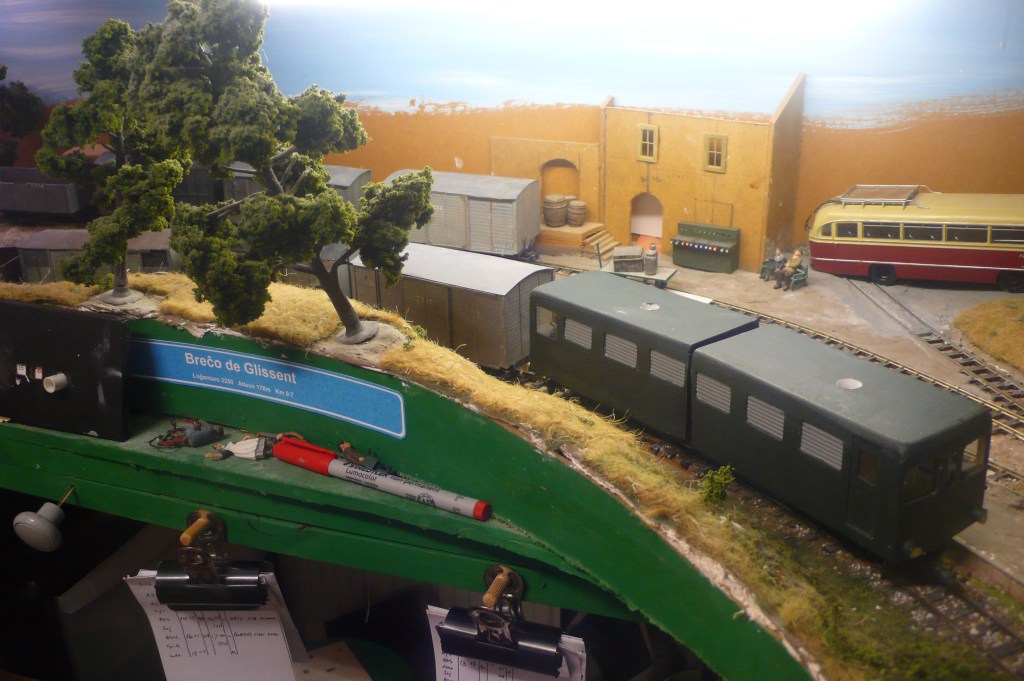
201. The train is officially booked for 94 minutes of shunting here but it usually leaves around one hour early to deal with issues at Boursson. There is a van of raspberries going to Boursson and the half loaded van of peas in front of the goods shed needs to be left where it can easily be loaded before being picked up by a down train. Fortunately there is no need to take any wagons round to the glassworks. By the time that the shunting has been done and the train is back in one piece the crew do not even bother to ask Ovidia, the stacioĉefino, to get them away. A protracted visit to the Orapercido is likely with the time most likely occupied by a game of gyerakàgy, the impenetrable Marronĝaccan card game.
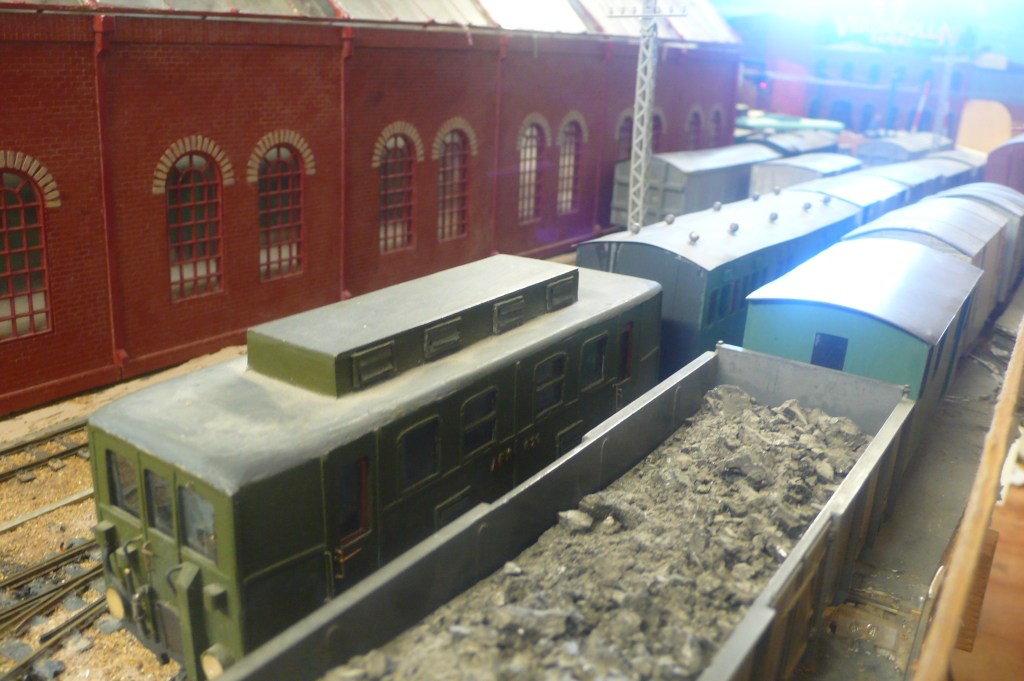
202. The market special arrives in Gasafabrikatastrato yard at Lacono. There is a wagon of cattle due to go forward to Relforka and another one of pharmaceuticals in the consist. Any passengers that have travelled so far will need escorting across the yard to reach the platform. The goods shed line, nearest the camera, is completely full with wagons needing further attention, not necessarily at the shed.
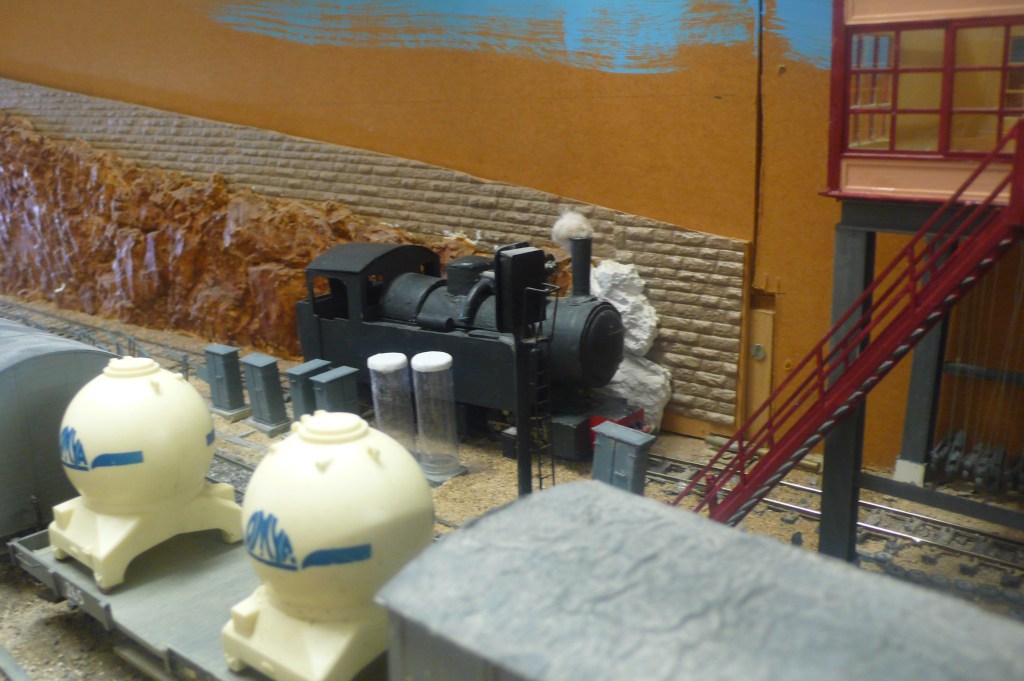
203. Lacono is a busy place in the early afternoon. The passenger train loco has finished its shunting for the time being and waits on the spare loop. The crew have gone to the box for a brew. It was always interesting to me to talk to the enginemen about how they saw the railway. The transparent cylinders will eventually turn into block bells. The brine containers on the wagon need marshalling into the down KTT train to go to Sojonno which cannot be shunted by up trains.
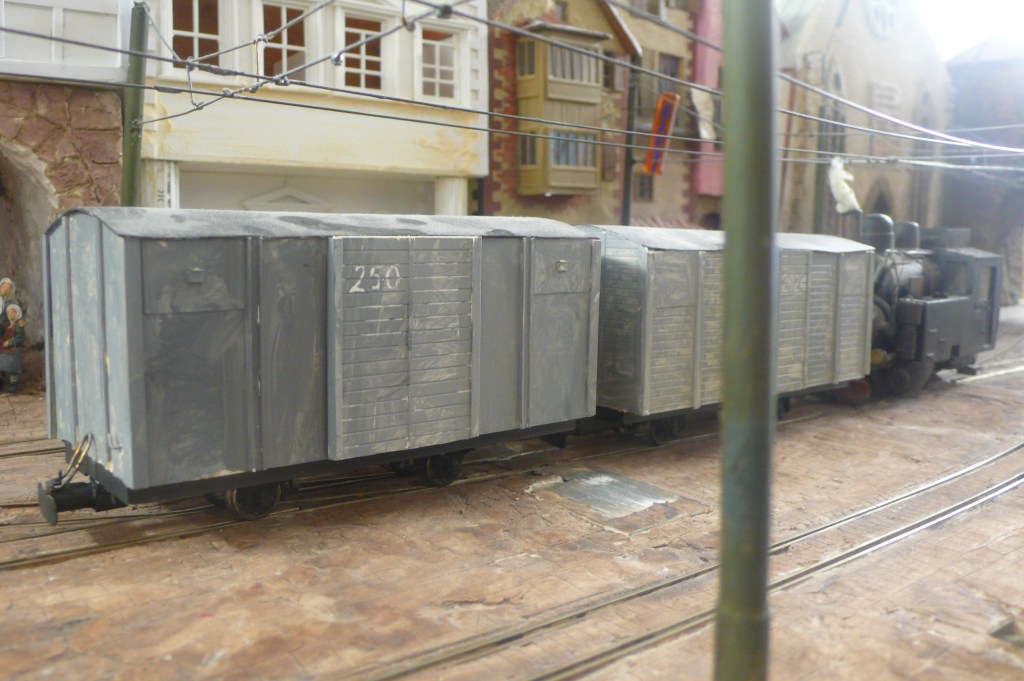
204. The various railcars have left the merkatubaxu at Isuri and the pilot is left to deal with the empties from the cattle special which need taking to the yard for disinfecting. The next job will be to retrieve the van of empty milk churns from the dairy.
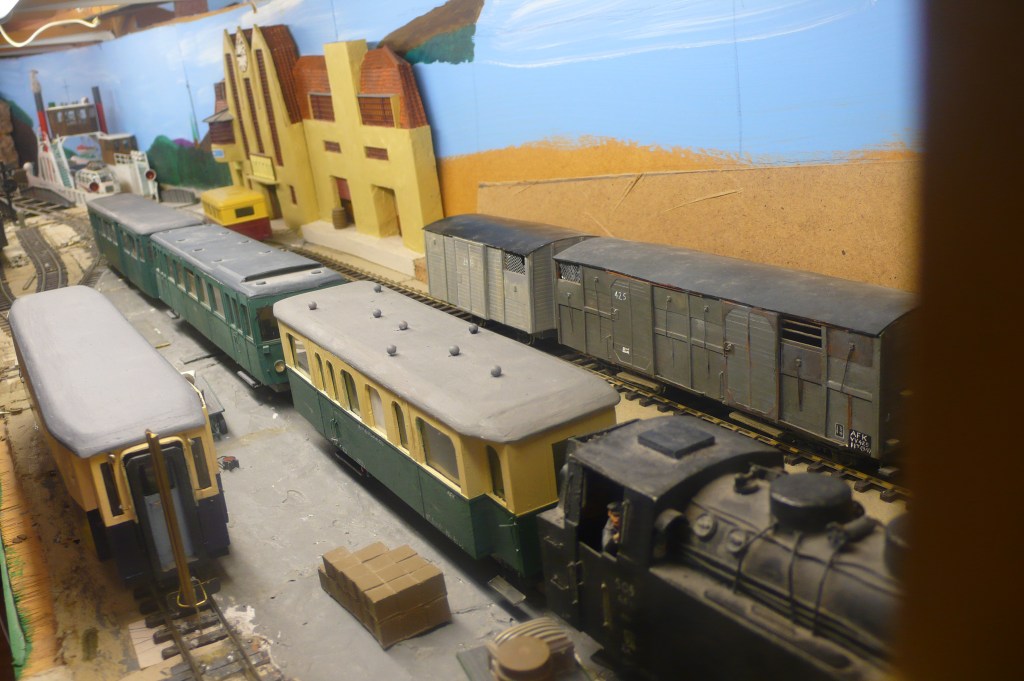
205. The afternoon is wearing on as this view is taken from the road bridge straddling Urteno. The pilot attaches the now empty ambulance to the railcar shuttle to take it to Lacono. It will then be transferred to the passenger train for its empty leg across the KTT. The Pullman is secured with a brake stick otherwise it would run away. The wagons in the goods siding are not quite so free running.
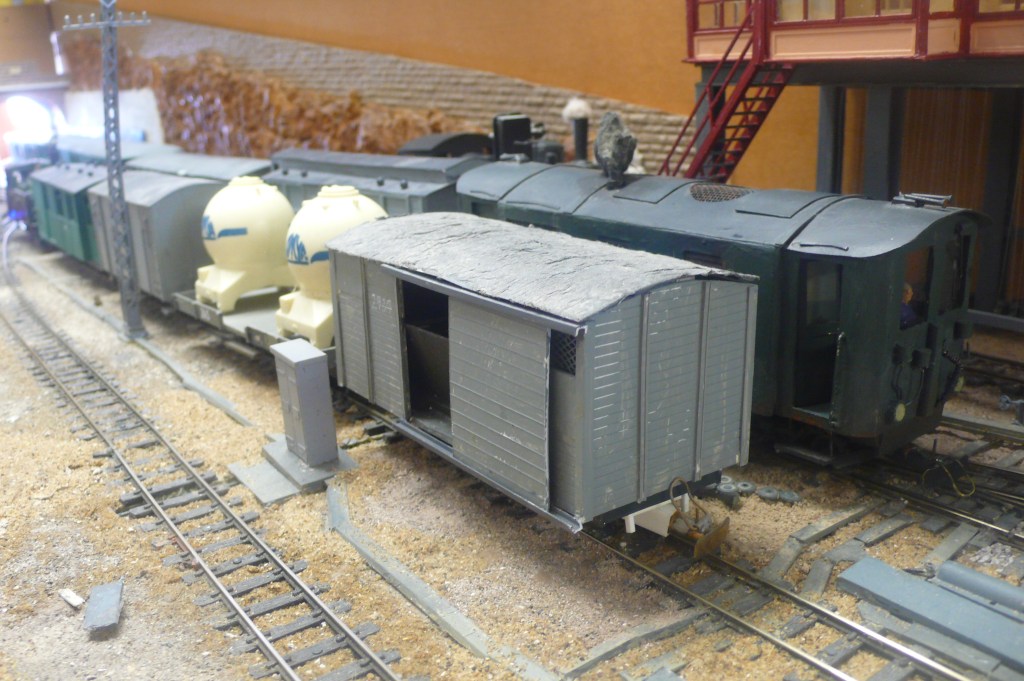
206. The mixto pulls into Lacono on time. Control has already ascertained from Nerv Control, which deals with the FT mainline and its branches, that the Forceful Unicorn is running Beruna Control this afternoon. This gives considerably less leeway for errant running this evening, not that the Narnian system is known for punctual running at the best of times. The white under gear and raw brass buffers indicate that the van in the foreground was one of the few to miss the mass treatment when an effort was made to paint all the underframes.
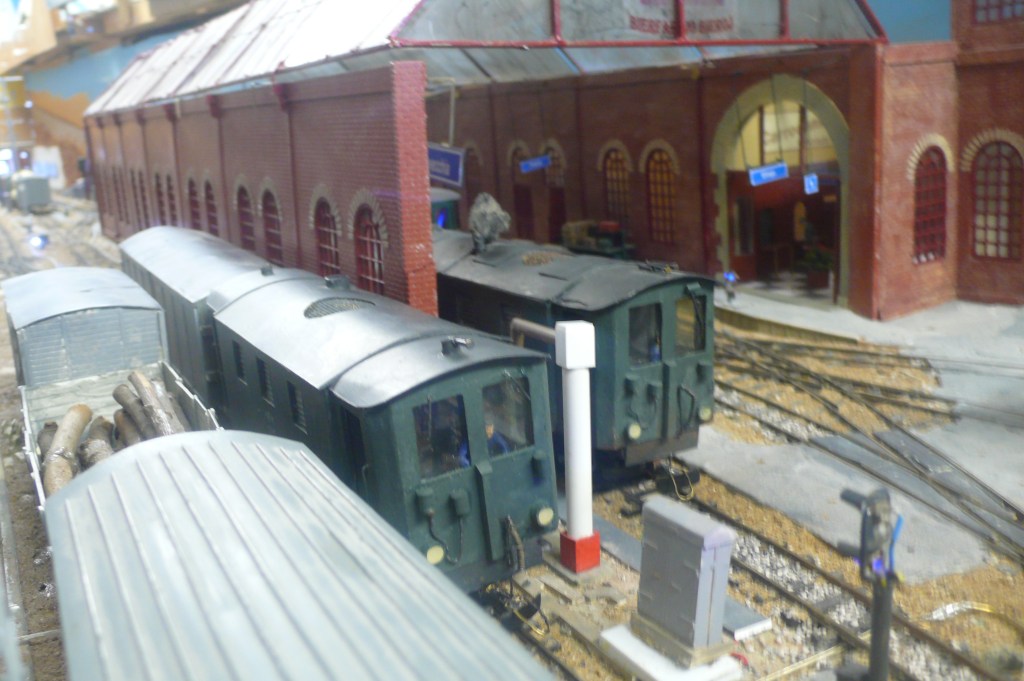
207. These two diesels were built simultaneously and show freelanced 1930s styling. The I-D-I at the right inadvertently received a little too much weathering and has been relegated to freight duties as a consequence. The mixto has arrived behind it in platform 3, the main and longest platform. This used to be occupied by the terminated passenger train in the days gone by but the mixto, pulling in on platform 2, could only use half the platform whilst keeping the north end crossings clear for the incoming railcar. This was finally deemed unacceptable for one of the most important trains of the day.
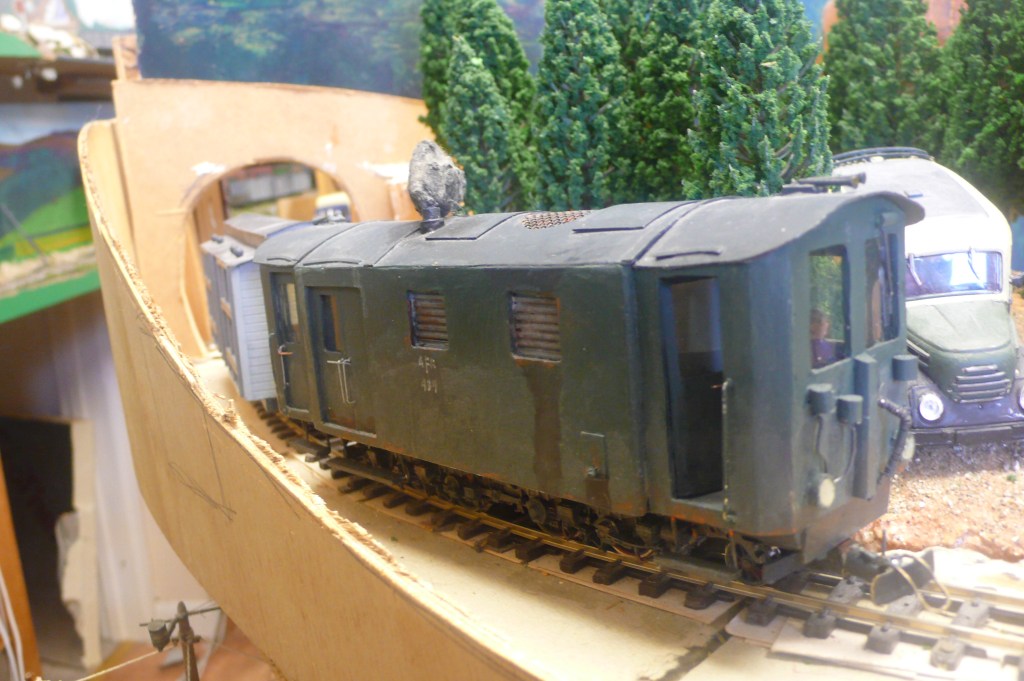
208. The dishevelled loco and the horsebox from the mixto pull forward to set back into the sidings. In actuality the loco is standing at Ghealdaban which is meant to be some miles away. The deception is not usually noticeable and is part of the price to be paid in creating a system. This piece of track can be switched between three controllers and is often used for parking trains. Unfortunately it is possible to create an inadvertent conflict when a train has left Urteno and Lacono needs to shunt. I suppose that I could cut the rails and install an extra switch somewhere nearby but it is easier, although unsightly, to lift the parked loco off the track. On this occasion the train leaving Urteno was held for the shunt move.
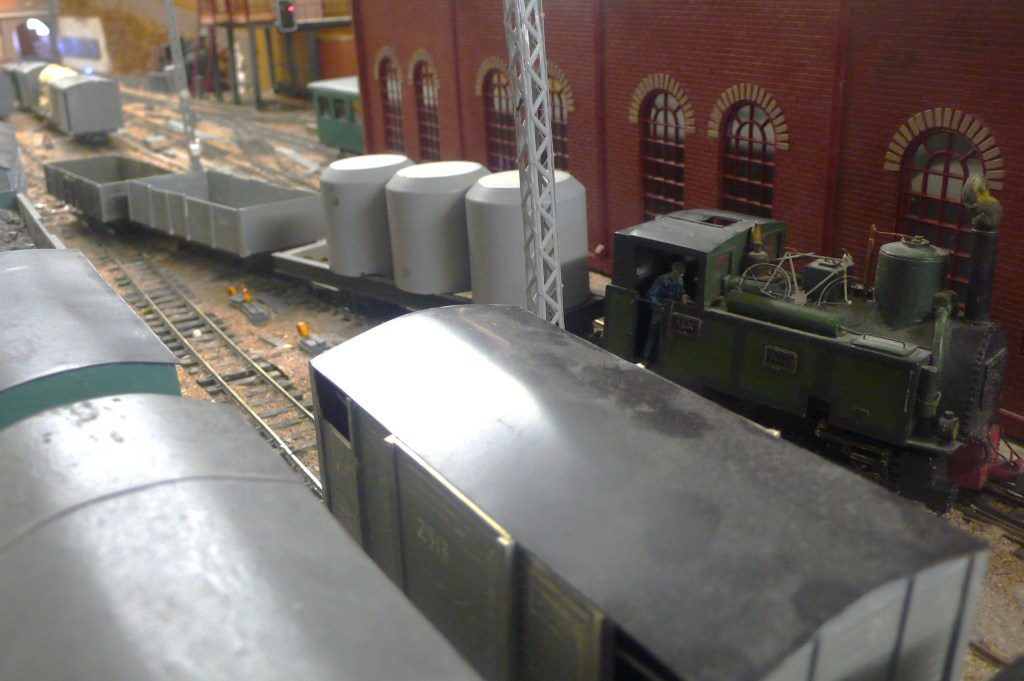
209. Sisyphus crosses the yard as it pulls empty wagons out of one of the storage sidings. These will be placed into the Altingablecaŭtoj local goods to go north. There were initial hopes that the newly altered yard would see more shunting from the north end, as here, but this has generally not become the case.

210. The railcar shuttle snakes around the Lacono north end curves as it approaches platform 1. The local passenger coaches stand in platform 2 and the Post vans are on the siding. (In reality one of them is in the middle of the road but a blind eye is turned.) The I-D-I stands in the yard because the more presentable 2-C-I has run onto the mixto. A queue has built up at the Karushnastato crossing which has been down for most of the last fifteen minutes. It can resemble the famous Durham Ox crossing at Lincoln at times.
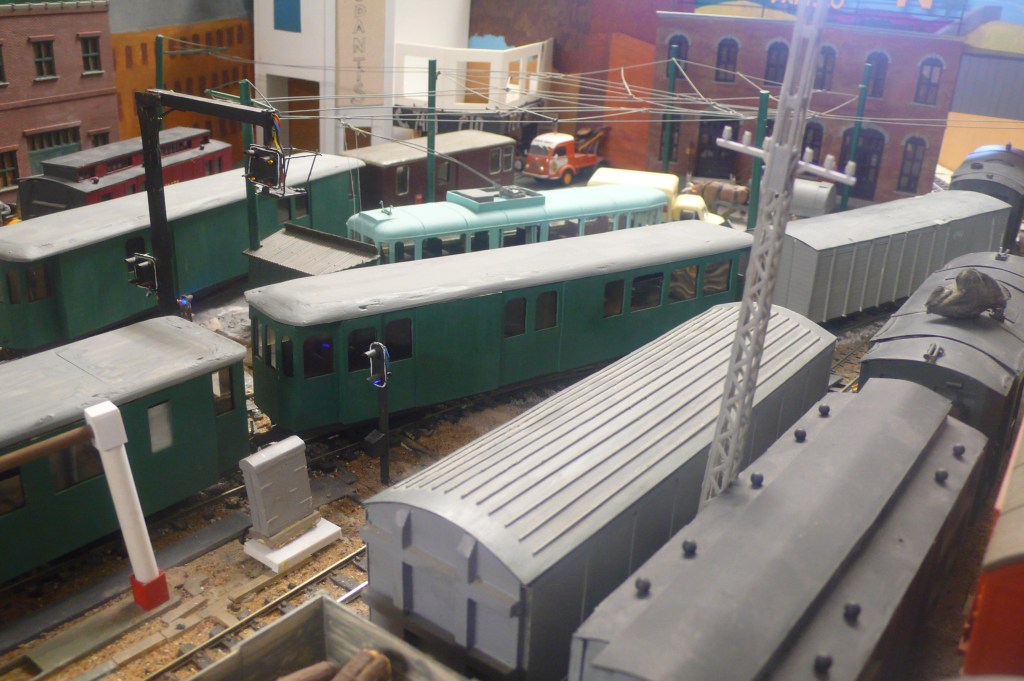
211. Looking in the opposite direction the barriers are still down as the mixto makes its get away, three minutes late. As was often noted, in the now lost sessions, the train is on a tight timing and really needs to run as punctually as possible. Three minutes should not make too much difference however.
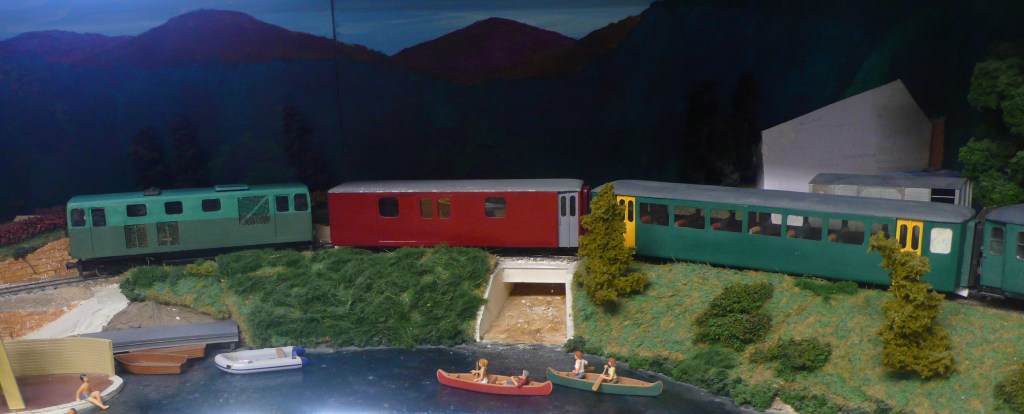
212. The down express rounds the mere at Varden not having received any handsignal to stop. Although nominally an express it effectively runs all stations across the top end of the line. The long carriage has had a couple of minor contretemps and will be pulled in for further investigation at the end of the journey. It travelled upwards “yesterday” without any problems.
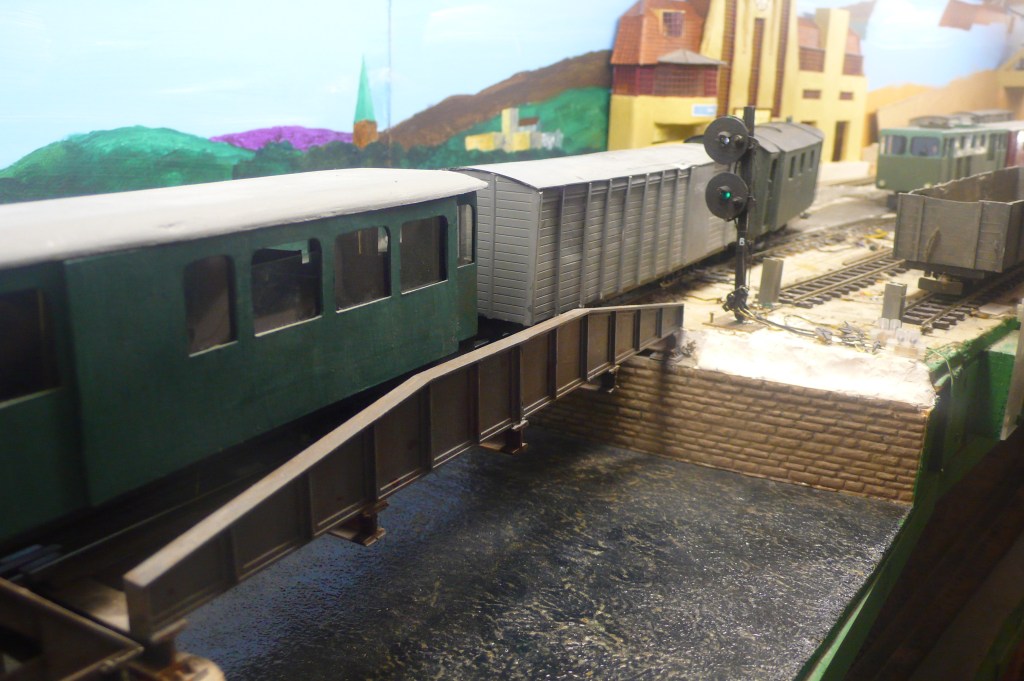
213. The mixto swings into the passenger loop (as indicated by the white over green) at Urteno where it crosses the express. The decision to include the Spegulagauno on the layout came at a cost because the passing loop has been shortened to the bare minimum. The express loco has pulled as far forward as possible to allow the pilot to attach the Pullman at the rear of the train whilst still allowing the mixto to enter the station. The mixto has to approach at caution because the north end of the loop is blocked.
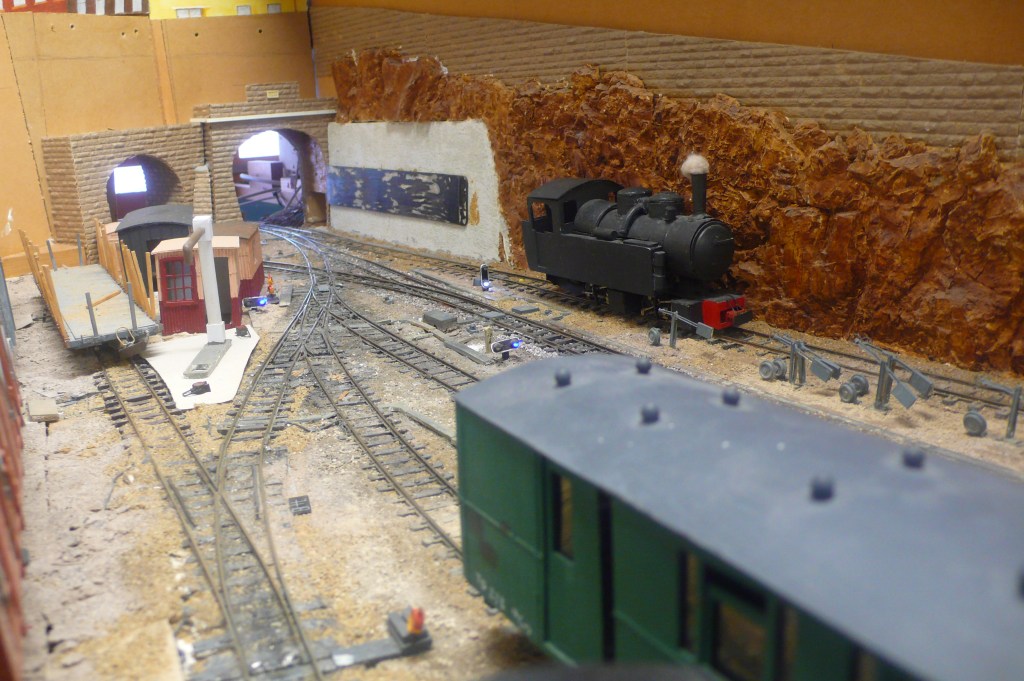
214. The shunt signal clears and the loco for the KTT passenger runs out onto the mainline at the south end of Lacono. This is the easiest and quickest way to collect the ambulance being detached by the railcar. In all honesty a double slip, rather than a single slip, on the entry to platforms 1 and 2 would be more useful because the loco could then run directly from the spare road into platform 1. When the layout was built the single slip was a superfluous extravagance that was little used. There is no chance of it being upgraded. The unsightly black area once held a running in sign but this got messed up whilst staining the cutting. At the same time the tunnel lining was removed. Two more things to attend to!
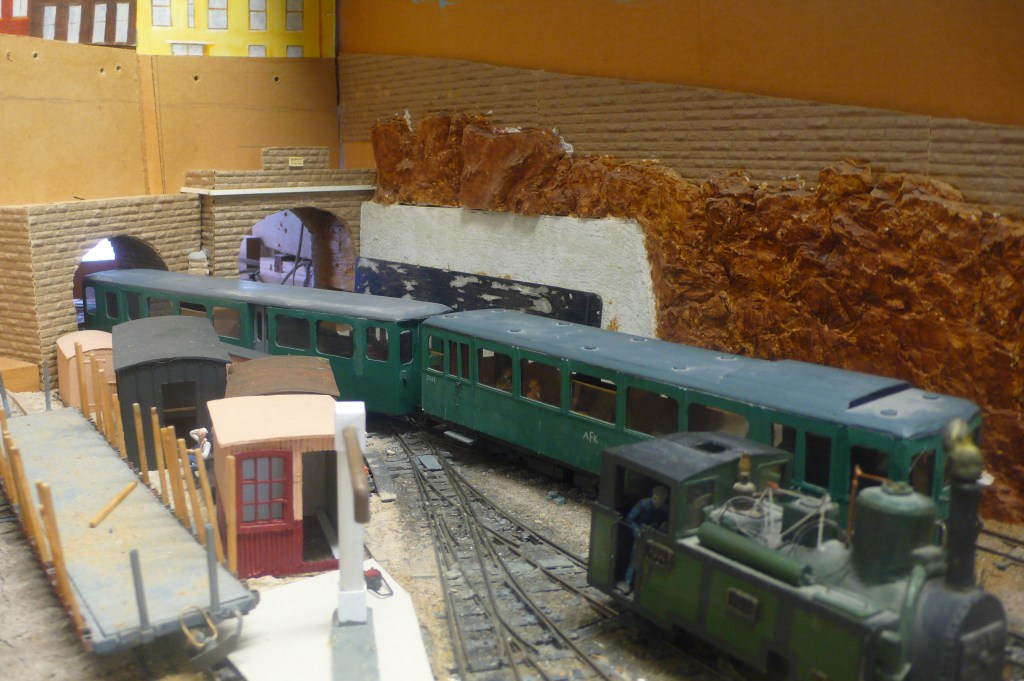
215. The rebuilding aimed increased shunting from the north end of the yard, but this proved to be a chimera. The pilot wants to get out of the yard to run onto the KTT local goods whilst the railcar runs to Aspargo. The 0-4-4-0T mallet, standing in the tunnel is blocking the up RFK-FDV goods, preventing it from entering Gasafabrikatastrato, whilst waiting to run onto the ambulance. There is also a conflict between this loco and the needs of the pilot. The “hutted encampment” is a recent addition and shows the kind of arrangement that grew organically on railway wastelands.

216. The local passenger loco has run onto the ambulance which it is shunting onto the passenger train, whilst the pilot has run onto various wagons. The long distance goods is now running into the yard where it is booked to stand for some time. The stake wagon outside the huts has seen little use recently as there is little logging in the highlands during the summer.
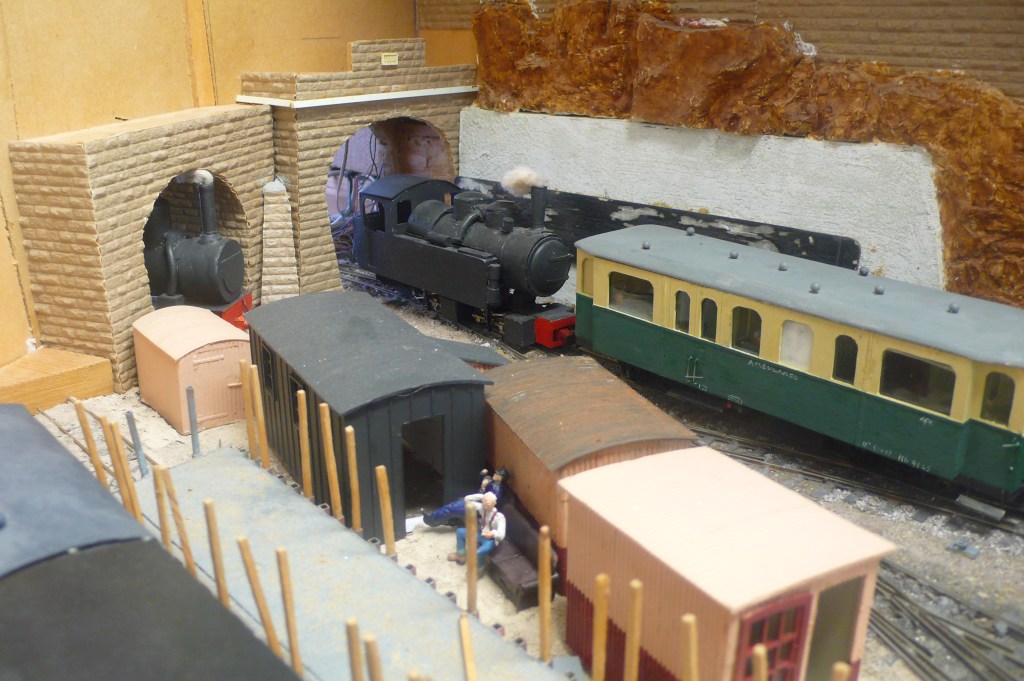
217. The local departs behind the mallet tank but Lacono will be busy for some time yet. As the two workers enjoy their break the ancient 4-4-0 pulling the empty stock for the excursion train to Eromarbordo waits to leave Apargo shed. This is a regular train on Tuesdays Wednesdays and Thursdays in the summer.
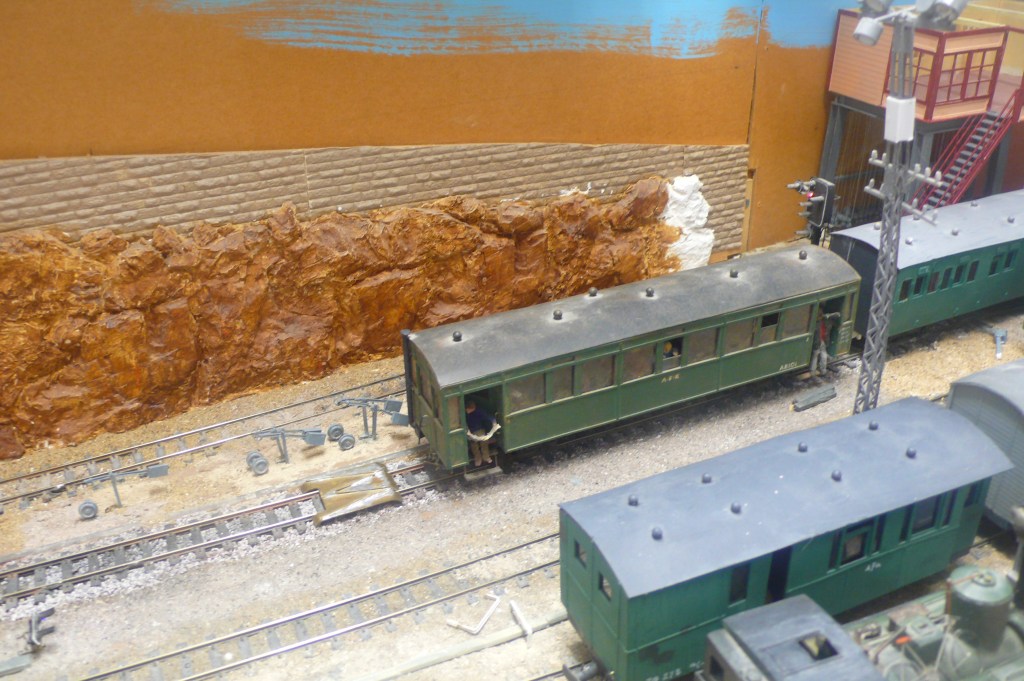
218. In actuality there is not enough room for the excursion train’s coaches to be loaded in Aspargo so they are loaded onto the main line using the home made rerailer. In the process the floodlight pylon was knocked over and the top fell off. These are delicate enough at the best of times and might be better replaced by something such as brass Gauge 1 lattice posts, if my soldering was up to it nowadays. A quick, and hopefully substantial, repair was effected using a plastic square section. The pylons are held in place by Blu-Tac to allow them to fall over without problems. They were difficult to construct from the war gamers diorama kit and always look as though they have suffered bomb blast damage.
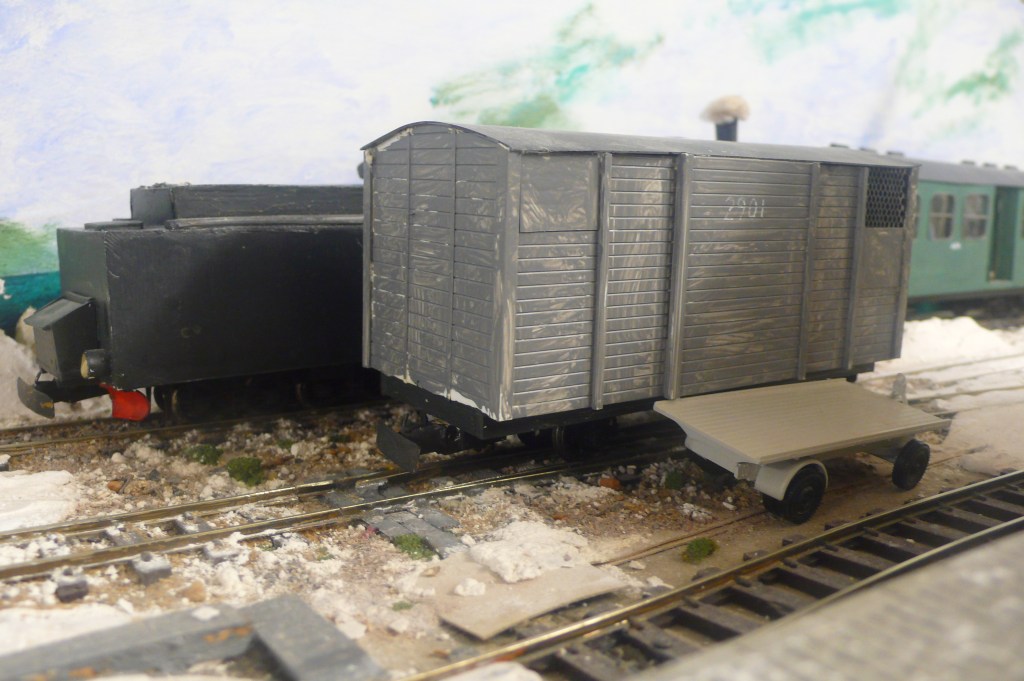
219. Although this is a fairly slack time in other parts of the system there is activity elsewhere. The road van is being shunted into its proper position in the train at Ospicio, out of sight of officialdom. The station trolley, which is holding the van in position, still needs painting. The goods road has suddenly developed an unexplained kink which needs straightening.

220. At Ithilarak the Jakarutu branch train has run round and has run along the RT (main) to wait for the arrival of the goods train. It will then pull into the loop (PFT) behind it to clear the RT for the mixto. The battered carriage could do with a visit to the paint shops at Relforka but it is the only rack fitted brake. In reality it was found that the 6 wheel vehicle ran smoothly round the curves and over the vertical gradient changes of the branch and it has operated here, literally, for years.
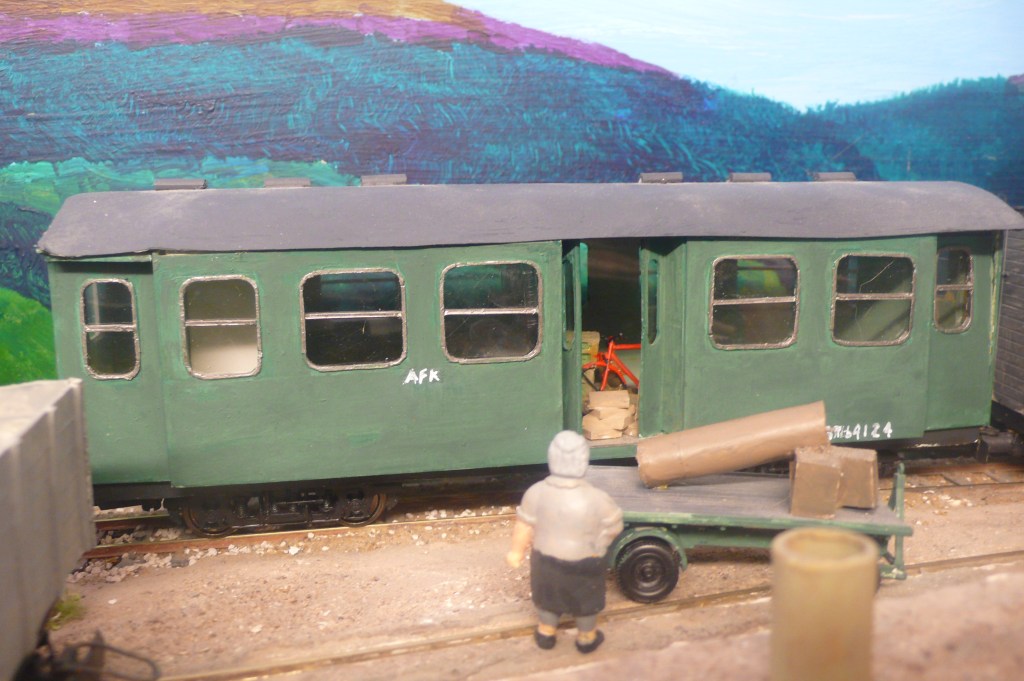
221. The freight stops at wayside stations such as Cadsuiane-Fanhuidol to unload. There is a bicycle in the van and a number of packages for local businesses. Any goods from the CFS will be in the road van. Dyddfrea stands beside the station barrow (borrowed from Urteno for the photograph) before returning to her much more important source of income, the running of the well known local café.
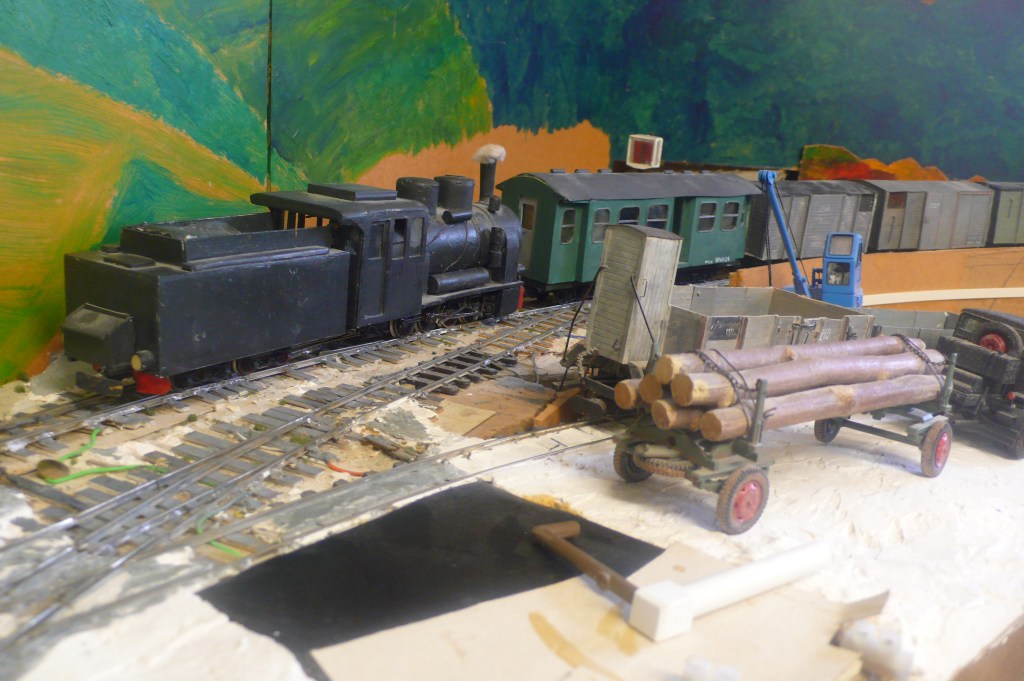
222. The goods left Ospicio early and is seen here leaving the Aepto viaduct and pulling into Ithilarak . This is another area where scenic development has regressed.

223. To state that Gasafabrikatastato is busy in the early afternoon would be an understatement! The yard is one careless decision away from chaos. The Cittavecchia side is busy as well. The original yard would have collapsed under these demands and today is a quiet day at the paper mill. This photo perhaps explains why much of the stock is incomplete. I massively underestimated how much would be needed in the earliest days of the layout and, with the exception of the SG wagons, it is all handbuilt. The SG wagons are running on scratchbuilt transporters, however. Around fifteen carriages are also out on the road with another four likely to be needed before long and that doesn’t count the railcars and locos and the CFS requirements.
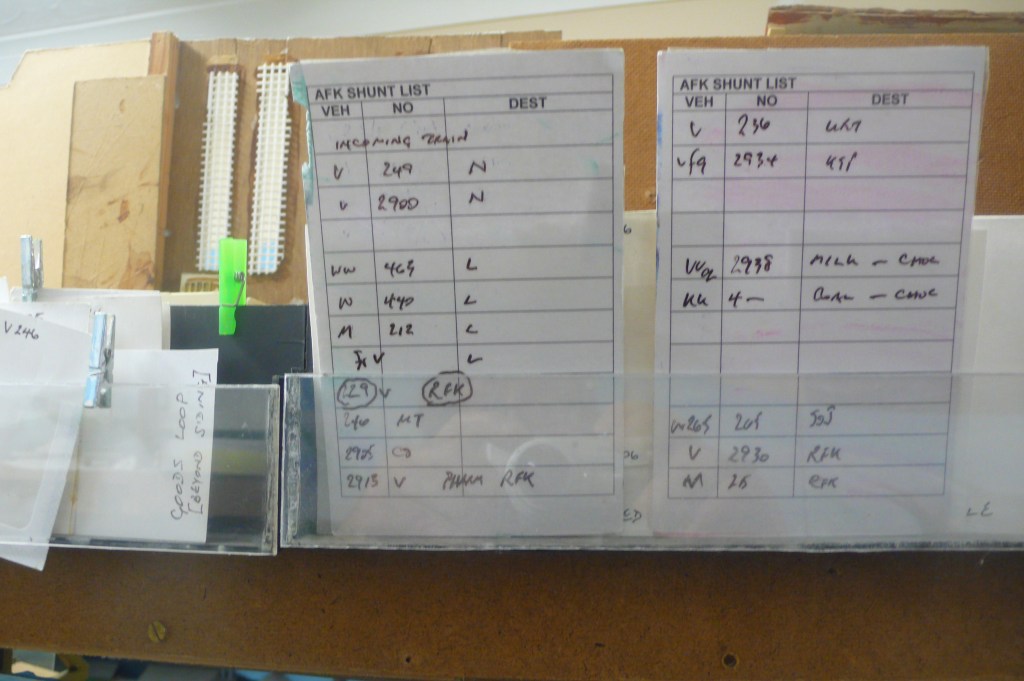
224. What Americans call switch lists are used to keep track of the wagons. Each load has a consignment note which is placed into a wagon docket but these are cumbersome to shuffle and the lists avoid the need to handle large packs of cards. They are stored in eye level boxes on the protective wall behind Fenditavalat.
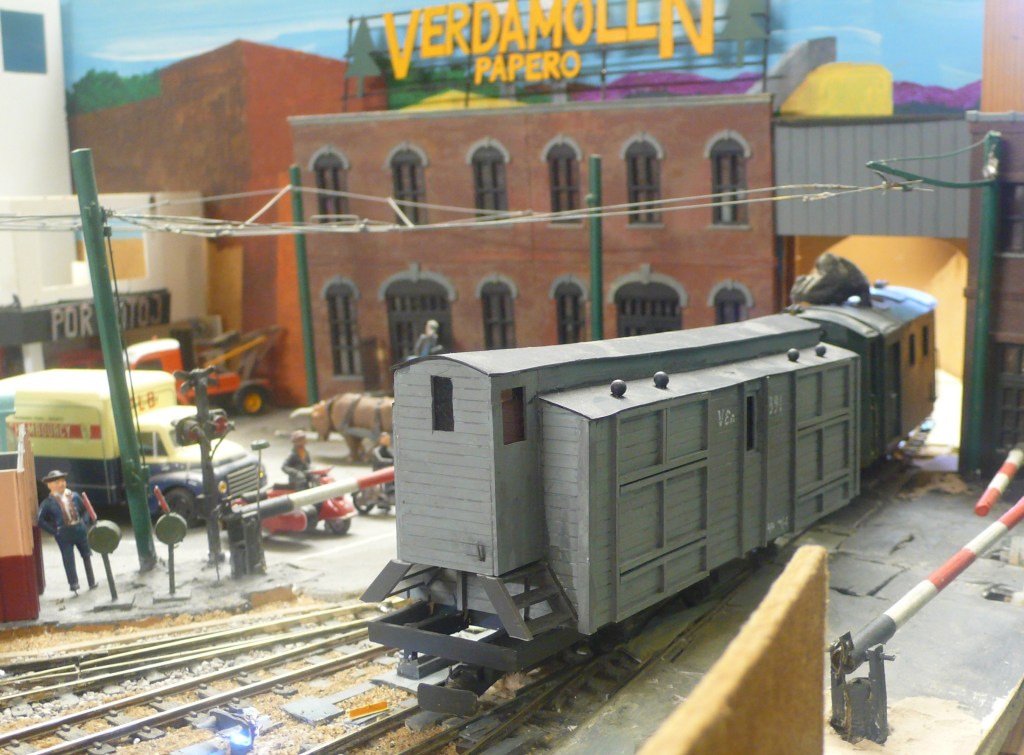
225. The Karushnastrato barriers are down for another 10 minutes, blocking road traffic, as the loco from the mixto pulls across with the horse box. It will wait on the north side for a while, partly to avoid mowing down passengers catching the express and partly to placate Licamo, the one legged barrier operator who has to stand amidst pedestrians held up by trains. He stands beside the two winding drums and the mechanical bell which sounds as the drums are wound in can clearly be seen. The barriers are somewhat approximate in their alignment despite attempts to persuade them to shape up! The “I see no ships” attitude extends to the authorising signal, bottom left, which applies to this loop and the adjacent goods shed loop.
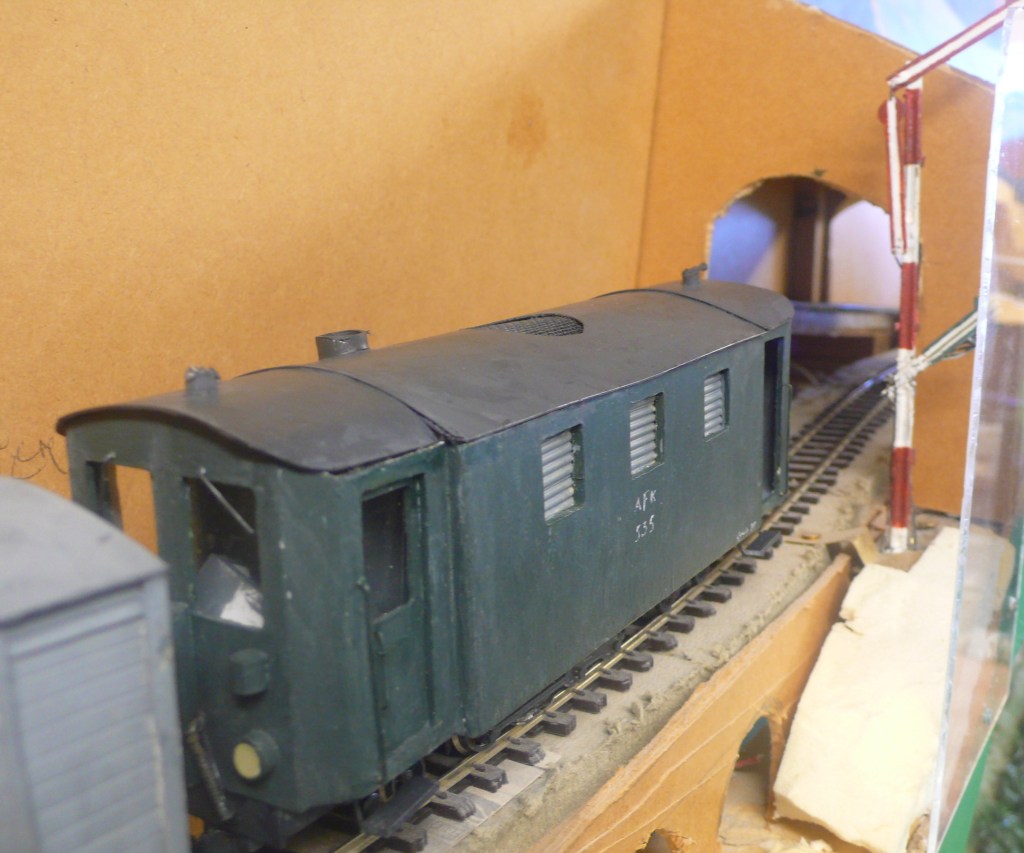
226. The mixto is about to enter the avalanche shelter in the upper Aepto valley. This recently received a southern portal, seen here, which has already had an argument with some SG wagons and been altered in consequence. The Bavarian signals unfortunately are partly hidden by their protective screen but are included to show the distant, the lower green and white arm. In contrast to the French style signals (photo 116) these give a positive clear signal. The upper arm is similar to a British semaphore although there is another arm, set parallel with the post, which drops out when a diverging route is set. The distant is a peculiar device and was modelled just for the hell of it. It consists of a circular face, split into two along a 45º axis with two lips to form the arrow shaped arm indicating “clear”.
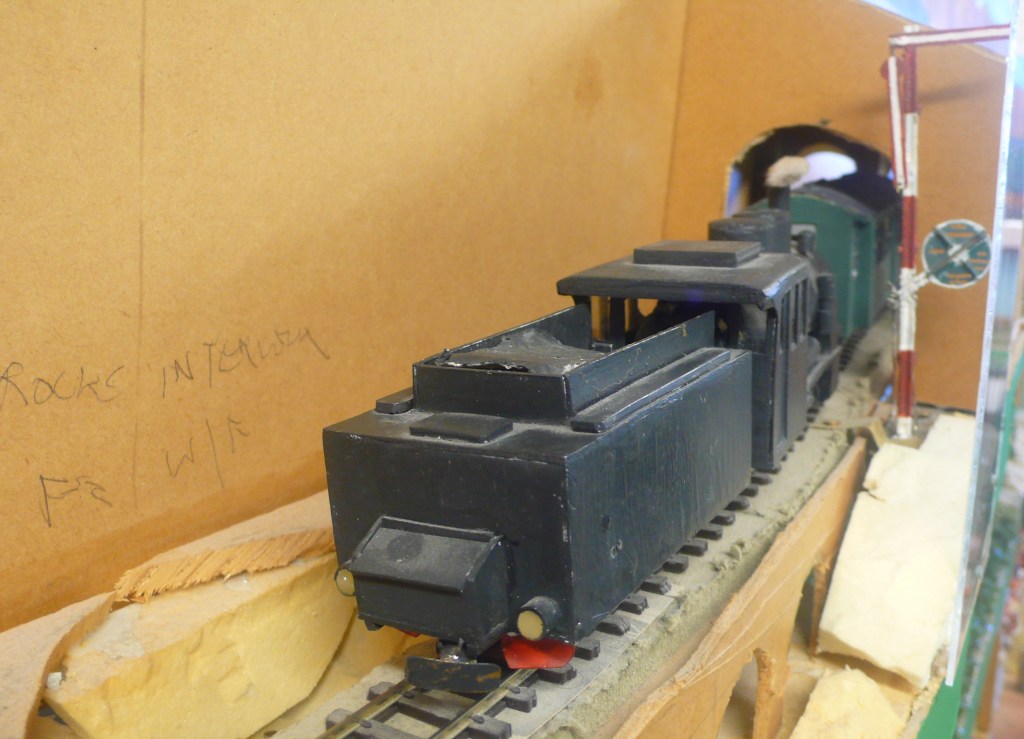
227. Just to prove that it works a few minutes later the goods train passes the same signal, now at danger. Adding to the constructive fun the distant has lots of holes in it and, if I remember correctly, the home should have too. Having done this exercise twice already I decided that an solid replacement arm had been used. If the scene ever gets completed there will be a “no dead stop” sign here for freights because of the gradient.

228. The excursion train enters Urteno as the pilot relaxes. There was no need to bank the mixto today and most of the shunting has been done. The loco was re-crewed by a driver and fireman who came in on the earlier railcar. It looks like a nice quiet start to the shift now that the days of the “von Ryans” are mainly behind us.
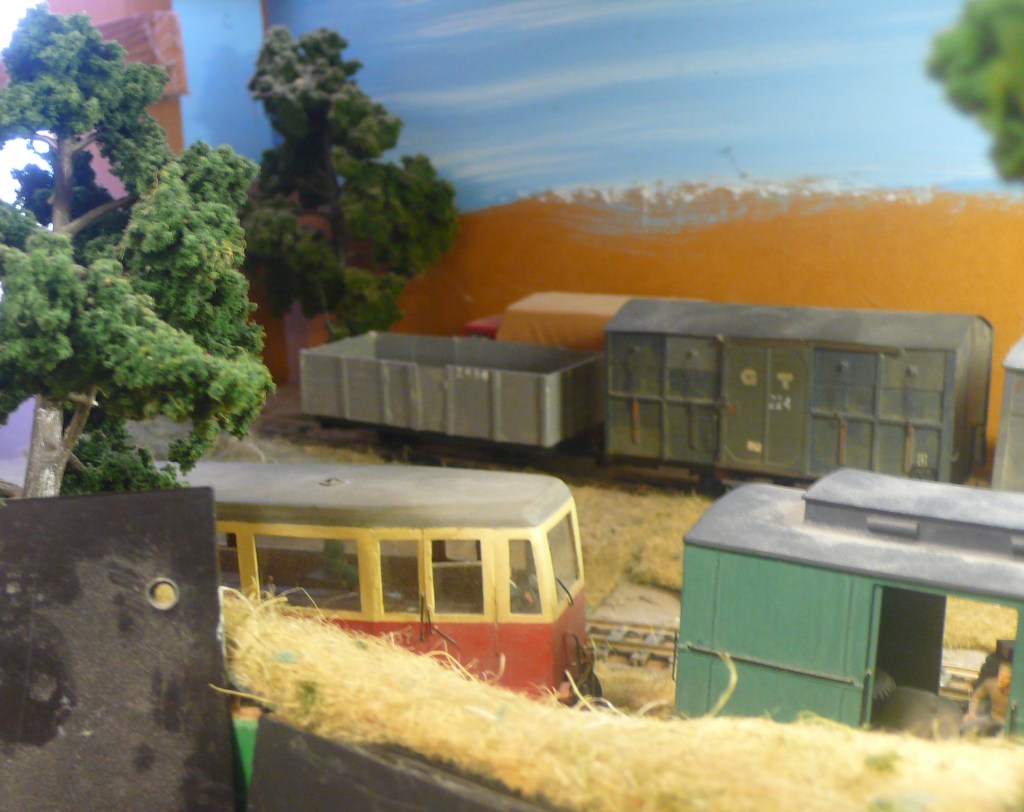
229. The Eromarbordo railcar has pulled onto the RT at Glissent, behind the local goods, to make connections with the down local passenger. It can just be seen behind the trees. I suppose that common sense should have dictated that the foreground was left clear but they help obscure the fact that the scenery will end halfway along the station, roughly in a line drawn between the two on the left.
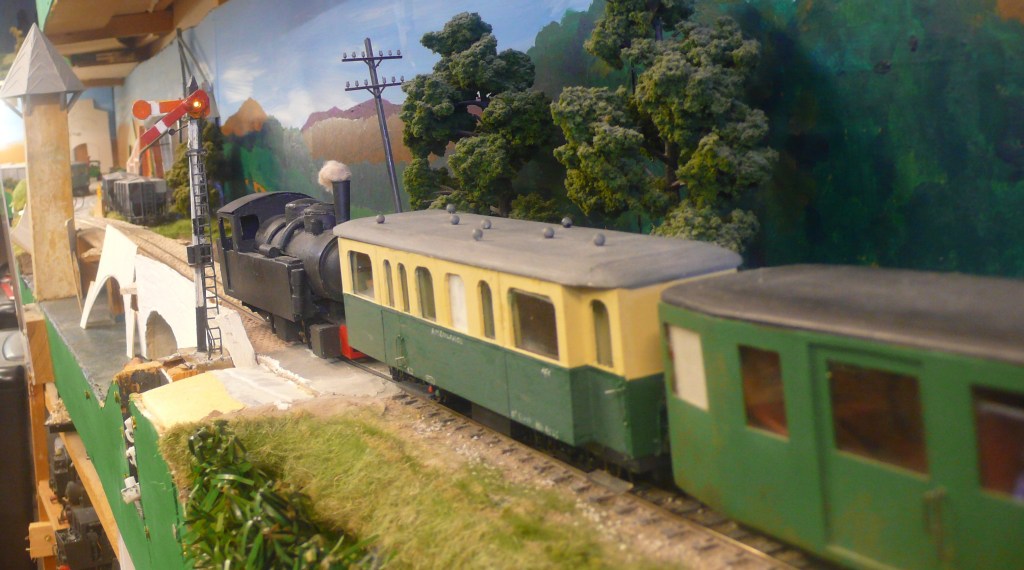
229. The local passenger passes Breĉo de Glissent’s down home which is showing the preni PFT, or “Take Loop”, aspect with the orange arm. This is based on an Italian inter-war prototype which could show four aspects, although the orange arm had no white band. There are three arms mounted on the same spindle to achieve this. The red home signal is in the off position and the take loop arm masks a distant signal. If the road is set through the main line for a non-stop train the signal arms align to look like a standard British lower quadrant signal at clear. I have always been fascinated by continental signals and the AFK deliberately accommodates far too many examples, taken from different systems, to be realistic. Rule No 1 applies!

230. Notwithstanding comments about shunting signals authorising running moves the express is signalled away from Lacono by the shunt signal alongside the mainline. I suppose that it ought to be replaced by a more conventional signal but there is no chance of that. In actual fact the train, as running today, is too long to fit into platform 3 and has to stand beyond the platform starters so that the Pullman is alongside the platform. There is not much traffic for the Pullman at Cittavecchia but it blocks the station throat otherwise and does not create a good impression with the gentry.
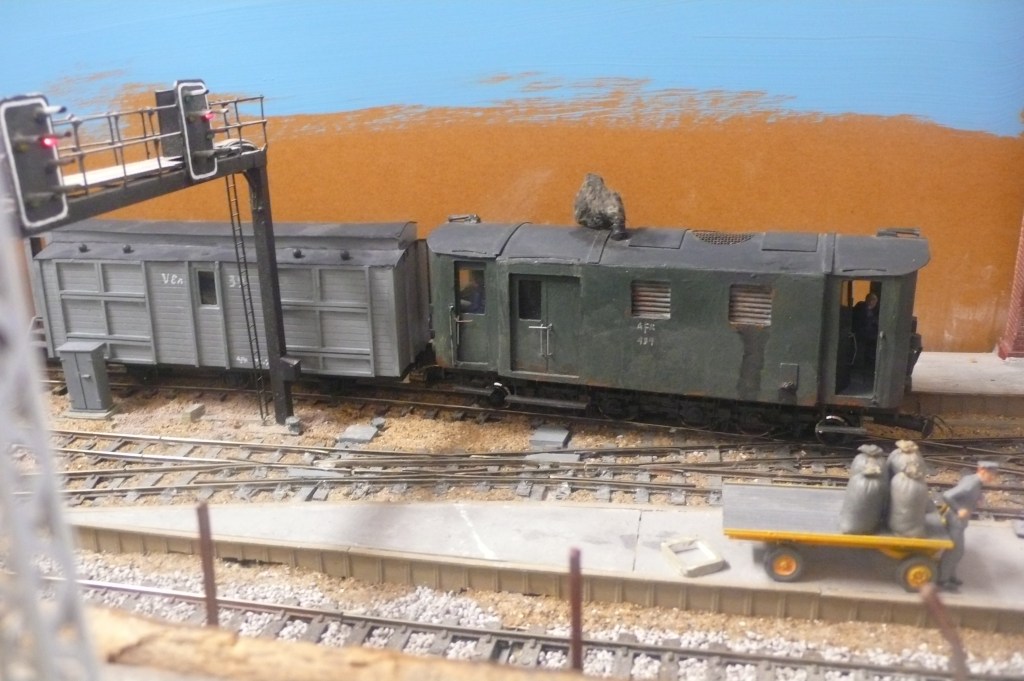
231. With the express gone, and the road traffic in the Karushnastrato calmed down, the freight engine finally takes the thoroughbreds to the “Horse Landing”. It usually sees more business from cattle going to the slaughterhouse, or from wagons used for cattle traffic that need cleaning and disinfecting.
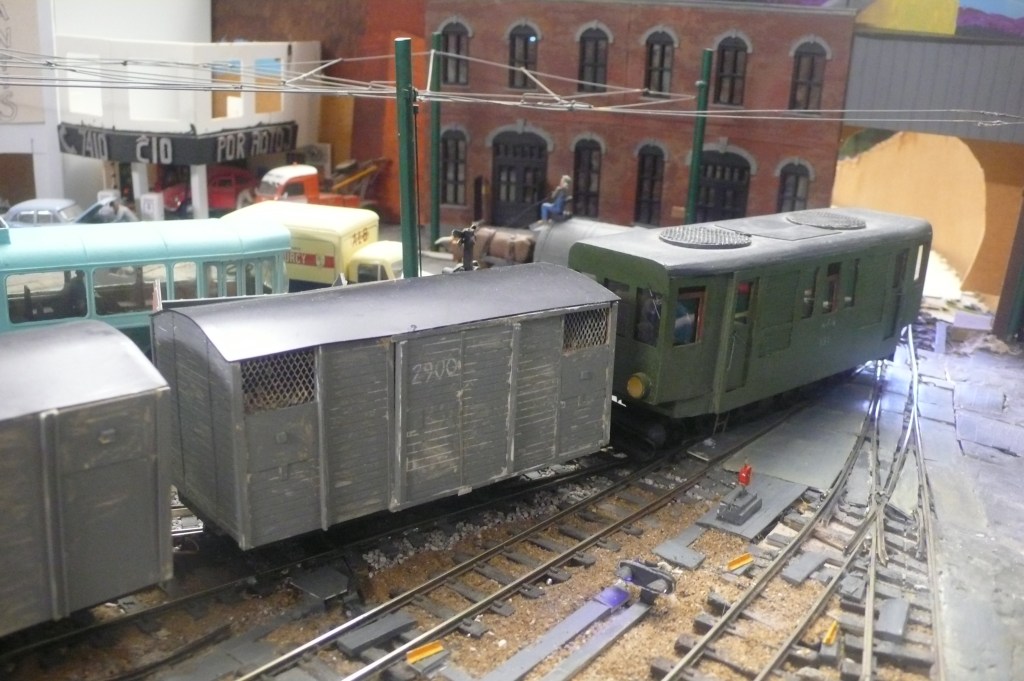
232. A little behind time the RFK-FDV goods leaves Gasafabrikatastrato whilst the barriers are still down from the previous shunt move. A couple of wagons have been picked up, helping to alleviate the congestion, but not too many. This train will need to deal with the wagons jettisoned at Ospico earlier in the day.

233. It is easy to forget that there are other places than Lacono that need attention. The Fenditavalat pilot has backed the empty cattle vans into the yard for cleaning and will then go to sort out the dairy traffic. The preponderance of vans, as opposed to opens, was a feature of continental NG lines whereas British lines used a much lower proportion. The Irish NG lines (been reading County Donegal books again!) followed the continental trend. The repainted lorry could almost pass itself off as a CDJR vehicle. I sometimes wonder what could have been achieved in the same space using 4mm scale and TT gauge.
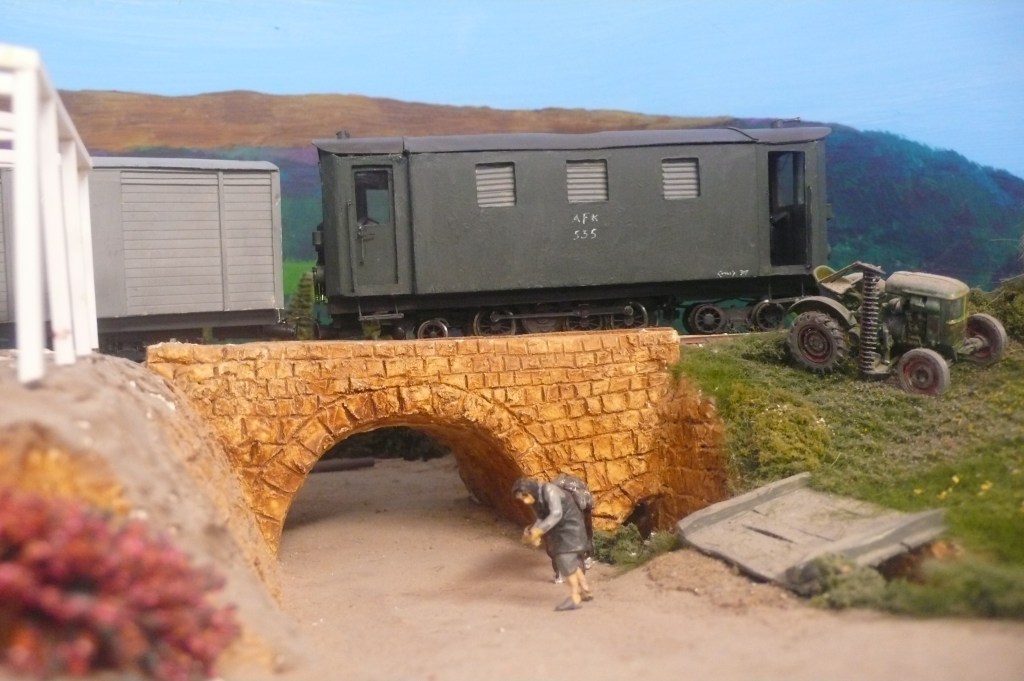
234. The afternoon is wearing on and the mixto disrupts the peace at Cadsuiane-Fanhuidol. The old lass in the road is trying to persuade a reluctant mule to get a move on. Best of luck with that! The low bridge restricts road transport into Cadsuiane village but the road surface cannot be lowered because of the adjacent stream which flows through the small arch to the right.
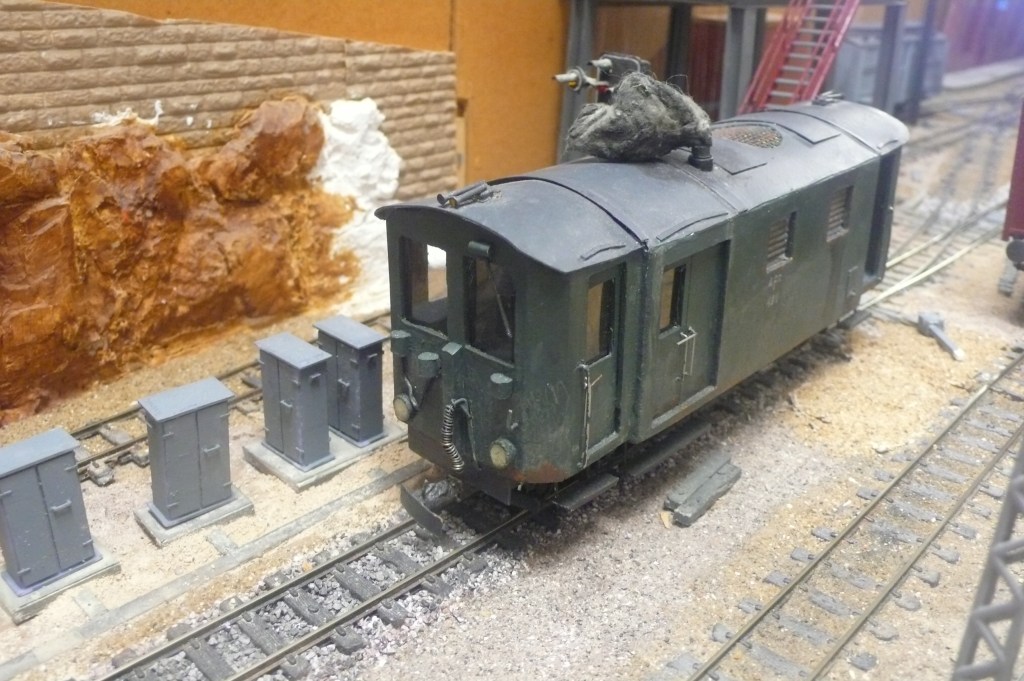
235. The loco for the Altingablecaŭtoj local goods, last seen at the horse landing, comes off shed after a quick service and is diverted to shunt Post vans because the pilot is still dealing with the congestion in Gasafabrikatastrato. Once the seaside excursion has arrived from Urteno it is let off shed to wait in platform 2. The loco was held to provide an overlap for the passenger train which is running slightly behind time because of the late running RFK-FDV goods.
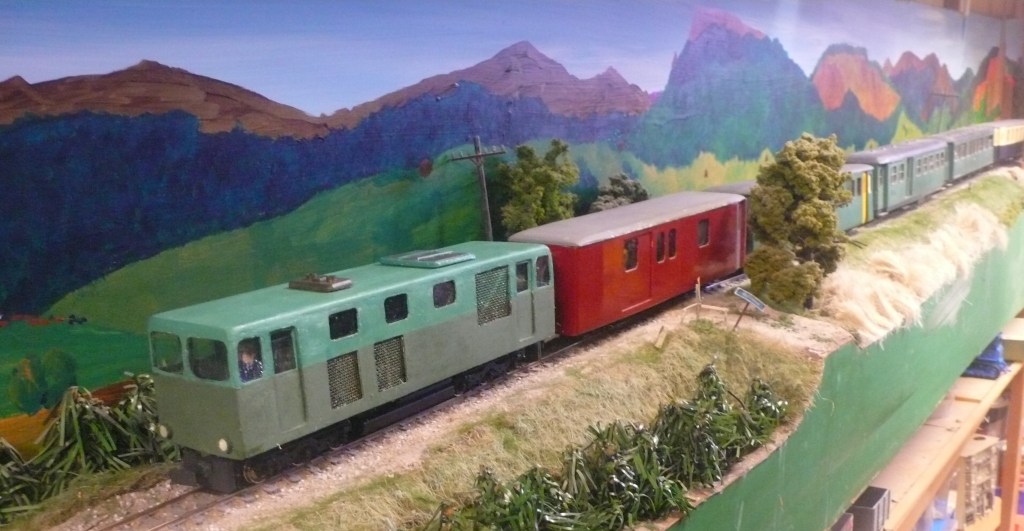
236. The express jogs along between the fields of the Kasatritikakamparoj. It makes no stops south of Lacono unless requested by passengers boarding north of Urteno on notification to the guard. It is a long and heavy train in this format although it is often shorter at other times of the year. The story could be sanitised and left there but there were major problems in persuading the “long” coach to go round the curve in the hidden section. This is effectively a new vehicle as it has never been used in anger although it was built years ago. A large number of items needed minor modifications before a successful passage was made. In fairness most of these stemmed from the use of Pullman connectors on this express stock and it would be alright without these for use on local services. I began to contemplate the possibility of chopping one bay out of the vehicle but persevered. The jury is still out however and more testing will have to be carried out between sessions. In addition the loco, also on trial, persisted in uncoupling from the mail van and made a number of visits to the bench before this problem was solved. The joys of scratchbuilding as a bodger!

237. The scenery in the corner can quickly be removed to retrieve derailments. As can be seen the behind the scenes woodwork leaves a lot to be desired. The reach into the farthest part of the corner is still a bit awkward.
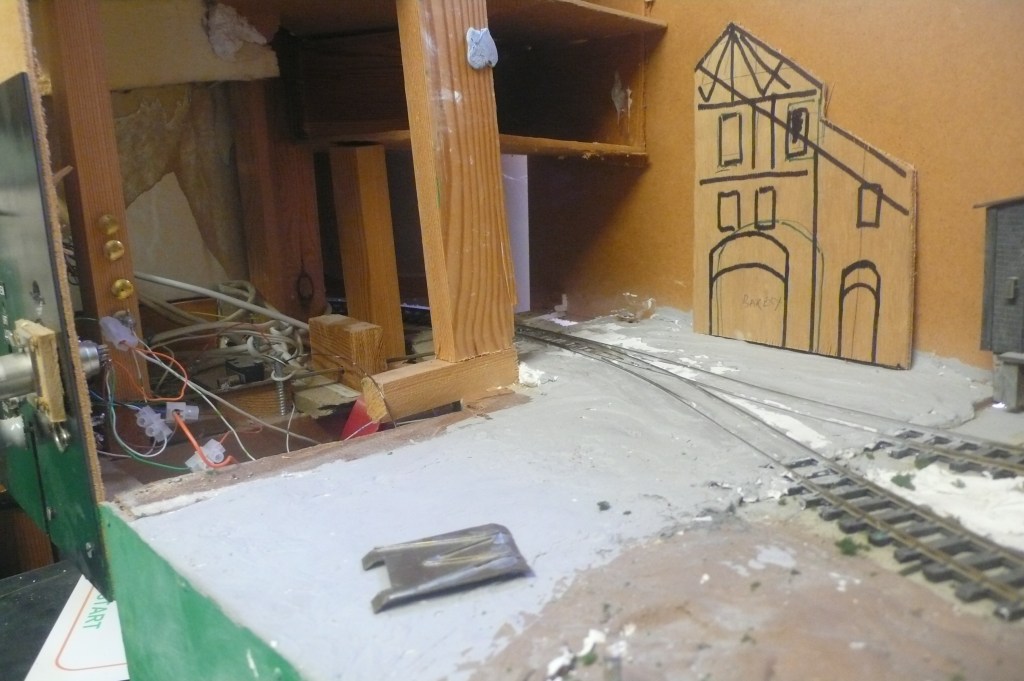
238. This is the view from the other end with the backscene, buildings and large tree removed. The wiring behind the main power distributing panel that can be seen at the left is hardly a paragon of virtue! If necessary, in dire emergencies the waterfall can also be taken out. Of course this spot is inevitably where most derailments occur on the lower part of the layout. The rerailer is mandatory for placing the Swiss coaches onto the track as their low bodies make it difficult to see or grasp the bogies.

239. After a very long wait, in real terms, the local goods crosses the same ground in the opposite direction with a fairly short train in tow. It was last seen in photo 200, although the brake crept into photo 229.
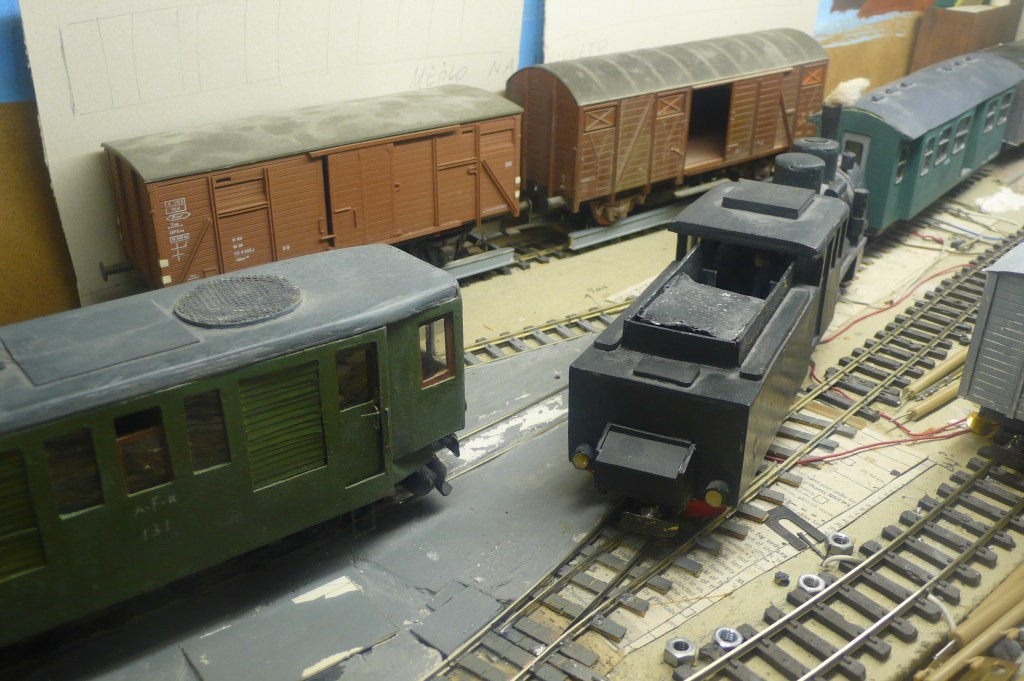
240. As operation, rather than remedial work, takes over once again the FDV-RFK freight pulls into the north end of Urteno, as seen from the bridge. It crosses its counterpart RFK-FDV goods which has just finished shunting and will leave on time despite its late arrival. As far as possible goods timings are fairly slack to allow for problems.
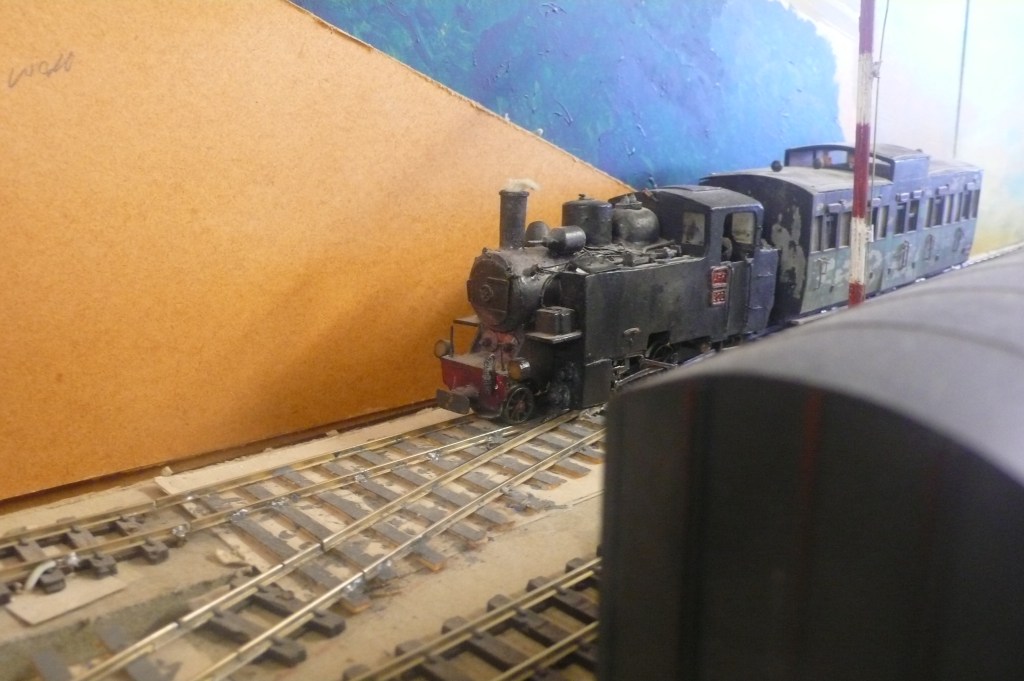
241. In contrast to the bustle elsewhere Ithilarak lapses into quietness after the mixto and the freight depart. The branch train pulls along the loop and halts outside the station building to collect a few parcels. As is often the case there are no passengers today. The Tegmentadelamondo is a “Closed Zone” of military significance and an over night stay at Jakarutu is not allowed without a permit. The van in the foreground is one of the notorious pair of 6 wheelers which tend to be used as a last resort. They are too large for normal loads and too small for large loads. The van has already languished in the siding for a couple of days but could find a new lease of life acting as a cattle van on market specials.
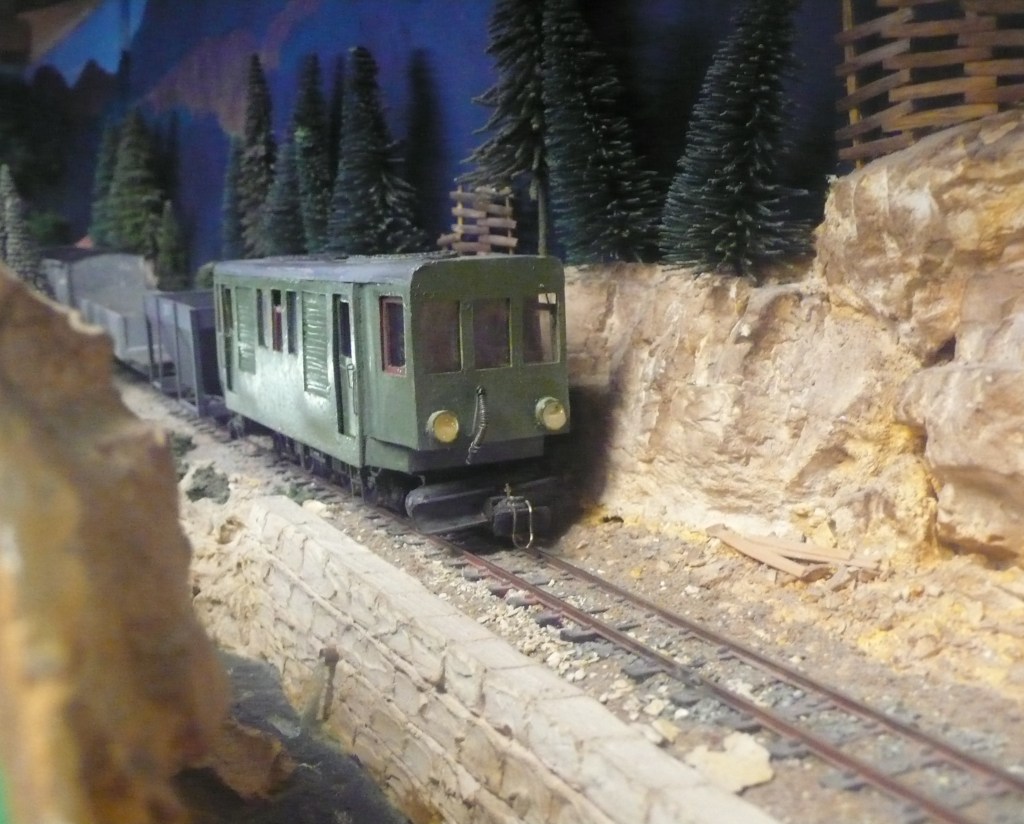
242. The RFK-FDV freight, which runs the length of the mainline, is no longer booked for a banker up the vulpafaŭkangulo because the pilot usually assists the mixto. Any excess traffic is dealt with by the relatively new local train which follows. Capacity up the bank cannot be wasted, however, and the front two wagons are making the short hop between stations. The loco has stalled because it has just been driven off the Urteno electrical sections and it is parked here until the train can be given further attention.
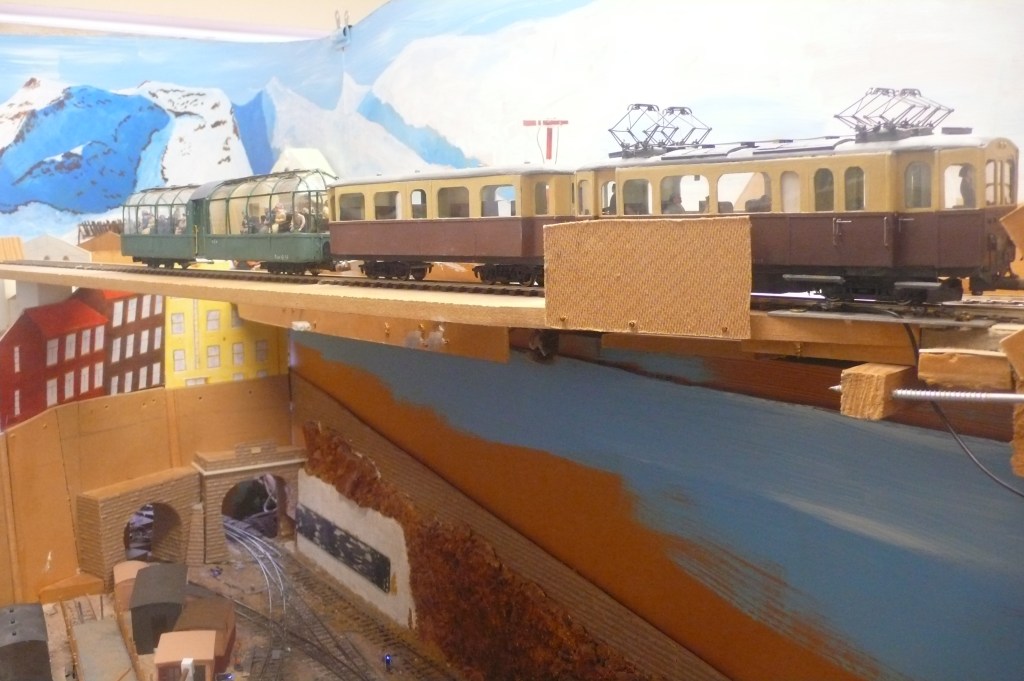
243. I do not usually bother to use the unwieldy cassette for Fenditavlat but I decided to load the CFS railcar onto it. It is somewhat precarious as it stands above Lacono when in place, although the photograph emphasises the vertical gap. The railcar was pushed off the cassette by hand and then powered from the Ospicio control point so that the movement could be observed. It was stopped just after the last wheel set crossed the rail joints and the circuit was switched to Fenditavalat. The observation coach on the rear is making the journey between Krelm and Relforka today. It runs in alternate directions as part of a “Land cruise” service on weekdays.

244. The cassette and its lead are in the foreground in this photo. It is a bit of a Heath Robinson arrangement but it generally works reasonably well. As far as possible trains running onto and off the cassette are watched because they are unprotected from the drop. The screw, visible at the bottom right, “clears” the Fenditavalat starting signal via the microswitch for running line moves. The cassette fits into a slot behind the support for the Lacono consignment note boxes at the left. It is powered by the crocodile clips at the front and across the mainline in the background. The bridge that forms the end of the scenic section, which is covered in snow, has to be removed to fit the cassette. In all honesty it is generally easier to load short trains onto the mainline avoiding the whole palaver.
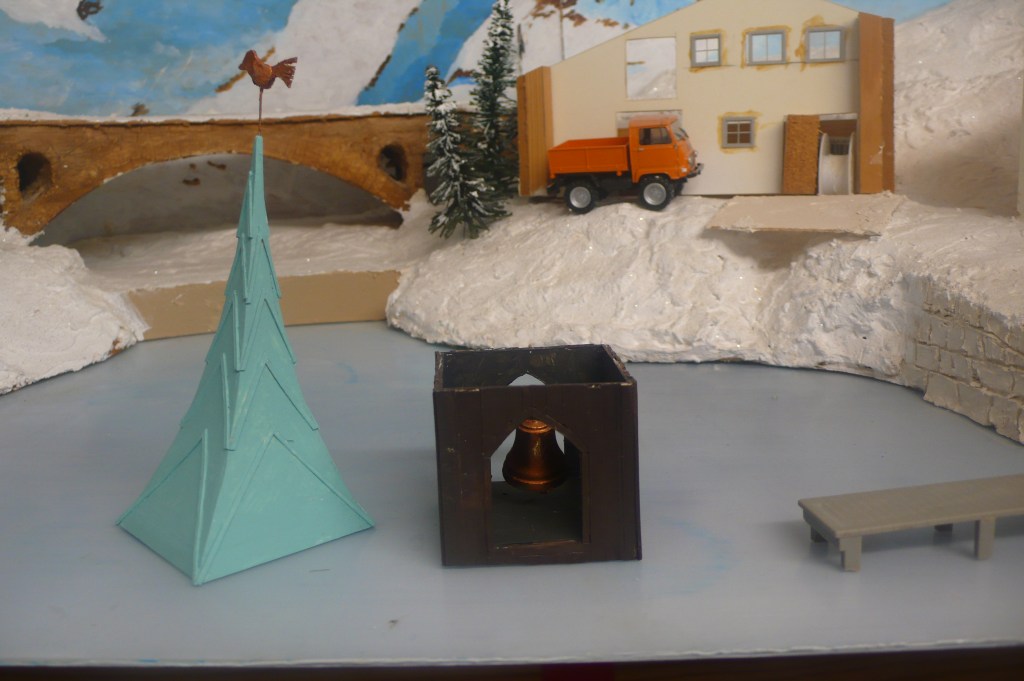
245. The cassette is supported at its other end by the tower of St Anaktix. The belfry and steeple are removed when this is needed. This can sometimes result in the direction of the lean on the steeple changing! It always looks a bit like that talking hat thing in Harry Potter.
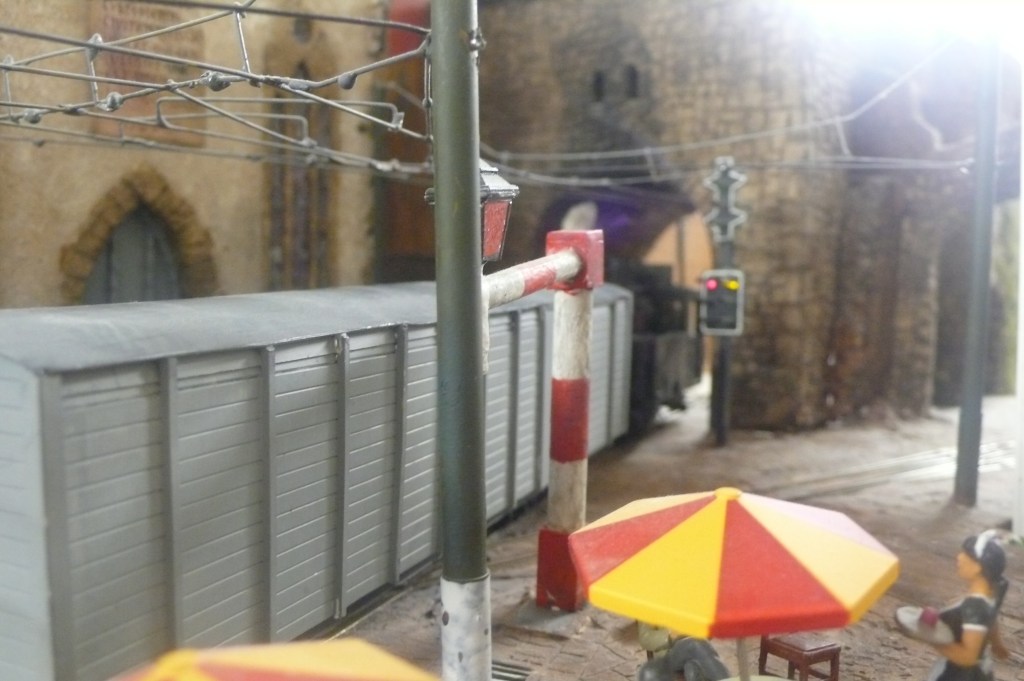
246. As has been noted before, the Fenditavalat starter plays an important safety role. If a running aspect, or the shunt aspect seen here, fail to come up and the signal remains red it definitely means stop. It remained red on the first attempt because the road was set to the now removed cassette and any train would have run into an abyss, so the signal did its job. Having checked the point and power settings the signal then cleared allowing the Isuri pilot to run onto the observation coach. The “glass” insulators on the three phase wiring show up well.
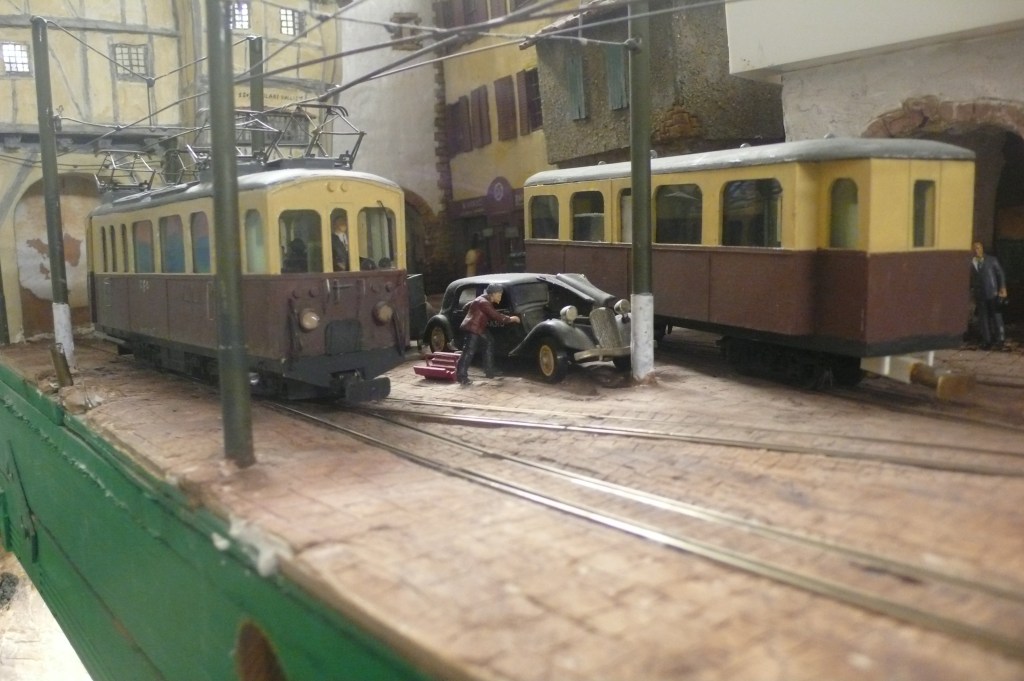
247. The pilot pushes the CFS railcar trailer up the hill so that the railcar can run past it. It is held by a track brake for this manoeuvre. Once the railcar runs in front of it the brake is released and the trailer runs onto the railcar by gravity.
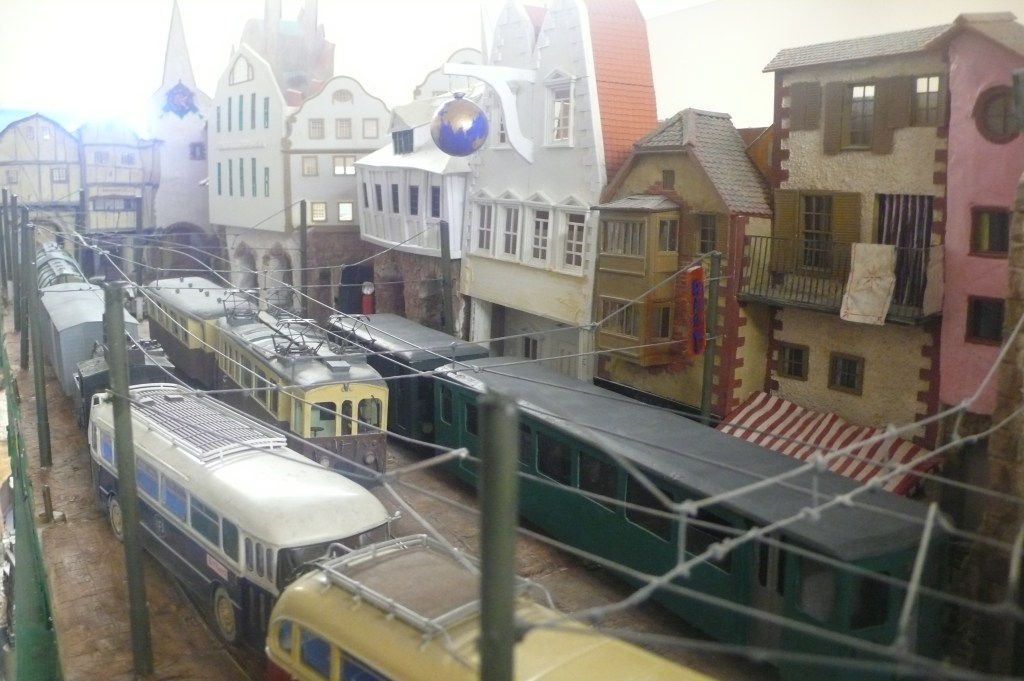
248. The buses have begun congregating in Isuri’s merkatubaxu as the AFK schools’ railcar joins its CFS counterpart. As has been noted many times before, such congestion would more than likely have led to the railway being evicted from the square by the 1960s. The AFK railcar will cross the incoming mixto at Caladonno.
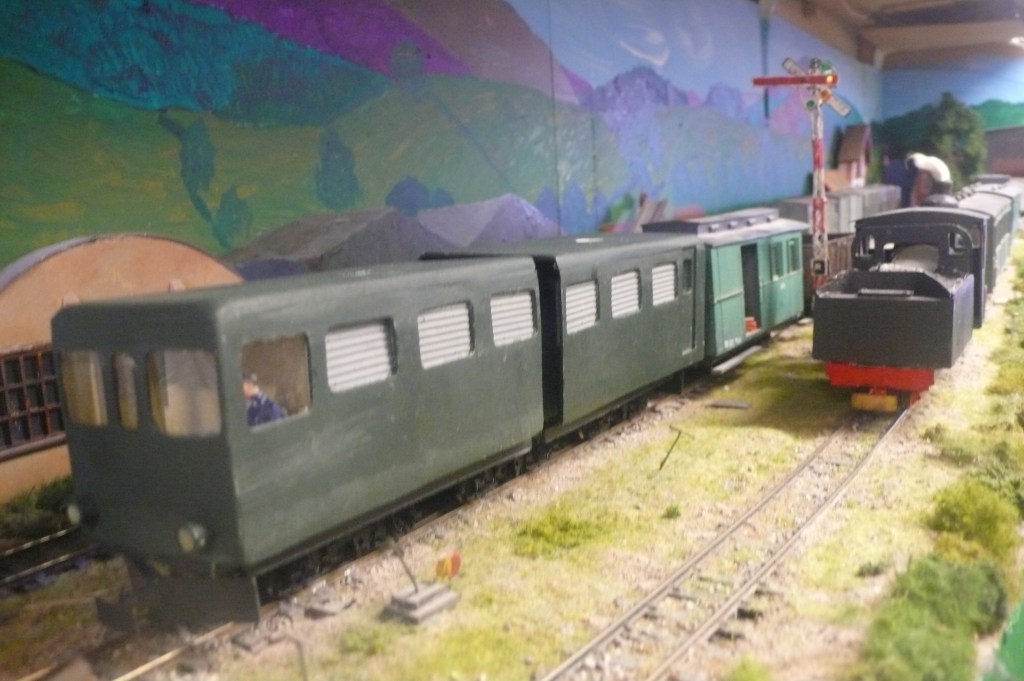
249. The seaside excursion passes the local goods at Boursson as the Bo-Bo-Bo shunts. The excursion is running slightly behind time and makes a brief halt here for any passengers. Most of its trade comes from Lacono and Urteno middle classes and workers rather than the rural peasantry. It has accrued a small amount of time by being put through the loop.
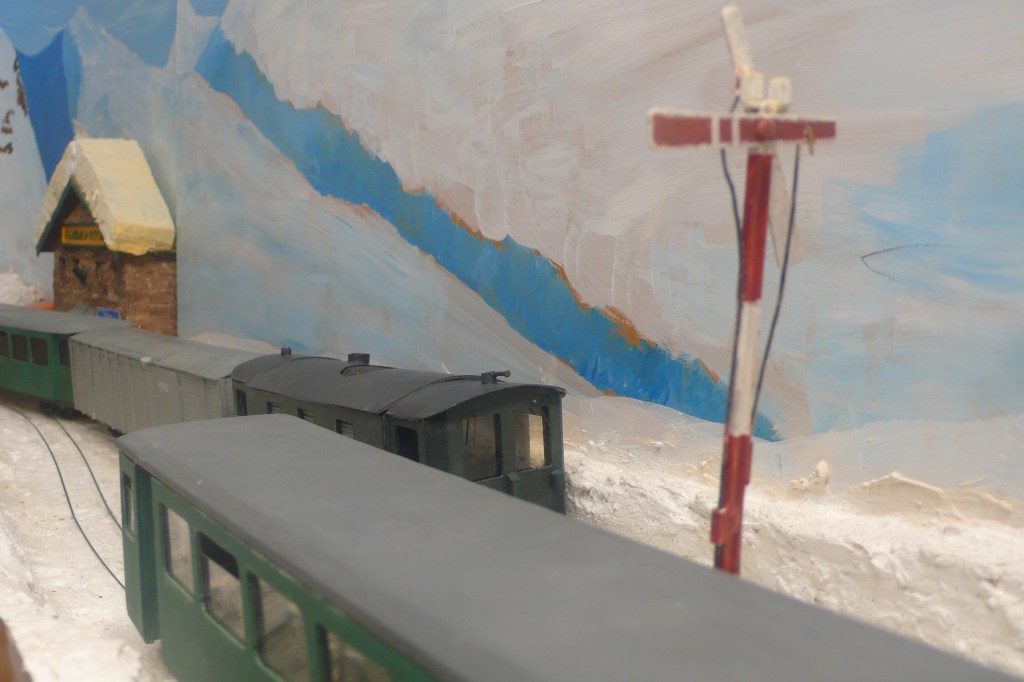
250. The AFK schools’ train meets the mixto at Caladonno in the snow bound Narnian enclave. Strangely gifted locals are conspicuous by their absence and the Thalnian schools, by mutual agreement, only accept normal human children as opposed to elves, centaurs, dragons and the like.
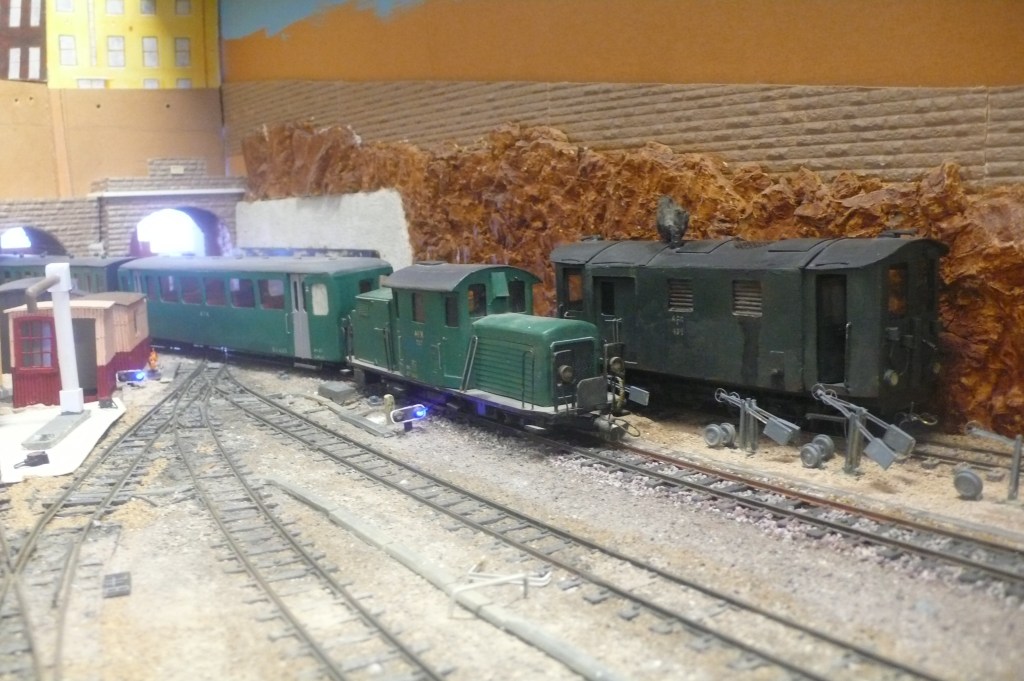
251. The layout is operated in sessions lasting for an hour or so. Many places are left “in limbo” until they need to interact with trains coming from elsewhere. The last attention that Lacono received was recorded in photo 235 and there was the saga of the derailing long coach intervening since it was last touched. Operations at Lacono are quite intense throughout the afternoon so a session was dedicated to bringing it up to speed. This photo shows some of the elements that make operating the station more difficult than elsewhere. Beside the comprehensive signalling system, which as an ex-signalman I like to work properly, there are often multiple locomotive moves made on one click of the clock. The down schools’ “railcar” is seen leaving Asapargo as the loco for the Altingablecaŭtoj local goods runs through the spare loop having left a Post van beneath the signal box. This is already a source of conflict because this loco needs to run to the north end of the goods loops whilst the railcar loco needs to run round before proceeding south. There is also no chance of a trade off because the underpowered, ungainly Austrian railcar, as these locos were designated, would be unable to cope with the goods train. The last time that it went into the Altingablecaŭtoj it failed dismally. As per usual the pilot also needs to access the diamond for shunting purposes.
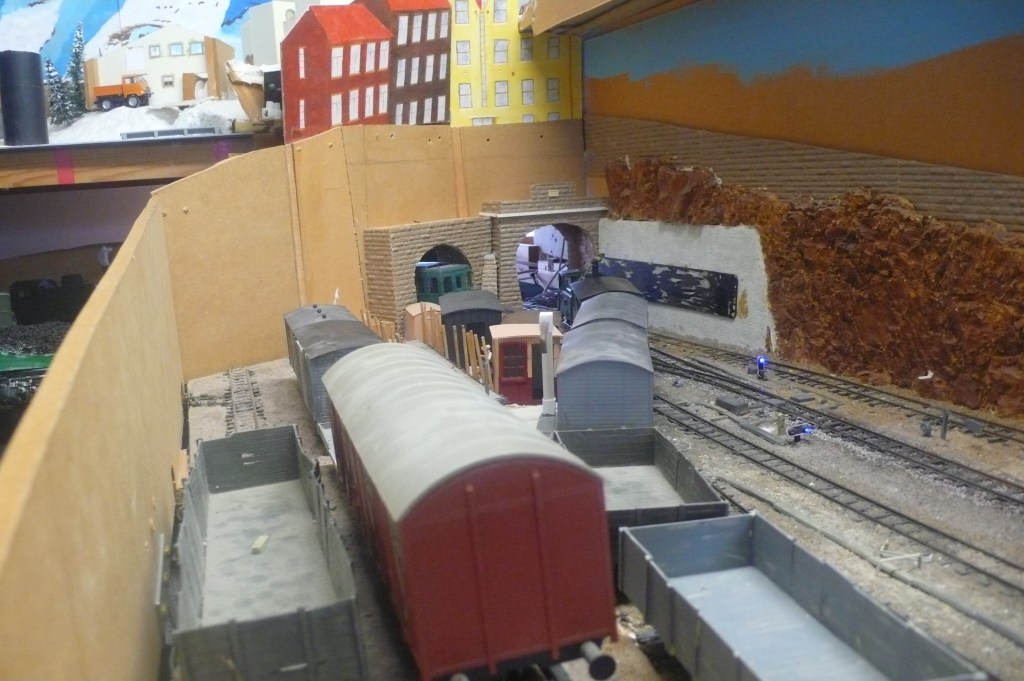
252. “Sisyphus” pulls a very long rake of wagons across the diamond at the southern end of the yard. To some extent this was inspired by a photo of Phoenix at Strabane pushing an enormous rake of wagons, well beyond its capacity to pull in a train. The 0-6-2T similarly struggled but just about coped.

253. A few moments later the Karushnastrato is the scene of the action. The freight loco has backed onto its train and the railcar is seen running round the passenger stock. With the clock going up to five this is a busy time of day therefore shutting one of the city’s major arteries for 12 minutes plays havoc with the congestion. There are also safety aspects to consider. The two schools’ trains will leave from the very narrow platform and, because of congestion today, they are being formed later than normal. Access to the platform is being controlled to make sure that everyone gets home safely!
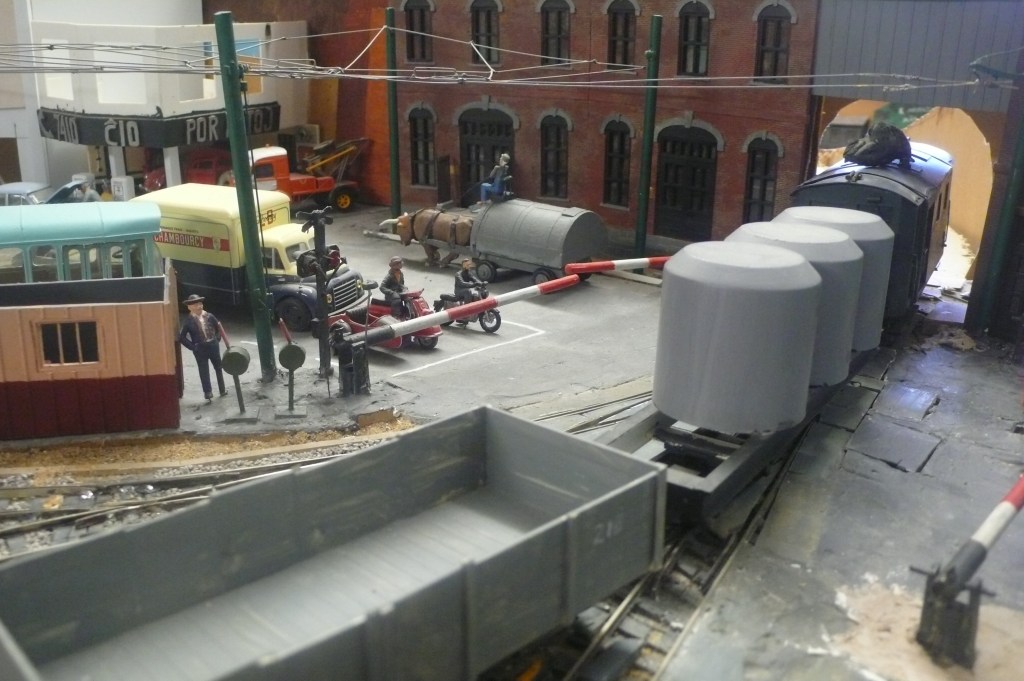
254. After a short pause, to give the road traffic some respite, the local goods rattles over the level crossing. This is a rather contentious decision because it will probably delay the Urteno bound train but there is an IBS splitting the long single line section into two parts.
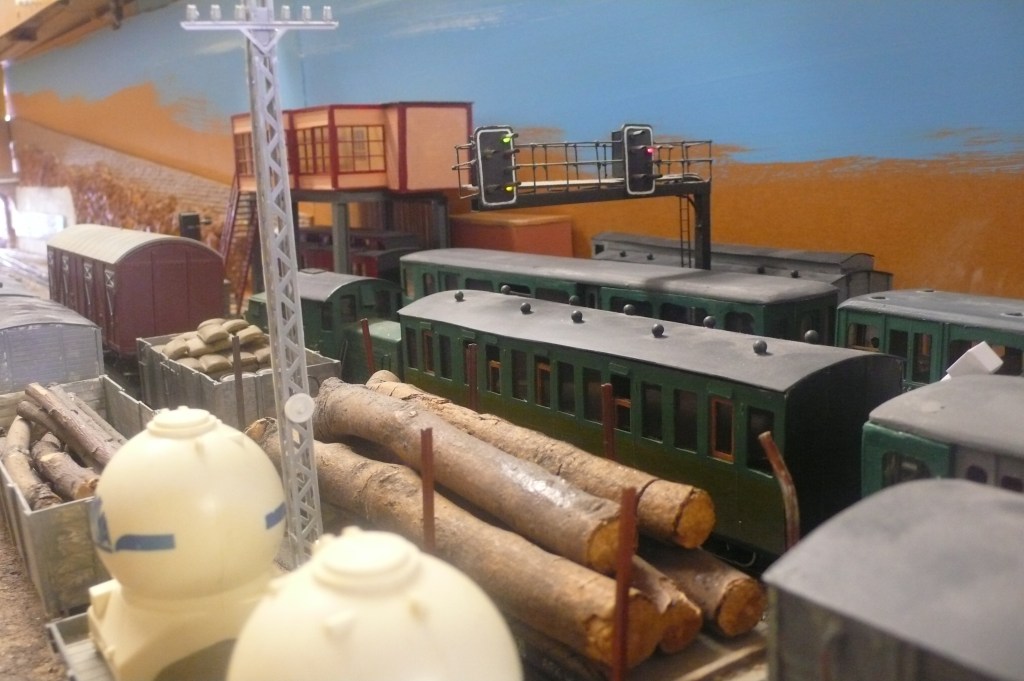
255. The southbound train leaves slightly late, passing the northbound railcar which has backed down onto the Post van. The yard is still full of wagons but progress is being made towards clearing the traffic surge. For the time that these wagons have been standing they may as well have been better brought in by later trains, which is something that may need future consideration. The outgoing passenger train will actually go no further because Boursson needs to catch up before it arrives there.
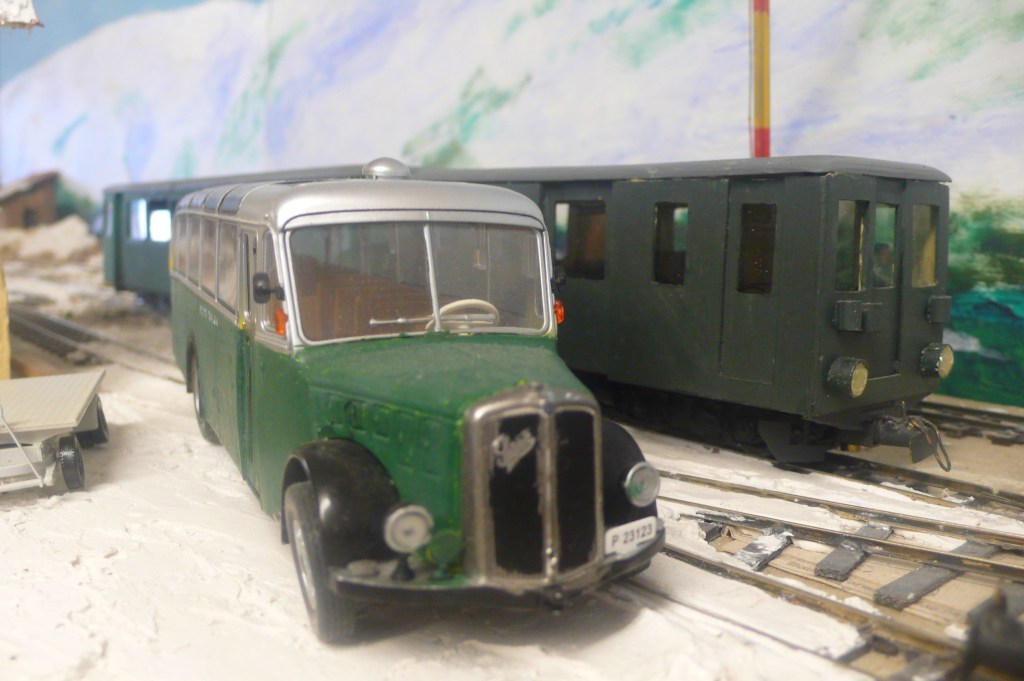
256. Elsewhere on the system the Fenditavalat schools’ train pulls into Ospicio to make its connection with the Post bus which will drop down into the nearby valleys. The scholari are still indulging in their Bacchanalian revels and a number decide that this is as good a time as any to sample the famous establishment at Cadsuiane-Fanhuidol.
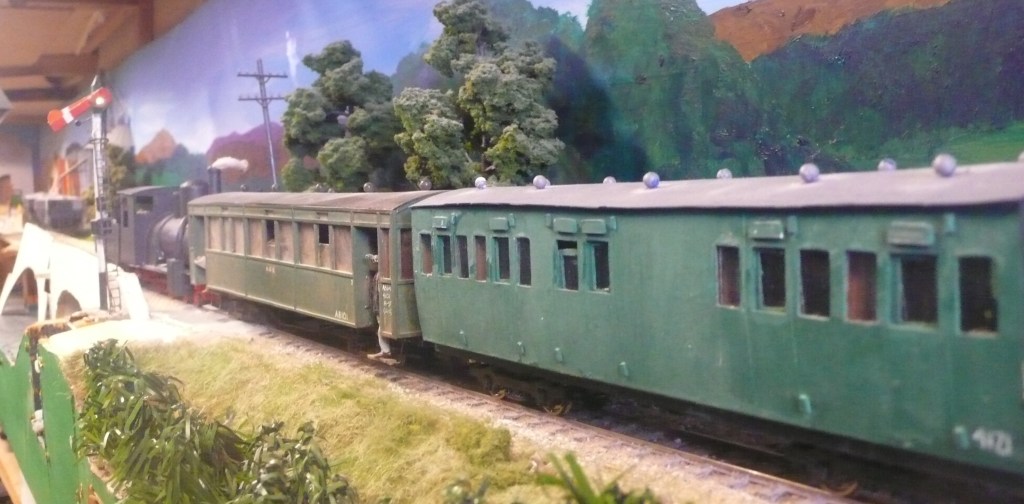
257. With reference to earlier comments about the Breĉo de Glissent enirasignalo, the home signal, (photo 229) the single visible arm shows the driver of the excursion that he is signalled along the RT (mainline) and that the forirasignalo, the section signal, is off. With the three arms aligned in the off position the signal aspect shows green. There were problems with the prototype when the distant and the home arms were both on in that the light tended to show orange rather than unambiguous red. This was solved by retrofitting a yellow lens which dropped down when the distant was on and the home was off. You can be assured that the AFK version remains as the originals! The signals were only used during the inter-war years.

258. As the excursion train is approaching Glissent it is now time to shunt Eromarbordo. On a large system type of layout there are always backwaters that receive little attention compared to busier places. This contrast adds to the appeal in my opinion. To continue the CDR theme it is similar to comparing Glenties and Strabane. The branch goods was last seen in photo 187 but it is now re-animated as the loco pushes the NG vans attached to the loaded SG refrigerator van out of the goods loop. This is a move not without danger as it easy to knock the vehicles on the front track, bottom right, onto the floor when coupling or uncoupling stock.
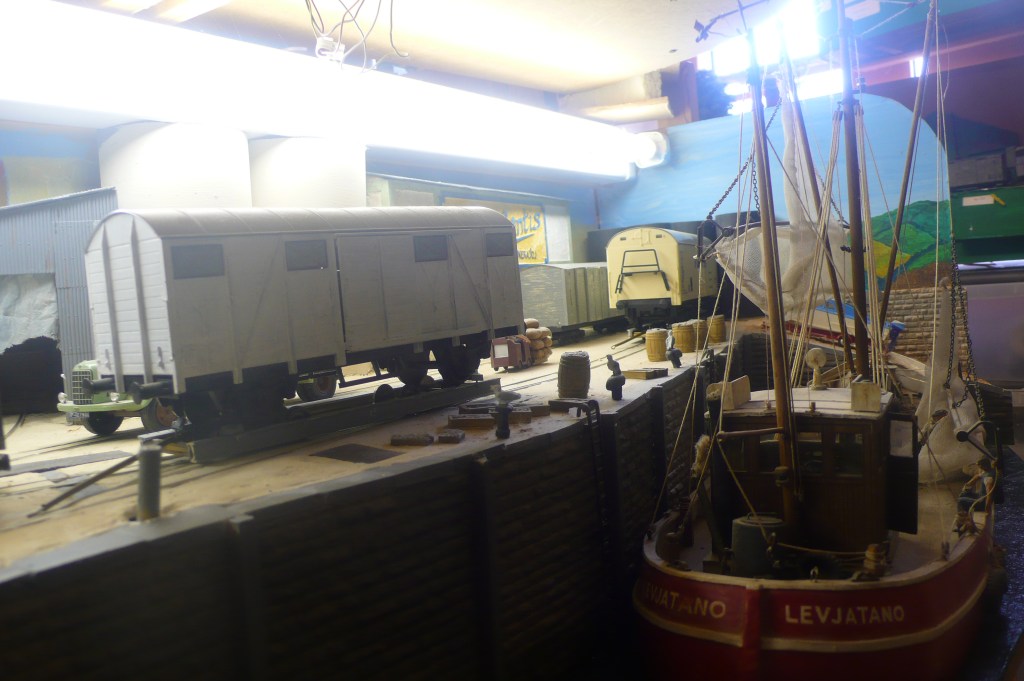
259. You will have to forgive the intrusive lighting but it cannot be avoided. After some sorting of the NG vans the SG vans can be dealt with. Peboja, the staciaĉefino, has asked the crew to swap an open on the Town Staithe for a van, at the request of the fishing Co-op but they have refused as this place is difficult enough to shunt without trying to make things awkward. The buffers of a NG van can just be seen at the left as it stops to couple onto the transporter. The SG van is a rough and ready repaint of a standard Lima O gauge vehicle dating from years ago, well before I obtained enough SG vehicles to avoid having to resort to such dodges.
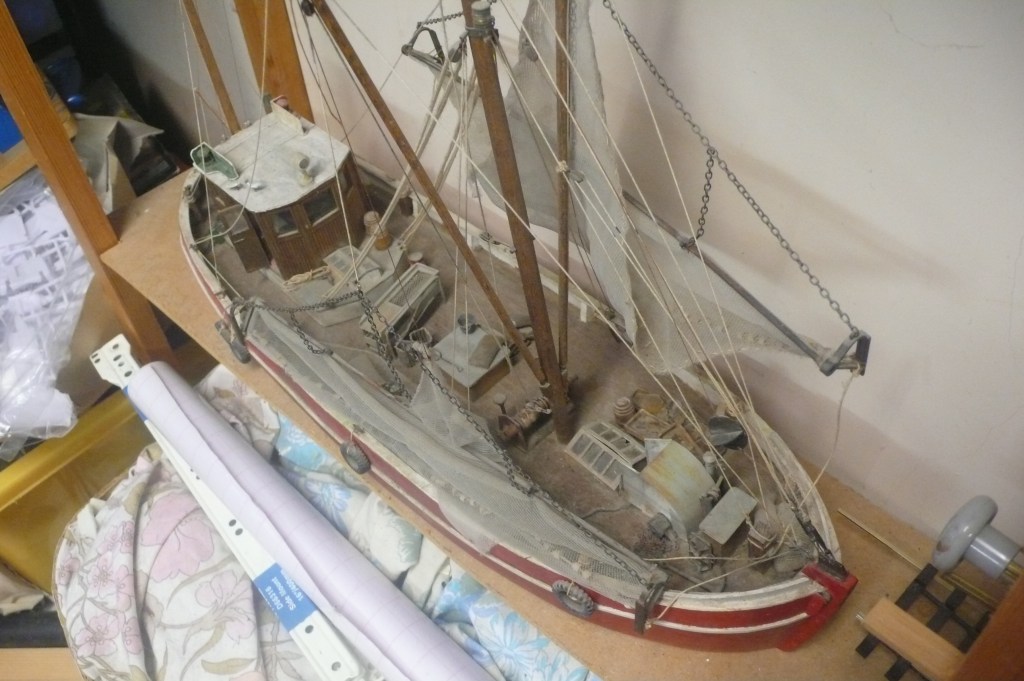
260. The shunting in the previous picture would be a complete non starter with the trawler in place. A special shelf was built to take the removed vessel, just across the aisle, but, as on this occasion, it becomes a magnet for “junk”. The boat was built from a Billing craftsman kit in the early eighties. It was converted to a waterline model and took around two years to build. Matters were not helped by having to hide its existence from the obnoxious landlord. Still he was better than the one who burnt down my mate’s lodgings, whilst we were playing University Rugby League, for the insurance money! The ship is delicate and recently received some TLC to repair a few minor problems and clean it up.
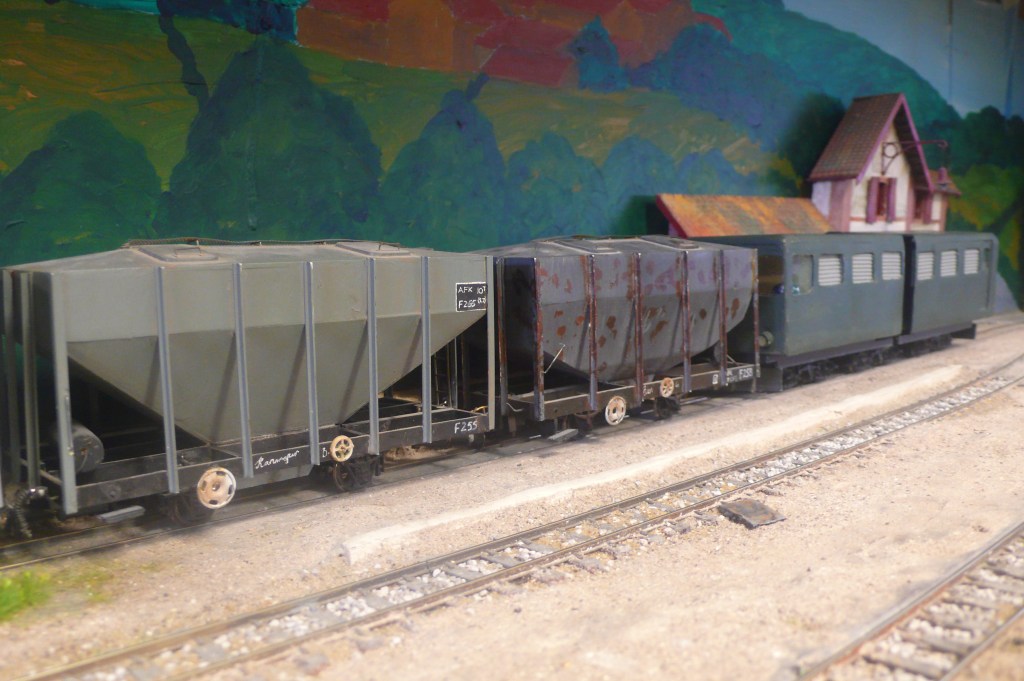
261. With Eromarbordo sorted out we return to Boursson where there is just time for the loco to run round the train and get into the goods siding before the schools’ railcar arrives. The two hoppers are “off spot”, to use an American term, in that they had to be pulled from the elevator to make room for two vans to be loaded with grain in sacks. Only Eromarbordo, Relforka, the Karamspur distillery and Bitrano distillery, on the CFS, can deal with hoppers. There was unusually no demand for any this morning and the wagons will be replaced for tomorrow when the vans are taken out, after the passenger train departs.
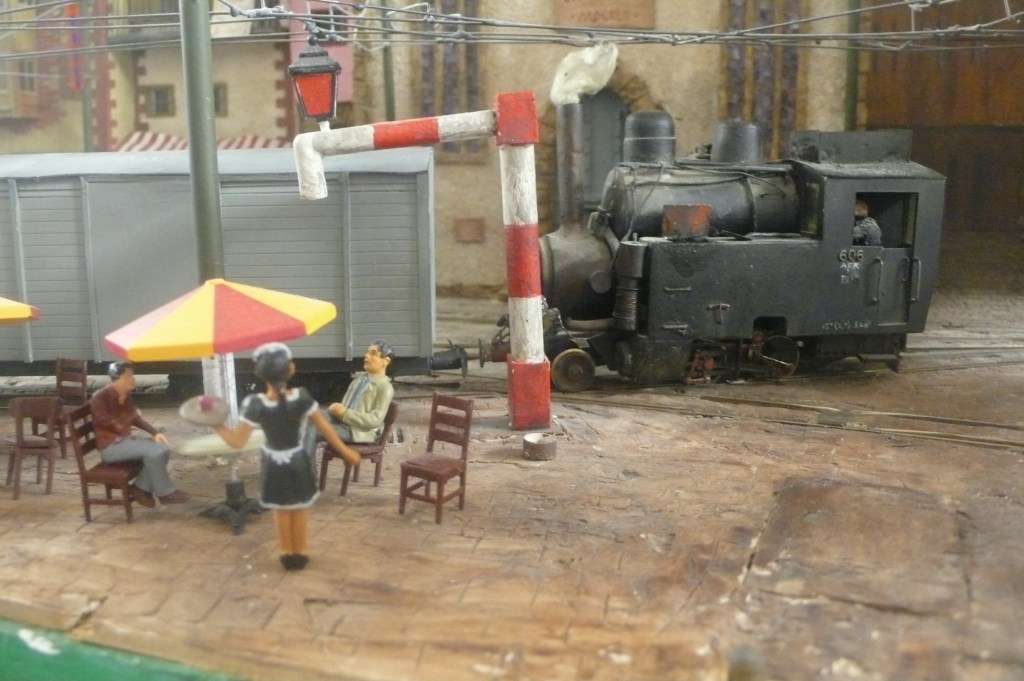
262. Isuri’s pilot reforms the mixto for the down journey. At the moment things are going smoothly and the train will depart on time. There is no news about the Narnian connection so far but, if everything remains as it is this will not be a consideration this evening. Things can quickly change, however. Those two blokes don’t. They have been sitting there all day because I am too lazy to change the clientele of the café.
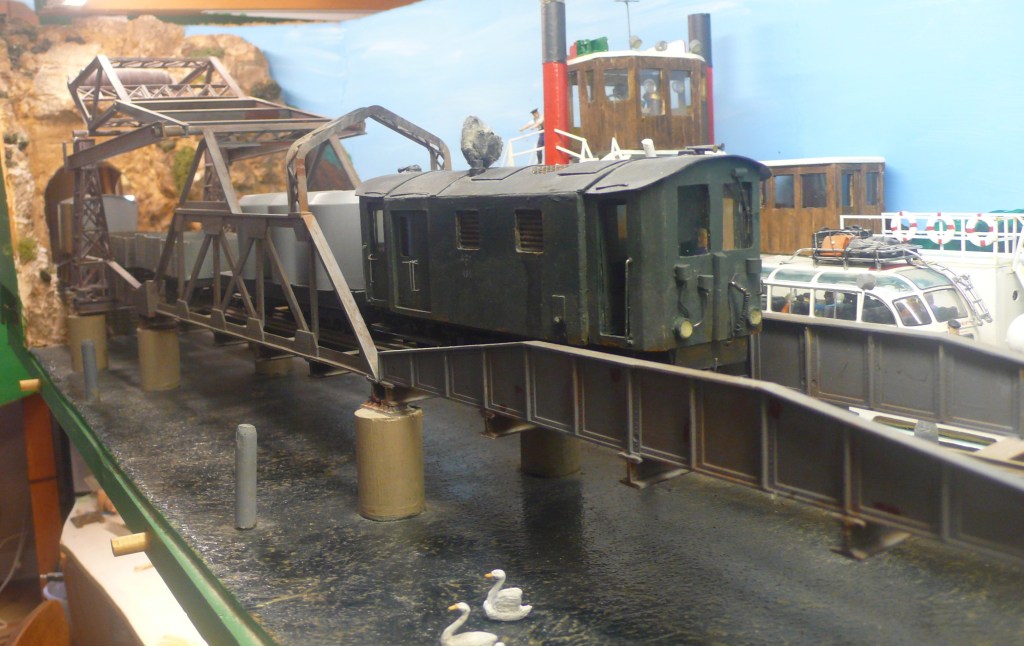
263. The evening Altingablecaŭtoj goods crosses the lifting bridge over the Spegulalaguno slightly behind time with the commuter train on its heels. As is often the case the train is simply redistributing empty wagons, such as the opens and the cement wagon, rather than carrying loads. It was introduced when the paper mill was added to the layout to ensure that there were no problems with the supply of logs from the north. Its role is less important during the summer months. The swans have returned after being painted but I am afraid that a pike must have got at the cygnets as not many survive.
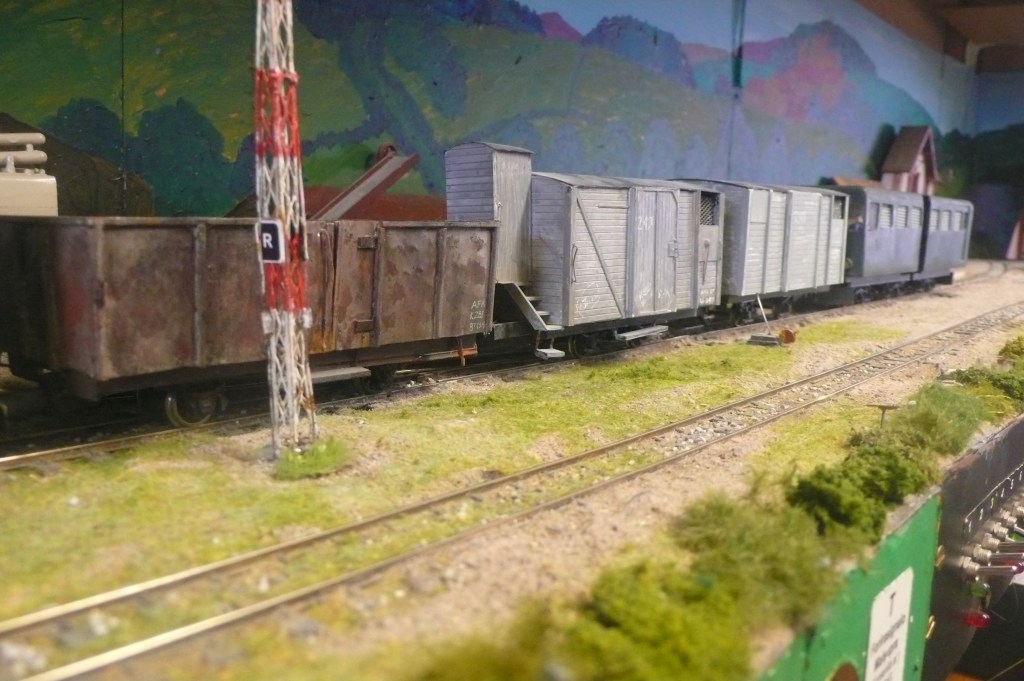
264. The KTT local goods has finished shunting Boursson at 17.35. The consist has changed significantly during the course off the afternoon which is what makes a system layout more interesting than a one station layout which can only tell part of the story.

265. The shunting has finished just in time to allow the down counterpart to enter the station. As is often the case this train has been thrown together and sent out “rough” because of time pressure at Lacono. It will need remarshalling before it shunts at Sojonno.

266. The LAC-URT schools’ train makes the Ghealdaban stop. The village is a little distance away, perched on its rock outcrop, but the Postbus is timed to make a connection. Although it is provided for scholars the train is open to all and is often used by those visiting relatives at the Regional Hospital. There is not much chance of horse play for any children so inclined in these circumstances.

267. The southbound counterpart (LAC-RFK) is making the Sojonno stop as the women still work the fields. This train makes a nominal connection with the afternoon train running to the Narnian border but it is a very tight timing and therefore unadvertised. As the train is running a couple of minutes late today it is likely to miss it because it will not be held. Due to a marshalling oversight this train is running without a brake van in the consist.

268. One reason behind the slowdown of operations is the garden railway. Following the latest incident the home made bogie open wagon has made it onto the workbench below Urteno. It had its buffer sheared off, at the lefthand side of the photo, and the loco bonnet, behind, lost its front. Most of my outdoor stock is similarly scarred but garden railways always seem to take these problems in their stride. The stock is much more robust when compared to the indoor scales and, to me, it is rather like playing, the long since banned, murderball compared to badminton.
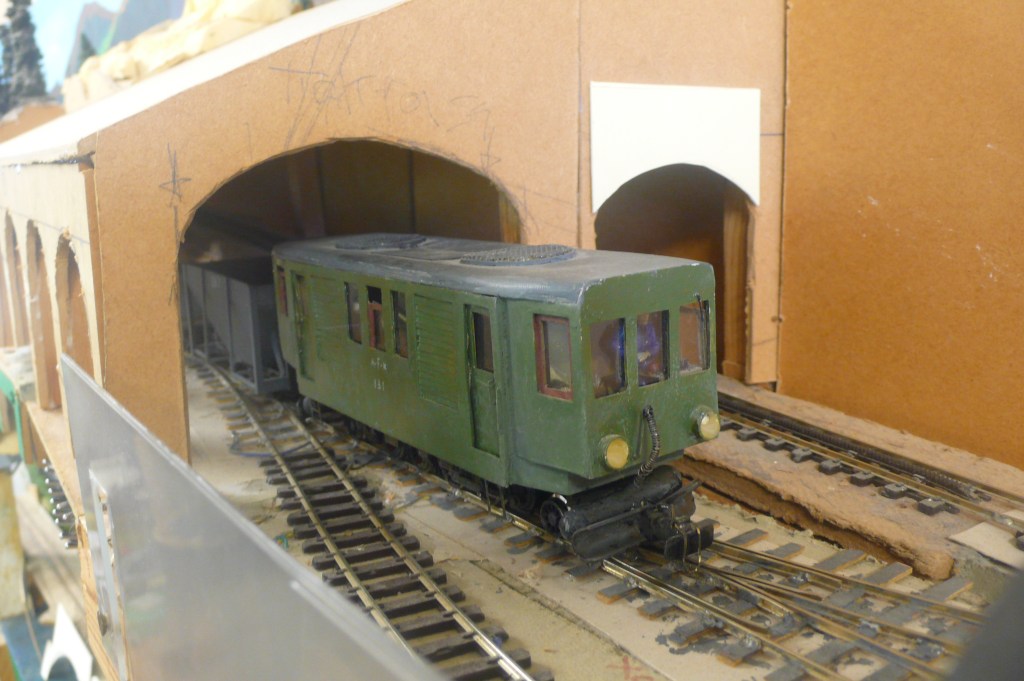
269. The express goods loco pulls out of Ithilarak avalanche shelter. The train has been retimed to accommodate the newly introduced local goods which follows it. It now meets the tightly scheduled mixto at Ospicio and is no longer supposed to work here. I always forget this and must write a larger reminder for myself! It is just about possible to make a set down without losing the path. If any more work is needed the train will be held but that means that the following train has to be held at Urteno.
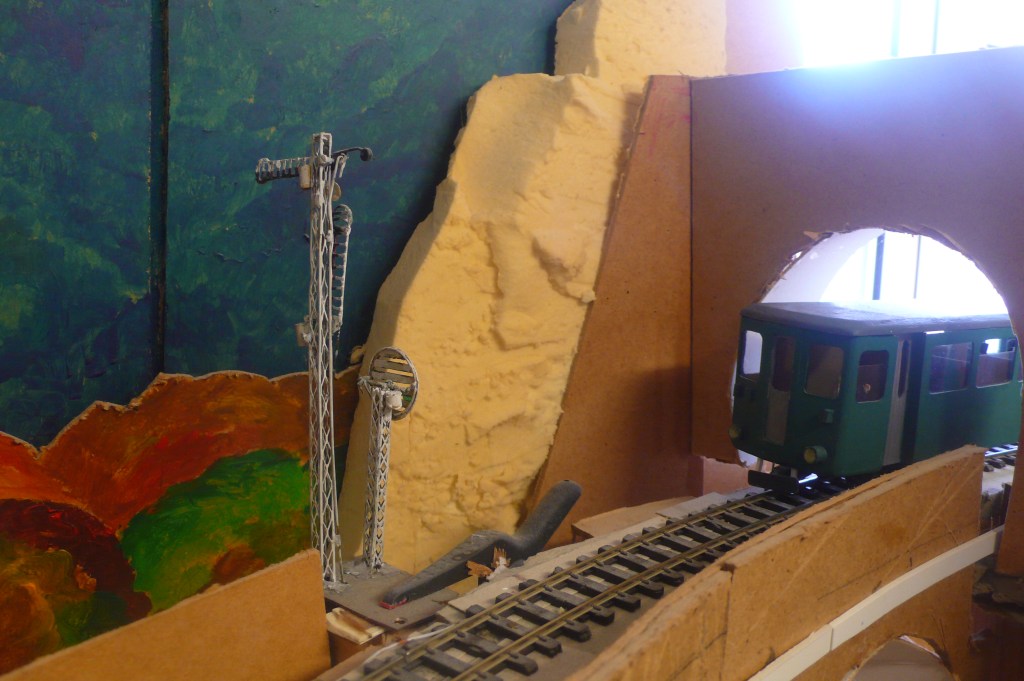
270. Problems inevitably result from the shunting restrictions and the van intended for Ithilarak has to be carried forward. The FDV-ITH schools’ railcar is also held, waiting for shunting, by the home signal. This used to work but was disconnected for scenic work some years ago and is currently simply clipped in place to allow easy access behind it, should work ever restart. There was also a “top” to the tunnel which mysteriously disappeared. The railcar is only held for a couple of minutes.
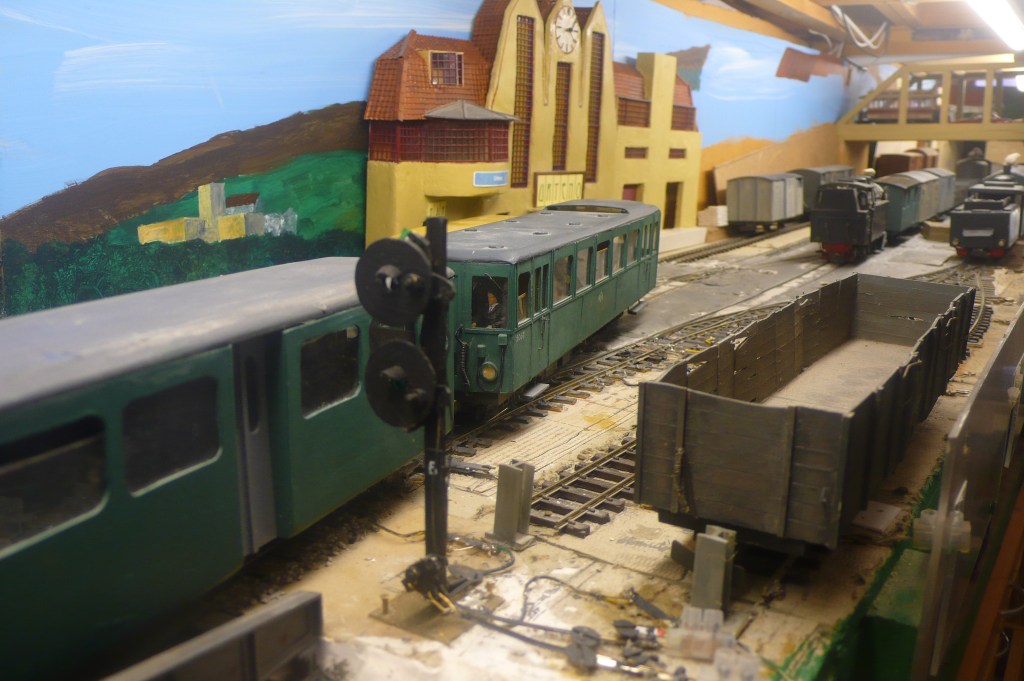
271. The LAC-URT schools’ railcar has just finished polishing the rails of the busy Lacono-Urteno section as it pulls into Urteno. The pilot has hardly had time to run onto the rear of the preceding local goods and the freight just visible at the right will enter the section immediately. The crude nature of the searchlight signal controls, in the foreground, is obvious.
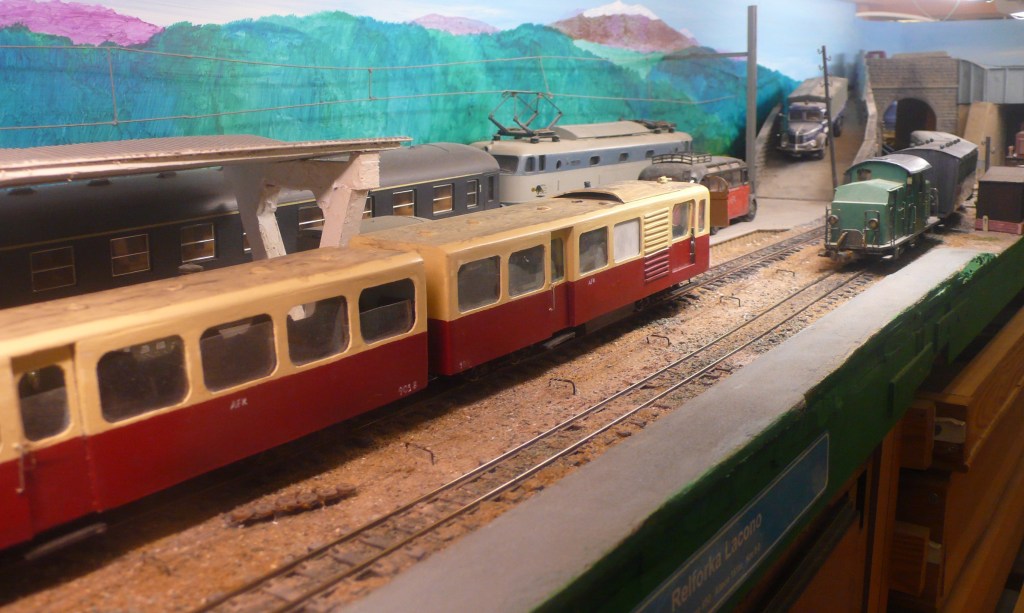
272. The LAC-RFK schools’ train finally arrives at Relforka, having stopped at every conditional halt upon the way. There are still a couple of kids on board as they live in the remote railway community here, think of somewhere such as Hellifield. The dmu set stands ready to depart and the connections, for a miracle, are on time today. The AFK can usually put a spanner into the timings though

273. The mixto runs into Ospicio on time to find the up freight waiting in the loop as timetabled. In theory, with no cement train running, this is the last down service out of Fenditavalat but there are rumours on the bush telegraph of a special running this evening.
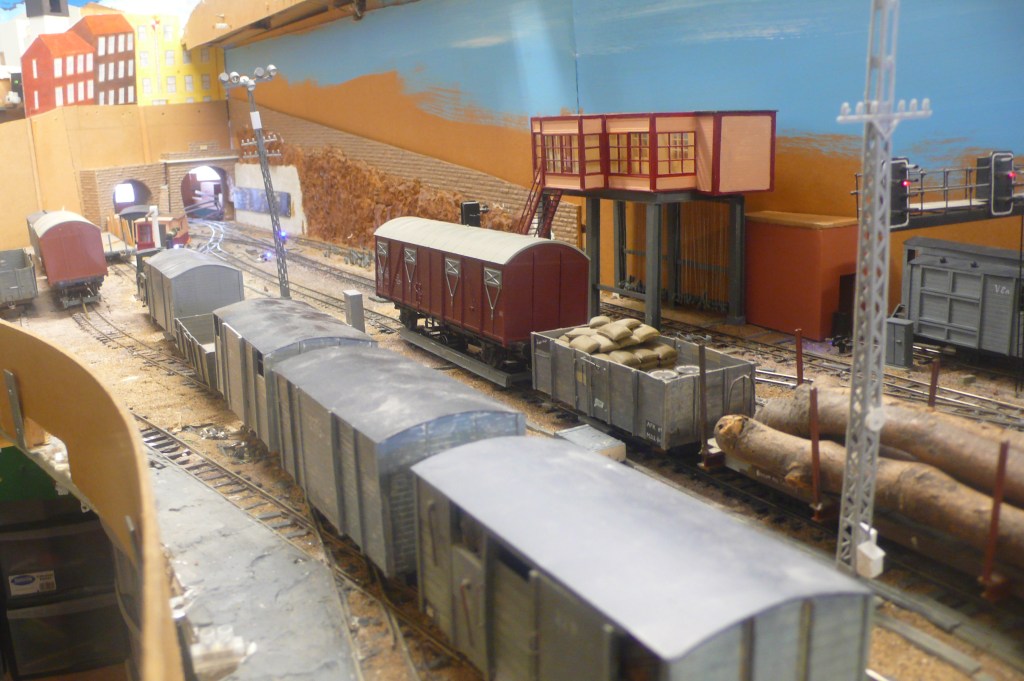
274. The line tends to be operated in sections, with attention being paid to train interactions in the Altingablecaŭtoj for instance, as in the previous photos. Once a certain point has been reached other locations need bringing up to time. It is now the turn of Lacono to be updated. The Gasafabrikatastrato pilot, at the far end of the cut in the foreground, is gradually sorting through the traffic that has arrived and some spaces have opened up with trains departing. To set against this two more trains are shortly expected to arrive.

275. La Besto arrives from Aspsargo shed to assist with the evening shunts. It is met by the shunter who is a clone of the one that disappeared some time back. La Besto will shunt the chocolate factory and the Danulbo industrial estate as well as possibly assisting with the paper mill traffic.
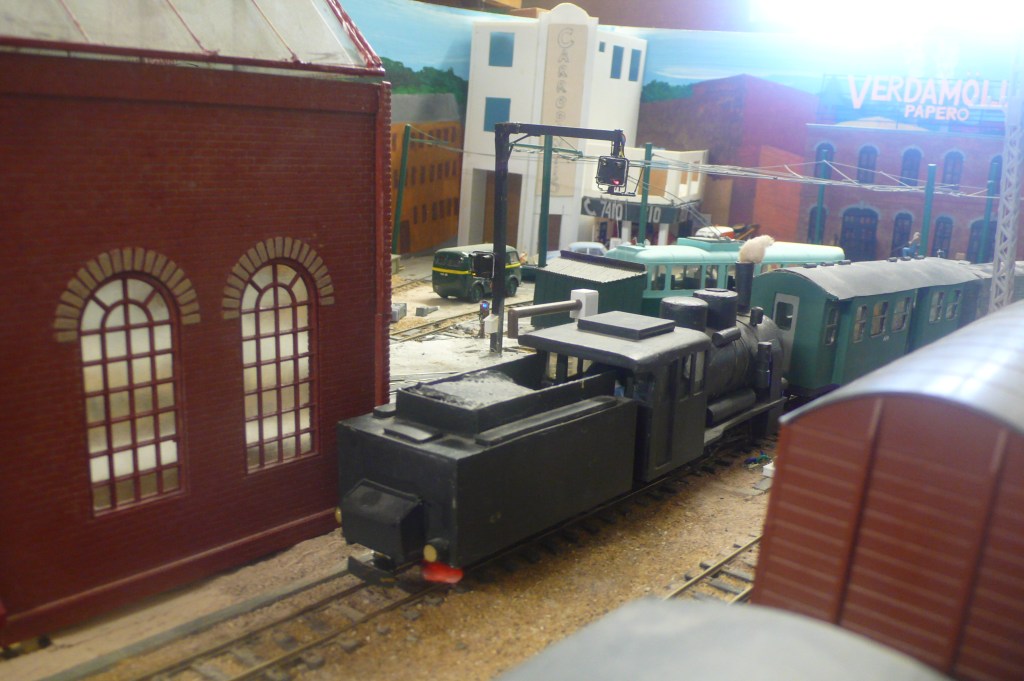
276. Some time later the FDV-RFK freight is let into the north end of the yard, having been held outside on the mainline, for shunting. Fortunately the train is short enough to fit into the northern end of the main reception siding because the southern end is still occupied
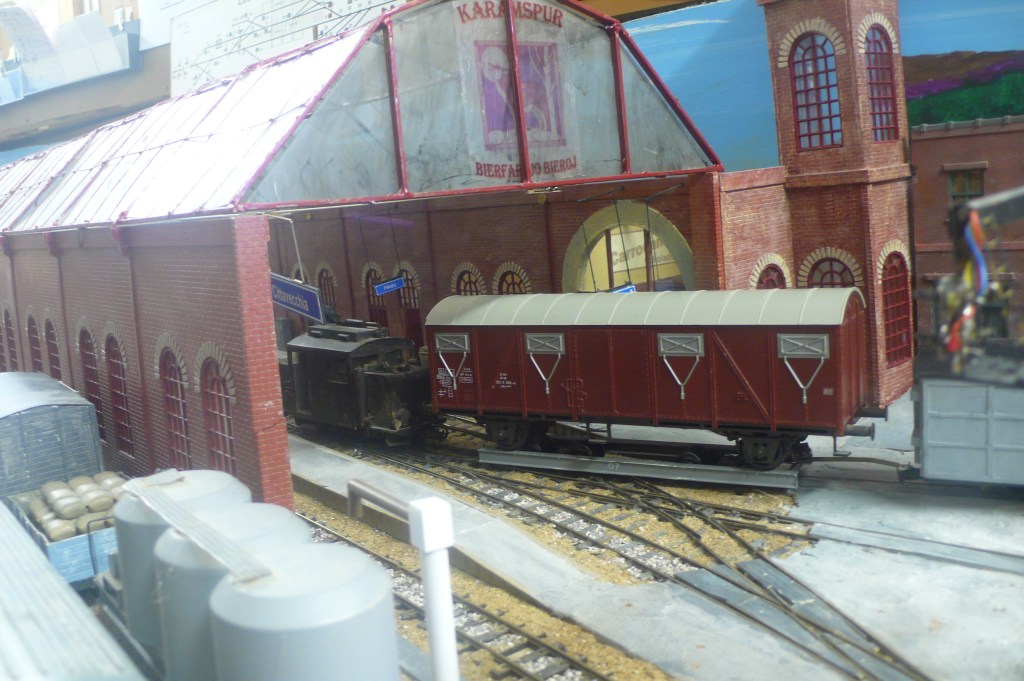
277. La Besto propels the Carrodantis shunt into the chocolate factory. For a long time ‘The Creature from the Black Lagoon’ held down the KTT local goods job but things have changed across the years as larger motive power has become available and it seems more than likely that this will become its more normal role. Due to the short siding length this is as far as the move will go. The factory will be “shunted” by markers on a magnetic board to calculate the time and record where the wagons end up. I rather suspect that the yard foreman is going to get a telephone call about the SG van as there are three in the factory already. Maybe the AFK are trying to palm off demurrage costs!
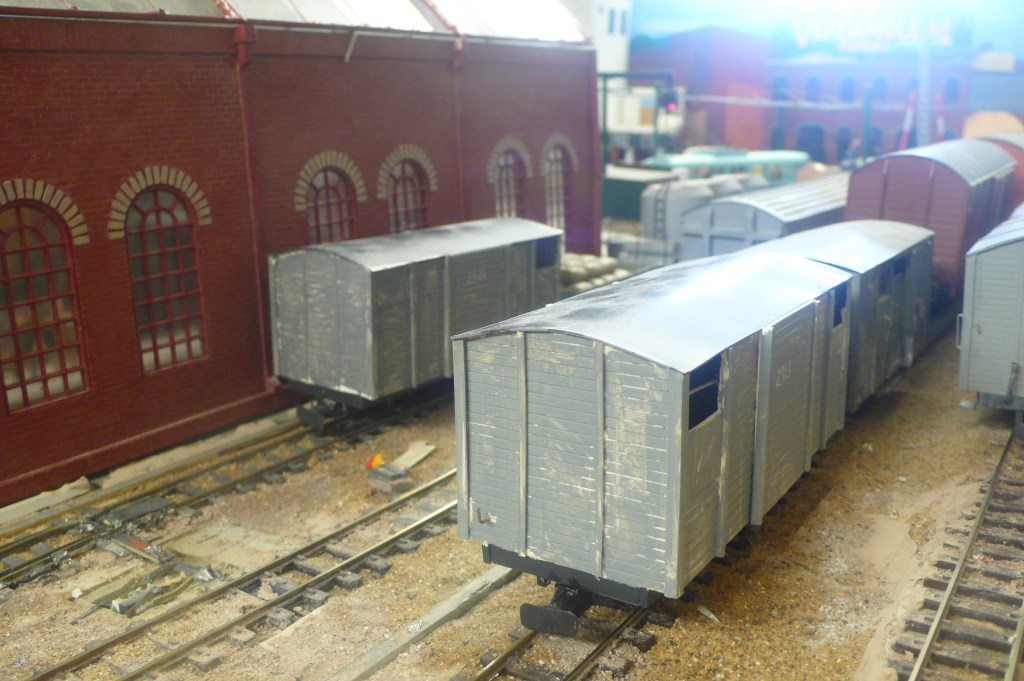
278. Lacono is the place to be if you like freight traffic activity! The arrival of the Relforka bound goods plugs the northern end of the yard once more. ‘Sisyphus’ has anticipated this in that the wagons in the foreground have been marshalled for the outbound goods. The van and wagon of sacks beside the train shed wall have been dropped off but the fly in the ointment is the need to place the cement silo into the ongoing train.
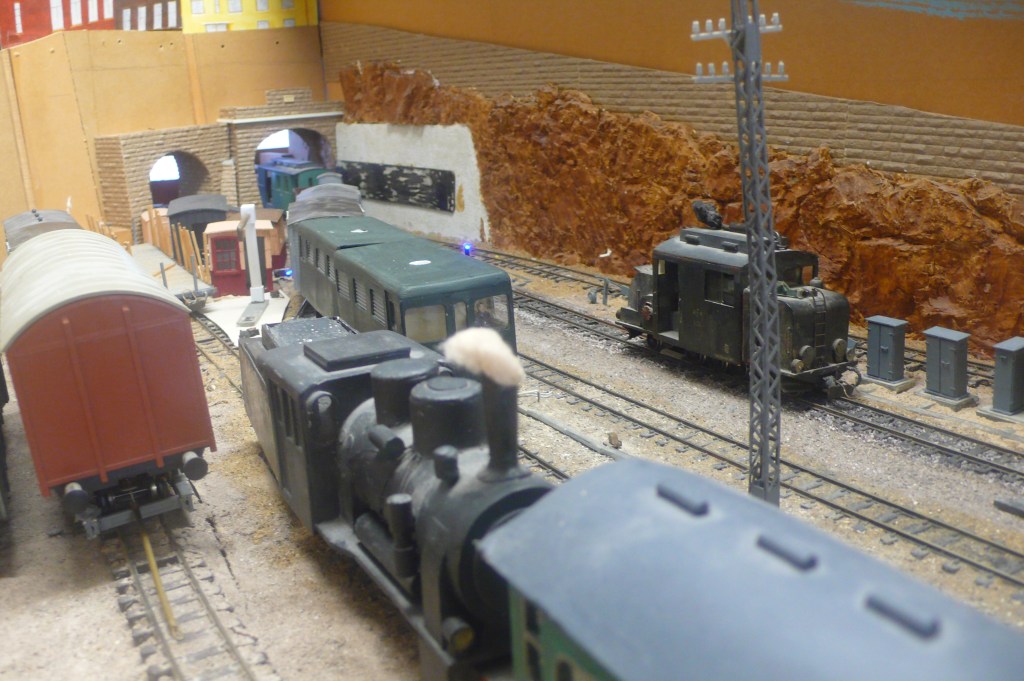
279. It is 18.15 before the inbound KTT goods can be allowed into the yard. This reflects the time taken to attach the silo and then get the train into the clear. Most modellers probably would not bother about this but, as an ex-signalman, I like to retain some aspects of safety conscious thought, even though no one will die in these circumstances! La Besto is returning from the Carrodantis shunt to pick up the Danulbo shunt. This looks as though it will be very light this evening. Flexseblamozulo has performed acceptably this time around and will wait its turn in an ever longer line of locos needing completion, such as the one in the foreground.
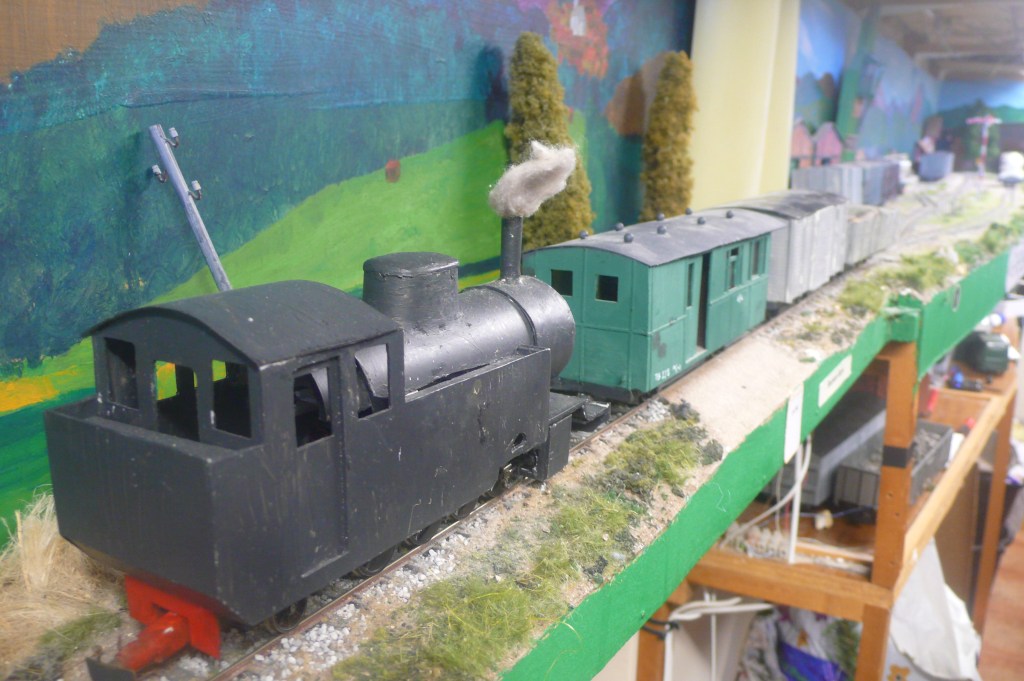
280. Meanwhile, elsewhere on the system, the down Kasatritikakamparoj goods remarshals itself so that it can shunt Sojonno. This is quite a common event because Gasafabrikatastrato is often under pressure in the afternoon and can do no more than throw the train together. The 2-8-2T pulls over the back road crossing at Boursson so that the brine containers can be placed at the front of the train.

281. The train is booked to stand at Boursson to let the railcar pass but there is no traffic at Boursson tonight. A quick phone call to Control elicits permission to leave early but with the admonishment to shunt Sojonno as quickly as possible. The train is seen crossing the cattle arch just north of the village.
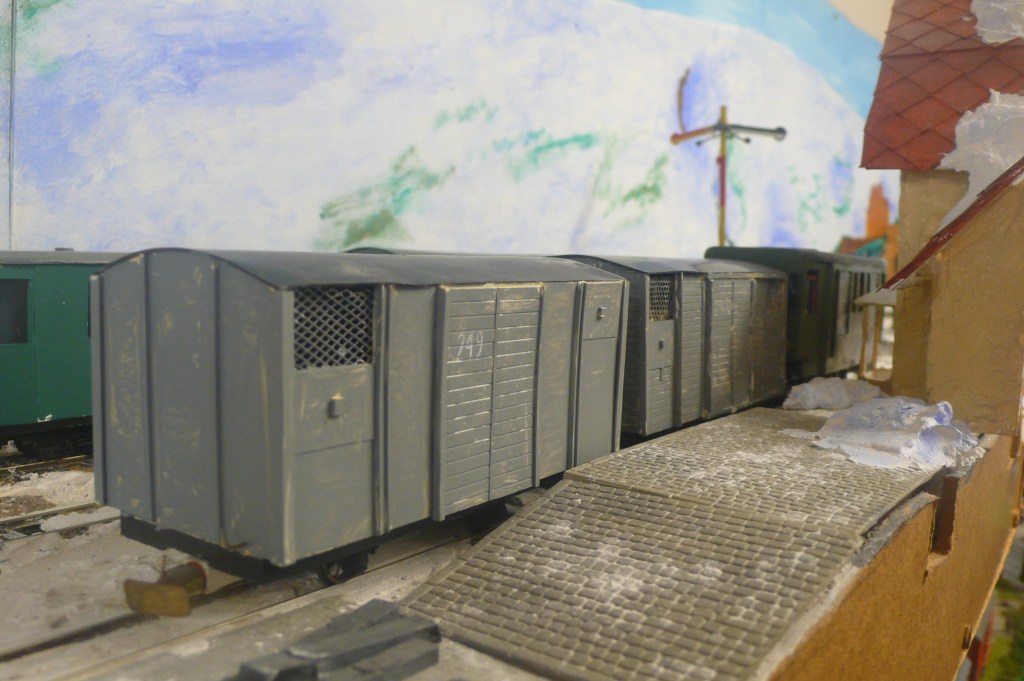
282. The RFK-FDV train is similarly shunting at Ospicio d’Helcaraxë. Van 249 should have been left at Ithilarak but there was not time to detach it. It will have to be picked up sometime and taken back. The situation was not that uncommon on the pre-computer age railways. As I have said before, on the deleted files, my father worked for a time, in the sixties, chasing up “lost loads”. 249 also needs calling in for a lick of paint to the buffers, by the look of it. The guard’s van also receives a good quota of freshly “refreshed” students returning from the fair. It has been a long but profitable afternoon for Quionamaresta in this remote outpost where every ĉento helps.
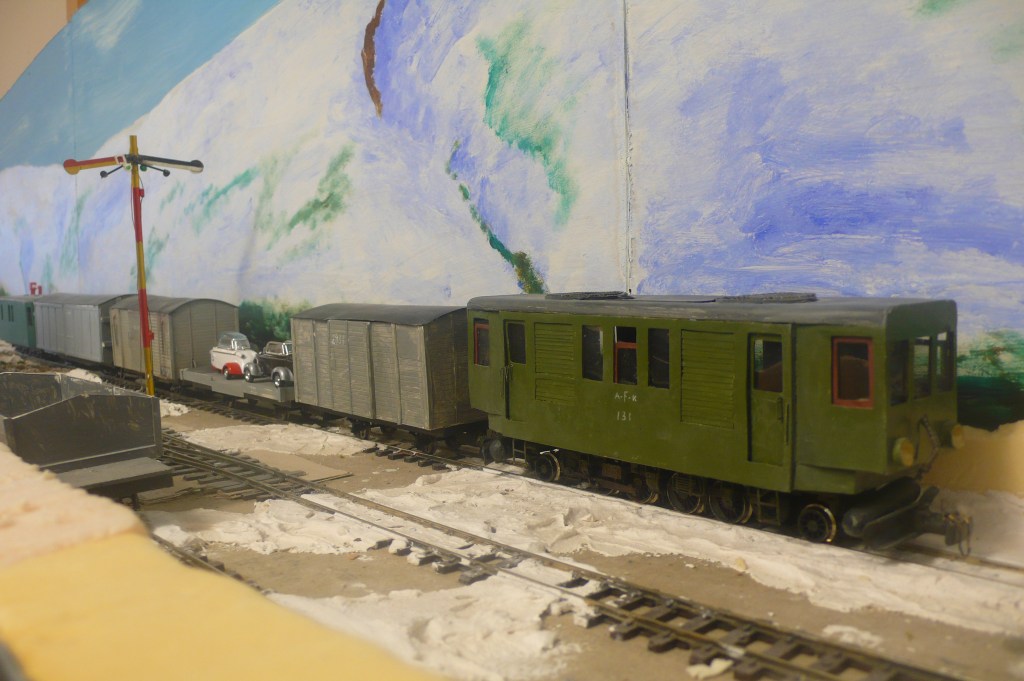
283. The loco goes to the north loop, after dropping the vans, and picks up the wagons left there this morning before placing them into the train. These include a couple of Messerschmidt cars on a flat wagon. Apparently the three wheel version was popular in Britain as it was classed as a motorised tricycle and paid a lower road tax whereas the four wheel version was classed as a car and paid much higher rates. The train crew have been informed by Quionamaresta, the staciaĉefino or stationmistress, that they will be held for a special train rather than leaving as advertised.
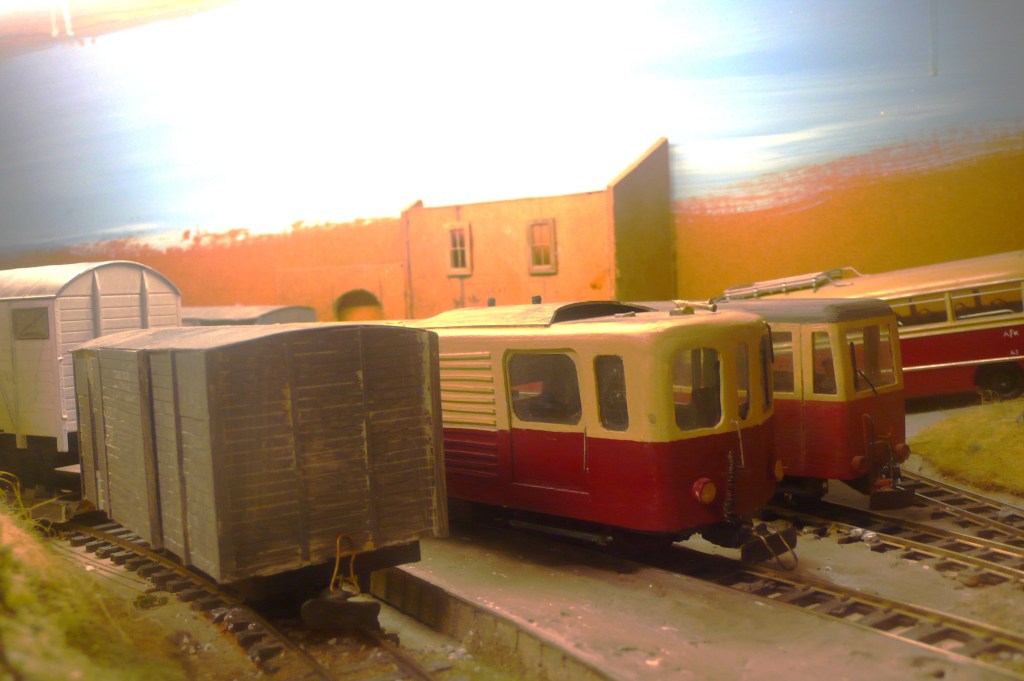
284. A full house at Breĉo de Glissent. The evening RFK-FDV railcar, a two car unit with tail traffic, stands at the left, the branch railcar stands beside it and the railway bus waits to go to Majlard. The two car set will wait longer than anticipated because of the local freight which has been let out early, emphasising the true priorities of Lacono Control at this time of day. The railcar does not connect with any ongoing services and is often sidelined to allow freight trains to run. The train at the left, the Eromarbordo goods, will leave immediately to let the KTT local pull into the loop but this will similarly delay the branch railcar connection until it clears the section at Lajver.
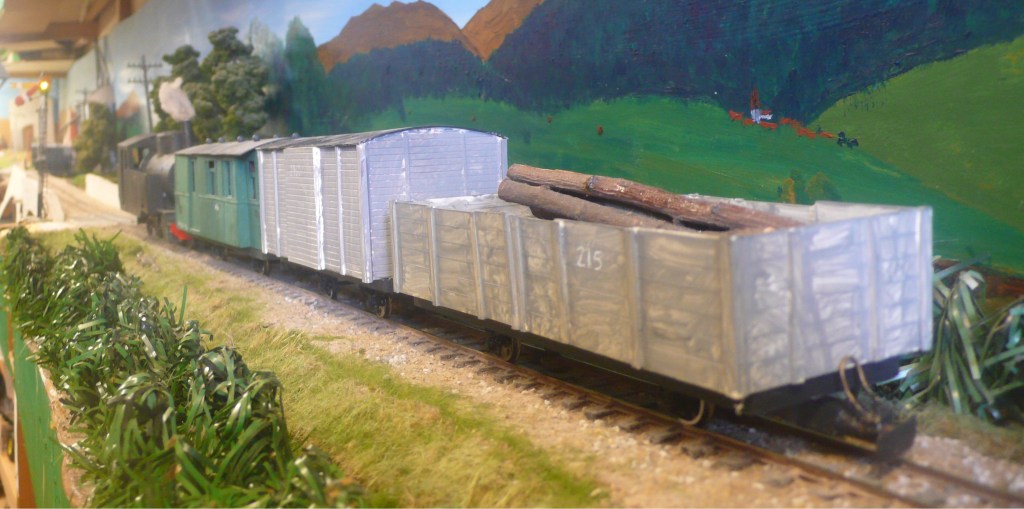
285. The KTT goods sees the distant aspect at Glissent enirasignalo indicating that it is signalled along the RT (main). The load is light this evening and the two wagons are going through to Relforka to relieve pressure on the long distance train following.
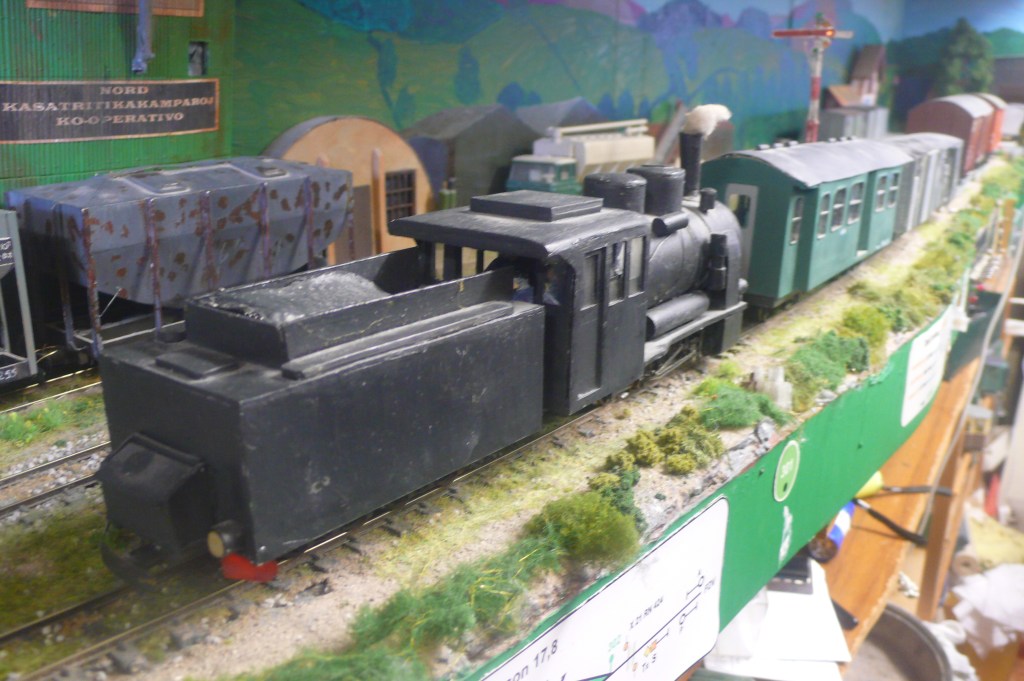
286. For once there is method in Control’s madness. The FDV-RFK train, which was blocking the yard at Gasafabrikatastrato, is let out early to cross the railcar at Boursson. This was the underlying reason why the local goods was allowed to proceed to Glissent. Providing that it does not cause too much inconvenience freight trains can run early. As we have seen many times the evening railcar has a low priority.

287. The Isuri pilot backs down into the yard to pick up the raft of wagons brought in this morning. These are now unloaded. (This is probably an unrealistic expectation but these are the rules of the game.) The yard would be overwhelmed with traffic if they were left here, given what is expected to come in. They will be shipped out, along with a van of cheese from the dairy, to make space. Note the SG wagon standing on the ground because there were not enough transporters around earlier in the day. Something else to attend to!

288. Just as you thought the von Ryan’s had gone one appears! Train 9402 trundles across the benighted Narnian exclave as it runs up to the summit at Ospicio. I suppose that is representative of a shift change that has occurred in recent years, similar to the re-allocation of La Besto (photo 277). At the drop of a hat a spare engine and van can be found to move excess wagons around the system. I can remember when there was a dearth of wagons and no possibility of an unused spare engine! Much of the stock needs completing though.
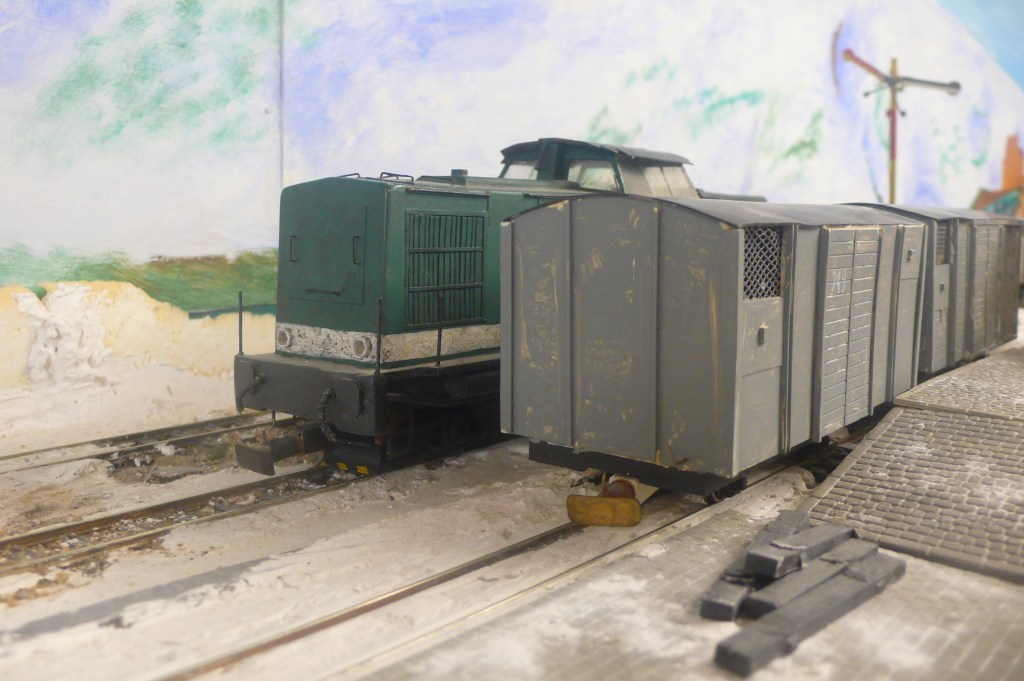
289. A von Ryan indeed! 9402 left Fenditavalat later than timed and arrives at Ospicio to find the signals set against it. Quiona, the staciaĉefino clears the up section signal, allowing the goods in the loop to depart, and then demands that the scratch crew pick up the “carried past” wagon in the foreground. Everyone gets their finger in the pie with these things as second, third and fourth thoughts intervene. There is no point in arguing with the mountain women so this could be a long trip. The von Ryan name comes from an engineers’ train that ran on the Leeds division in the 1970s. It ran everyday but had no set pattern or timetable and did as it wanted where it wanted, off the cuff. It sounds about right from my railway experience of dealing with engineers. Some I dealt with really needed a Stetson and a six shooter to finish the job off.
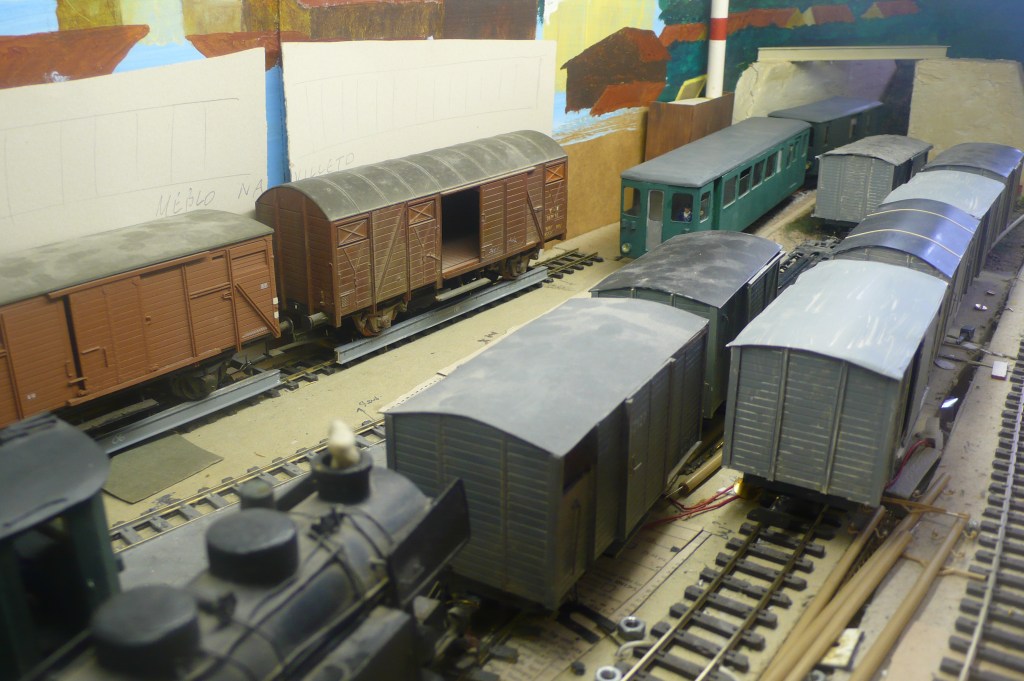
290. The schools’ railcar, now empty of pupils, runs into Urteno. It will couple to the LAC-URT schools’ railcar to run through to Lacono. There will be relatively little traffic for this service. The pilot is preparing the wagons to go to the carpet factory and the ferry.
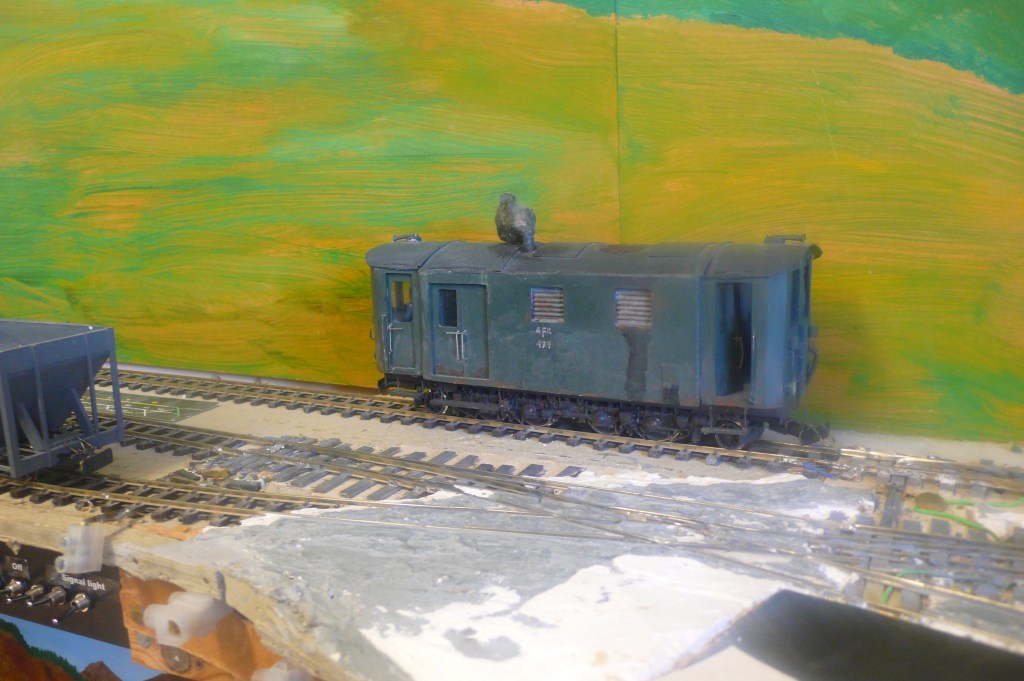
291. The loco from the ABC local draws down the PFT (loop) at Ithilarak with a view to making its pick ups, in the near siding. There are a lot of wagons in the exchange siding tonight and it will not be possible to keep the loco and wagons from fouling the RT (mainline). As per usual, by this time of day, the punctuality of the Narnian Railways’ connection from Beruna becomes important to the AFK because it affects the running of the mixto, shortly due to arrive at Ithilarak. Sacansa, the staciaĉefino, has already rung Lacono Control to be advised that the Forceful Unicorn in Beruna has kept the connection on time today and that the mixto had better not be delayed. All bets are off and, as the loco cannot complete the shunt before the mixto arrives, it can bide its time which is no hardship on a pleasant summer’s evening.

292. The punctual mixto rolls across the Aepto viaduct as the goods loco waits. The lorries on the RN424 are still having fun negotiating the tight hairpin bend through the arches and the smashed Citroen 2CV awaits repairs.

293. The local is a long train this evening and the loading tables had to be consulted to determine the maximum allowed. Sacansa and Quionamaresta have already decided that this train will take precedence over the extra train despite what Control had advised. It is quite safe for them to take this decision because they control the block section between Ospico and Ithilarak. Control is advised of this alteration, once the local has left! It is best not to argue with these Marronĝacan speaking mountain women at the best of times, this is a fait accompli and there are enough problems elsewhere to occupy Control rather than worry about the remote line over the Helcaraxë Pass. My experience of Control, in London, was similar. They really had little idea of how the railway really worked in faraway Norfolk.
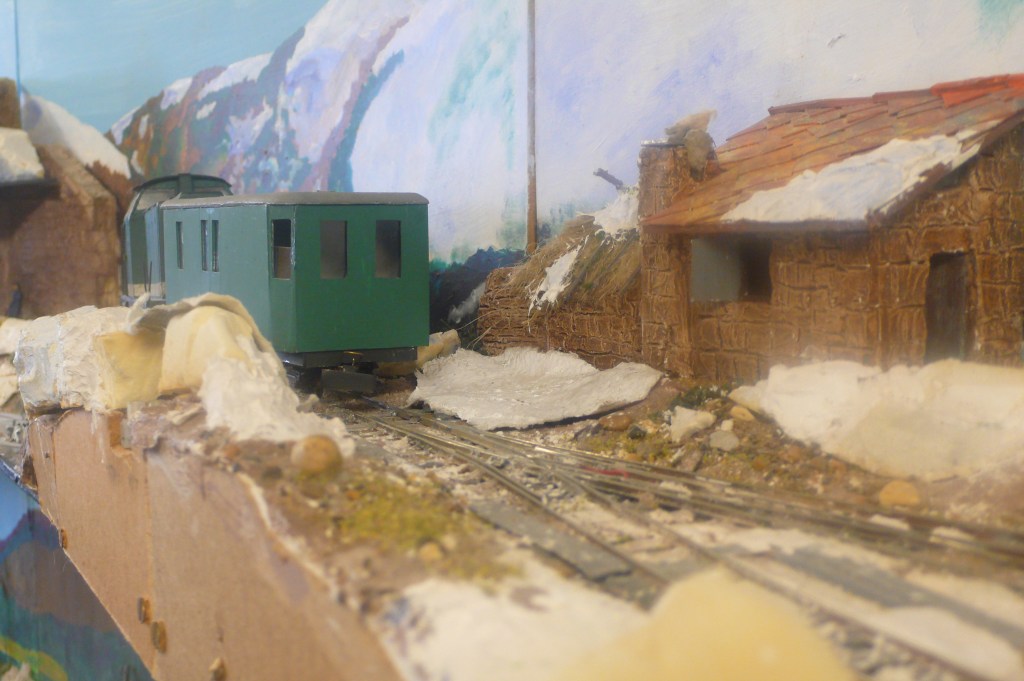
294. The crew of the extra are told to pick up the wrongly delivered van in the loop. This will take 15 minutes or so, by which time the local will be well into the section. The large loco apprehensively trundles out onto the single line under the control of the scratch crew. One slight mistake here and there could be a catastrophic runaway. The sightlines from the cab of this huge loco can also result in heavy shunts unless care is taken.
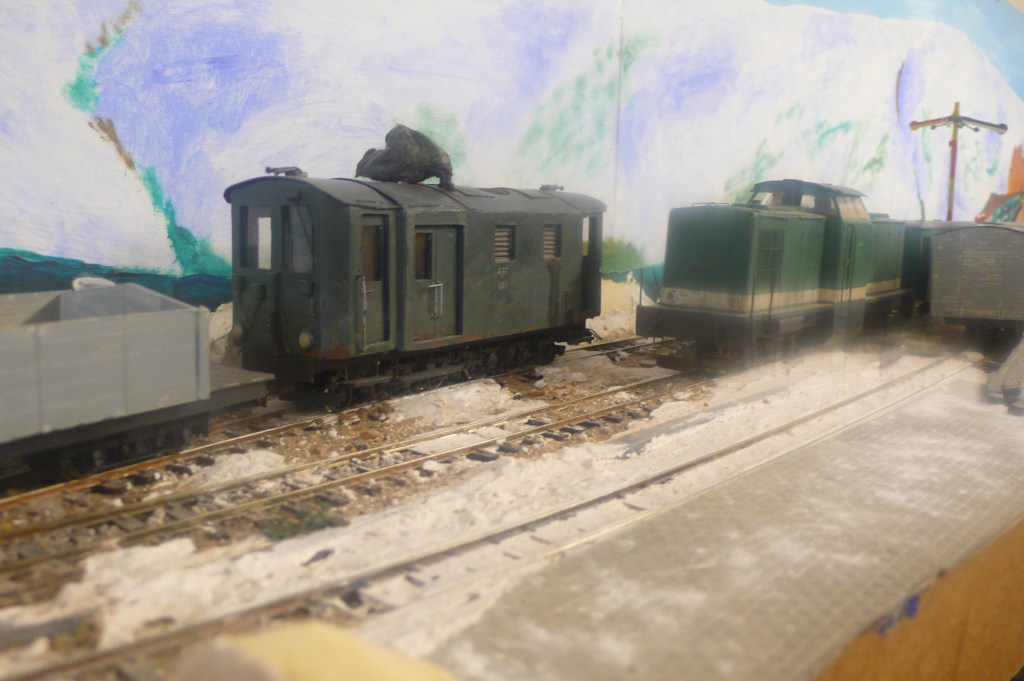
295. All is completed without mishap and the local pulls into the loop. There must have been a smudge on the lens as this and the following picture are blurred.
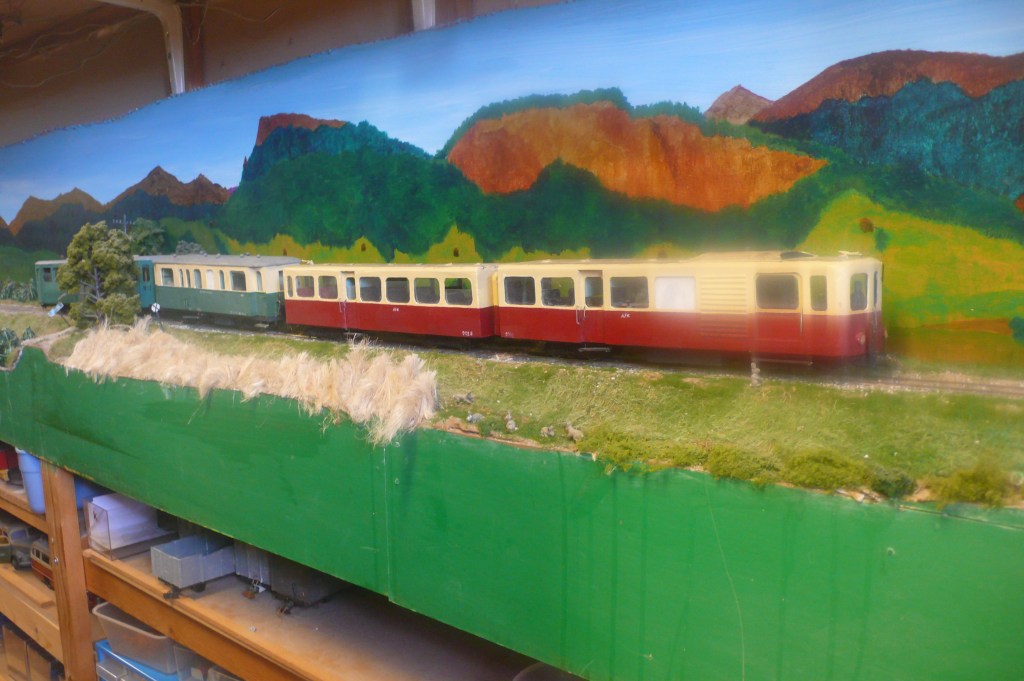
296. Control is more interested in keeping the valley section of the line fluid than it is with the remote mountains. This section of line is still busy and the FDV-RFK train occupying Boursson loop could cause problems. The RFK-FDV railcar has lost 6 minutes at Glissent but it is now in the section to Boursson. Once it arrives the plan is to let the long distance goods out to run in front of the mixto.

297. The early arrival of the KTT goods at Glissent is of little avail. It caused the railcar to leave late and this impacted on the departure of the branch railcar. The loco has been forced to sit in the loop for 15 minutes and it is supposed to pick up the van loaded with peas besides the goods shed. Control has rung through to Ovidia, the staciaĉefino, to tell the goods crew to forget this as the mixto will be on their tail by the time they have made the shunt. Another train will have to pick up the peas.
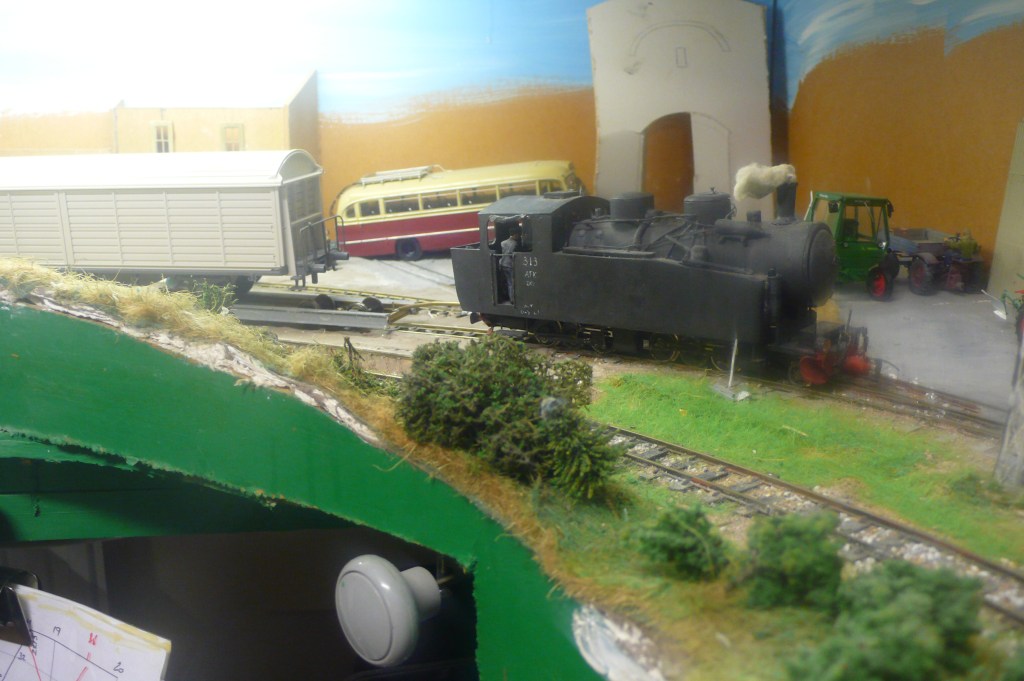
298. The early running of the express goods has far reaching impacts. The RFK-URT goods has lost its path which is not an unusual occurrence. It is sent out to run to Breĉo de Glissent to await developments. The stock tonight is all SG vans, bound for the paper mill, as there is a shortage of wagons for loading. There is some urgency in getting this train to Lacono to alleviate the shortage.
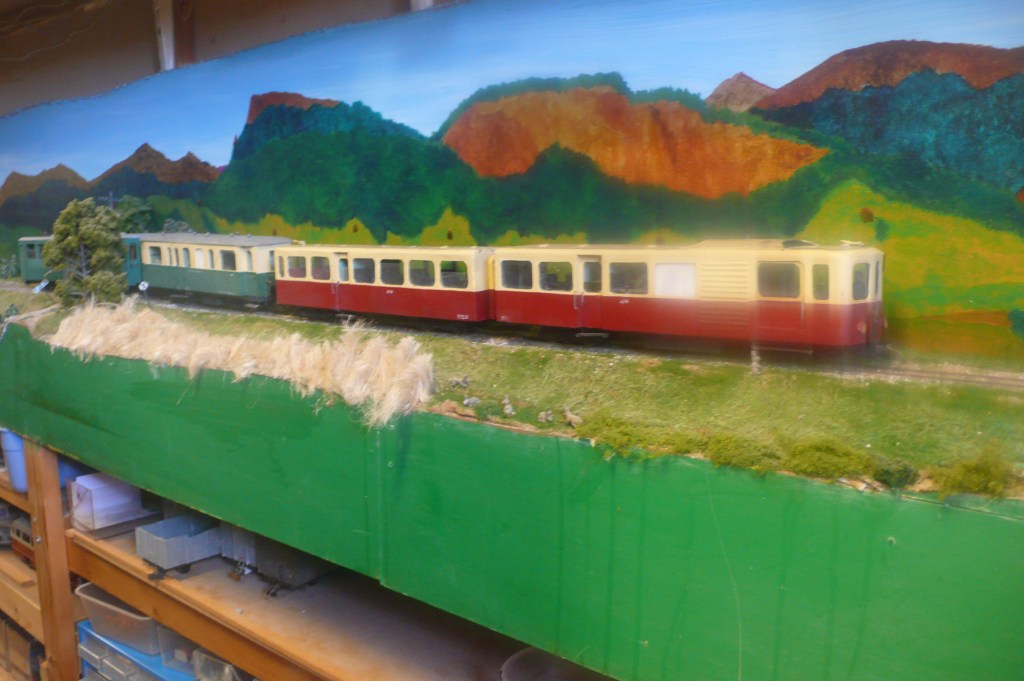
299. The railcar pulls out into the Kasatritikakamparoj to continue its journey 6 minutes behind time. There should be sufficient leeway at Lacono for it not to affect the mixto. The train composition is typical for an AFK “railcar”. Rather than being some ancient dilapidated and frankly unlikely road bus conversion the railcar is a ‘modern’ dmu set towing an additional carriage and the ambulance. Having said that, the French prototypes were built before WWII but served into the seventies in Portugal after the Germans completely destroyed the Provençal lines that they were designed for. Perhaps the AFK version has had a refurbishment similar to the Portuguese units.
300. The session is interspersed with other railway activities. A friend brought a Hornby loco to run on the garden railway, something I had never thought of! Some of my own small collection was dug out to complement it. Just like the 1950s, except not on the carpet.
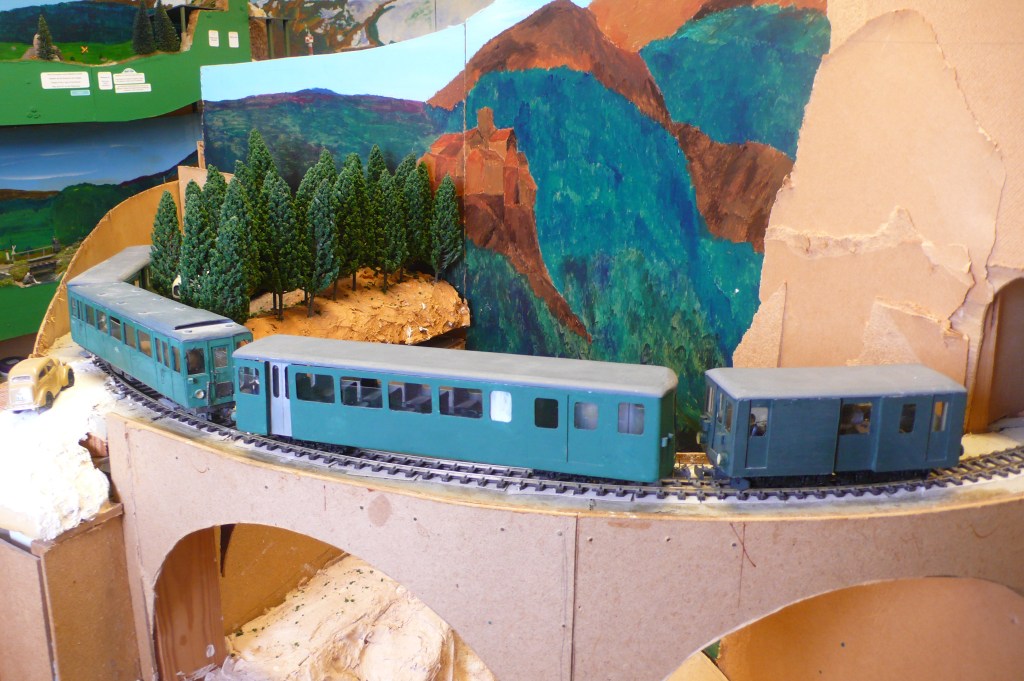
301. The busy Lacono-Urteno section is currently occupied by the two ‘northern end’ schools’ shuttles running coupled together. There are a reasonable number of passengers as day workers and visitors return home from the hospital.
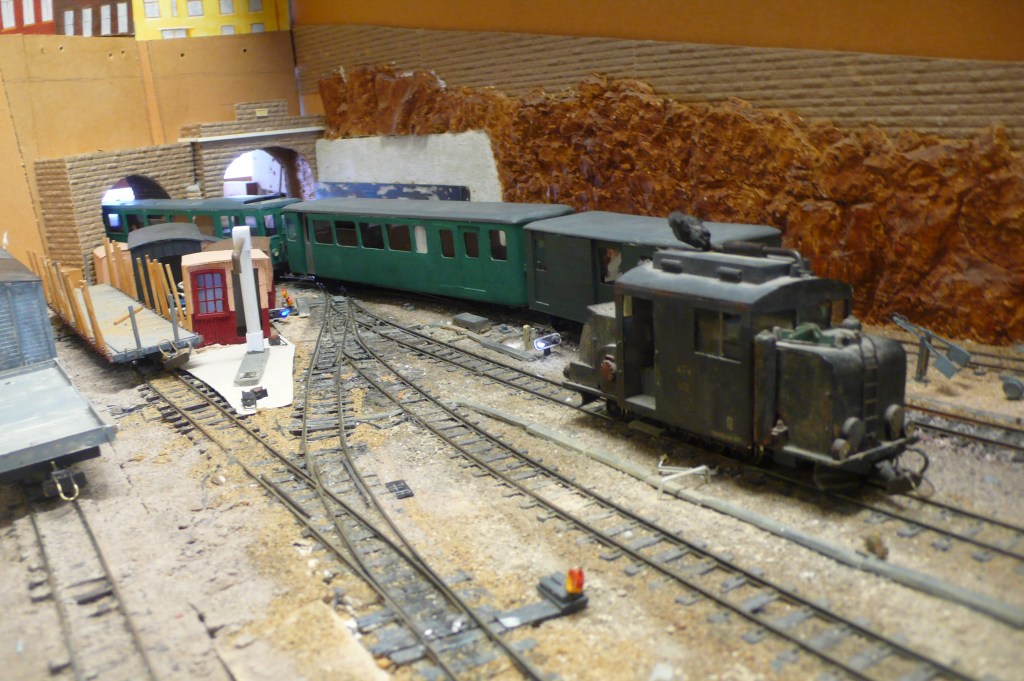
302. The eternal conflict at the south end crossing at Lacono continues as the two schools’ shuttles cross towards Aspargo and La Besto waits to get out of the yard. It was temporarily put here to let the Bo-Bo-Bo go to the shed.
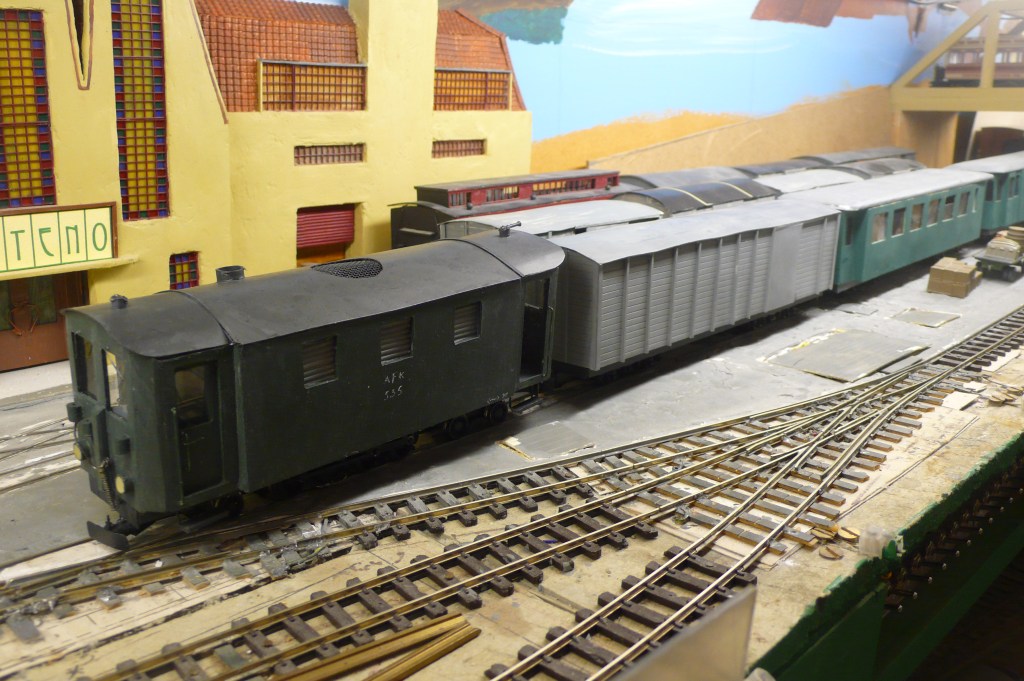
303. The mixto arrives at Urteno. The cut of vans behind it is attached to the pilot via a reach wagon. They will be propelled onto the ferry once the mixto departs. The leading van offloads the last of the milk churns here in summer as the cattle occupy the high alpine pastures in the transhumance system.
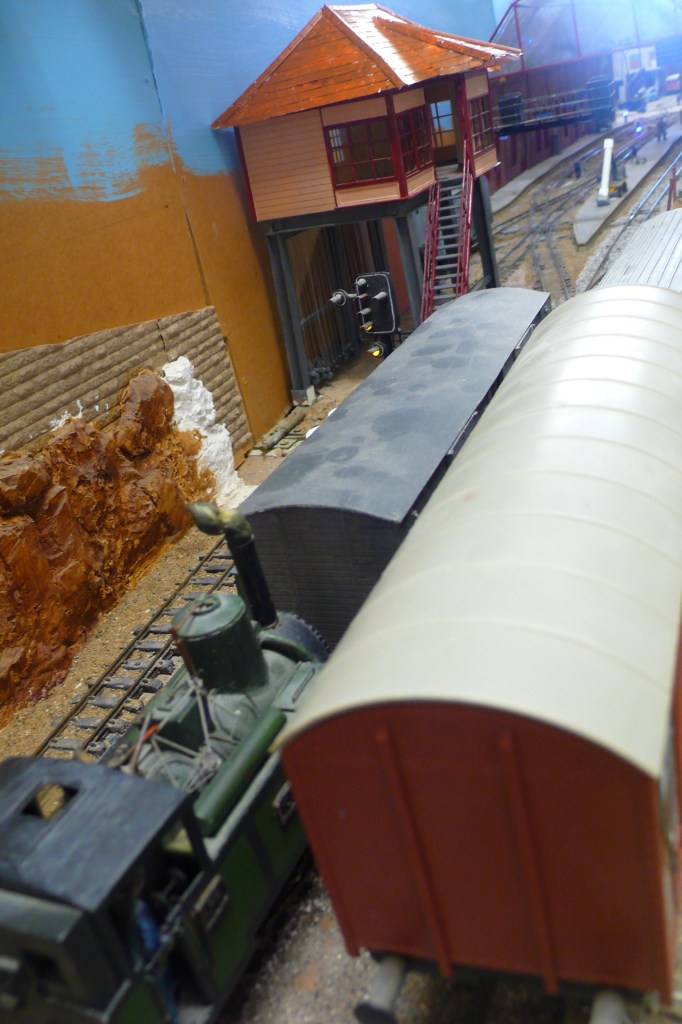
304. As the chaos is sorted out an overlooked van of cocoa is taken to the chocolate factory before the two through trains arrive. The home made signal shows diagonal yellows over yellow indicating a movement to the left at slow speed. This is necessary because the next shunt signal will not clear until the berth in front of it is occupied. That is the theory at any rate!
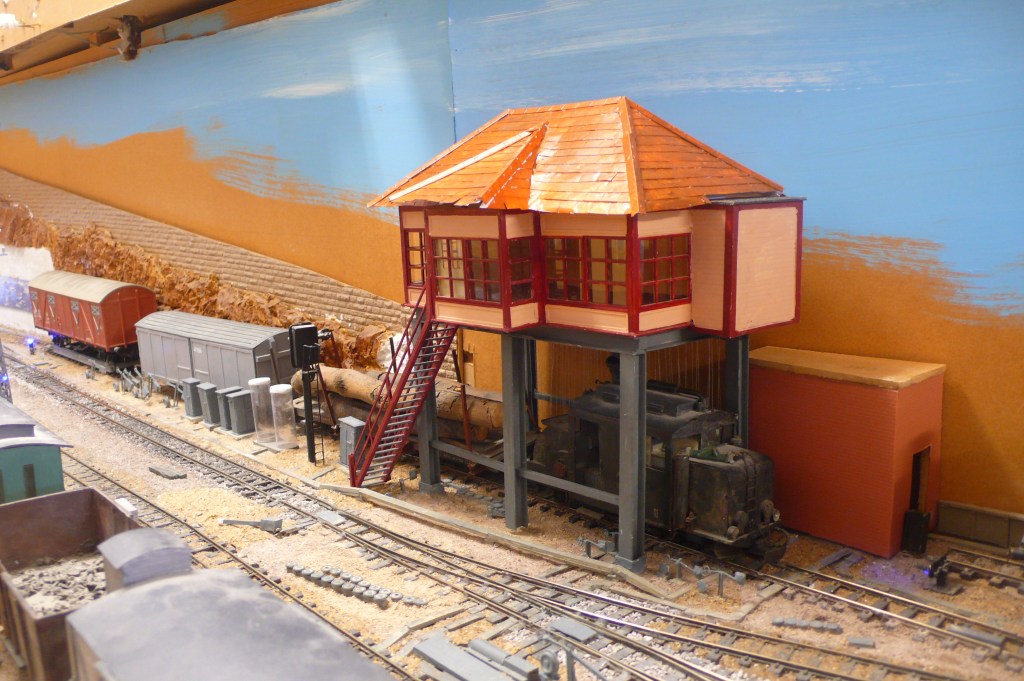
305. The Danulbo shunt hides under the box waiting for a quick getaway when the passenger trains have gone. It will shunt the paper mill this evening rather than the fireless coming to Cittavecchia. The signal box has got a new roof making it more imposing. It looks to be slightly off its moorings here. It will need removing anyway to tone down the brightness and catch the bits that were missed.
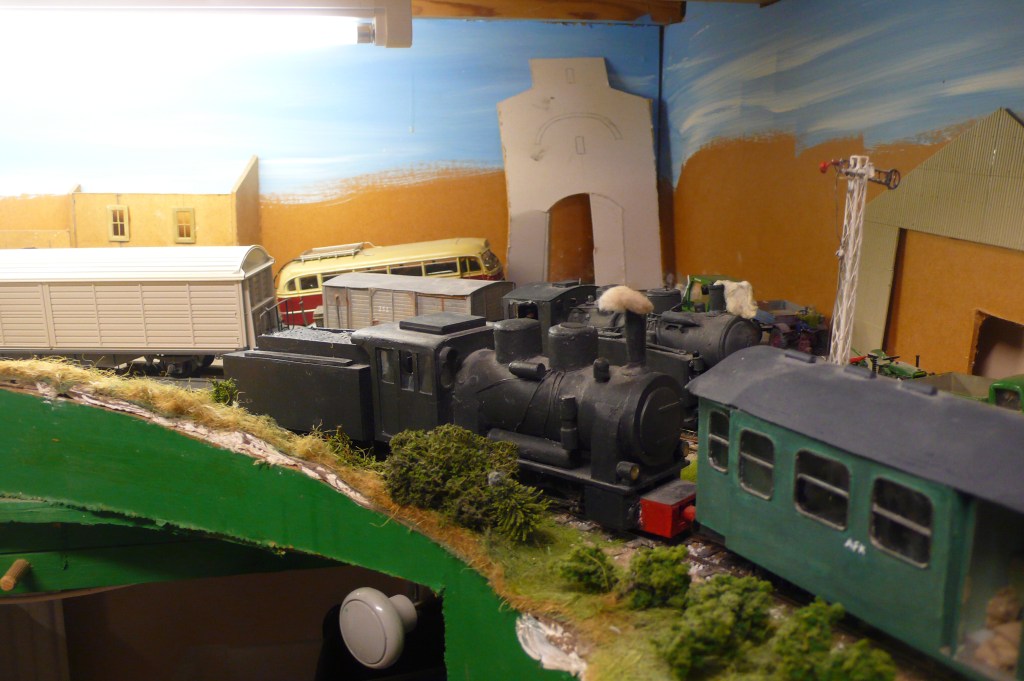
306. Ovidia, the staciaĉefino at Breĉo de Glissent, is not one to waste time. With a spare engine and an urgent van of peas to be forwarded she has arranged with Control that the down goods train will stop for the van to be attached at the rear. This will make her life easier with the local farmers, although it might put the chances of the up train departing into jeopardy. As the goods keeps to the mainline the mallet waits with the van.

307. The freight is eventually let out but it is calculated that it will arrive at Boursson one minute before the mixto. Obviously this will put a few minutes into the mixto but Control are prepared to take that risk. The second van, a long heavy vehicle, made by Lenz caused problems and had to be substituted with a standard Großraumwagen. The Billerbahn replacement is much lighter. The two long wheelbase vans, from a Swiss supplier if I remember correctly, still await the attentions of the painters.
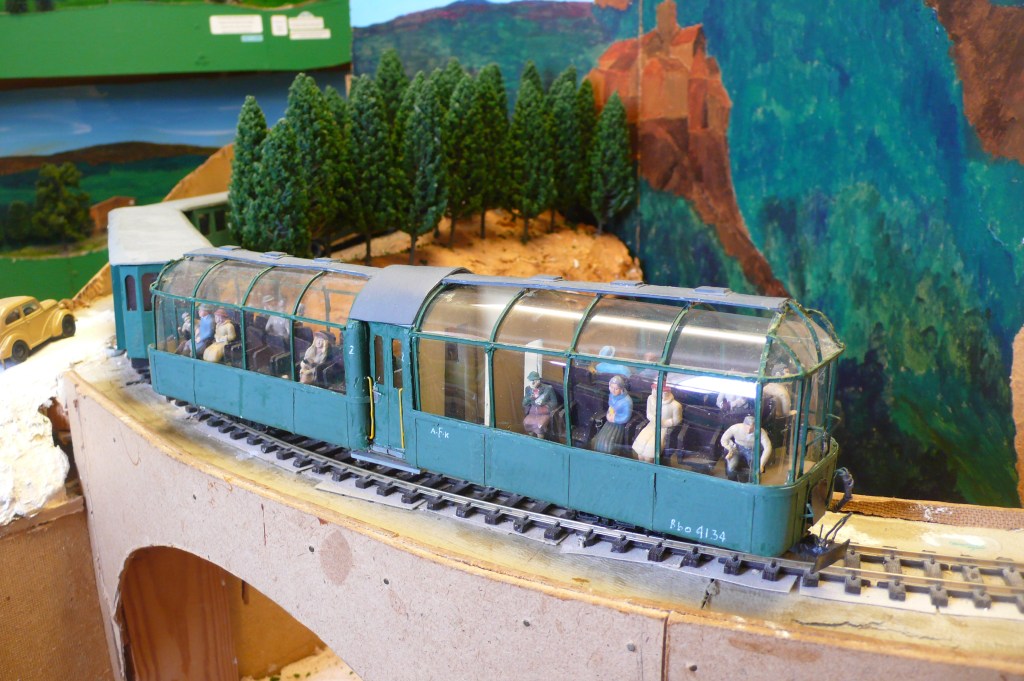
308. One of the ironies of the ongoing SG services being on time is that the mixto cannot stop, as it often does, to allow the observation car passengers a view of the spectacular Carramasco Gorge. Tonight it is a case of don’t blink or you will miss it. At least the observation car is distinctive and based on a Swiss prototype. It needs to be with all the construction problems that it threw up. I would not like to speculate upon its crashworthiness!
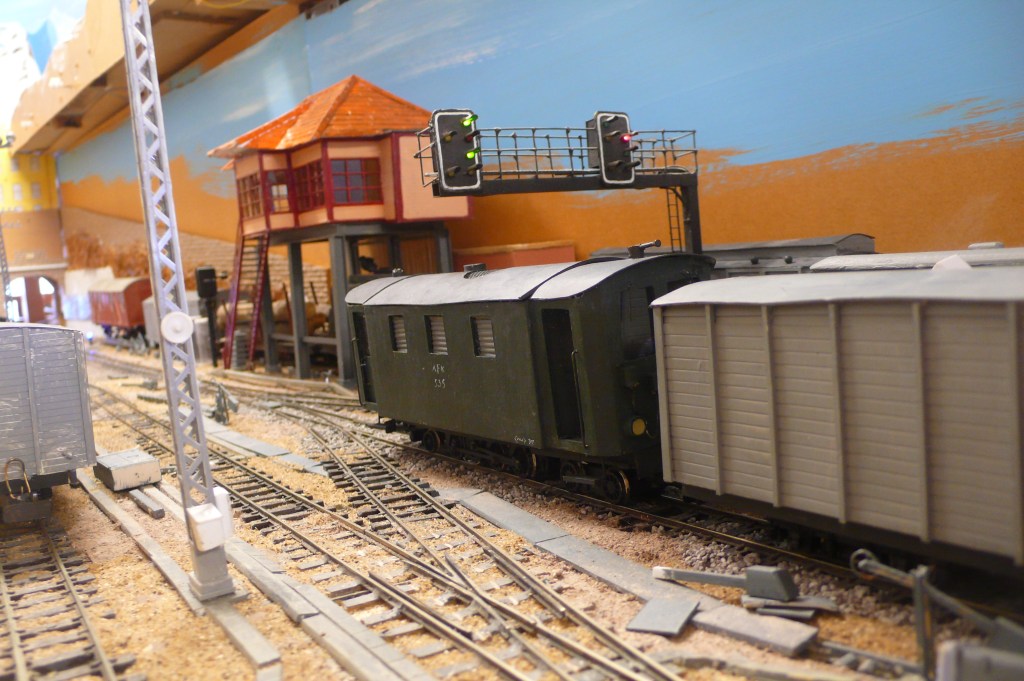
309. The up railcar arrived on time at Lacono Cittavecchia and stands in the clear to cross the mixto. This is booked to stand for 5 minutes but it is already signalled away as it arrives. At least Demopho, the Station Supervisor, will be spared any complaints tonight from the moaning politicians and administrators and he will have the pleasure of telling them to get a move on!
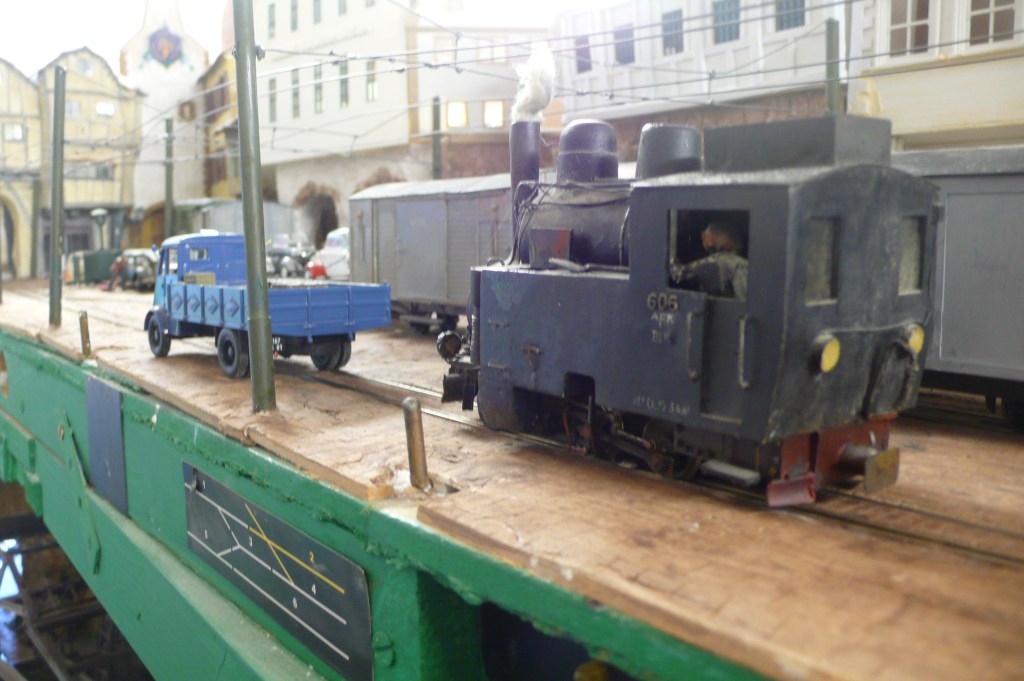
310. The RFK-FDV goods pulls into Fenditavalat in the early evening. The pilot will remove the sliding door van on the rear and the rest of the train will be reversed into the goods yard.
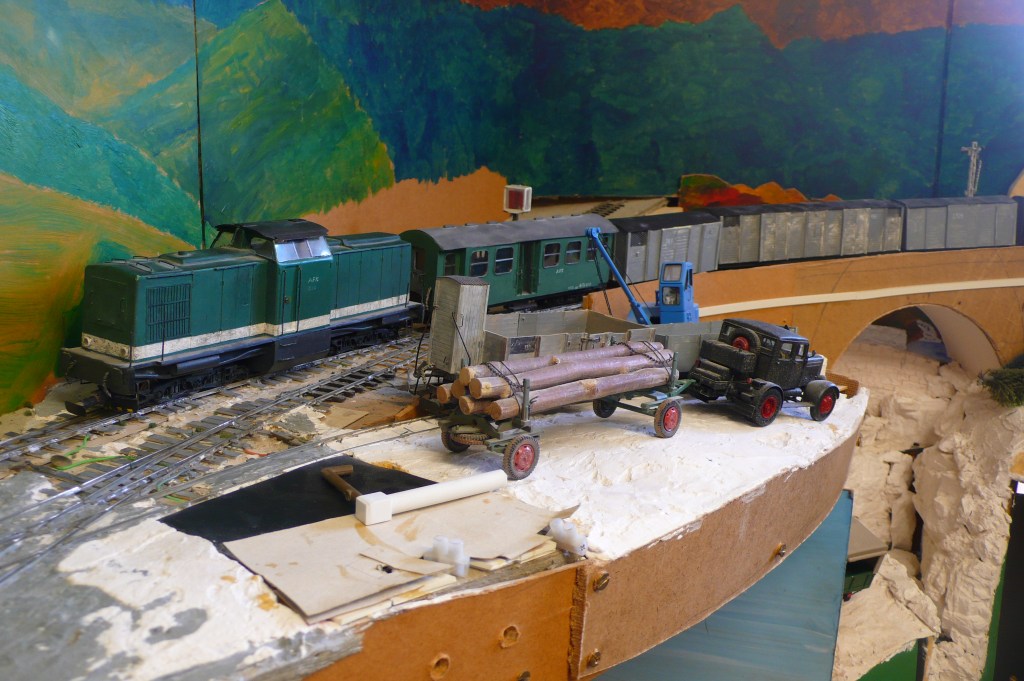
311. The von Ryan pulls into Altonia, crossing the viaduct over the Upper Aepto Gorge. Prior to this point it has been in Calviero and Rolnth cantons. It will wait here to cross the evening railcar. Most of the empty vans will go to Karamspur which has a shortage for tomorrow’s traffic. The more observant will note the magical change to the brakevan. The six wheeler kept derailing and, despite a visit to the bench, could not be persuaded to behave itself. Like its sister it will receive bogies in the fullness of time. Some of the six wheelers run well, others less so. With the bodging techniques that I use it seems to be a matter of potluck!
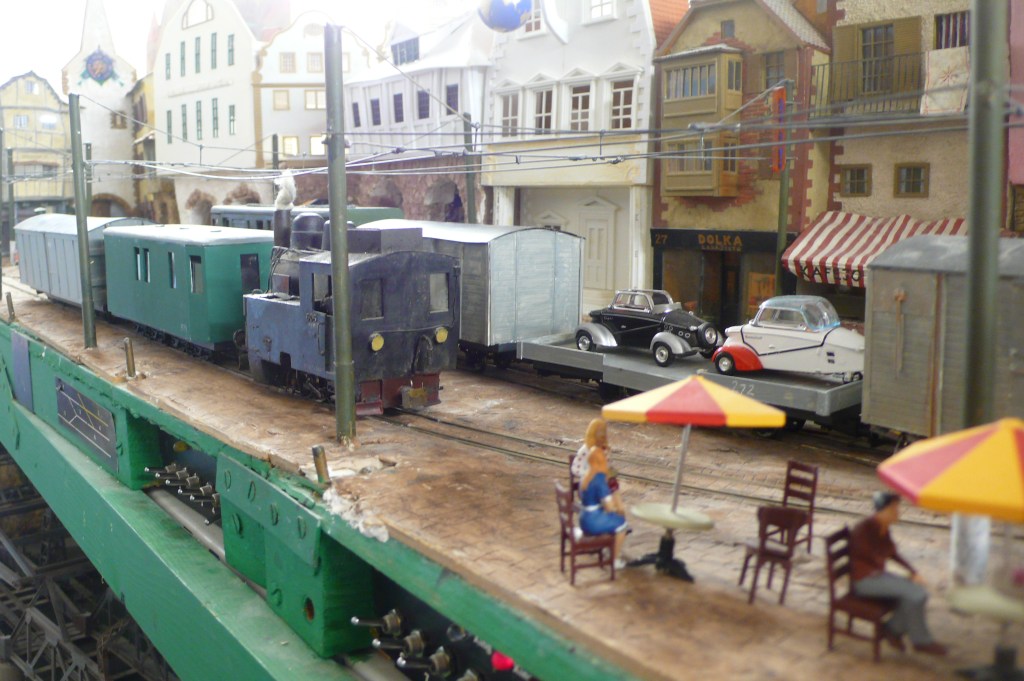
312. The merkatubaxu is unusually busy with rail traffic for the early evening. Things are normally quietening down by now, on the railway side at least, if not with the students. The pilot takes the empty milk containers to the dairy and the train loco pushes the remainder of the train into the goods yard. The milk van would normally run on the mixto and the other traffic was left behind at Ospicio this morning.
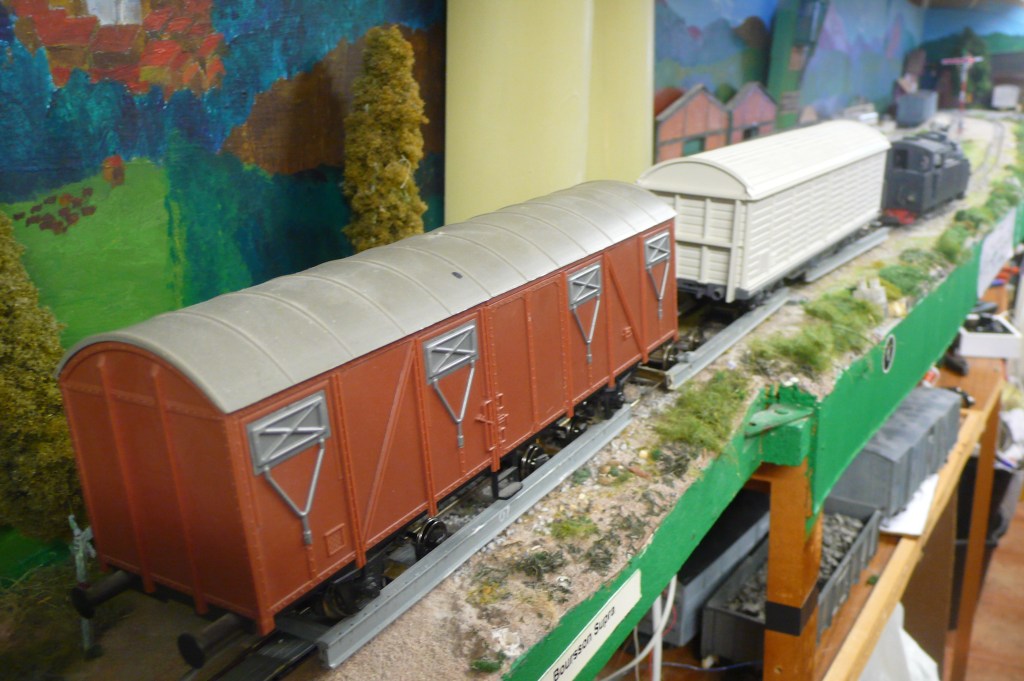
313. The up goods, with the substitute GRW runs into Boursson loop. Whether the transporter caught something along the way to cause problems I do not know. This will be investigated later. Running trains is more important for now. The mixto has been held at the down enirasignalo, the equivalent of the home signal, to provide the overlap necessary for safety reasons. This was why more sophisticated British systems used outer and inner homes, although there were noticeable for their absence on most British NG lines. The goods is given priority over the mixto so that it does not have to restart on the steep gradients.

314. With the goods train safely arrived and stopped the mixto is let into the station. This delay costs three minutes but the arrival at Relforka will still allow passengers plenty of time to transfer to the ongoing SG trains. It might do those politicians some good to hurry up in the real world. The steam loco is actually standing on the points which are set to the siding. This would theoretically invalidate the locking system, based on keys (Schlußelwerk). I believe, from studying German technical texts that this could be arranged for conditional locking, as seen here. However, given my illiteracy in German, the text probably meant something else entirely! Otherwise it is known as cheating because the loop is too short.

315. Returning to Urteno, just after the mixto has departed (a tardis is a necessity in Altonia) the pilot shunts the ferry. The vans on the left are going across the lake to Karamspur and the loco is pulling the incoming wagons up the slip.
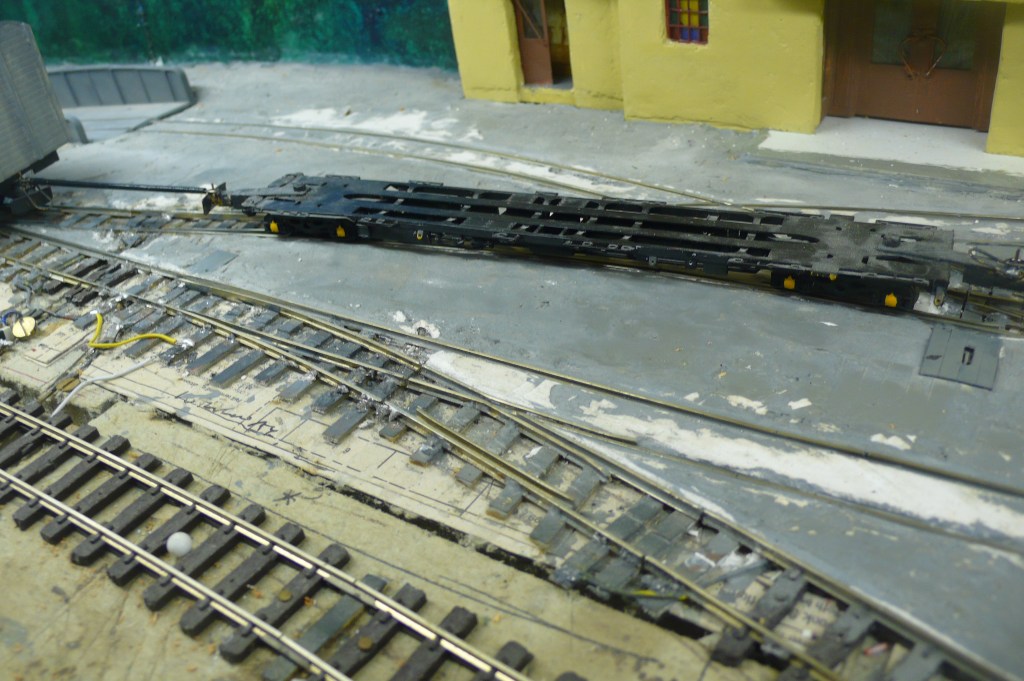
316. The reach wagon is a crudely converted OO Freightliner wagon which, to be honest, could perhaps benefit from a little more attention. The pole is coupled onto the homemade centre buffer coupling system of the adjacent van. All the couplings include a post to allow transporter wagons to be attached.
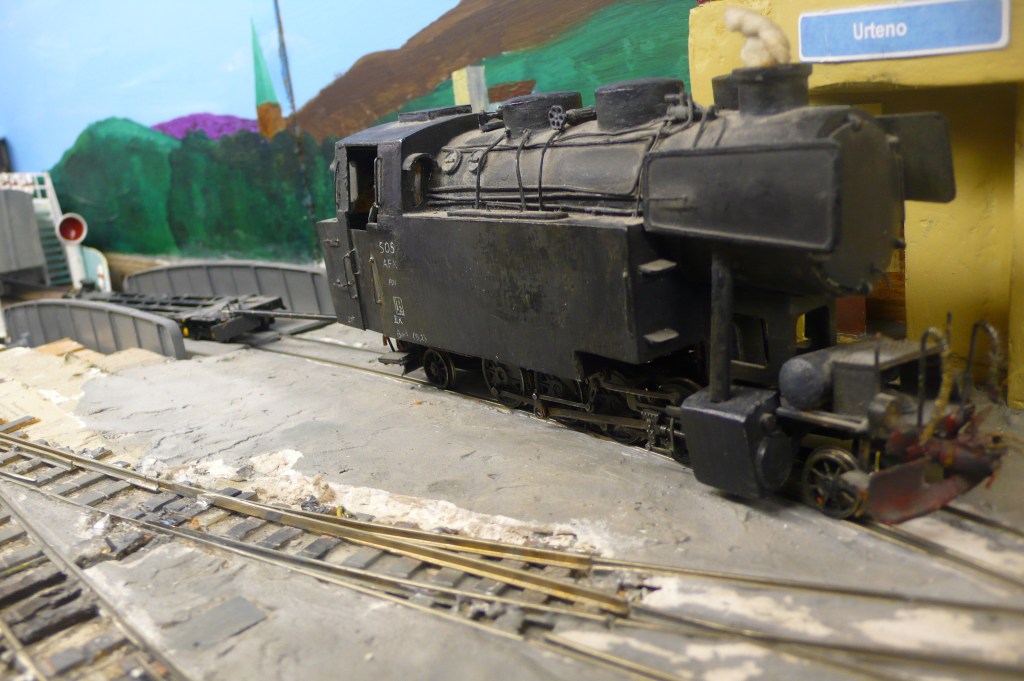
317. As well as being realistic the reach wagon ensures that the loco remains on “dry land”. The link span bridges the baseboard joints and has to be removable for maintenance therefore it is not electrified. The juice ends at the edge of the slip. The ferry is at a lower level than the track creating quite a gradient. This was quite common on the real thing but most modellers have the link span dead level to avoid problems.
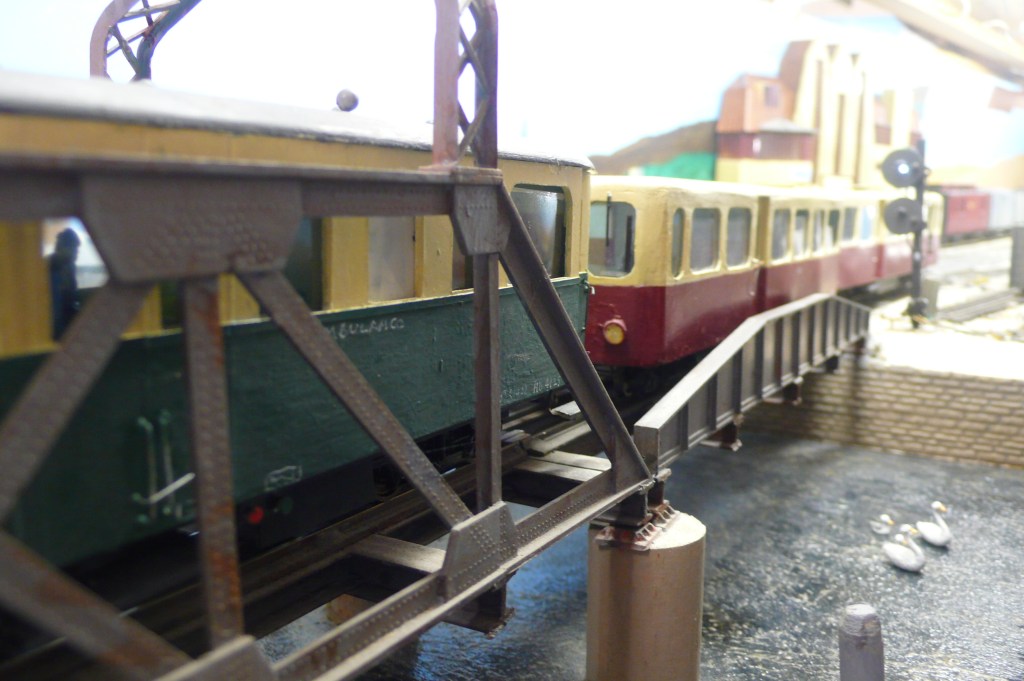
318. There is consternation amongst the regulars that use the evening railcar. The damned thing is running on time! In former days its lateness became legendary and the bar at Urteno profited. Tonight there will be a quick getaway and no time to linger in the bar. As was noted in the last session, there are rumours of a petition being raised to extend the stop purely for bibulous reasons.
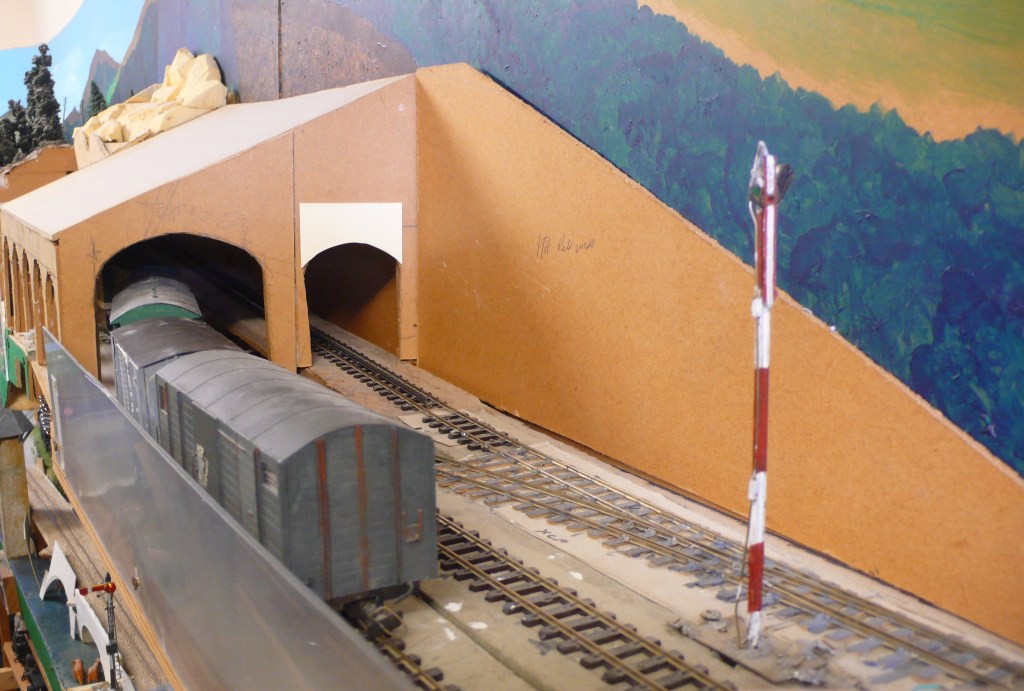
319. The special goods, running in the Altingablecaŭtoj, drops off the van carried past Ithilarak earlier this evening. Space constraints mean that nothing of the goods facilities are currently modelled but a short platform facing may well eventually appear as a token gesture. Shunting is allowed by the Bavarian home signal in the vertical “Ruhe” position because this aspect frees the points for hand working.
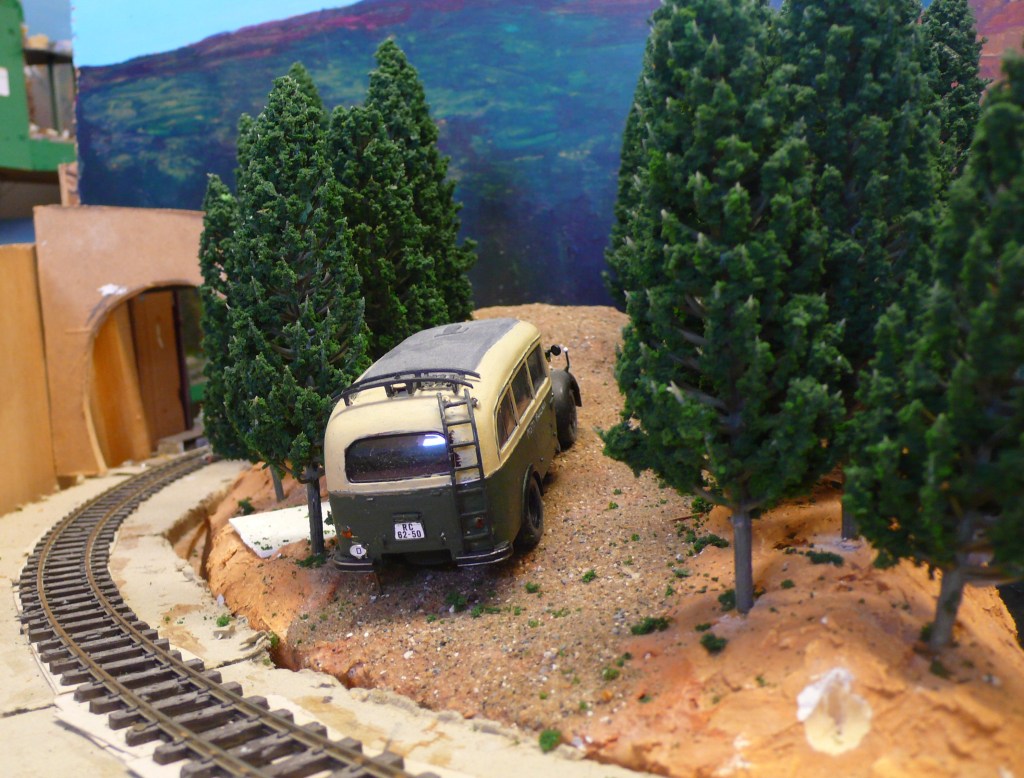
320. The gravel road leading to Ghealdaban comes down to a level crossing beside the halt. The section behind the track is removable because the Danulbo cassette fits here. It is a case of now you see it……
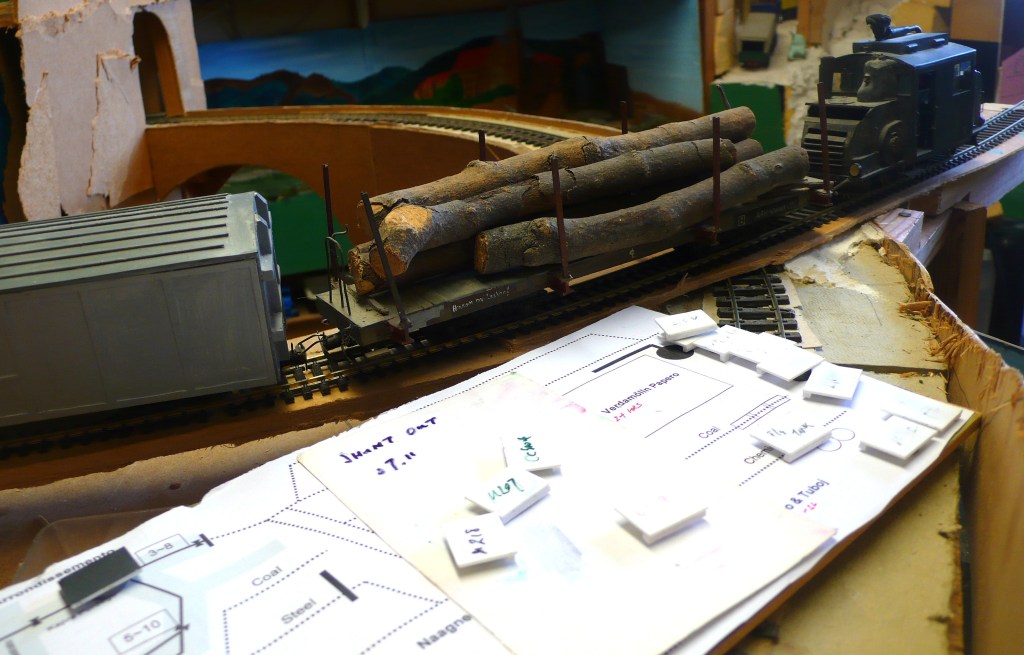
321. ….. and now you don’t. The scenery has been removed and the shunt has proceeded onto the cassette. There is a precarious drop to the floor beyond the end, which once had a bufferstop. This got knocked off but the last six or so inches are electrically dead. The diagram in the foreground uses magnetic markers for shunting, the times of which are recorded in water soluble pen on the plastic covered sheet.
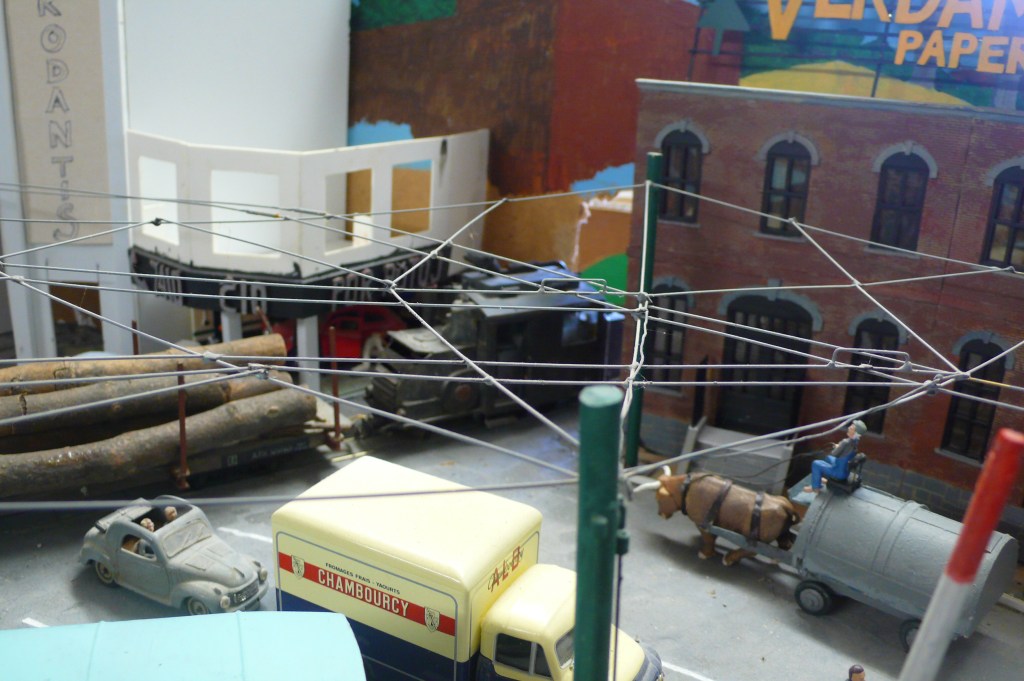
322. The entrance to the cassette is hidden behind a doorway painted as an industrial building in front of the backscene at Lacono. It is unlikely that the Karushnastrato would be so busy in mid evening but I do not remove the road vehicles very often.
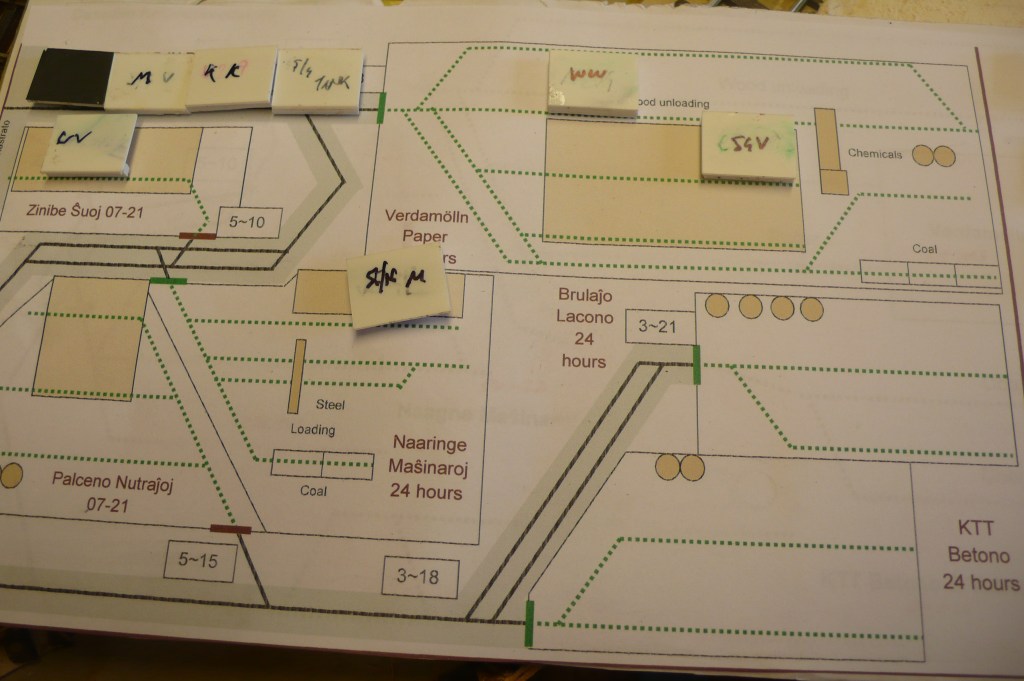
323. Retrieval of the magnetic board forced a few reminders of its shortcomings. It was untidy and could also easily be condensed into a more compact form. This replacement diagram was revised to include an oil depot, (Brulaĵo Lacono) which was inadvertently missed off the original diagram. There are, as I recall, three SG tankers which have seen little use, but that will change. This left space for another new industry, a bakery named Palceno Nutrajoj, which will produce foodstuffs. I am becoming wary of adding traffic sources ad infinitum and it is likely that this will replace a couple of other traffic flows rather than supplement them. This area has expanded and could make an interesting layout in itself. The random use of the extra shunting loco could also be reconsidered with more formal timings introduced. This evening’s shunting is finished and the magnetic markers are arranged in the order that they will appear on the layout (at the top left). The timing calculations, on the separate sheet, indicate that it should return at about 21.00. To some extent this depends upon how lazy the crew are.
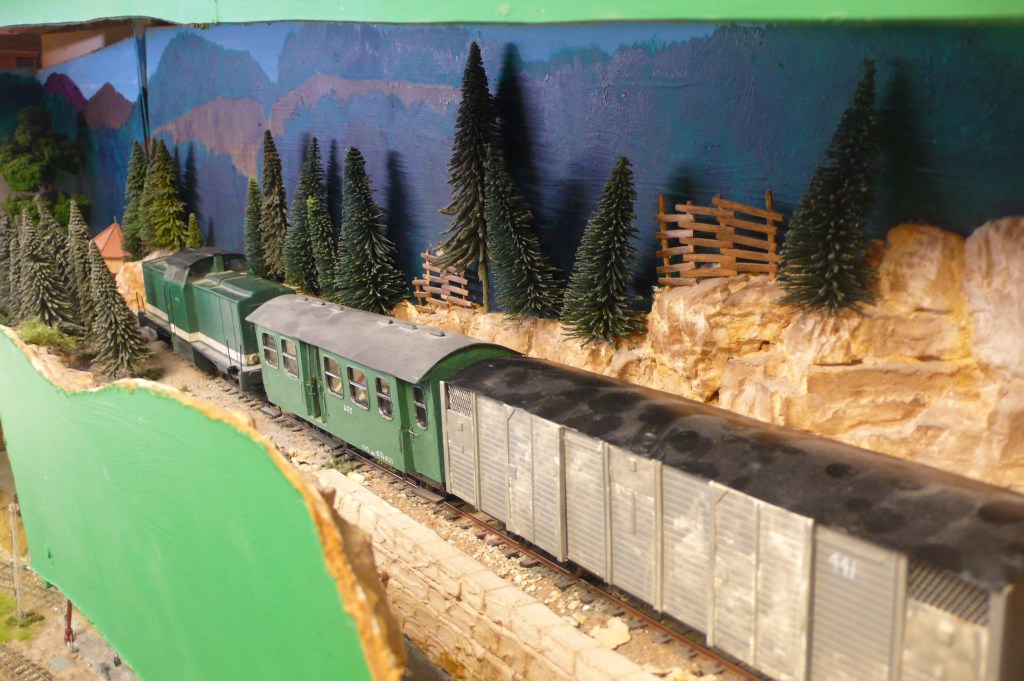
324. The von Ryan is proceeding down the Aepto Gorge and is likely to run no further than Urteno. It will probably be held there to await a connection with the RFK-URT goods which will exchange traffic for the Altingablecaŭtoj.
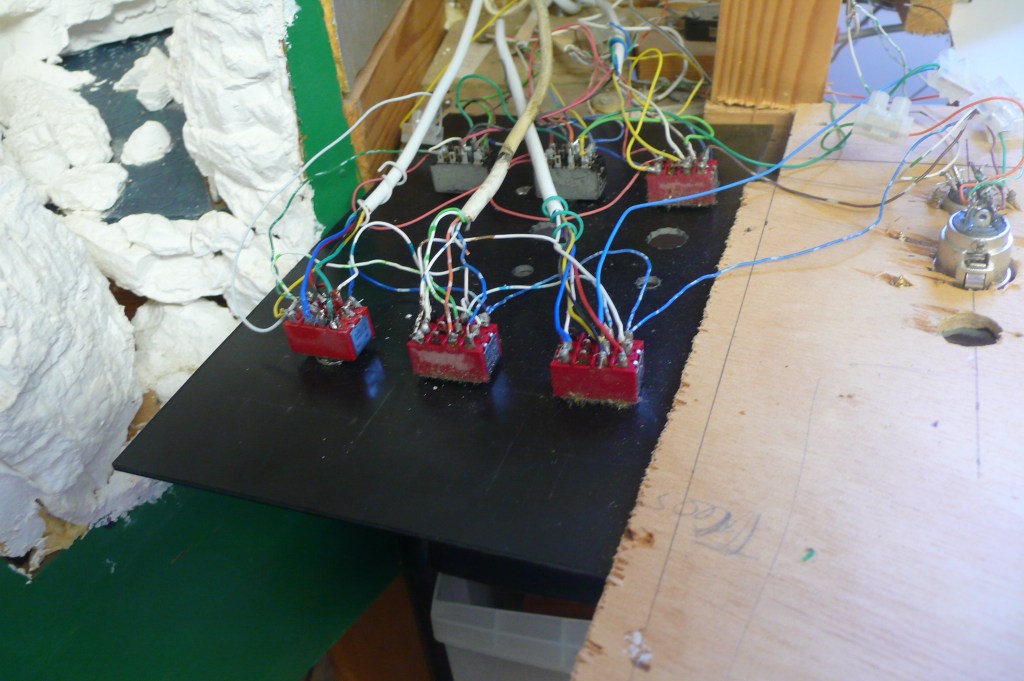
325. All is progressing well, although the warm weather means that the layout is seeing little usage. Then disaster strikes! An attempt to carry out a shunt move at Ospicio results in the loco going “dead”. My initial response is to remove the loco and test with another one to determine whether it is the loco or the traction circuits. It rapidly becomes apparent that the whole of Ospicio is dead. At least with a large layout divided into traction districts the problem can be isolated and operations can continue elsewhere but the bullet has to be bitten eventually. The first port of call is the master panel which switches power between local and remote controllers. AFK wiring is almost a textbook case of how not to do it, with no colour coding and rather sketchy wiring diagrams. A loose wire is found on the Ospicio switch and resoldered but this is not the source of the problem.
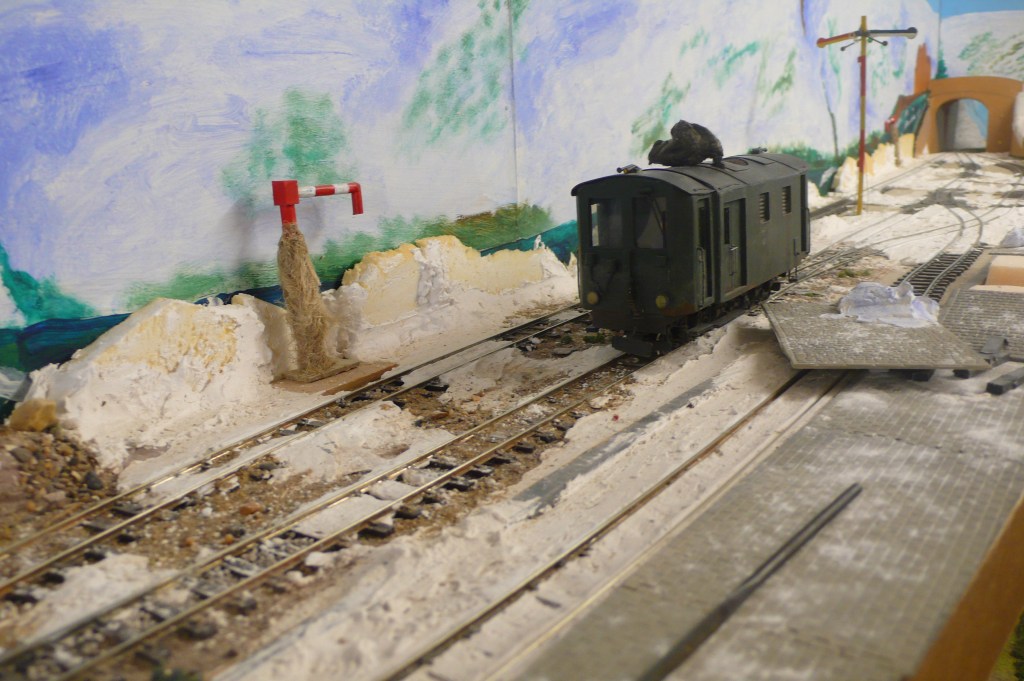
326. After some testing it becomes apparent that the traction return for the whole district is “out”. Now we come to another problem with AFK wiring. Because the layout is multi-level the wiring on the upper levels was carried out on the baseboard surface to avoid interfering with the levels below. All the near rails were bonded together to give the return so effectively one soldered joint failure has killed the district! The only problem is that this joint and the associated wiring cannot be found, especially as the station is modelled with snow melting, which covers the tracks. Eventually it is decided to attach a new link but the problem is to decide what to attach it to below the baseboard.
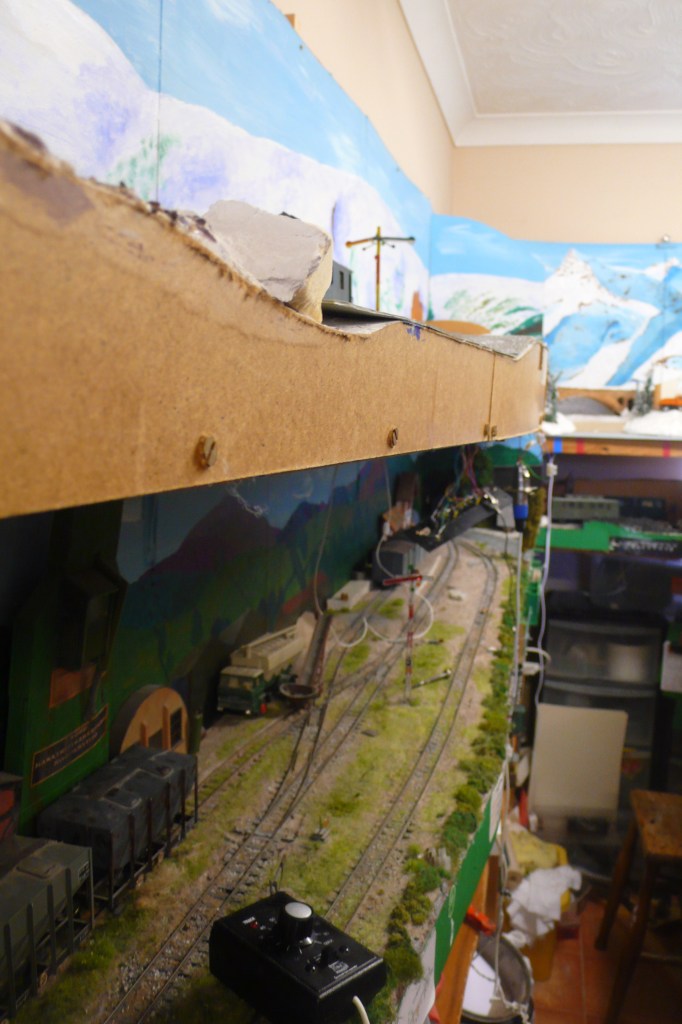
327. Boursson is directly below Ospicio and has its own traction district. This is switched to remote control to provide a nearby live return whilst Ospicio is placed on local. By using a long jumper wire the correct joint is identified for a new connection. Testing the repaired Ospicio on local control proves okay but the remote controller cuts out when switched in. The cause is not obvious but, with experience of dealing with these issues it quickly becomes apparent. Metal tools laid on the track at Boursson are shorting that area out and hence Ospicio. Removing the tools and switching Boursson out of the remote circuits allows Ospicio to work as it should. Remember, as Model Railroader used to say, “Model railroads are fun!” I notice that they do not use that slogan now so perhaps they have had similar wiring experiences.
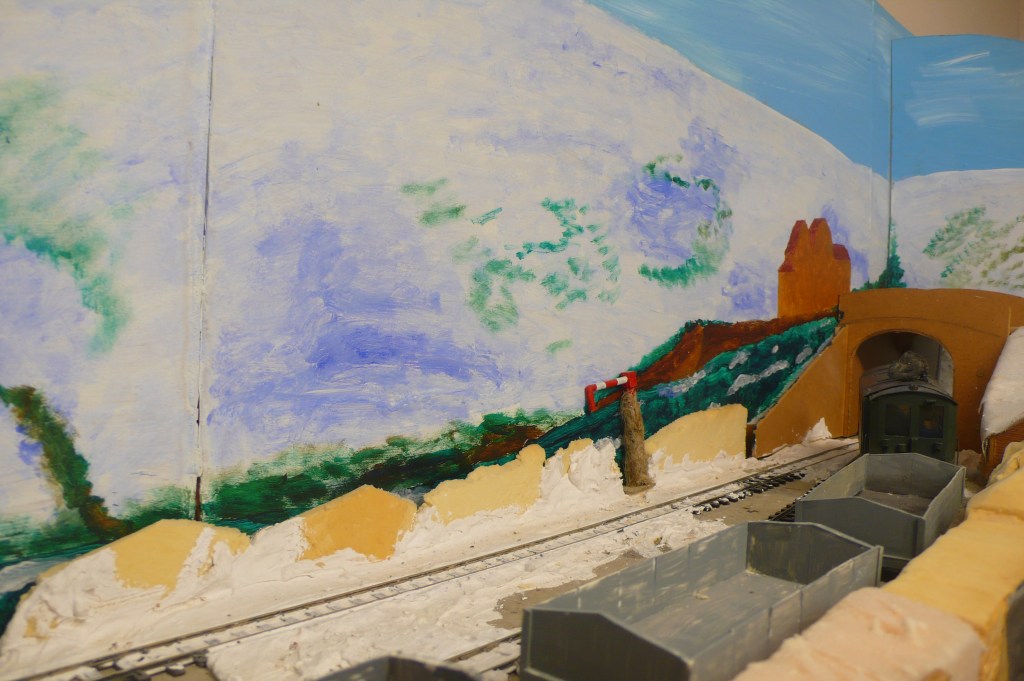
328. Of course everything does not go to plan when replacing the removed panels. The local control surprisingly cuts out when tested and a stray wire from a cold soldered joint is found in the main power panel. Fortunately I have had such experiences before and I now test after each stage of replacing disconnected electrical items. I suppose, as well, that the complexities of such a large layout add to the problems. On a typical home layout Ospicio might well be the only station modelled which would simplify things. The remote control cable, for instance, relies on two sockets being connected. I wondered why the test loco had stopped running until I remembered that the cable had been removed from the main socket to allow it to be manoeuvred into place. Doh!
Following an extended delay, due to other interests and warm weather, the session restarts. I had to consult one of the photos to determine the exact composition of the evening goods, although I roughly recalled the traffic it was handling. The two self unloading gravel wagons are returned to the quarry siding before the train continues on its way.
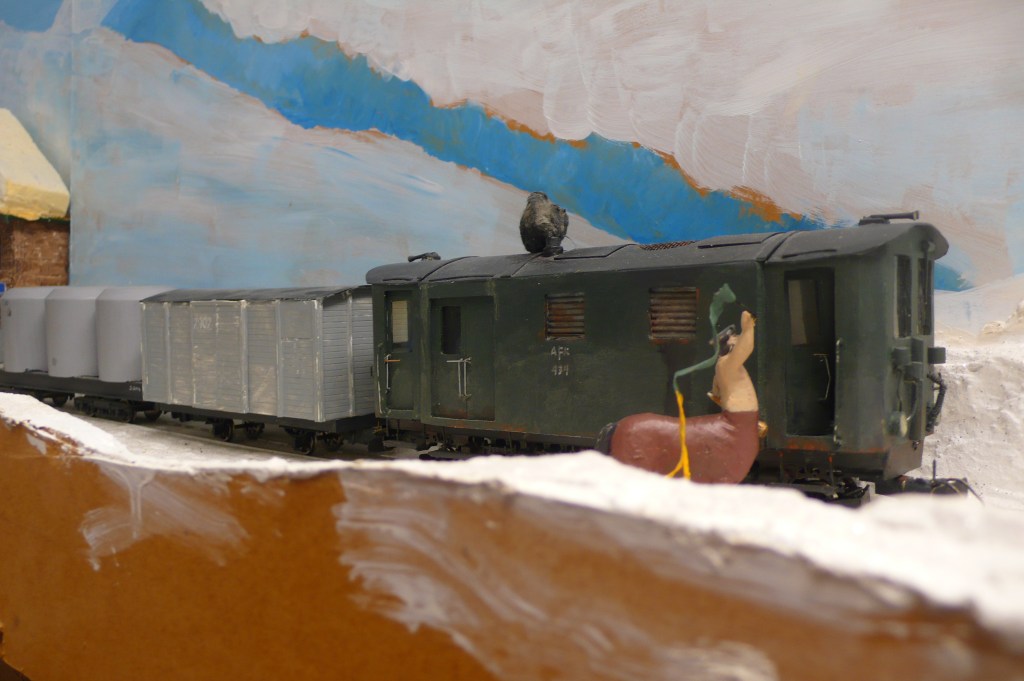
329. Urchyllu, the staciaĉefo at Caladonno, meets the goods. There are some advantages to being a centaur, including being able to speak to the face of loco drivers whilst standing next to the cab. The train will drop the two opens here for overnight loading by Steinkastir, the troll. He will need to work quickly this evening as we are close to the solstice and, as we all know, trolls turn to stone in daylight.
NEW PHOTOS
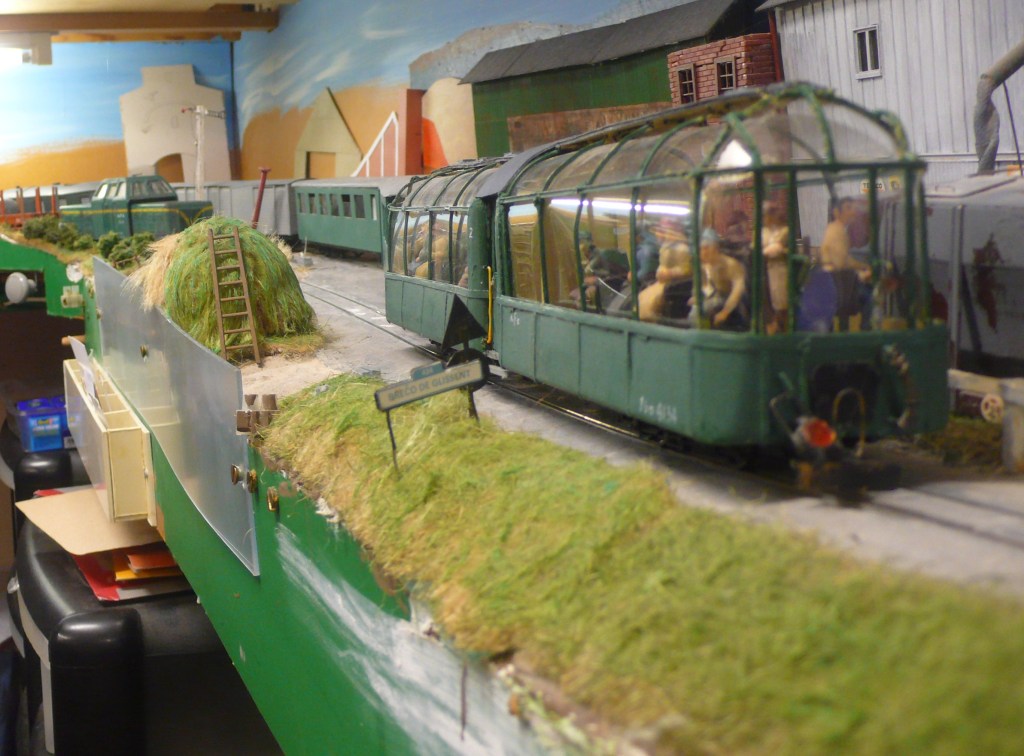
330. It is not everyday that you see an observation car running down the middle of the main road across the province. The mixto is put through the loop at Glissent because the RT (main) is occupied by an early running freight train.
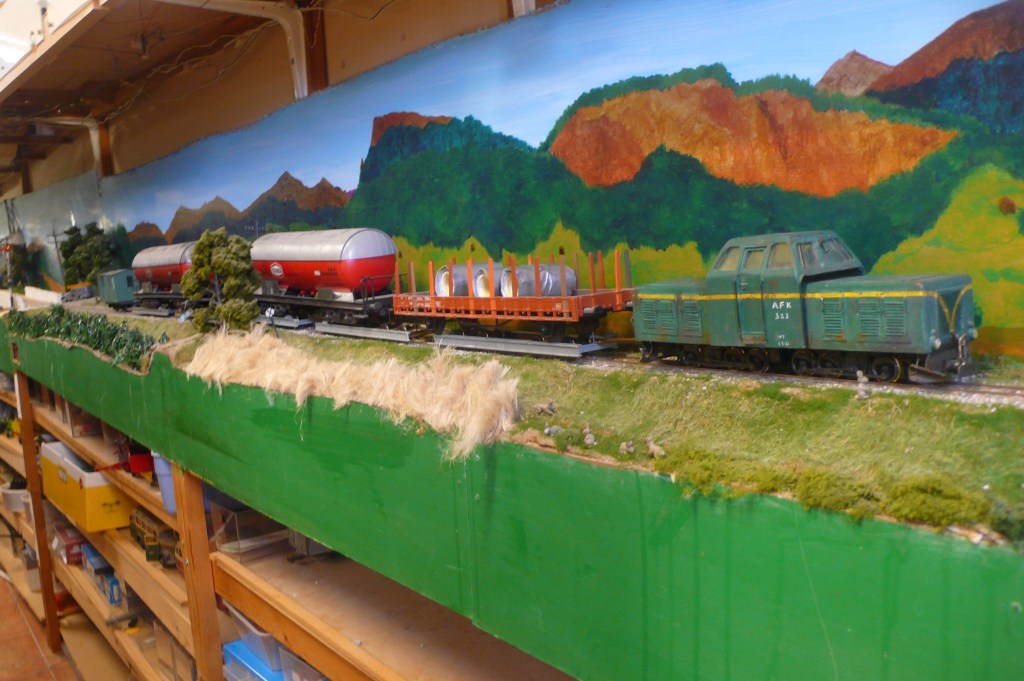
331. The freight was put on to serve the paper mill but most of its traffic ran on the previous train. The consist is entirely SG wagons on transporters all of which are going to the Danulbo district at Lacono. The first wagon contains steel coils for the agricultural company. These really need more attention to finish them off.
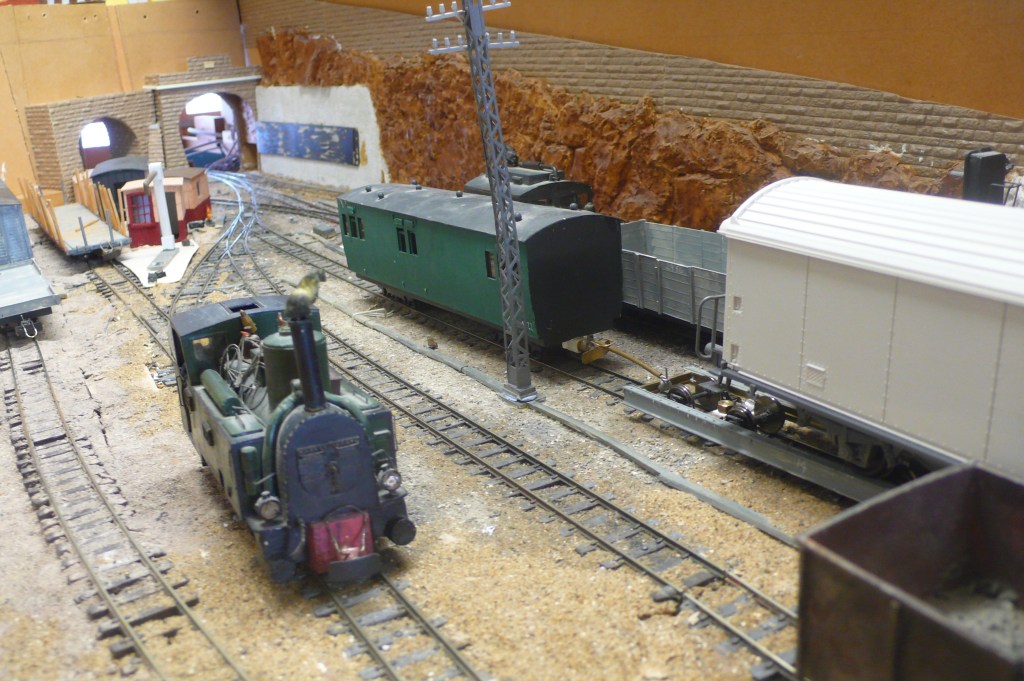
332. The Danulbo trip returns, at the right, behind the SG van, as the pilot looks to cross to the reception siding. It will prepare to add the brake to the rear of the goods going forward to Urteno.

333. La Besto has added the northbound wagons from the industrial district onto the northbound train whilst the pilot has run onto the brakevan to transfer it and complete the marshalling. Effectively the diesel has become the de facto No 2 shunter diagram at Lacono. It is likely to be busy for an hour or two shunting the industrial estate, even at this time of day.
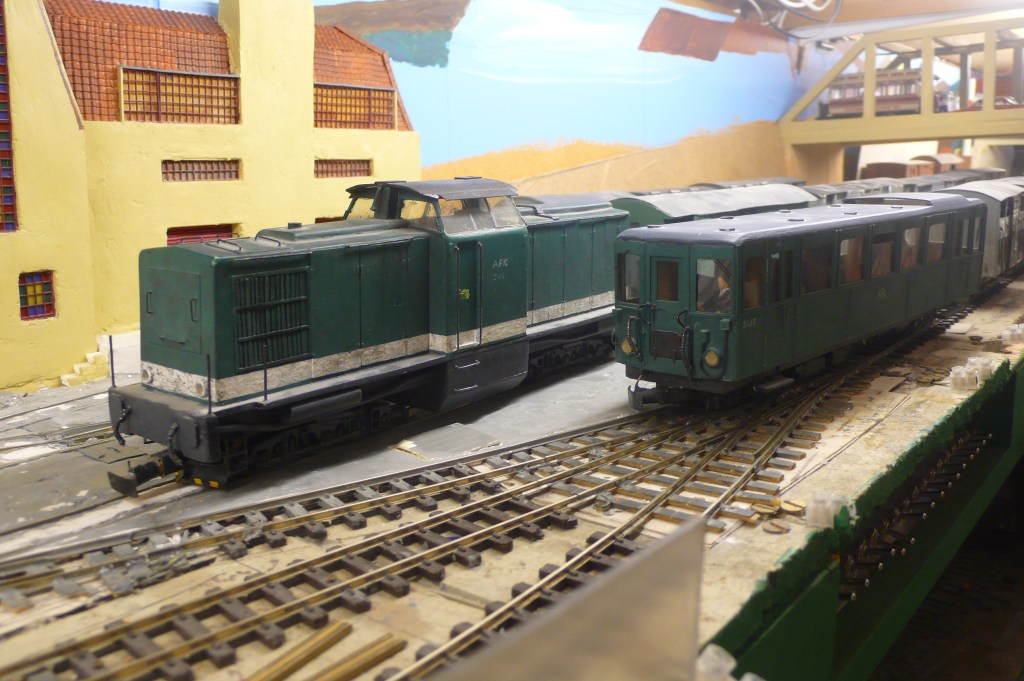
334. The north end extra train arrives at Urteno at 21.05. The shortly to depart railcar has been put into the goods road to allow the Harzkamel to run round and begin to shunt the ferry.
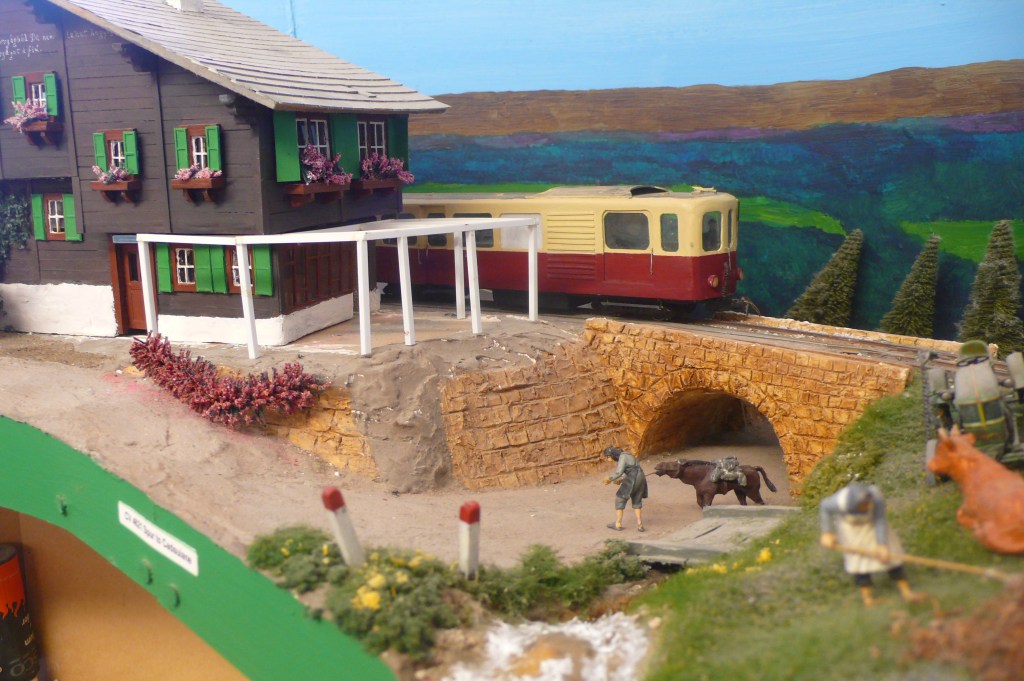
335. The evening railcar runs forward to Cadsuiane–Fanhuidol. This is the last passenger train of the day and the scene is more animated than might be expected, simply because I do not usually remove the figures on the layout for the sake of photographs. On the other hand things might become very animated if some of the more “refreshed” members of the scholari cannot be restrained. You might remember that some of them continued their revels here following the cattle sales at Ospicio earlier today. Cadsuiane station bar has a reputation for over-imbibers of Lesĉek, the local fire water, being found next morning, comatose, in the woods below the station!
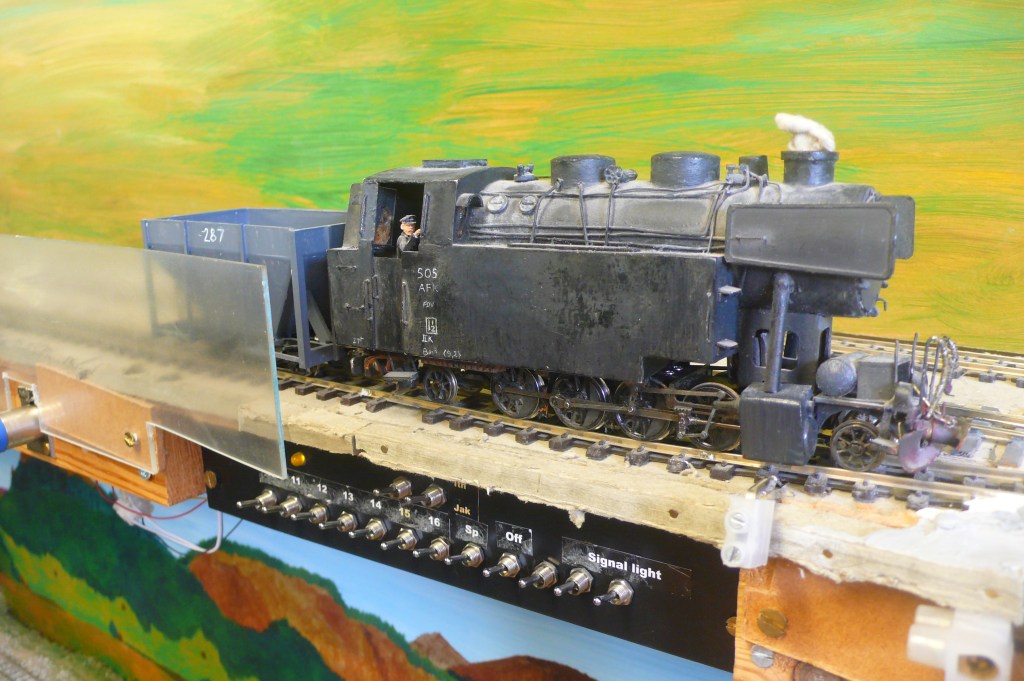
335. Meanwhile, once the railcar has left Ithilarak, the Urteno banker/pilot shunts an empty coal wagon to the mine. It is seen here leaving the exchange siding. There was once a longer guard but it caused as many problems as it solved. Care has to be taken not to knock stock onto the floor.
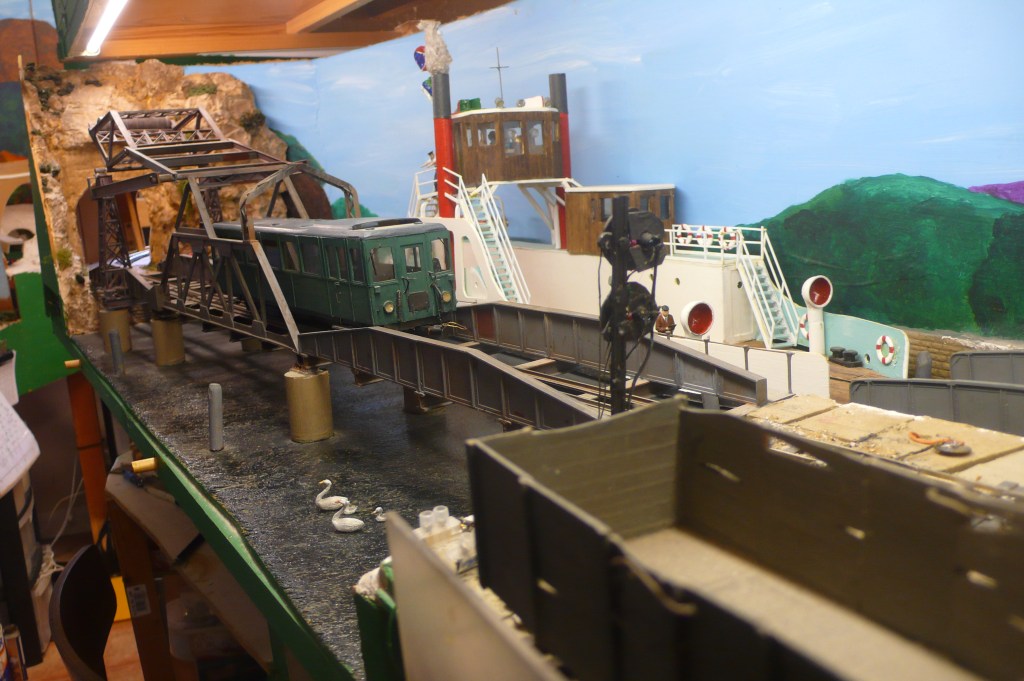
336. The late evening railcar crosses the lifting bridge over the Spegulalaguno. This is the last down passenger train of the day and it sees little traffic beyond Lacono. Late leaving hospital visitors and those on the evening shift at the hospital make up most of the passengers. The ferry provides the one of the last ongoing passenger connections of the evening although it is little used. Railway needs take precedence at this time of day and the von Ryan will shunt most of its load onto the ship this evening as the brewery is desperately short of vans.
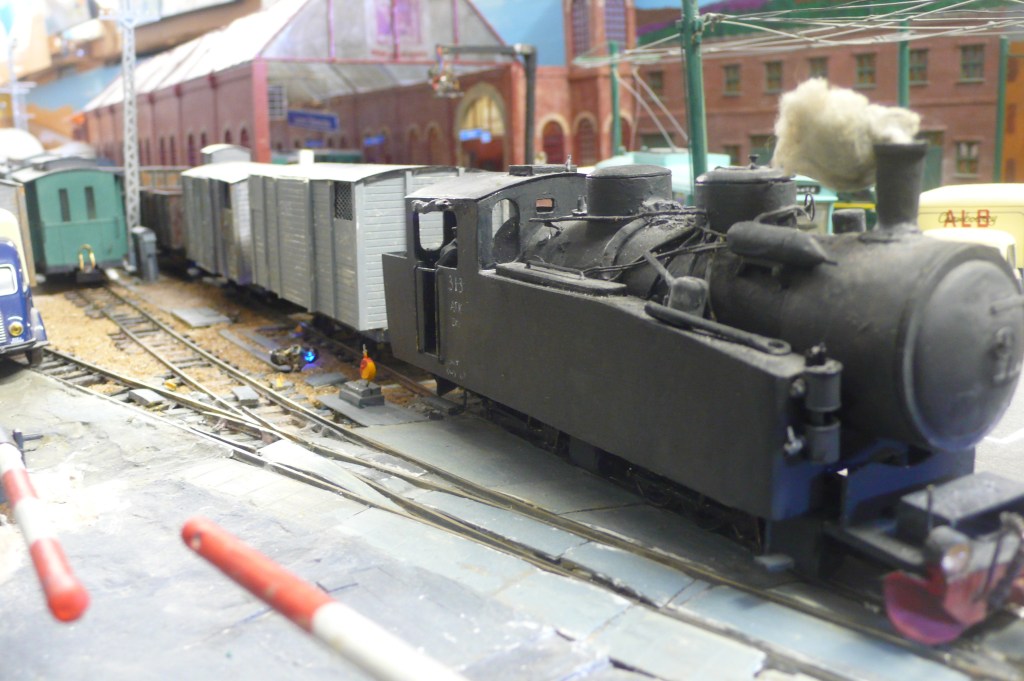
337. Once the down evening railcar has arrived at Lacono the RFK-URT freight pulls out. There is not usually much traffic to go forward at this time of day and the train often turns around to return to Relforka without running to Urteno.
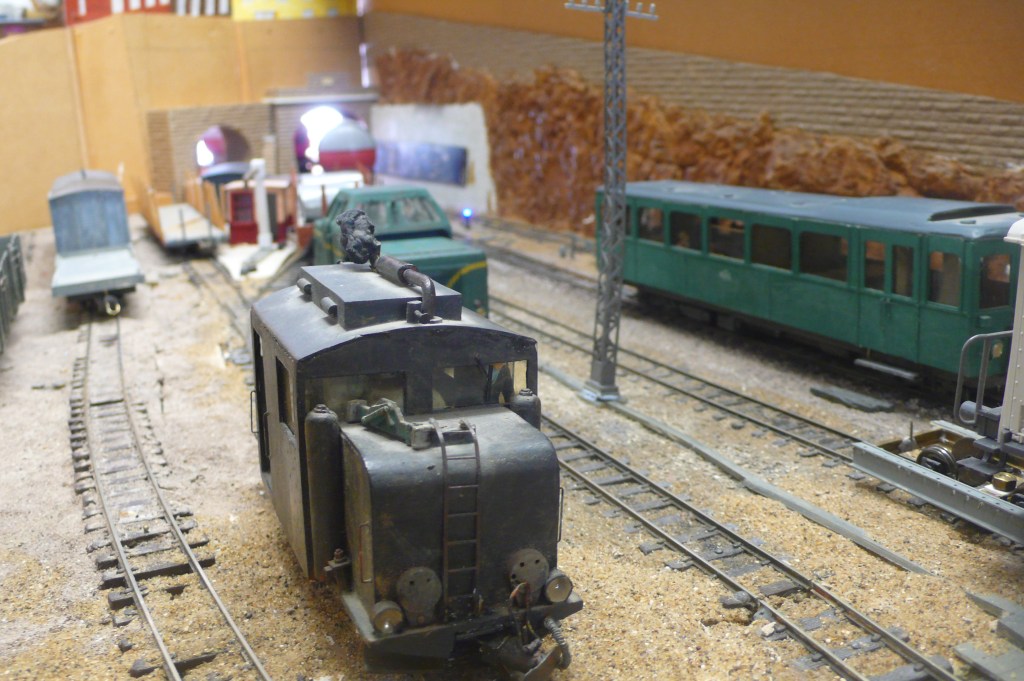
338. The early running freight train seen in photo 331 causes problems. There is not room to accept it into Gasafabrikatastrato yard and it has to stand on the mainline. The down evening railcar is held at signals to wait for it to run into the yard. The Danulbo pilot is waiting for it to arrive before dealing with the SG vans already in the yard. I remember once putting a freight train out early, having rung Control and received permission. A few days later my boss rang me to enquire about this, as it had got in front of another train at Peterborough and ‘caused’ hundreds of minutes in delays. I told him to pull the phone tapes and there was our conversation. Control used to try to blame the signalmen for their mistakes and played “pass the parcel” with delay attribution. Of course when I asked how assiduously they were going to chase the phantom delays my boss laughed and said, “You know that as well as I do!” They became a little more circumspect once someone discovered the DOS code to access their logs! This was rapidly circulated around the local boxes and they then spent a lot of time correcting “accidental errors” blaming signalmen in the log.

339. The last up railcar crosses the Kasatritikakamparoj in the fading light. The first coach is an antique six-wheeler dug up from the depths and the maroon TPO can just be discerned behind the tree. The railcar, which is now almost fifty years old, has now outlasted the prototypes although it has recently been re-motored.
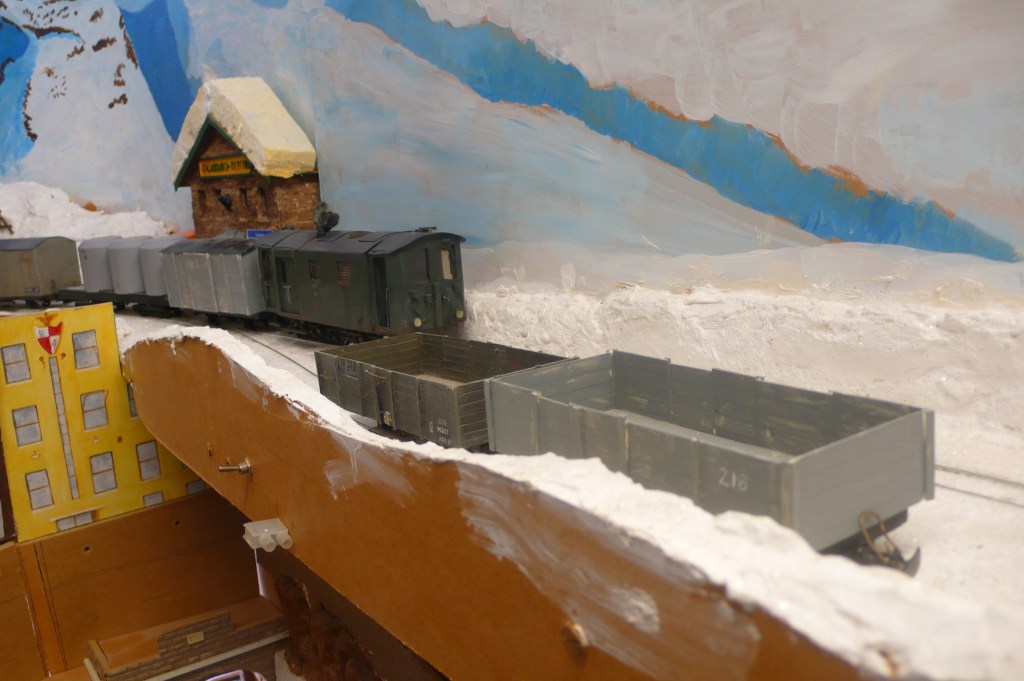
340. The up Altingablecaŭtoj goods has finished shunting in the frozen wastes of Narnia. It has dropped off the two opens in Caladonno’s siding for Steinkastir to load. He will be along shortly after darkness falls to fill them with timber and Narnite, the fossilised Marmite used for building stone.
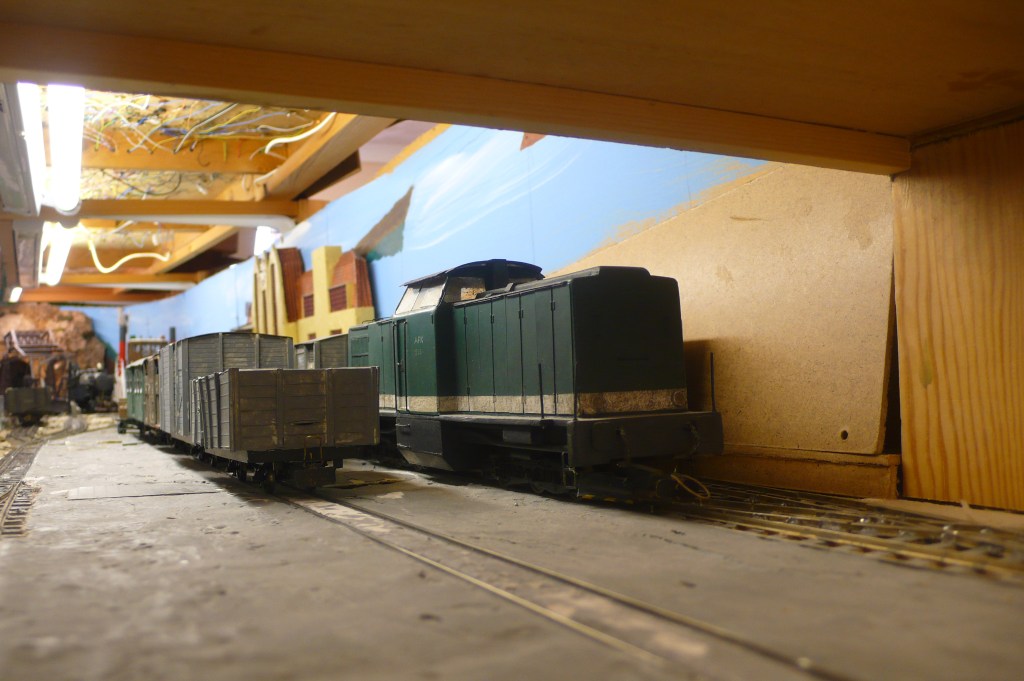
341. The large Co-Co shunts the wagons that it has brought across the Altingablecaŭtoj, or High Reaches, onto the ferry. Urteno is usually quiet at this time of night with little happening. With reference to earlier trials and tribulations, the wiring of Fenditavalat shows up well! This was, however, originally built as a stand alone layout with a more conventional approach to construction than some of the later builds on the top level of the layout.
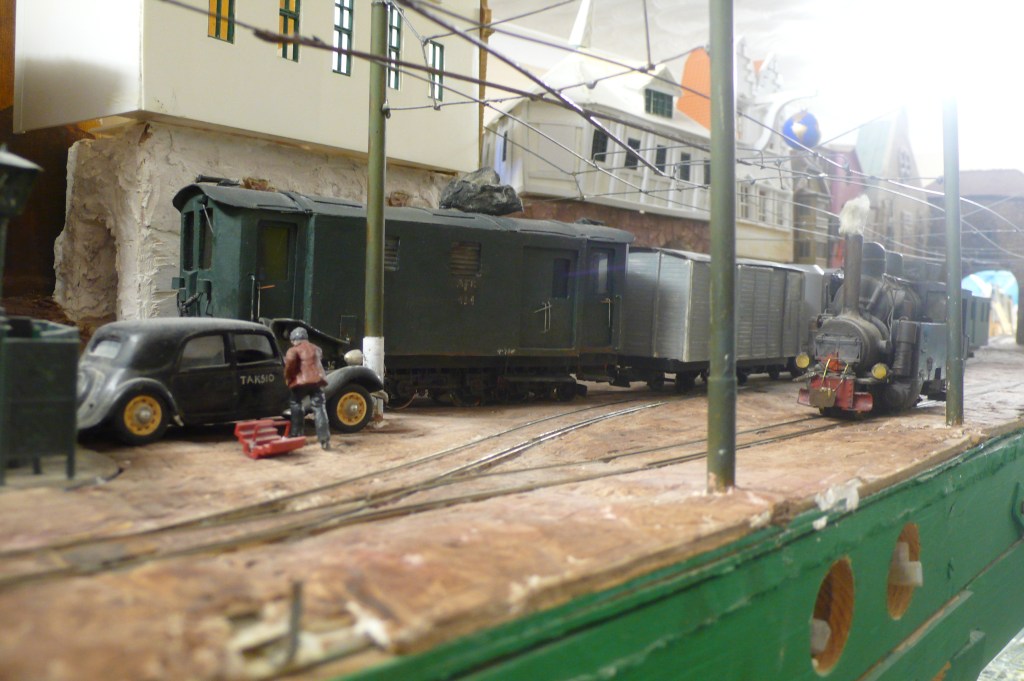
342. Although we are late into the evening the AFK is still active with a number of trains out and about as the Altingablecaŭtoj local goods pulls into Fenditavalat after 9pm. Most of the wagons are transfer traffic for the CFS which will be taken round to Rivabordo by the pilot. One or two of the scholari alight, having taken advantage of the AFK’s readiness to allow travel in its goods vans upon signature of an indemnity form over a two Kronoj stamp.

343. The returning special goods runs around the Vardenamero in the late glow of the sun. This is a light load for this powerful locomotive and the two empty coal wagons, transferred from the RFK-URT train, are only going as far as the colliery.
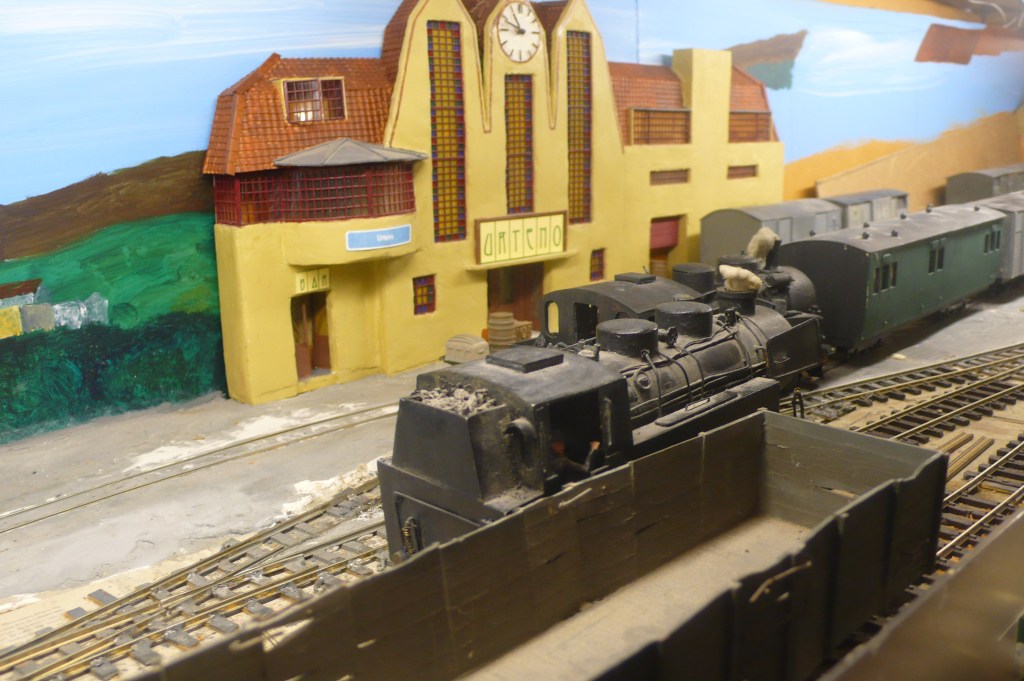
344. The return URT-RFK train, hauled by the 2-6-6-0T is formed up at Urteno and awaits departure. The signalman, in the semi-circular box at first floor level in the station building, is in contact with Control about whether to hold the goods or wait for the railcar to arrive. Urteno has got in front of the rest of the layout so, in reality, it will be some time before an answer is known. Whatever happens, the pilot is likely to shunt the wagons in the passenger loop before the railcar arrives.
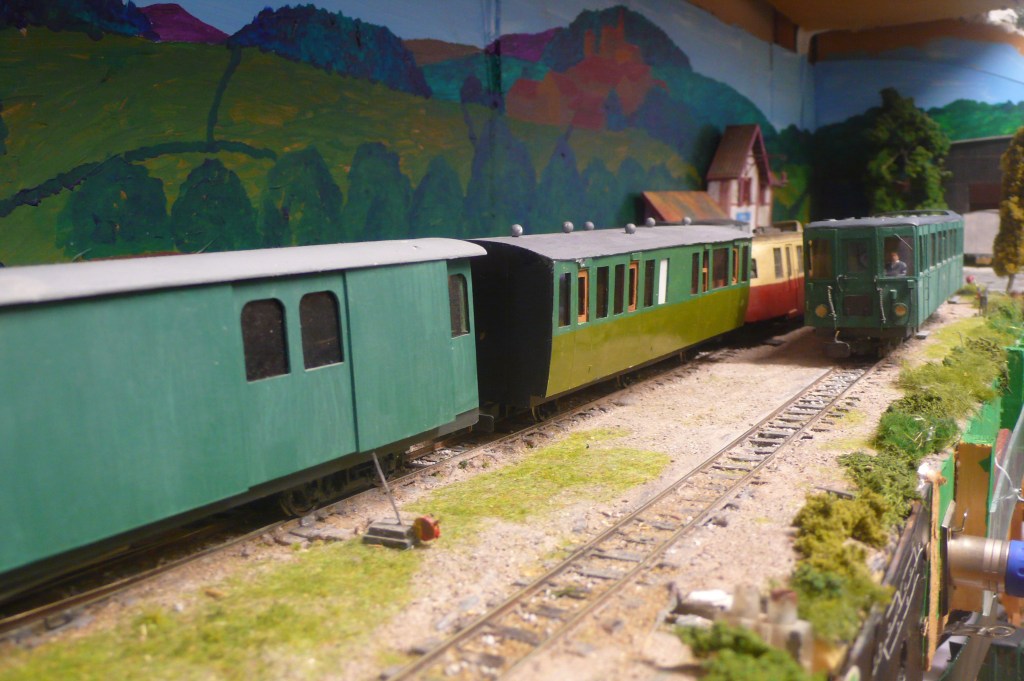
345. The last two regularly scheduled passenger trains of the day cross at Boursson. The six wheeler on the up train runs okay but seems to have developed a list. Another minor thing to look at! The down train sees little traffic and is basically a repositioning move to Eromarbordo for tomorrow.

346. The Fenditavalat train finishes its toil for the day as it passes “The Star”. It is all down hill from here. I suspect that the prototypes might have been overpowered by the tail load although they were built for the mountainous lines of Provence.
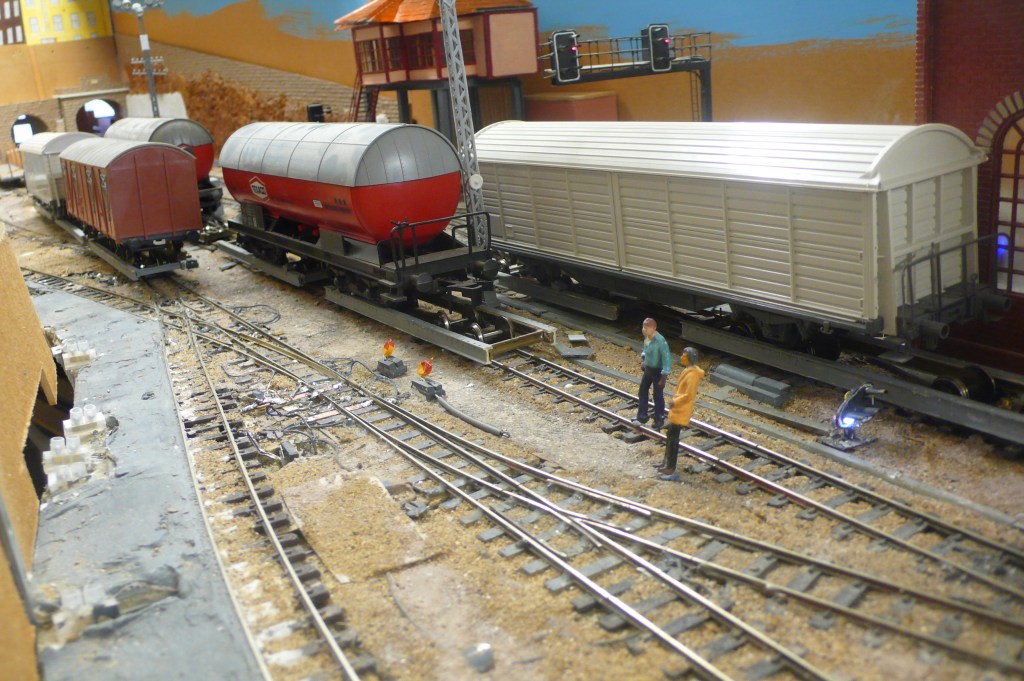
347. Gasafabrikatastrato yard is full of SG wagons which need sorting out and transferring elsewhere. The Danulbo pilot is shunting a SG van out of the way before assembling a trip for the paper mill. The shunter and the foreman watch on. Perhaps one of them will get around to changing the points before the move ends up in the wrong siding.
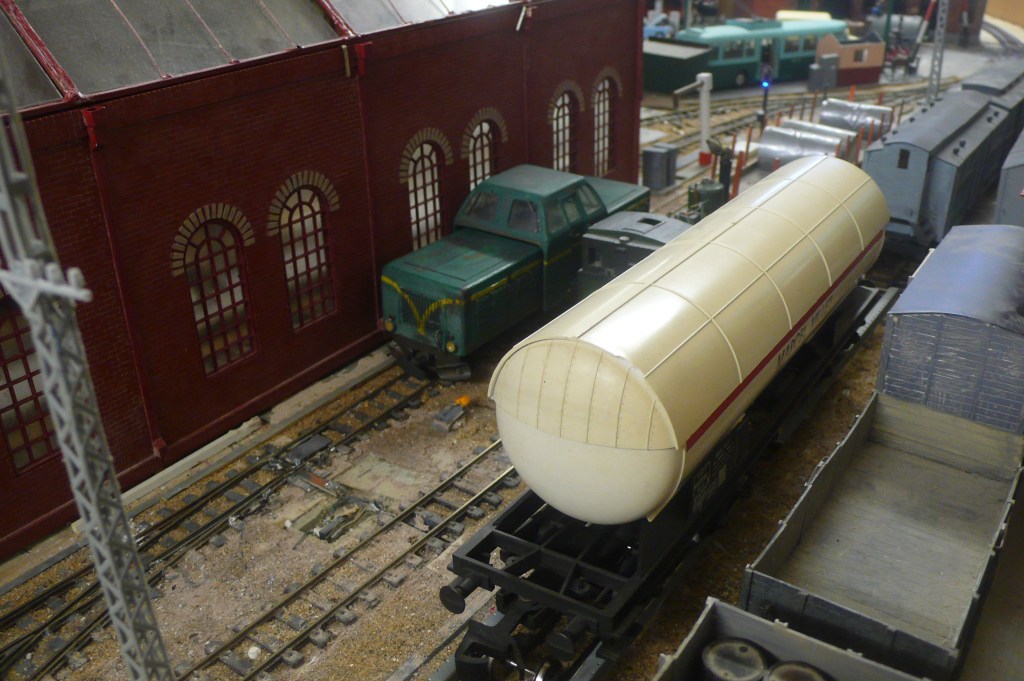
348. Looking in the other direction the congested nature of this busy yard is apparent. The train engine from the goods is still waiting to get out of the yard and the pilot is dealing with the steel coil wagon whose loads look to have shifted.
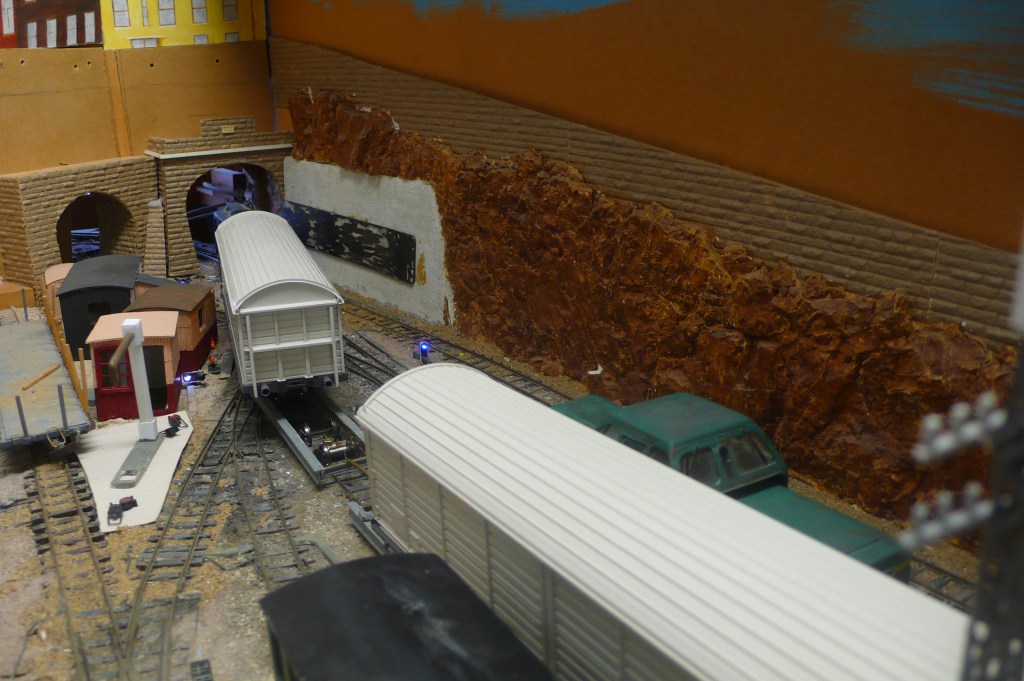
349. La besto pulls the two long wheel base SG vans into the tunnel. Almost inevitably a derailment follows upon reversing. There are a lot of variables in the use of the model transporters, making the culprit difficult to track down. Assuming that they are running properly, and they have all been checked, and the track is correctly fettled they can still derail if the chocks holding the SG wheels are not set properly. Too tight and they pinch the SG vehicle but too slack and the SG wagon moves on the transporter. These long wheelbase SG vans need to straddle the transporters because they are too long for a single vehicle. The retainer settings should take into account the 2 foot radius curves used on the mainline in these circumstances. The bogies on the tankers, for instance, swivel ensuring that they pivot without difficulty. The problem is that these Swiss vehicles rely on rotating axles to negotiate SG track which don’t work well on the transporters. It is also easy to get their weight distribution wrong thereby lifting the NG bogies off the track. It looks as though some new longer transporters might solve the problem. Hopefully experiments can take place before the next session.
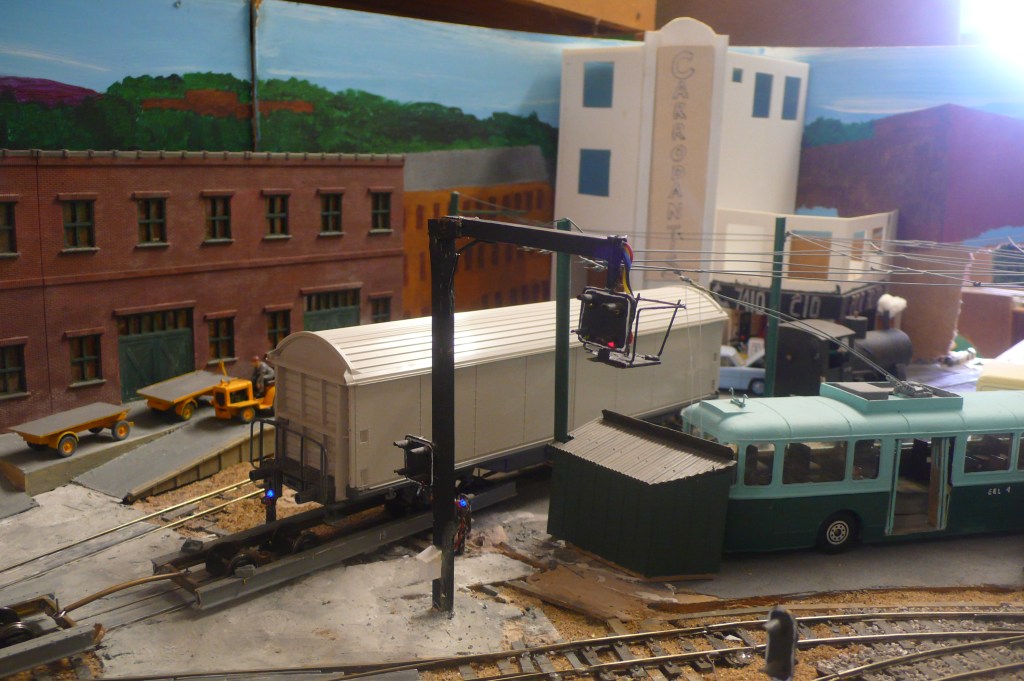
350. La Besto has retreated into the yard to prepare another trip working into the Danulbo. The fireless takes the two long slide-walled SG vans to the paper mill.
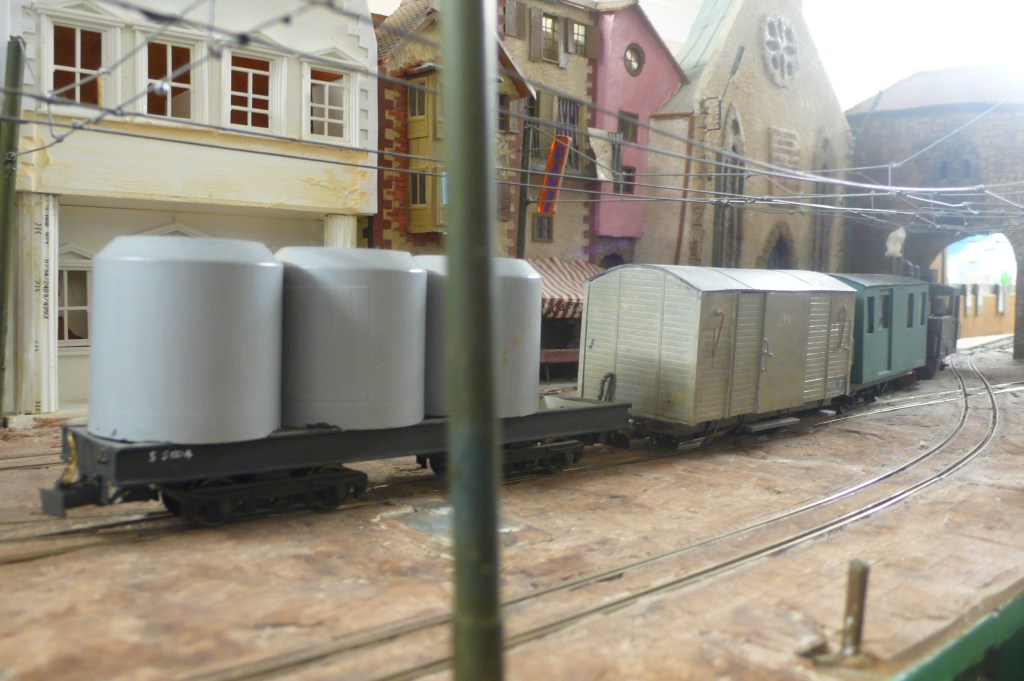
351. The Isuri pilot pulls the rear part of the evening goods out of the merkatubaxo. The empty cement wagon and the Lacono-Krelm road van will be transferred to the CFS.
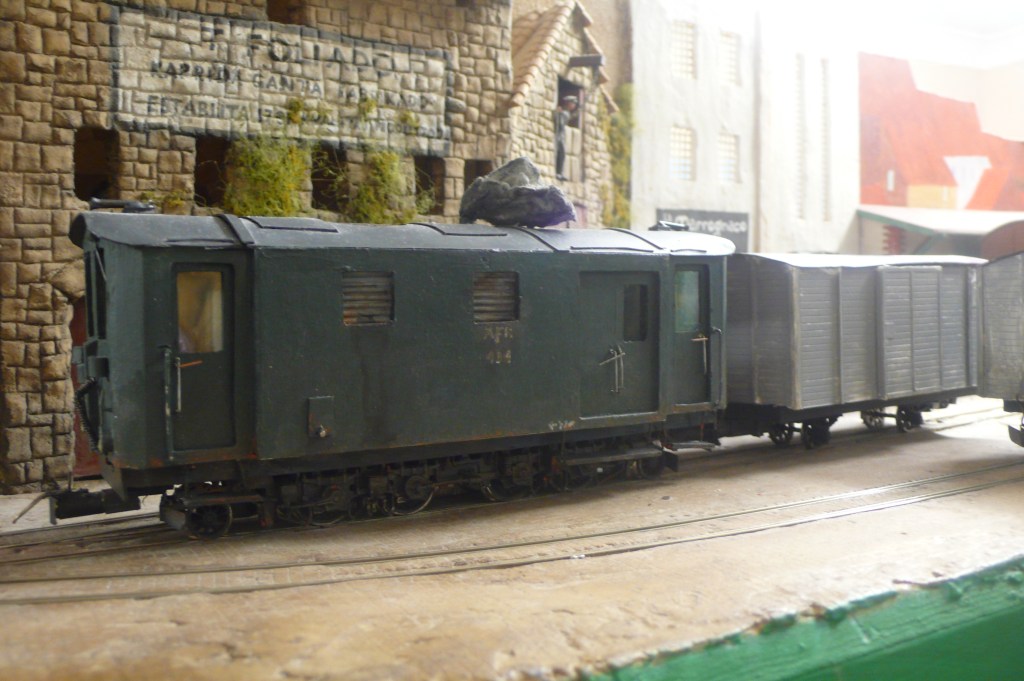
352. The road loco then pushes a van of rabbit skins into the yard. These will be taken into the workshop behind the loco to be used in the glove making process. The factory is still unfinished nearly fifty years after work began. Surely some sort of record?!

353. The seaside special crosses the Kasatritikarakamparoj in the twilight, full of satisfied patrons. Some have spent an afternoon on the sands with their kids, others have frequented the renowned fish restaurants and others, the scholari mainly, have indulged in imbibing. The train is popular with the scholari because the University is split across three sites and the train serves Lacono and Urteno allowing them to fraternise. The notorious improvised bar facility occupies the leading vestibule of the first carriage. As per usual the door is open just so the anyone can fall out!
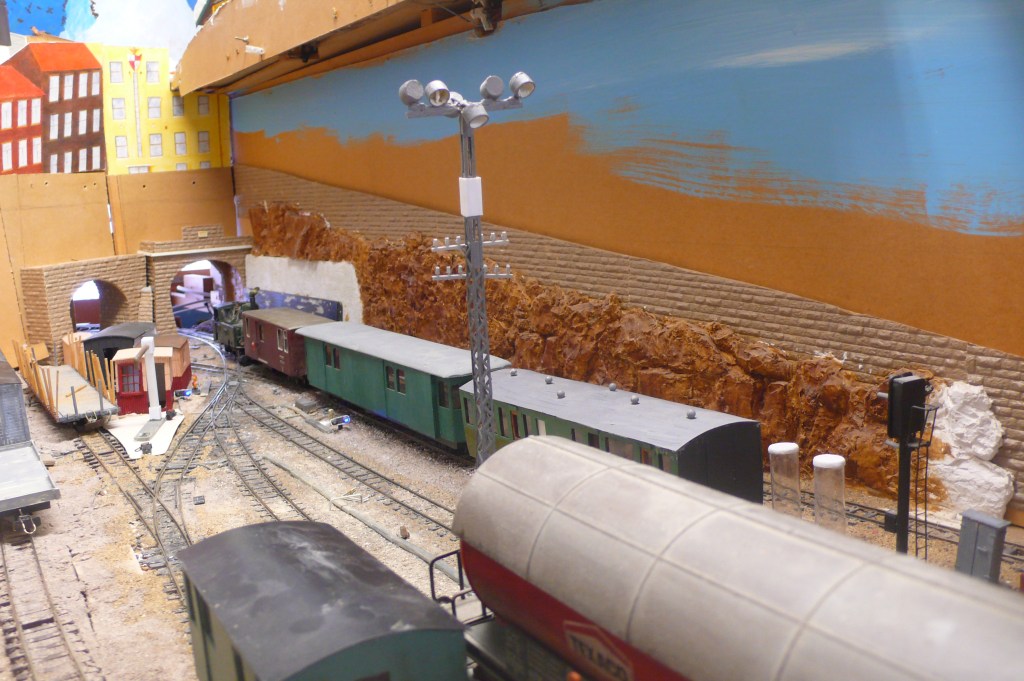
354. Lacono is still busy this late in the evening as the pilot shunts the extra carriage and Postal tender brought in by the railcar. The TPO will be returned to the train as it sets off on the final leg of its journey to Urteno.
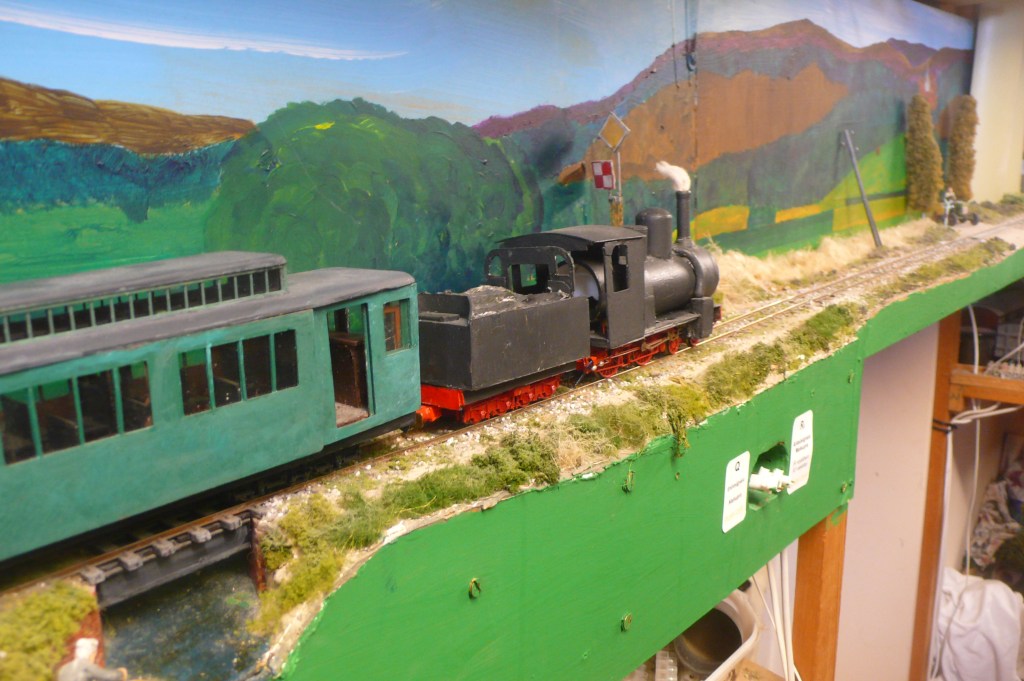
355. Station hours are 06.00-22.00, when the staff, either the ganger or his wife who is staionmistress, operate the signalling equipment. The excursion is running after the station is closed. The driver of the 4-4-0 slows to a crawl and sounds the whistle as he passes the enirasignalo at danger. He should actually stop but on the steeply graded AFK it is best to avoid this if possible. The guard will operate the station signalling equipment giving access to the next section.
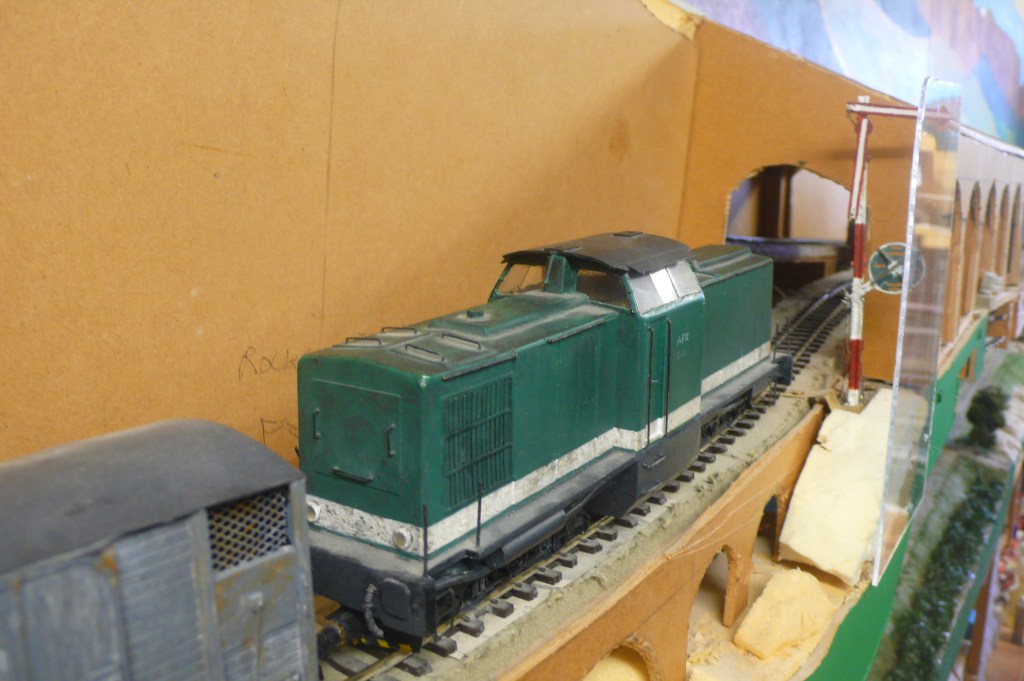
356. The extra train running across the Altingablecaŭtoj similarly passes the Ithilarak entry signals. In this case the loco is authorised to pass at danger without stopping on account of the gradient.
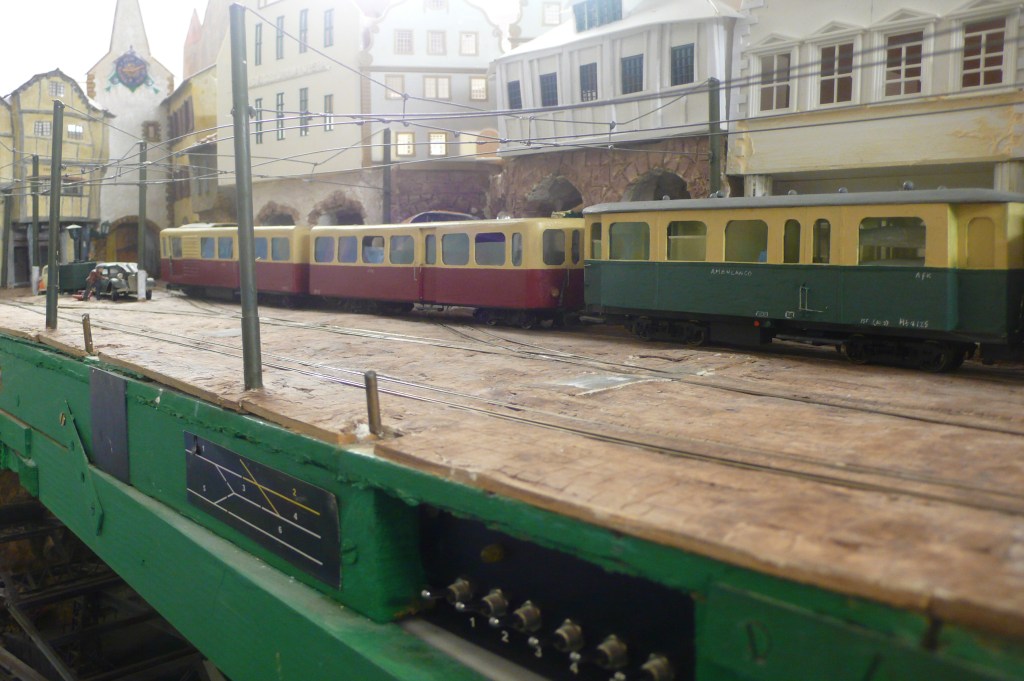
357. The evening railcar pulls into Fenditavalat at 22.00. The small mountain city is quiet this evening with the exception of the few revellers decanting from the train. The pilot will remove the trailing vehicles and the railcar will soon leave for Rivabordo.

358. The Urteno pilot/banker ascends the bank for one last time today, but only as far as Varden. The crew ask Urteno for a local release on the points to shunt the siding here. The van delivered earlier during the day is ready for removal and it is easiest to do it now rather than wait for tomorrow when things will be busy.
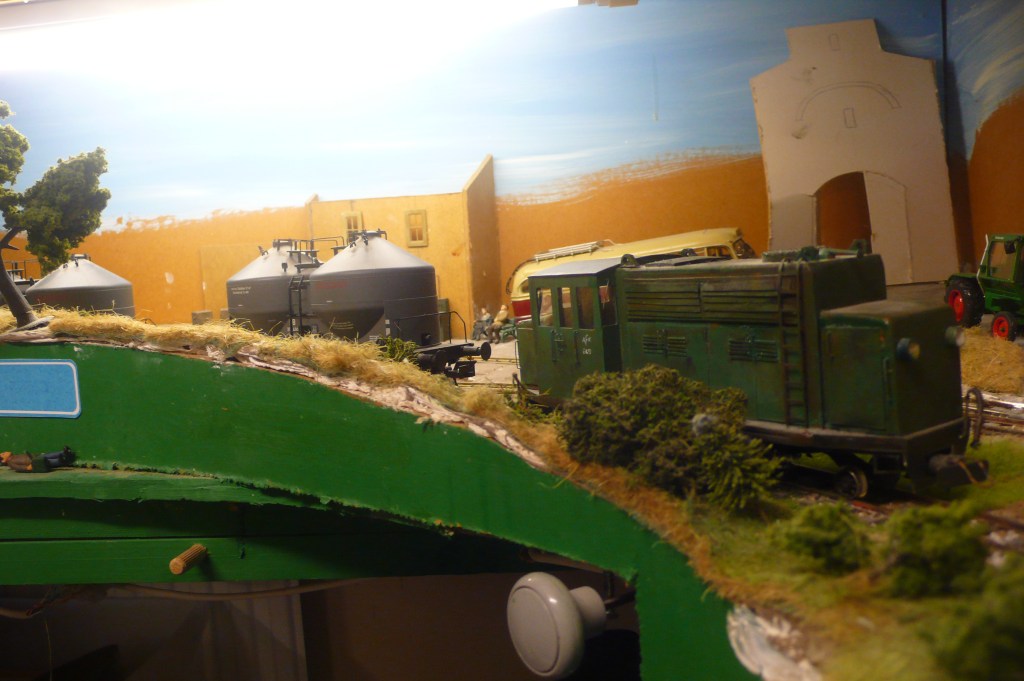
360. The last up train of the day, the RFK-LYL cement empties to Lyddatyl (CFS) stops at Glissent to get clearance to Boursson. The bedraggled 1-C-1 diesel is rarely seen by enthusiasts in daylight hours. It is also giving a spluttering performance due to dirty wheels even though it has hardly been used this session. The session has dragged on and it is months since the track was cleaned. The loco has always been a ‘problem child’ since the mechanism was bought cheaply from E-Bay. As I suspected, given the lack of bidding and the box colours, it was a Roco factory conversion to a three rail runner which needed “re-converting”. The seller did not make this clear although, given the ignorance of some vendors, they might not even have known!
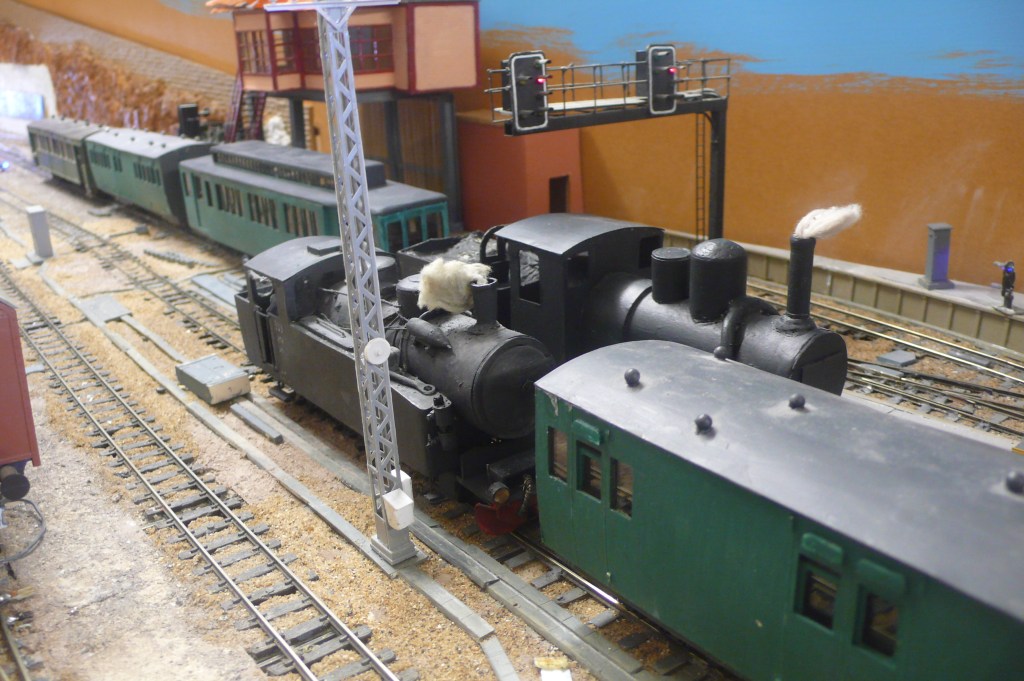
361. The excursion approaches Cittavecchia as the goods returns from Urteno. The excursion was briefly held outside the station to allow shunting to continue. The tired but happy day trippers will not mind as they have had an enjoyable afternoon and evening. The makeshift bar, in the front coach vestibule, will close here.
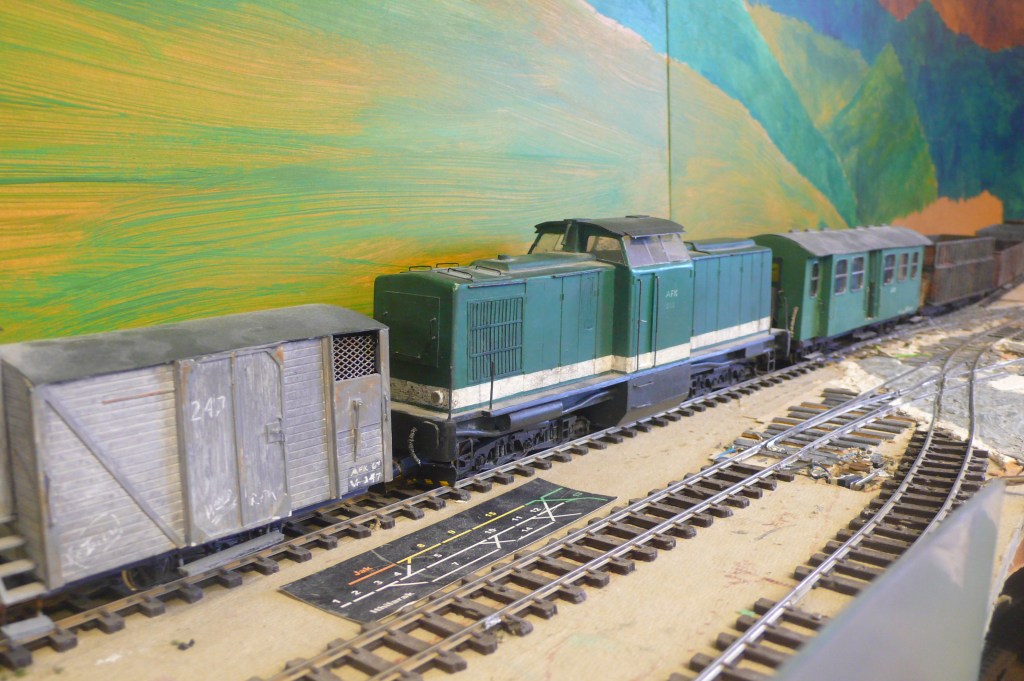
362. The von Ryan shunts the empty coal wagons into the colliery siding at Ithilarak. The time is well after 23.00 and it looks as though the train will be out and about well after midnight. The track diagram could do with updating and sticking into the correct place. I often toggle the isolating switches more in hope than expectation.
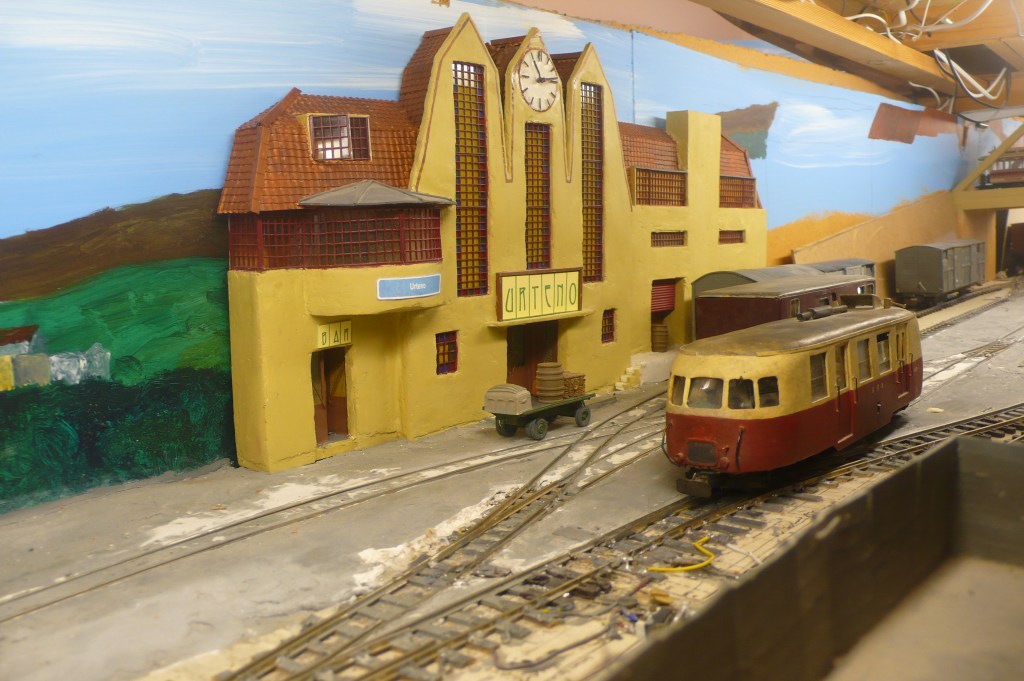
362. The terminating railcar runs round the TPO at Urteno. The time, as can be seen on the station clock, is 23.15 and the excursion is due to arrive shortly. The background still needs finishing and revisiting.

363. The 2-8-2T covering the Urteno pilot duty makes the last move of the day, at 10 to midnight, as it drops off the empty van retrieved from Varden in the Karbaflanktrakoj. It will return to Aspargo shed behind the ecs from the excursion, which is already in section. The empty signal blanks, nuts and bolts and telegraph poles could do with removing.
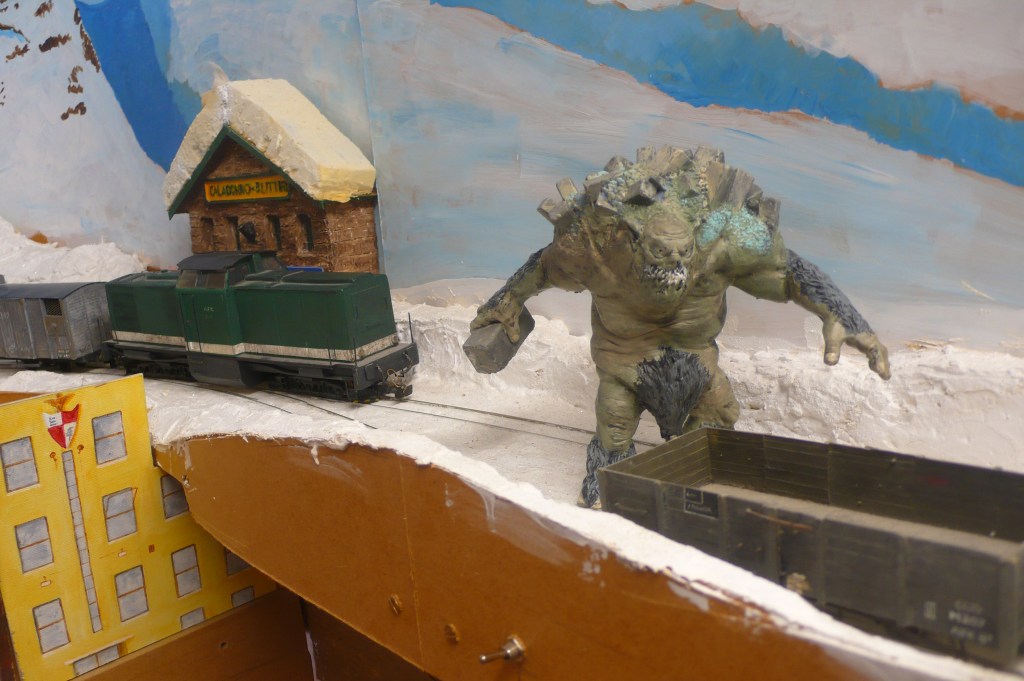
364. The von Ryan disturbs Steinkastir the troll loading wagons in the darkness at Caladonno. Steinkastir’s name translates as “stonethrower” for good reason and one good blow with that piece of Narnite could possibly wipe out the Co-Co. Steinkastir has been warned about this train by Urchyllu, the centaur, and advised that Lohrazzak, the Legate, would not be happy if it suffered an “accident”. In the circumstances he sits down to let it pass, (hopefully not in one of the wagons!) It is all part and parcel of running a train through an outpost of a magical kingdom.
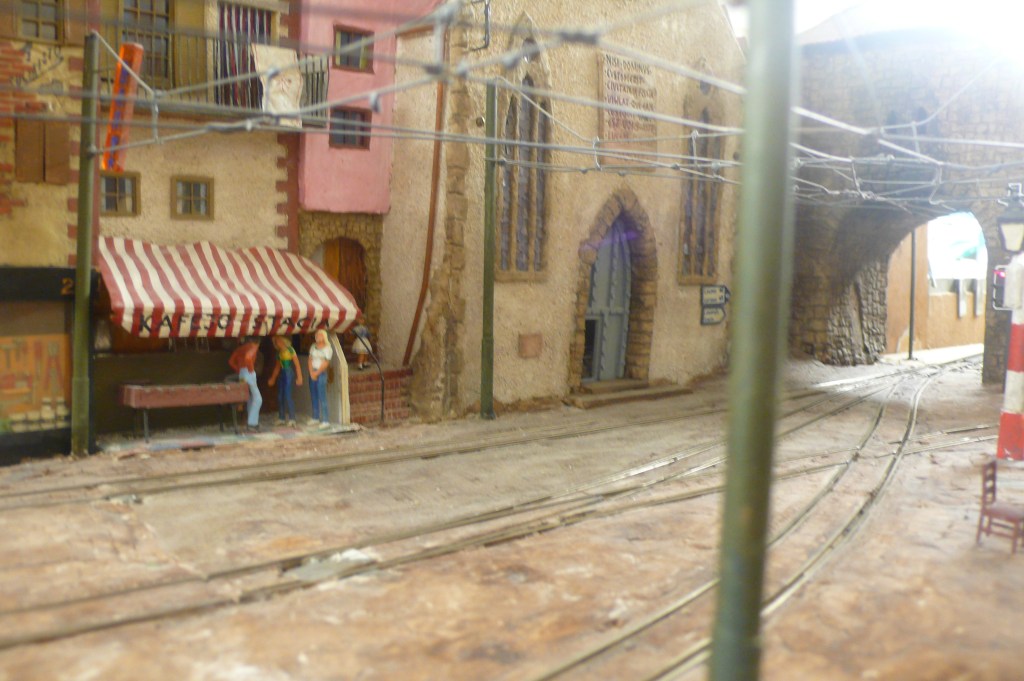
365. The watchman watches in vain! The engraved stone on the gate chapel quotes the relevant verses of Psalm 127, although the watchmen are often more concerned by the scholari! Fenditavalat Basabazaro never sees the special because the city ordinances restrict railway activities after 10pm. The square is quiet, except for a few scholari, because the unusual decision is taken to terminate the train outside the city and reverse it into Rivabordo yard.
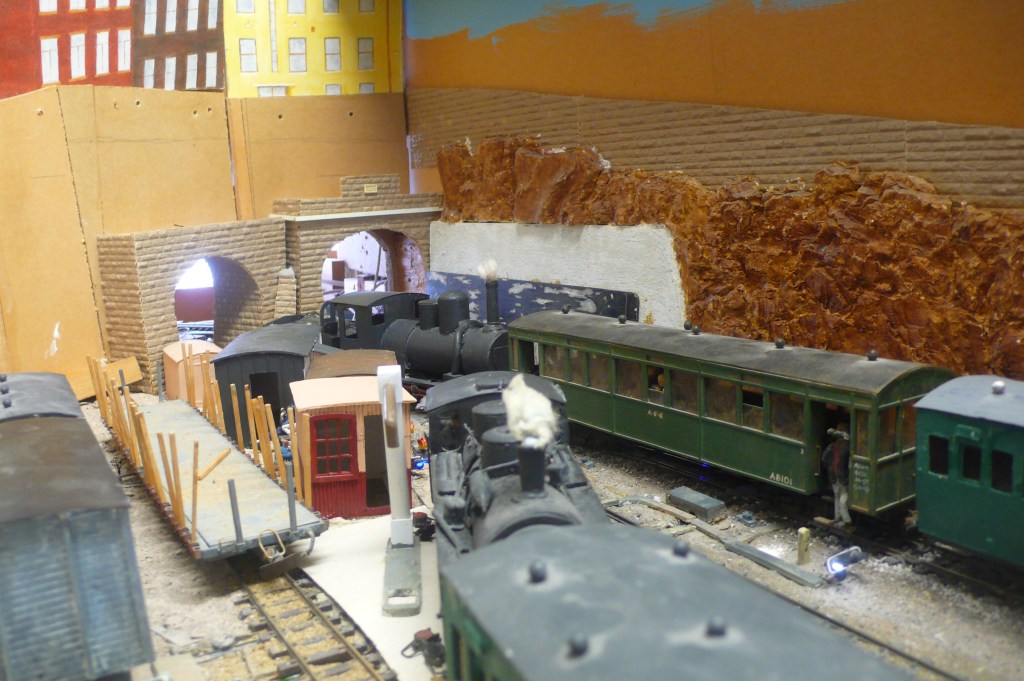
366. The congestion at the south end of Gasafabrikatastrato yard continues, however. At midnight the empty coaching from the excursion crosses in front of the URT-RFK train, now a mere 90 minutes late. In reality the coaches and loco are lifted off here and placed onto nearby shelves.
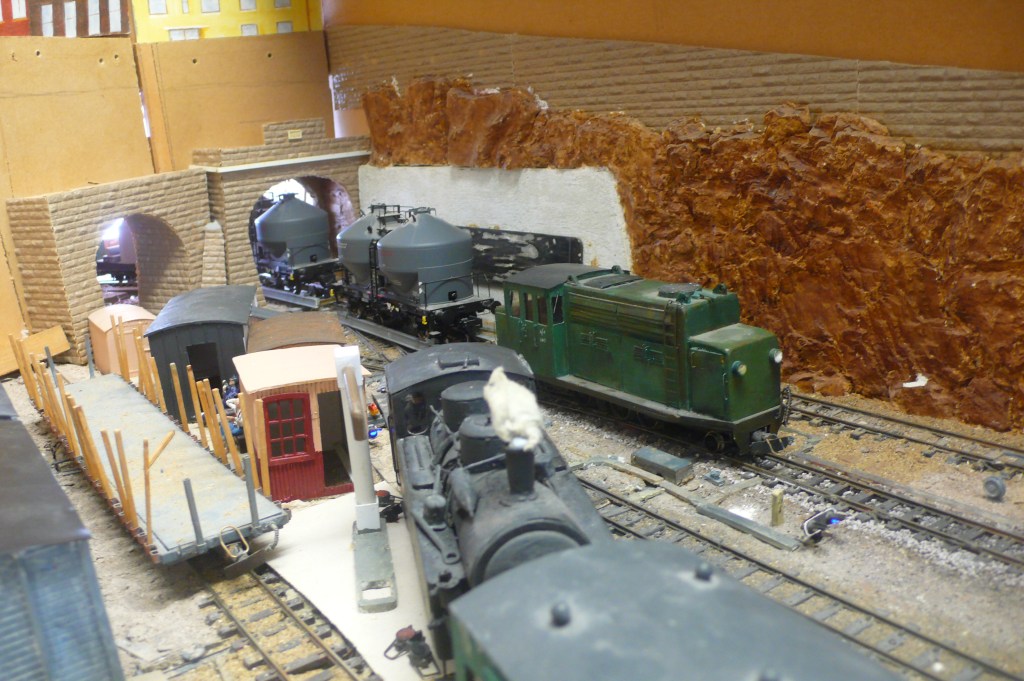
367. The cement train has been held on the mainline to the south to allow the coaching stock priority. It now runs into Cittavecchia where it will terminate before resuming its journey in the early morning. The loco is running better after a “seeing to”.
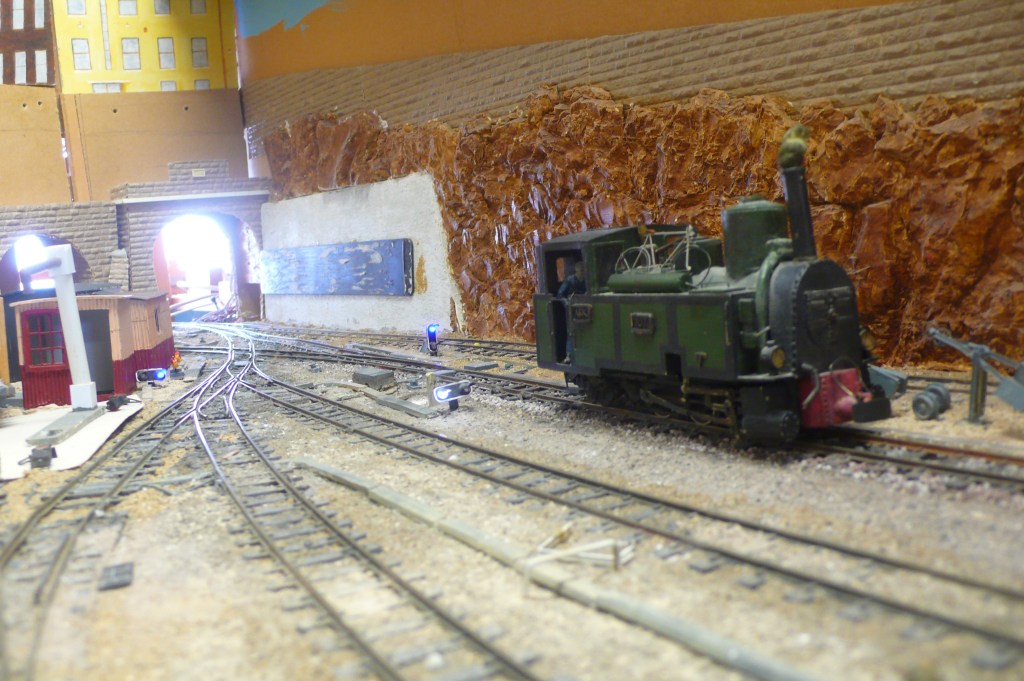
368. It looks like a clone copy of many previous photos but it is not! A now familiar view of the Lacono pilot shows it retreating to the shed at 00.21. It will get a wash and a scrub and be back on duty within a couple of hours. The other railwaymen will maybe grab a couple of hours sleep on the railway’s account in an uncomfortable chair. It was one of the perks of the nightshift I suppose, although it knocked your ‘body clock’ for six. Rather than gratefully accepting this bonus I worked with some idiots who seemed to think that this was their right, thereby hang some tales!
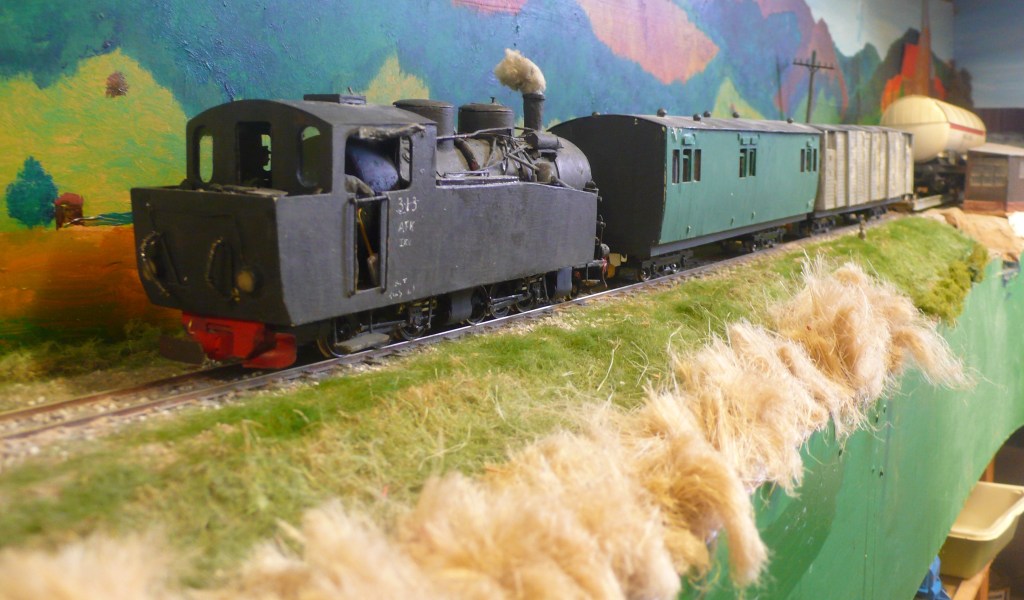
369. And is it tomorrow today? The last train of the day jogs through the dark fields of the Kasatritikakamparoj on its return to Relforka. Within a couple of hours the next day’s Urteno goods will be passing by. The AFK is now a 24/7 surrogate mainline rather than a NG by-way.
370. The AFK is well and truly shut as the drop flap is opened up and the relevant circuits switched out to prevent any mishaps.
The session has dragged on, finishing in August after starting in February. A number of reasons have contributed to the length, including time away, faults, hot weather and, sometimes, loss of interest. The line will now be closed for some time to allow for construction and some repair work. Other railway interests will also receive more attention. Hopefully it will not be too long before the next session begins. If you need a “fix” I suppose that you could read through the entire session! It is longer than normal because much of the lost website info has needed restating.
 Altonian Complementary Railways