A trip along the line

This simple sketchmap shows the route of the AFK or Altonian Complementary Railways. The line leaves Altonia canton to cross into Rolnth canton before entering Calviero canton and crossing Caladonno, a Narnian enclave. The AFK terminates at Fenditavalat, the ancient Roman capital.
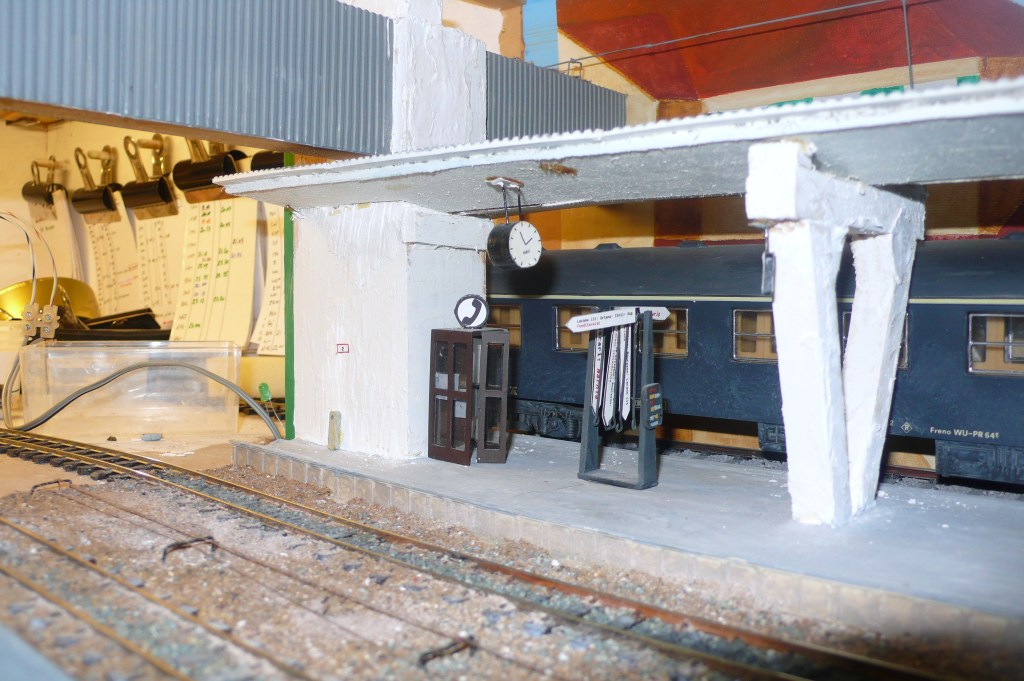
1. The journey starts at Relforka Lacono where a connection is made with the standard gauge Feravojo Thalnia, the national railways.
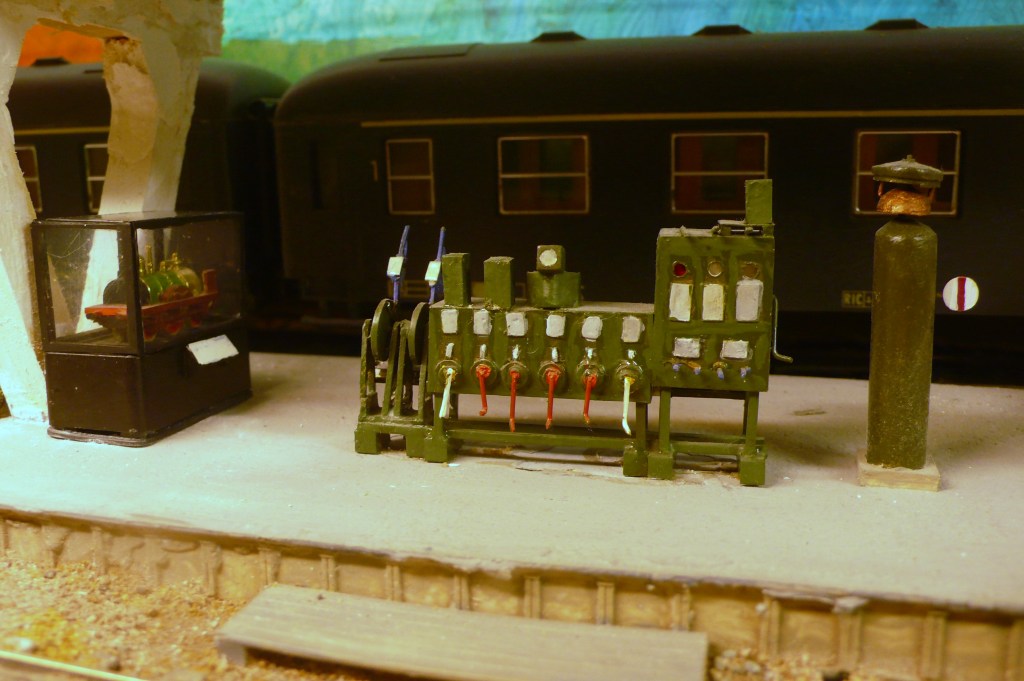
2. The AFK signalling equipment is on the platform in full view of the passengers, as was common continental practice. The model in the display cabinet is L’Exjuko, The Eagle, the first loco to run in Thalnia.
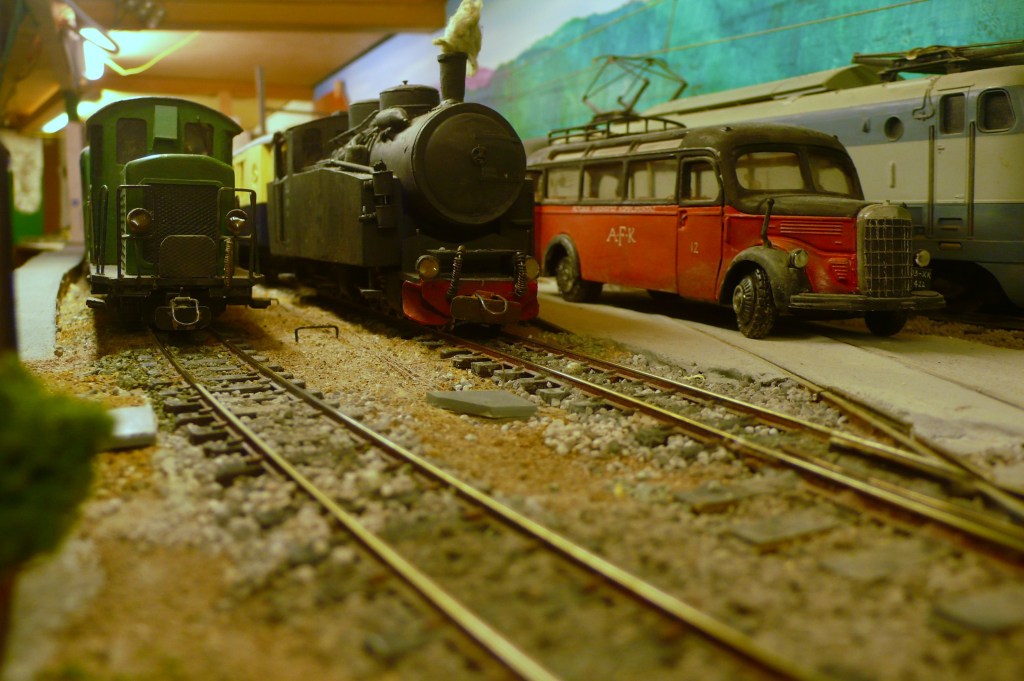
3. The express, behind the 2-6-6-0T mallet, waits for the off. It will run the whole length of the line. The local train, at the left, will terminate at Urteno, the end of the valley section. The railway bus provides a connection to Eromarbordo, the ancient Roman port.
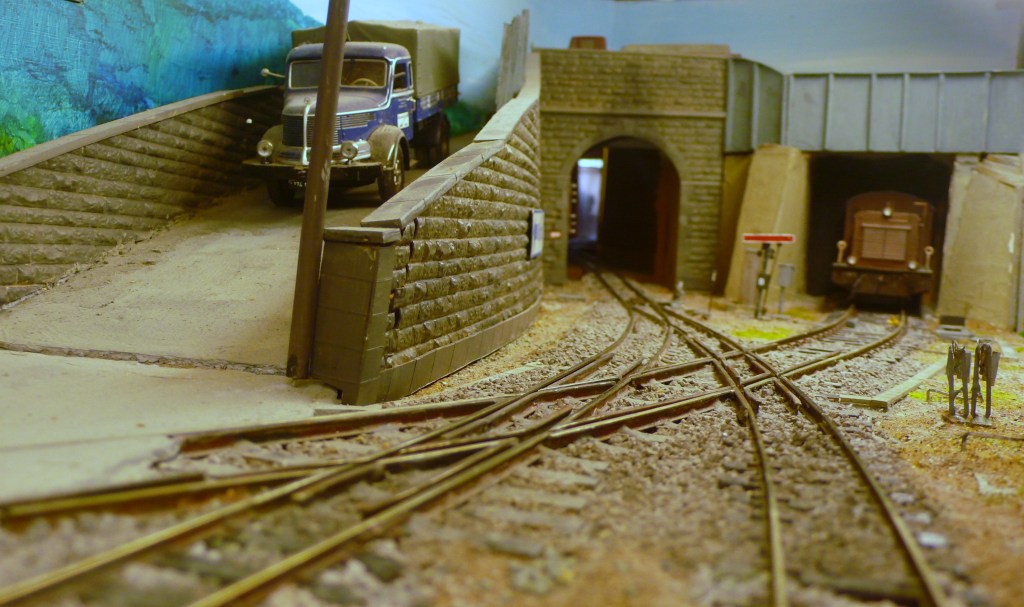
4. The standard gauge shunter, at the right, waits for the signal, visible just above the signal wire balance weights, to clear. The difference between the NG and the SG is obvious. The AFK departure signal stands to the left of the loco.
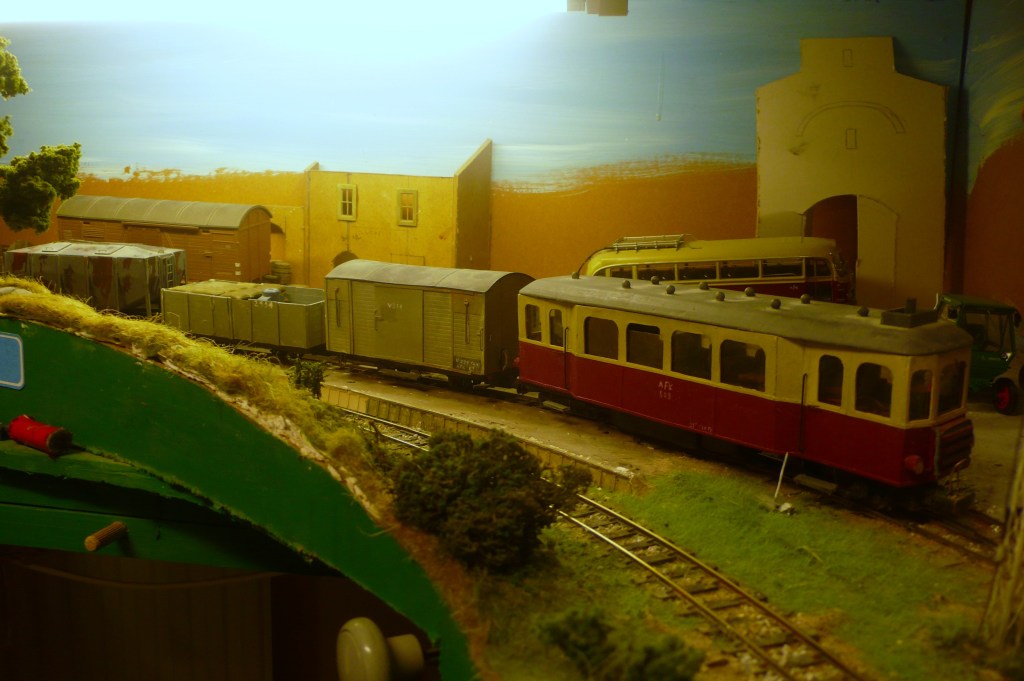
5. The branch railcar fills in as the Breĉo de Glissent shunter. The southern end of the station is incomplete with the town gate simply mocked up.
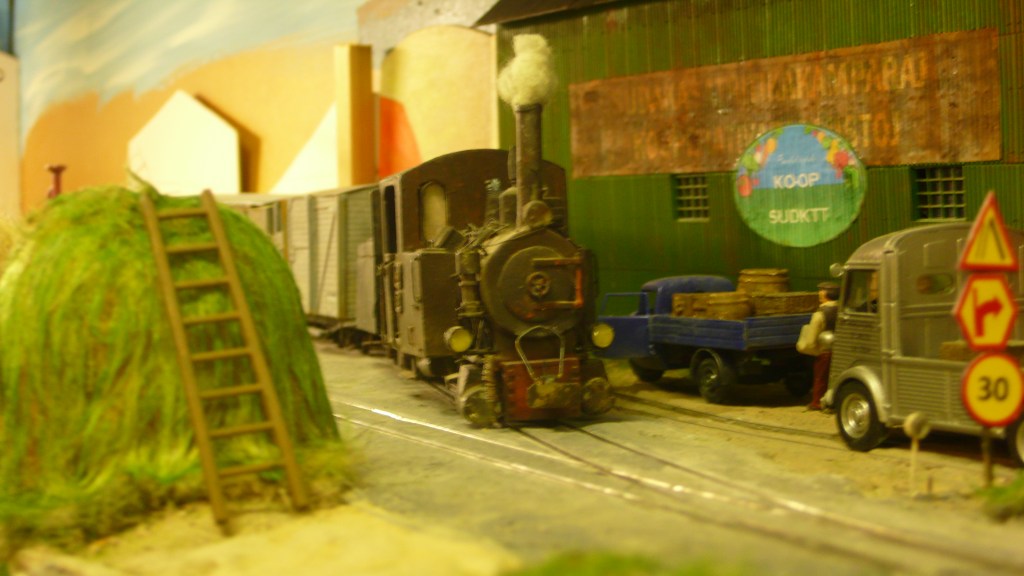
6. The ancient 0-4-0TT shunts outside the Agricultural Co-op at the more complete northern end of the station. It is standing in the middle of the via murranaccia, the Roman road across the province that today forms the RN424.
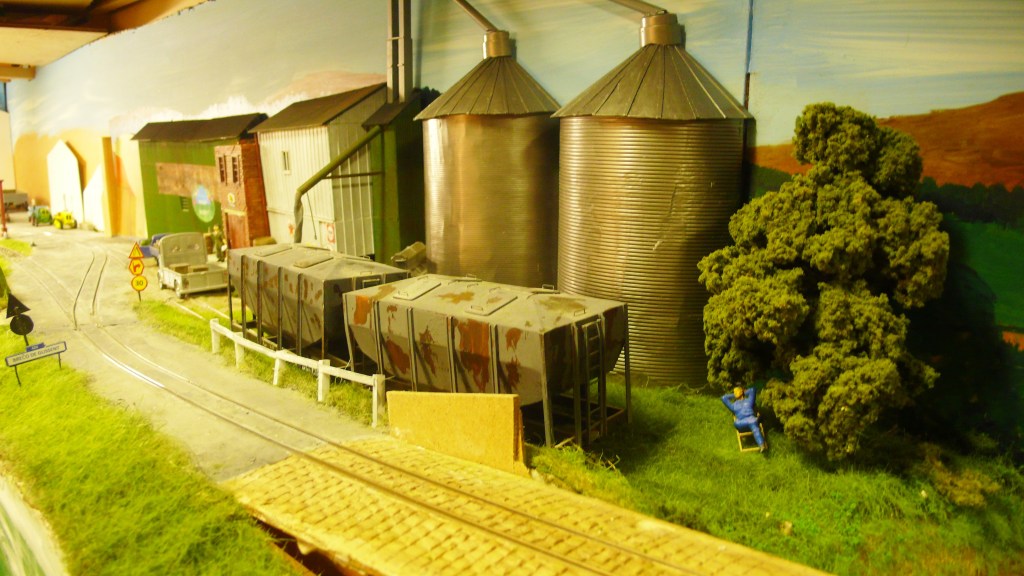
7. A fuller view of the Co-op shows how the railway runs down the middle of the main road. The slacker in the deck chair wears “blues” similar to those that I was issued with in a well known local factory.

8. The line crosses the fortified Mediaeval bridge over the Ero. Although the line follows the Ero for much of its route this is the only appearance of the river on the layout. Geographers will note the undercut bank and slip off slope, where the cows are wading, on this meander.
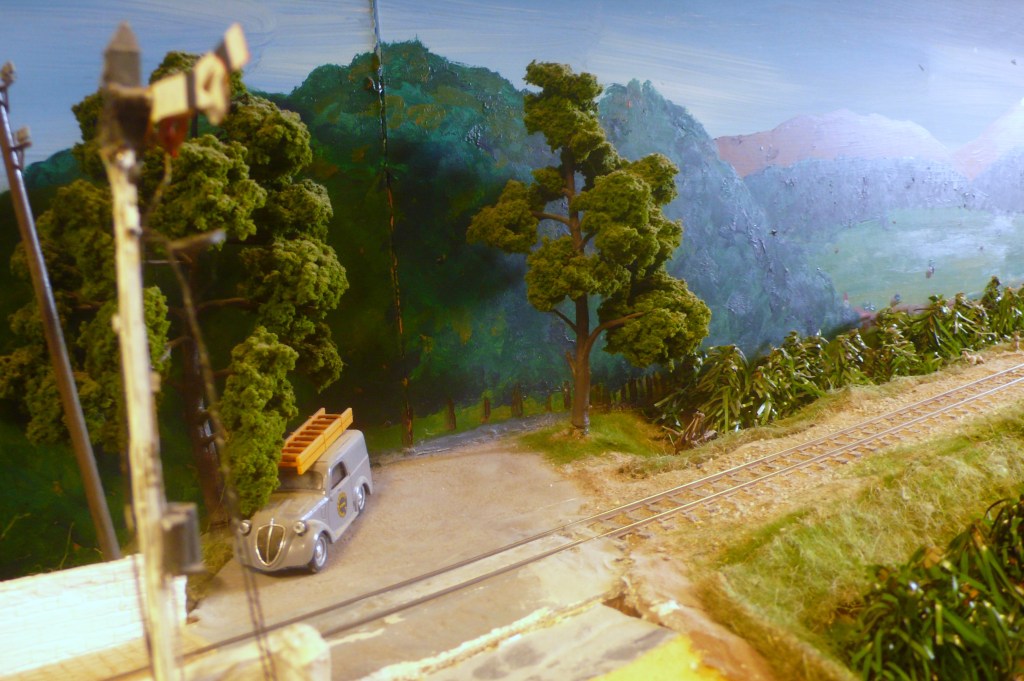
9. The main road turns away from the railway to run across the valley bottom on a tree lined route. The signal is a copy of an Italian prototype.
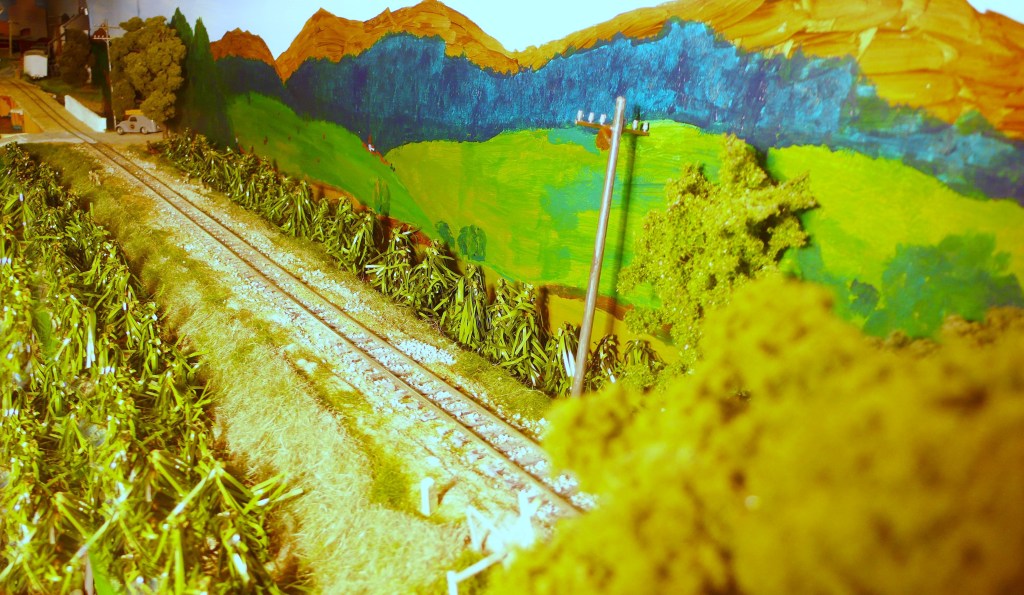
10. The line runs out through the maize fields of the Kasatritikakakmparoj, The Hidden Wheat Fields area of the province beside the Ero.
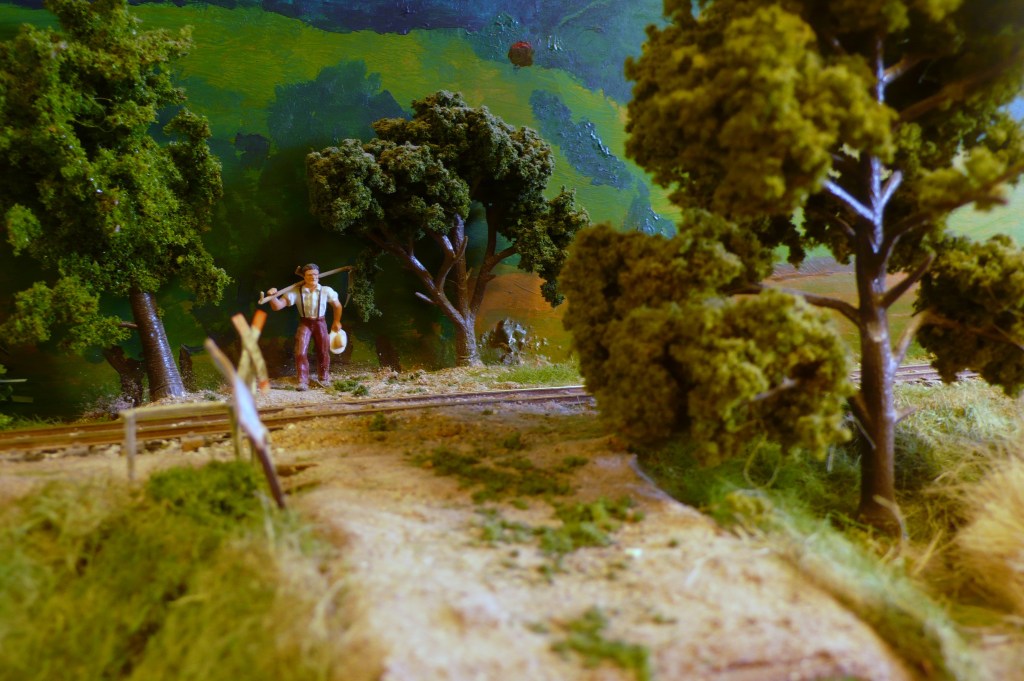
11. An agricultural worker crosses the line at Rohaenna, a conditional halt in middle of nowhere provided for Education Authorities.
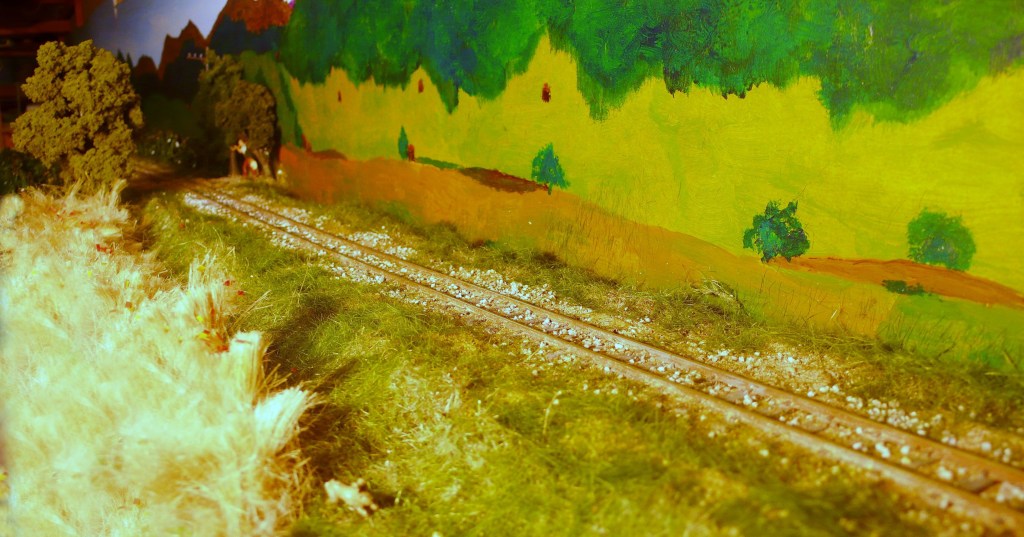
12. This is an area where trains can stretch their legs. The wheat field has been photographically doctored to increase its size. The rabbits are kept under control by the local ganger.
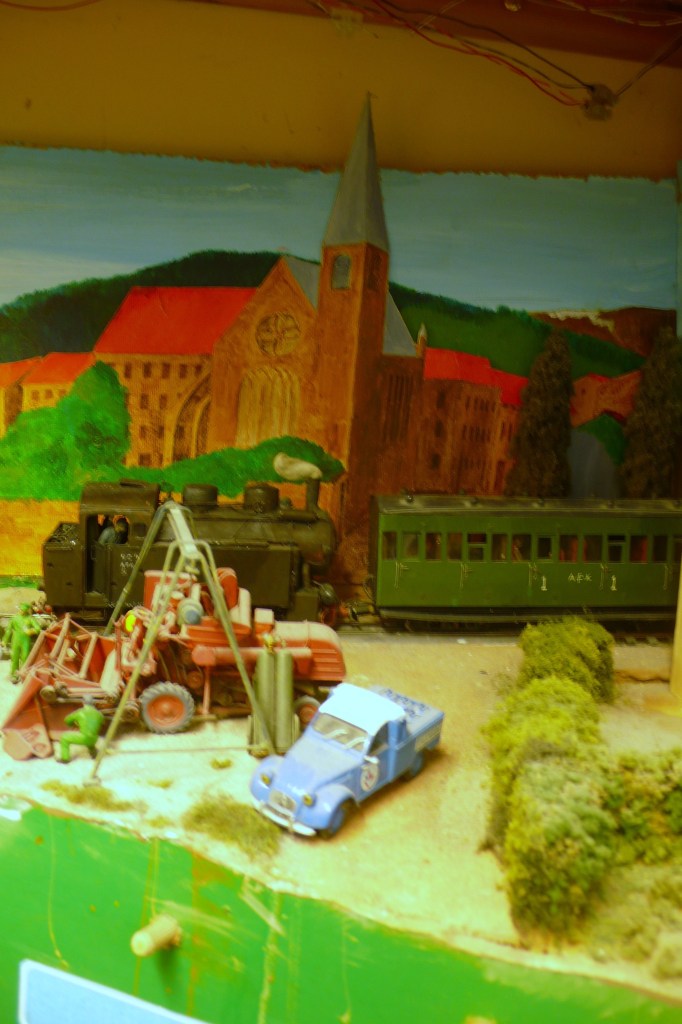
13. A train pulls into the halt at Abateĵo de Narrasson. The Cistercian Abbey drained the swampy lowlands and turned them into agricultural land. It still farms today and the Abbey workshops are repairing a combine harvester.
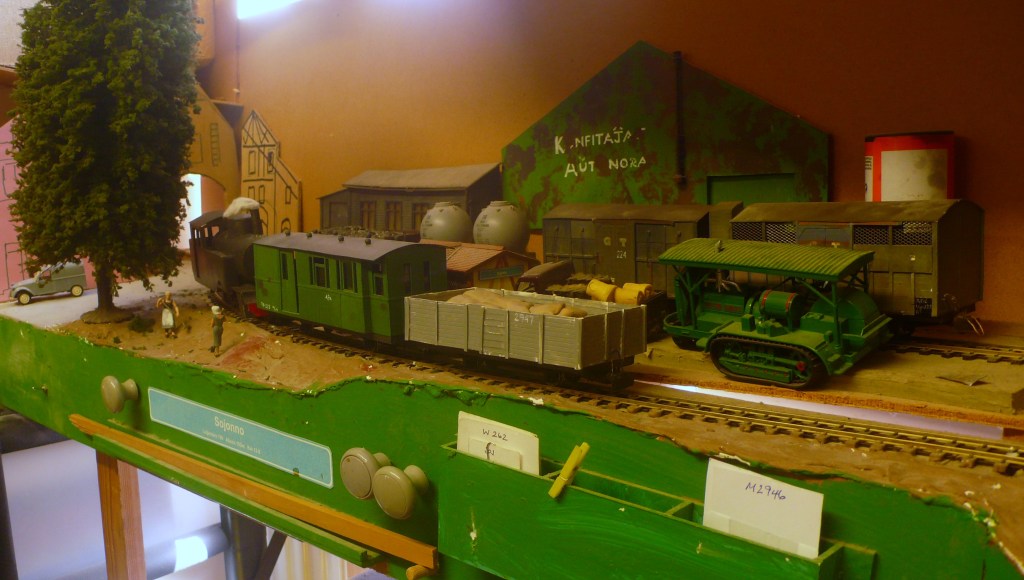
14. Sojonno is the next stop. The local goods has just shunted the jam and pickles factory and is set to leave via the Mediaeval gateway. The pink place holder is La Tranvila virino or Quiet Woman. The peasant women till their plots as the works shunter lumbers around the factory yard.
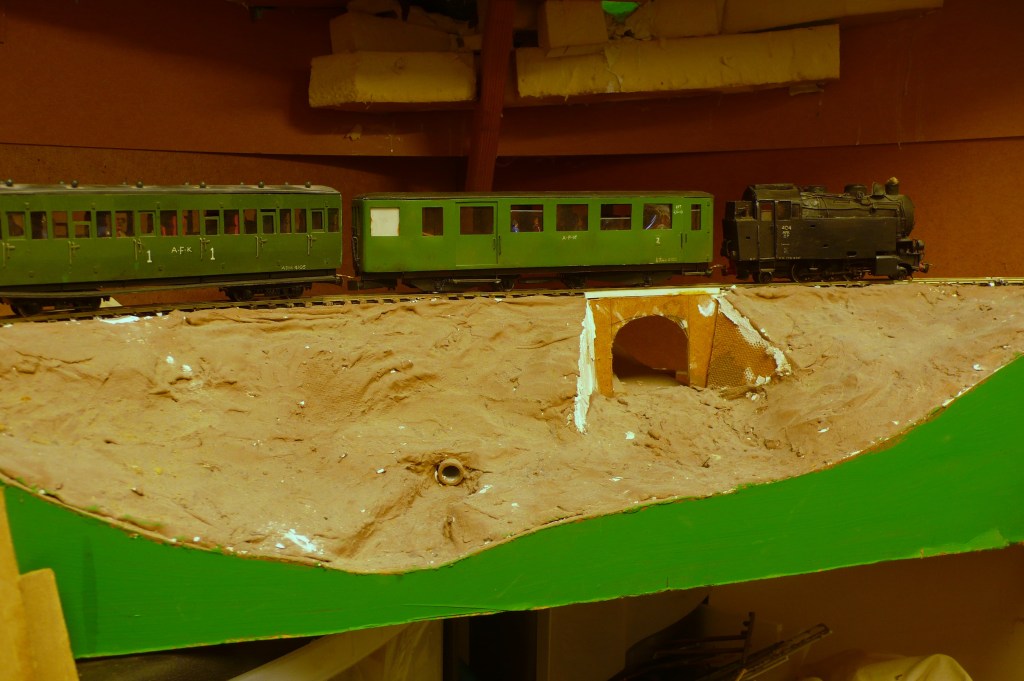
15. The 2-6-2T pulls away from the halt and crosses the cattle arch. This was one of the first scenes to be started yet, ironically, it is incomplete. It might potentially be finished as a rain scene.
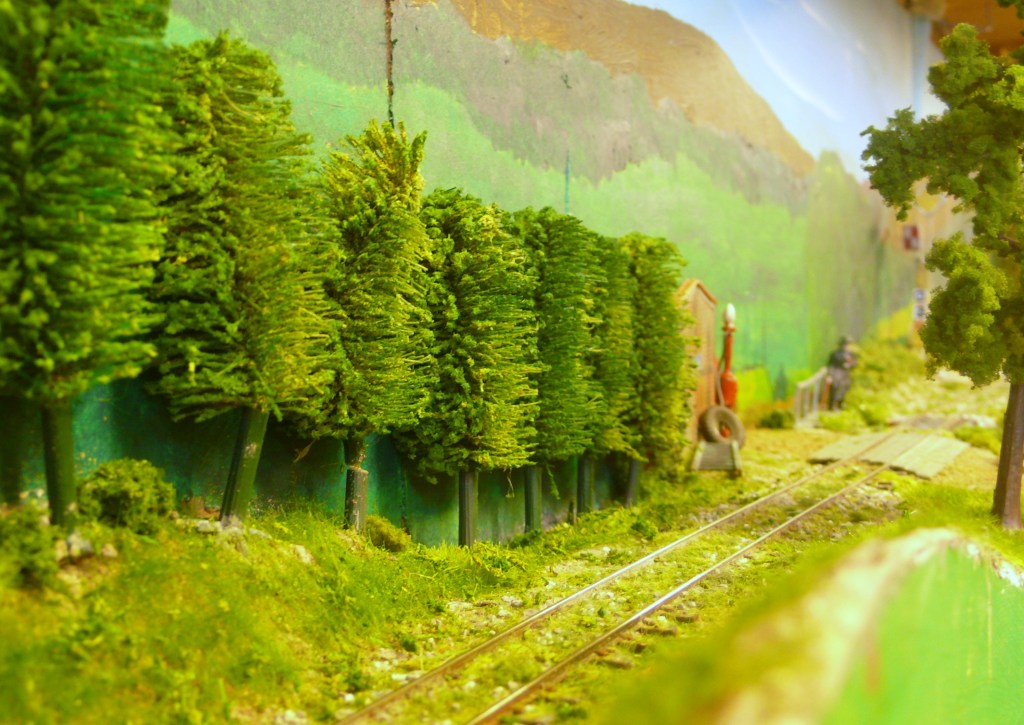
16. The line runs through an orchard. This is a notorious area where wet leaves cause stalls in the Autumn.
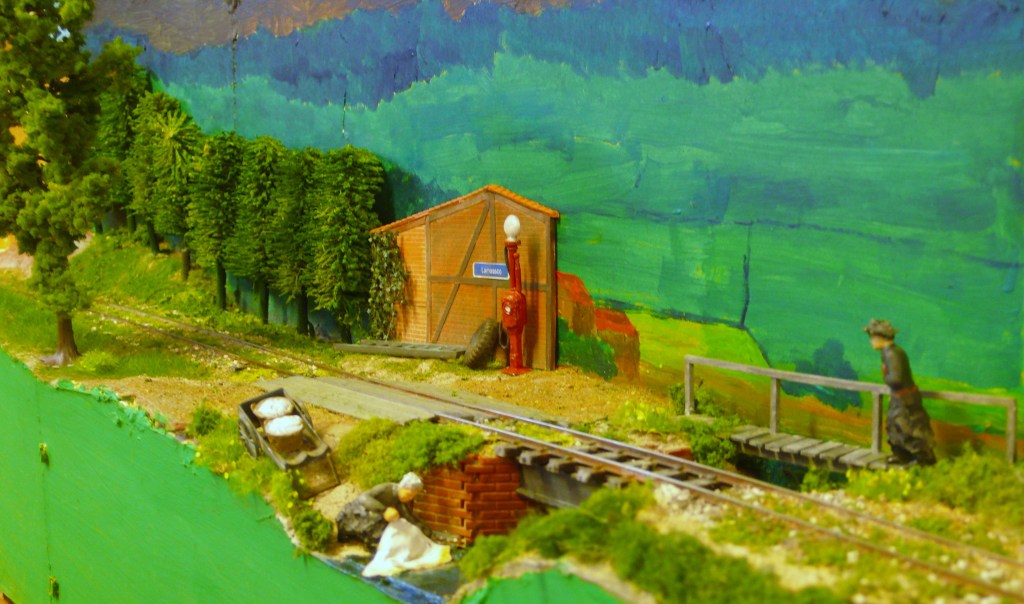
17. Lamassco is another halt provided for the Education Authorities. The curate does his rounds as a peasant woman washes her clothes in the stream. Piped water was a rarity in rural Europe into the post war period.
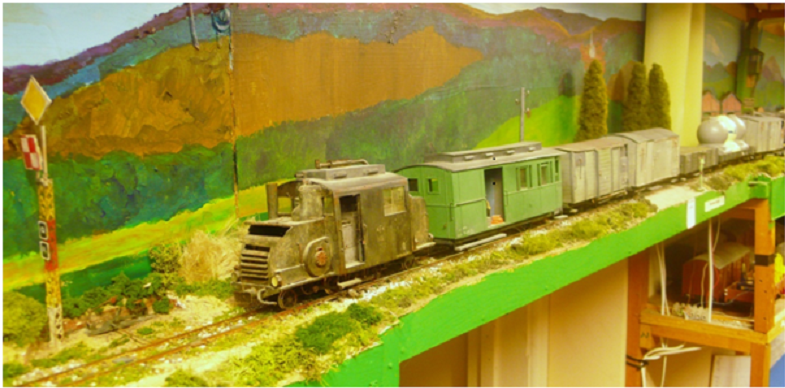
18. A local freight pulls out into the fields as it leaves Boursson. The chequerboard enirasignalo or home signal is visible at the left, along with the distant.
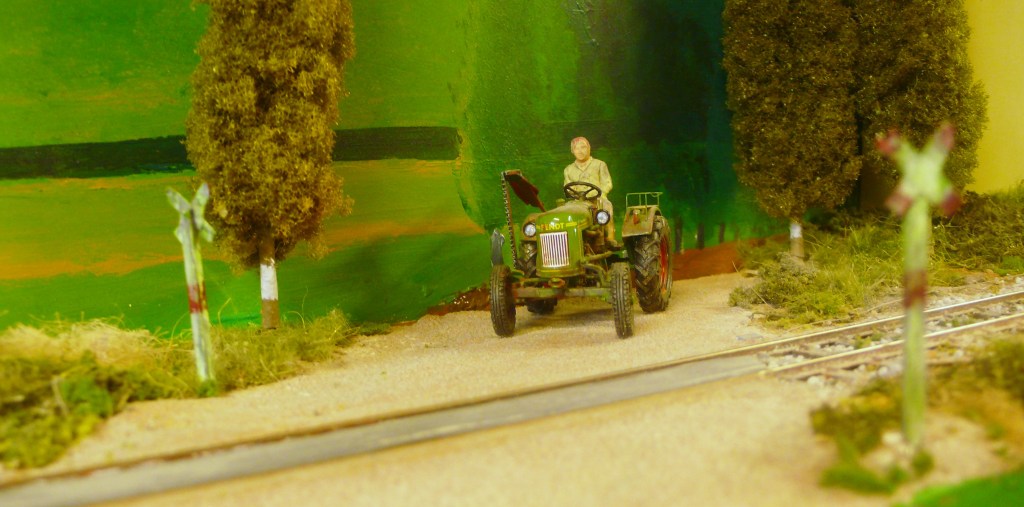
19. The quiet back road effectively ends the traverse through the fields.
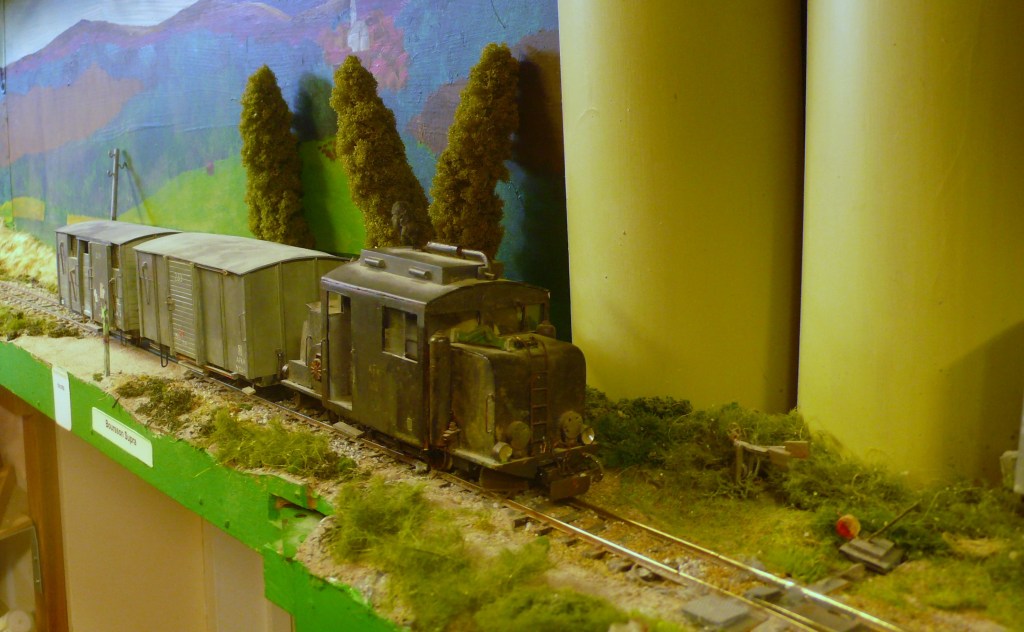
20. The southern end of Boursson station is dominated by the grain silos.
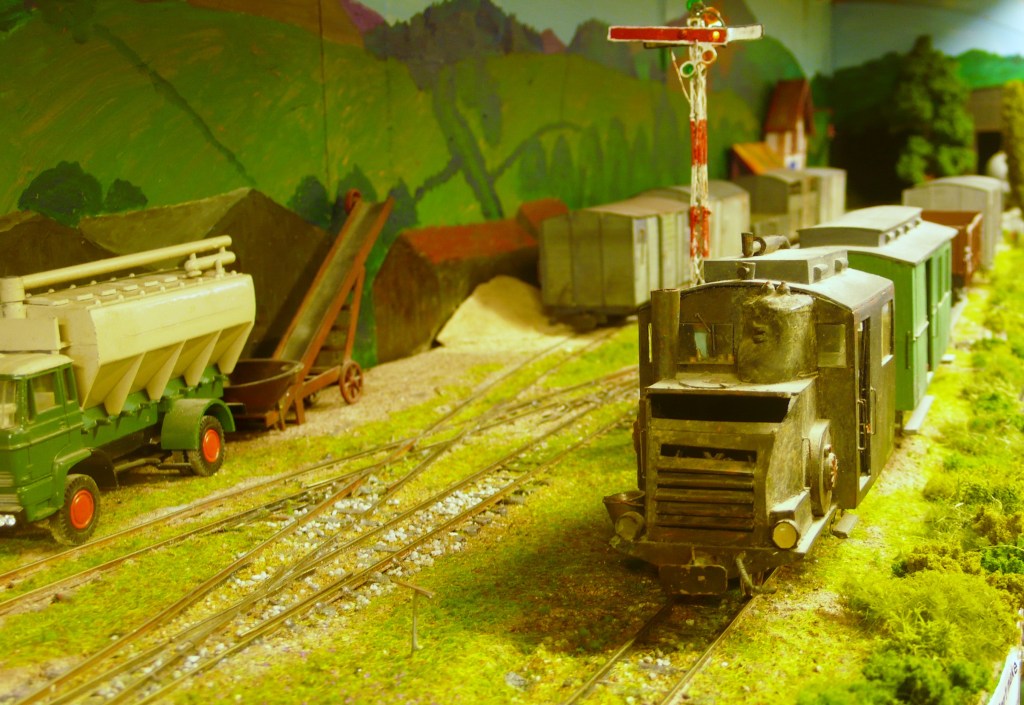
21. The layout follows continental practice in that it is a series of parallel loops. The goods shed loop crosses the Co-op siding by a diamond to save space.
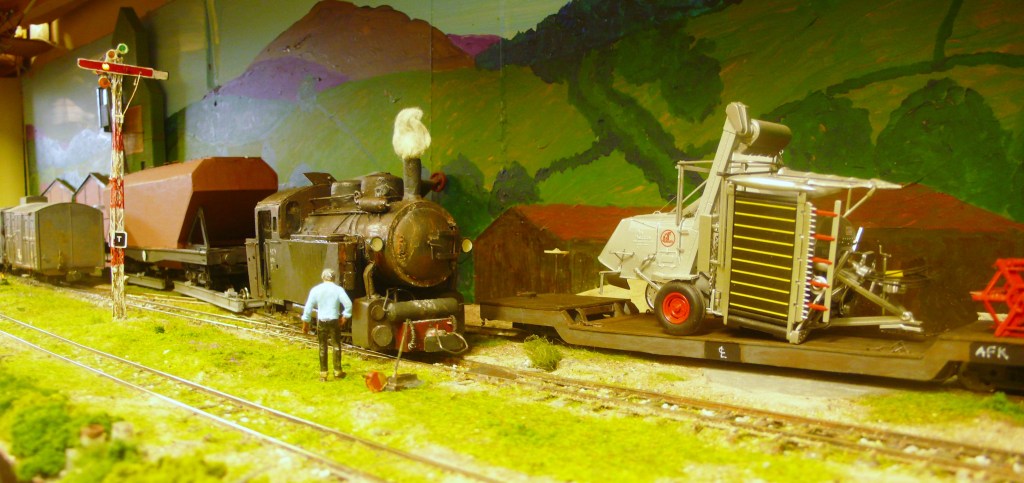
21. The 0-10-0T shunts a SG hopper into the Co-op during the harvest season. The machine on the trolley is a harvester designed to be pulled by a tractor.
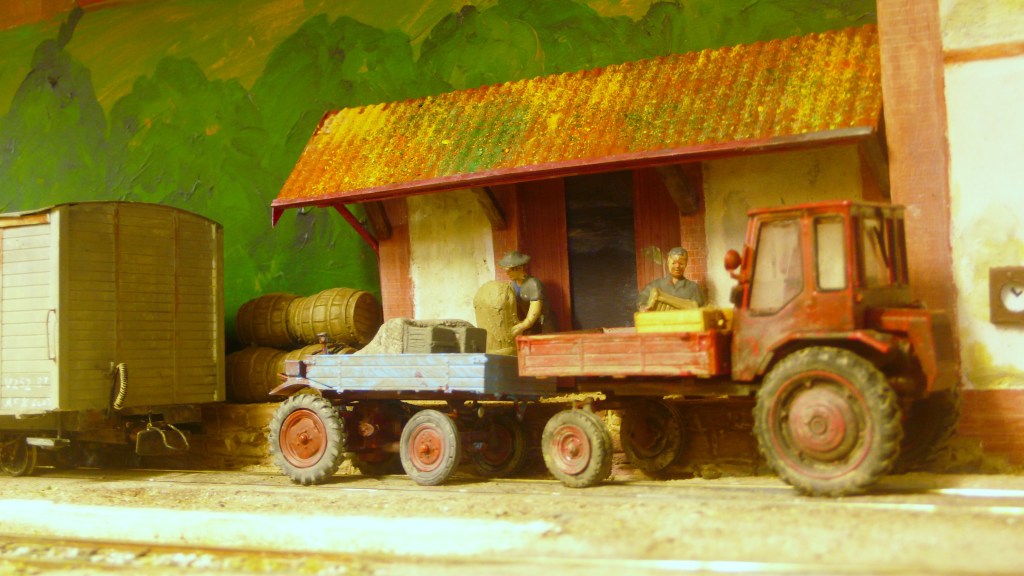
22. A series of motorised contraptions are loaded at the goods shed by the staciaĉefinio, the stationmistress and a peasant woman.
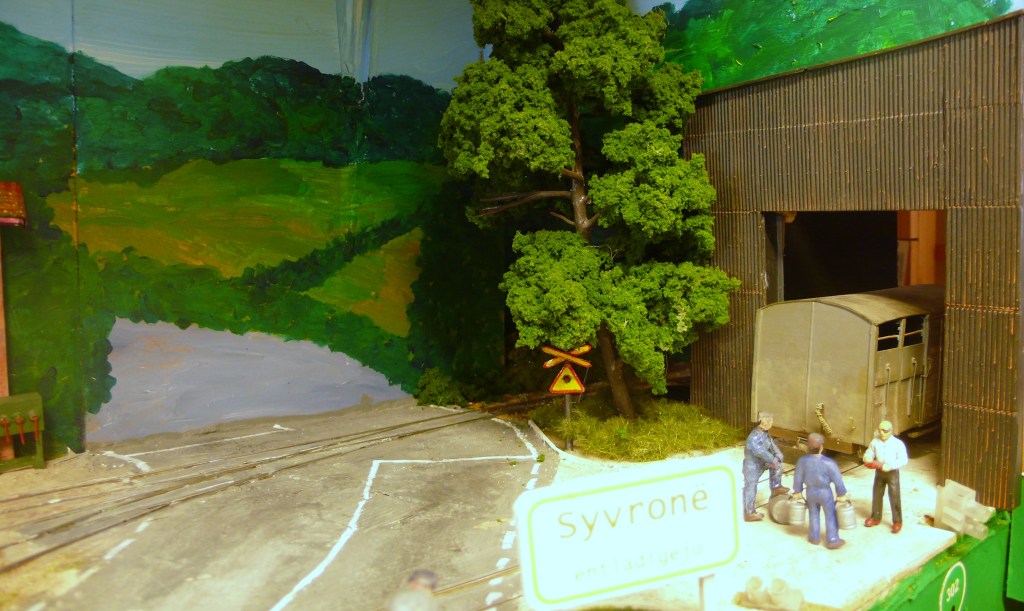
23. The railway crosses the RN 424 to pass behind the Syvrone cannery.
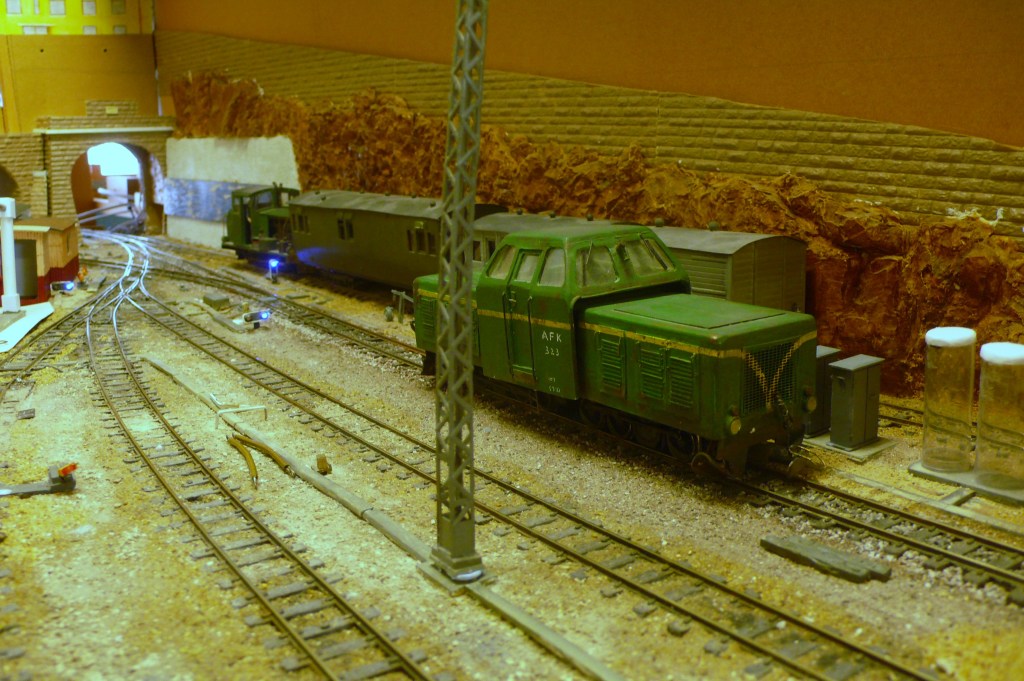
24. The railway enters Lacono by a tunnel beneath the upper part of the town. Lacono is built on the site of Laccundum, the Roman town. In 1895 it replaced Fenditavalat as the provincial capital. This section of the layout is dominated by the railway.
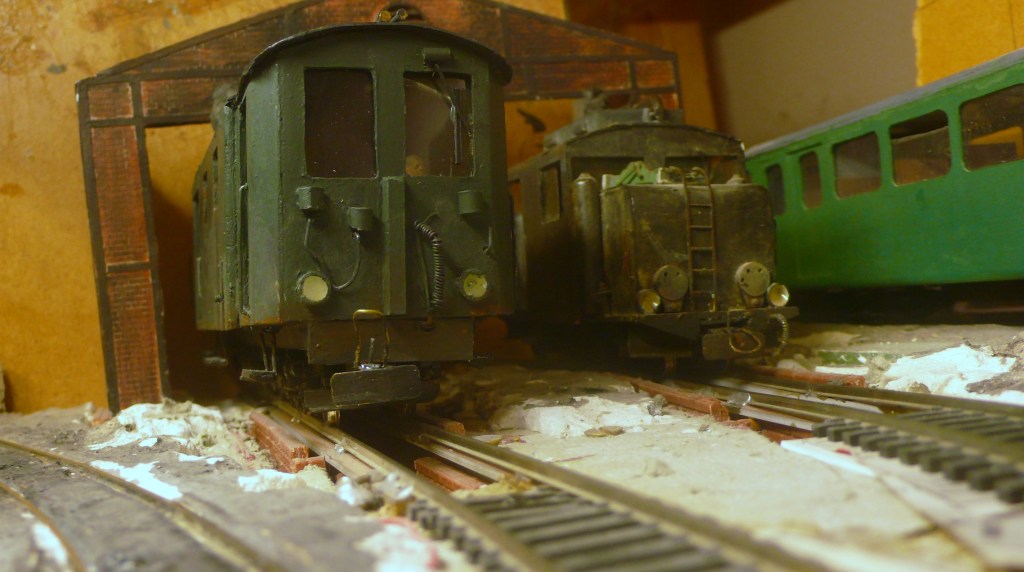
25. The city’s cramped loco depot is found at Aspargo. This was once more complete but it was decided to include pits at a later date.

26. The far road gives access to a fan of carriage sidings. These are not actually modelled and stock is placed onto the track.
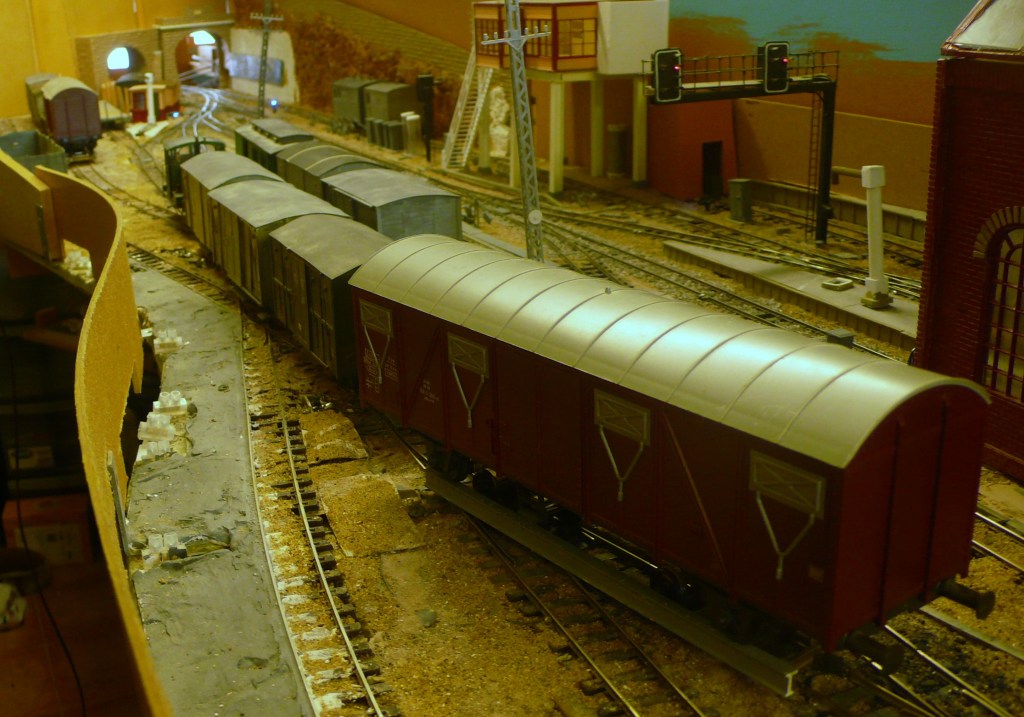
27. Gasafabrikatastrato, or Gas Works Street, provides the goods facilities which include a goods shed, storage roads and marshalling sidings. The layout is sufficiently complex as to require colour light signalling.
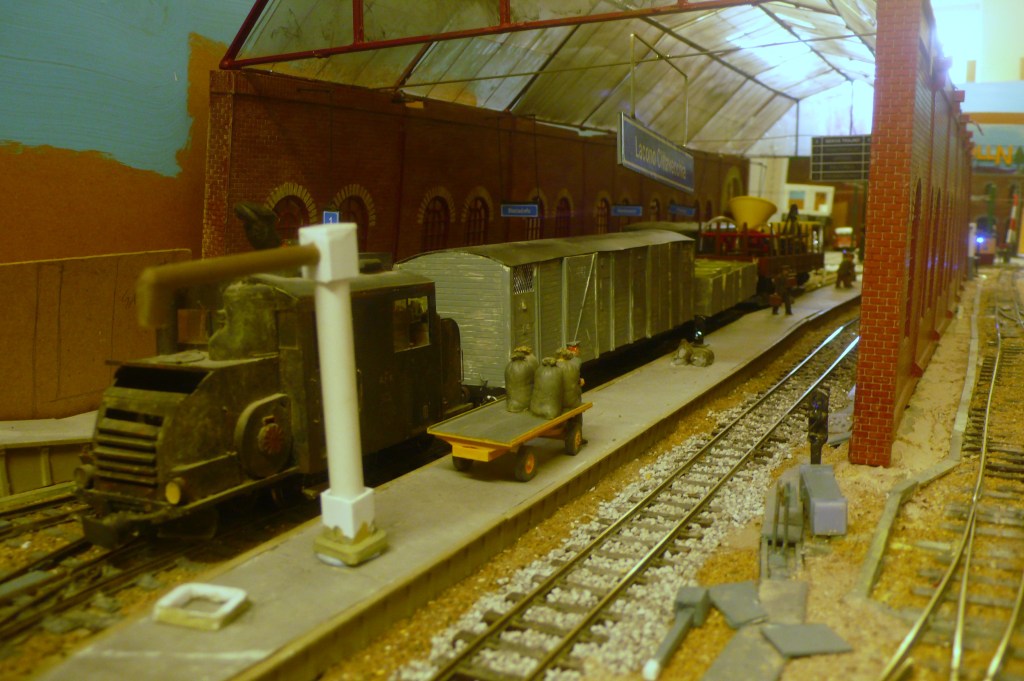
28. The passenger facilities are separated from the goods yard, although goods trains run through the station to access the factories on the northern end.
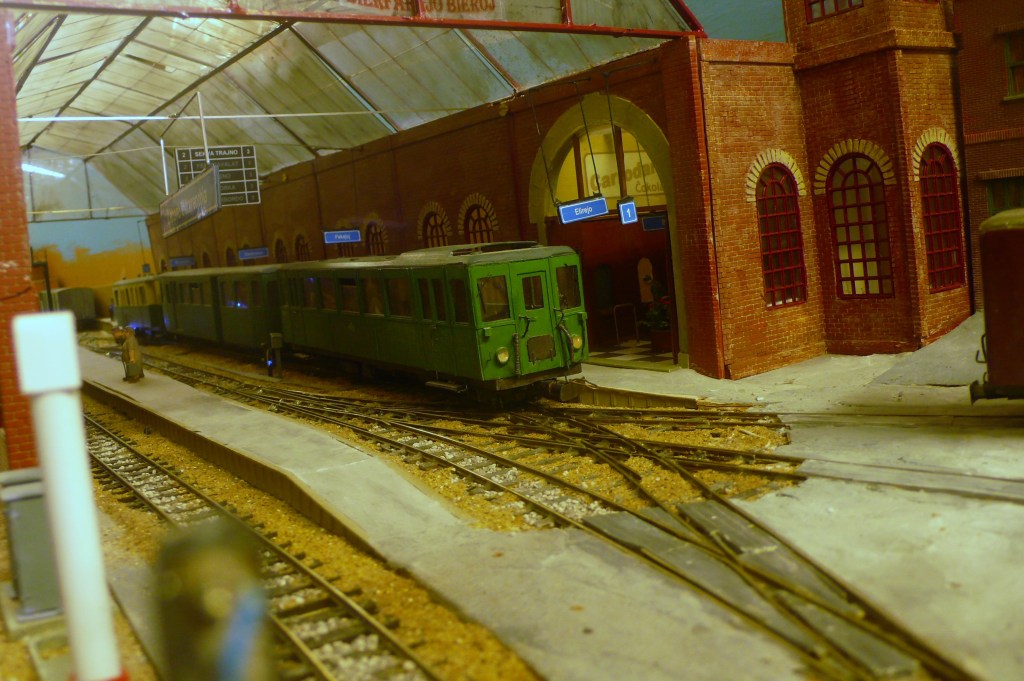
29. Cittavecchia, as the station is known, has three platforms covered by the train shed. The complex pointwork gives access to a chocolate factory and an industrial estate.
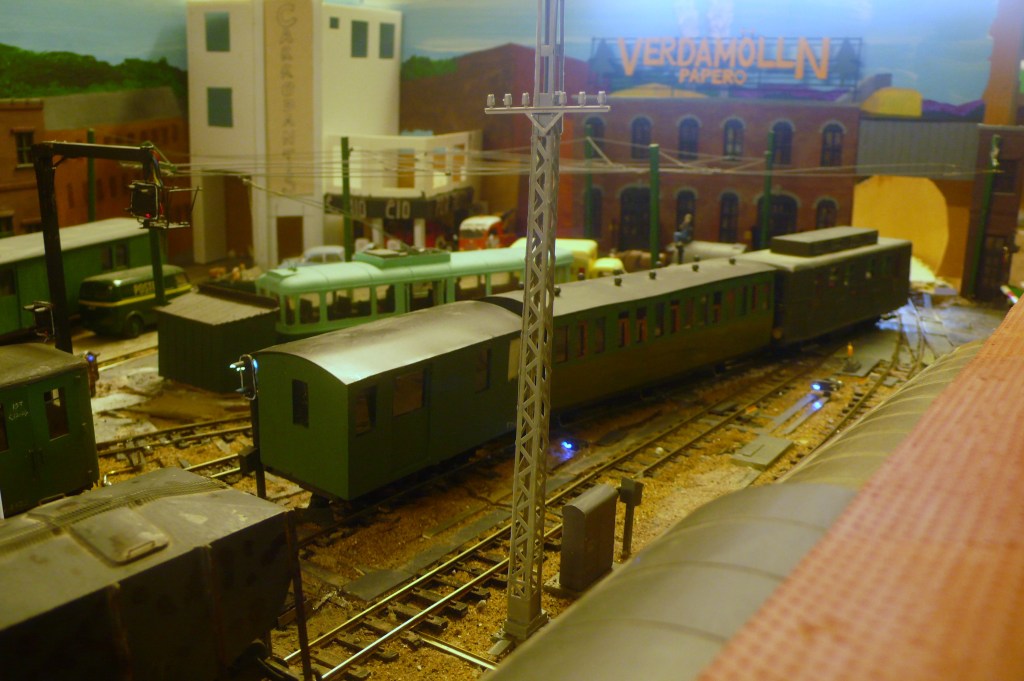
30. A train leaves the northern end of the station. Various industrial buildings can be seen as well as the trolleybus terminus.

31. As the line heads towards the mountains the scenery becomes more rugged. This passenger train is standing at Ghealdaban halt, although part of it is on akvalando viaduct, a pale imitation of Landwasser on the Rhaetian.
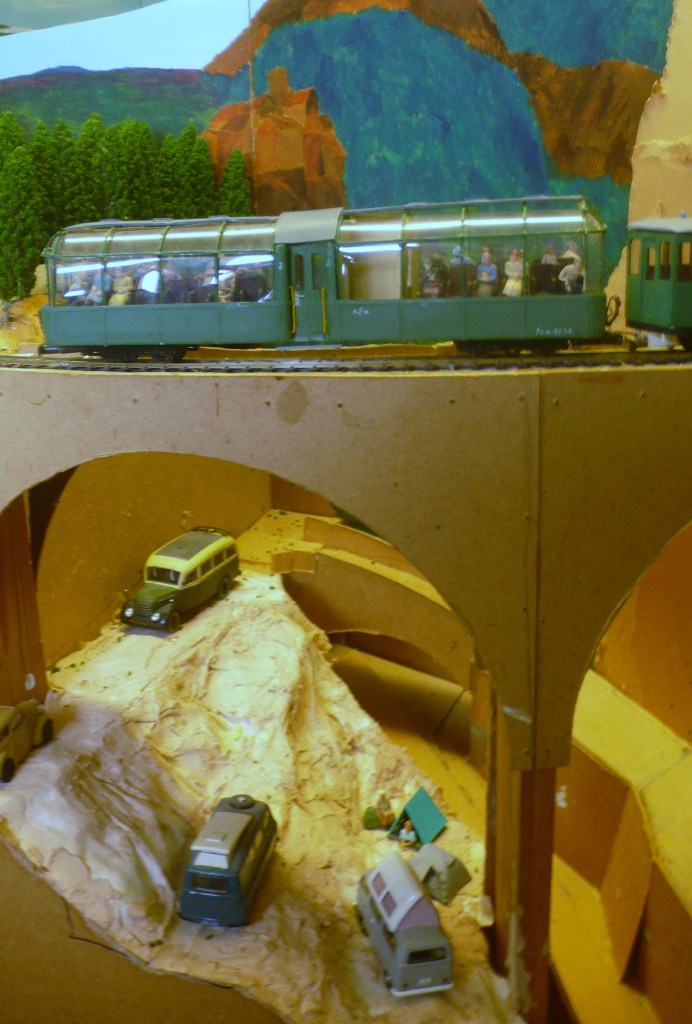
32. The viaduct crosses the Caramassco Gorge with Ghealdaban village standing sentinel in the background. The scenery is sufficiently impressive that the AFK runs an observation carriage during the summer months.
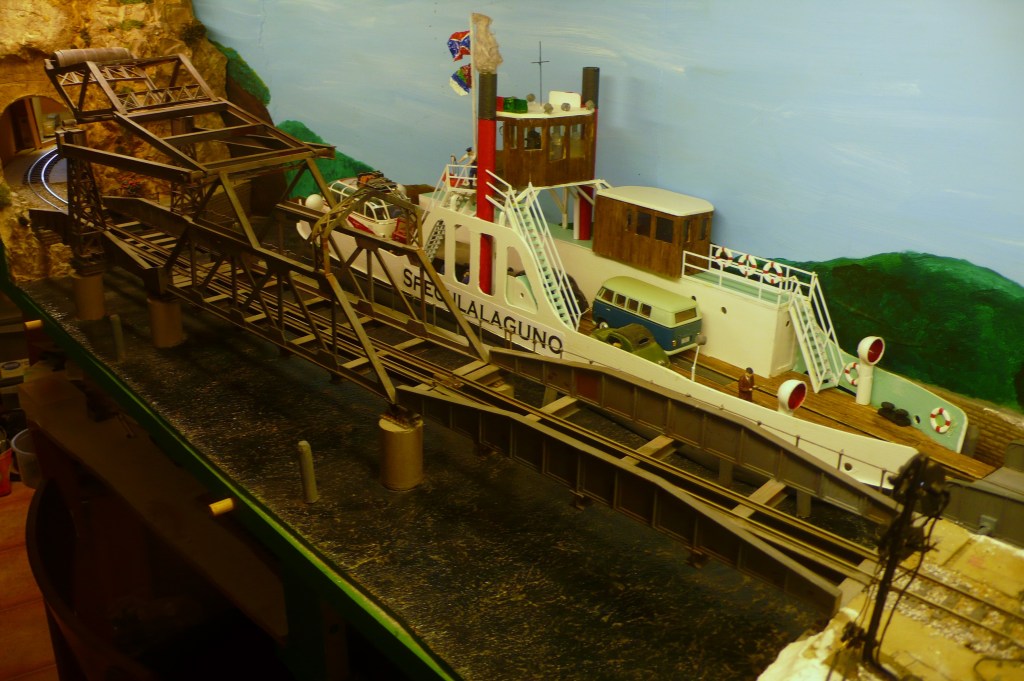
33. Trains enter Urteno via the bascule bridge which crosses the spegulalaguno, a ribbon lake. The train ferry, which berths beside the bridge, crosses the lake to reach Karamspur where the brewery is an important source of traffic for the railway.
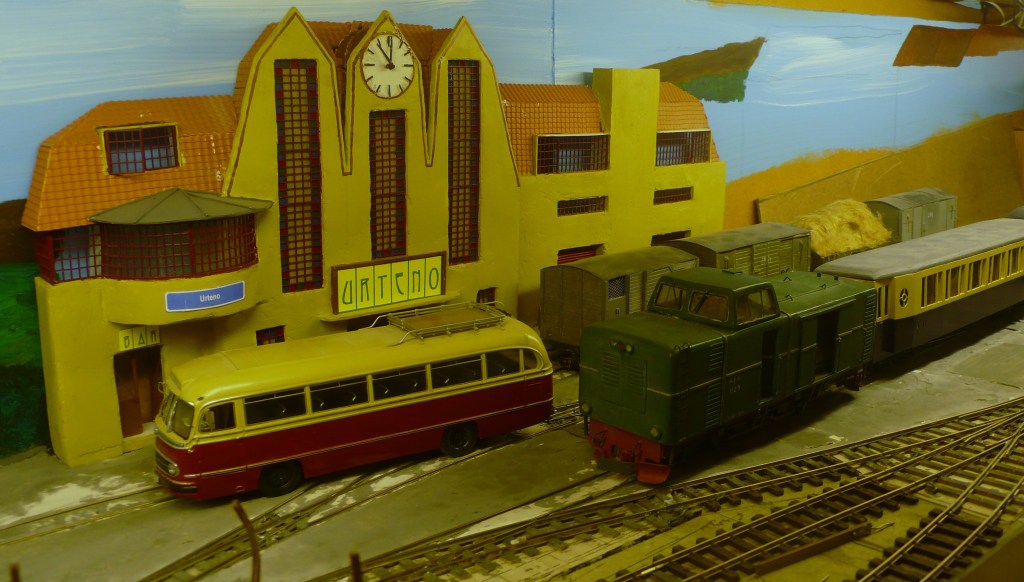
34. Urteno is a spa town and has an impressive Art-Deco station building. The railway bus connects with the train, crosses the lake on the railway ferry, and runs high into the mountains.
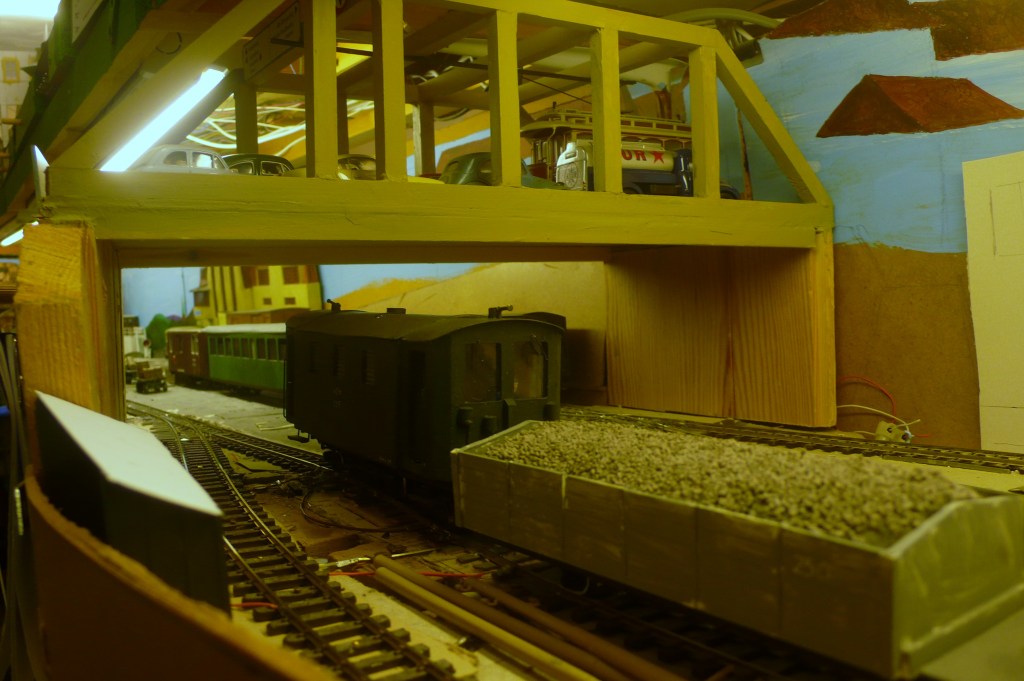
35. The old main road crosses the station but has nowadays been replaced by a by-pass.
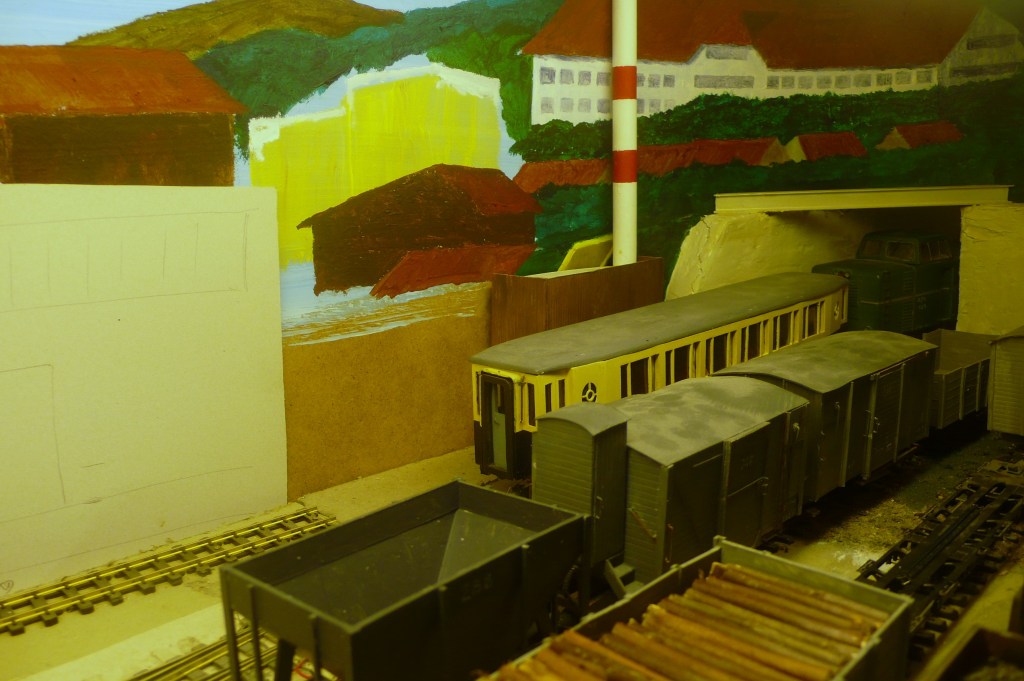
36. The Pullman comes off the express at Urteno and is shunted into a siding. The new bridge for the by-pass is clearly visible. Urteno is at the foot of the vulpafaŭkangulo, a vicious bank that severely taxes locomotives. The “coal sidings” to the right are used to store jettisoned wagons from trains too heavy to climb the hill. They also act as an auxiliary marshalling yard. One of the luxurious spa hotels can be seen in the background.
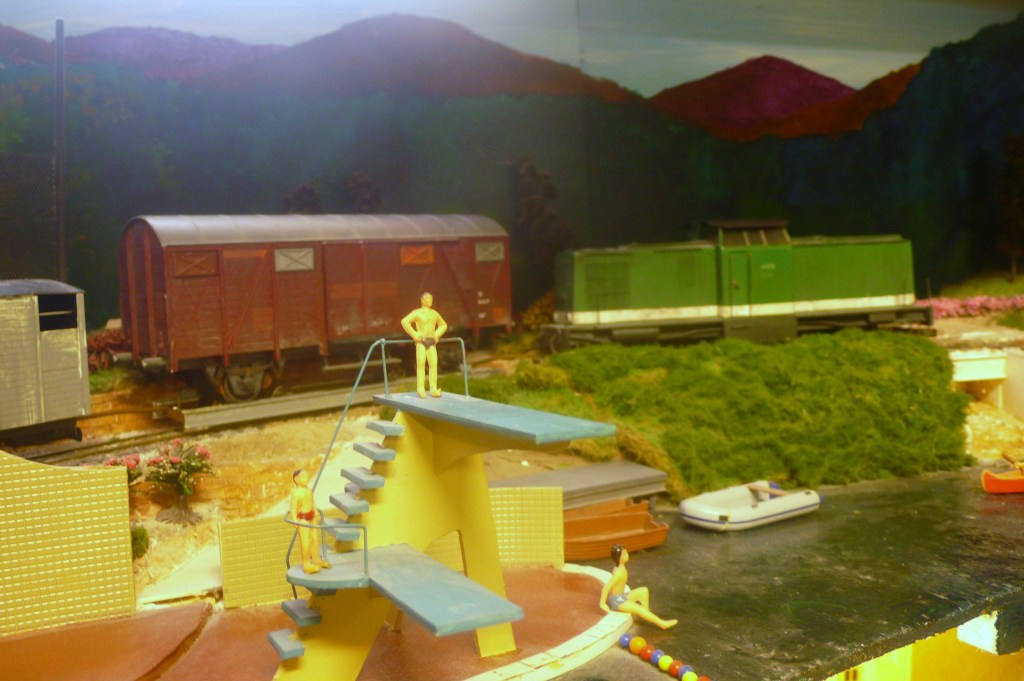
37. The line climbs around the lido at Varden which is effectively an upper suburb of Urteno. The railway is entering the Altingablecaŭtoj or High Reaches, the mountainous area of the province. This is a stronghold of the Marronĝacan language which calls the area Y Magorsoromban.
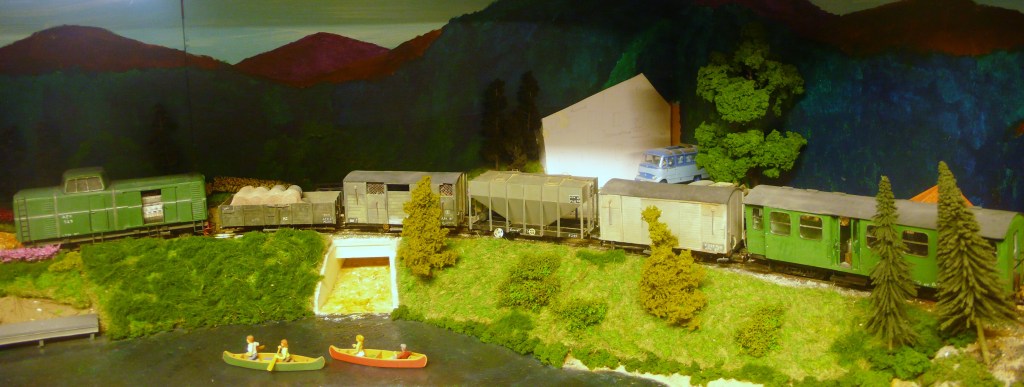
38. Boating is also offered in the summer and there is a golf course. The ski lift stands behind the train.
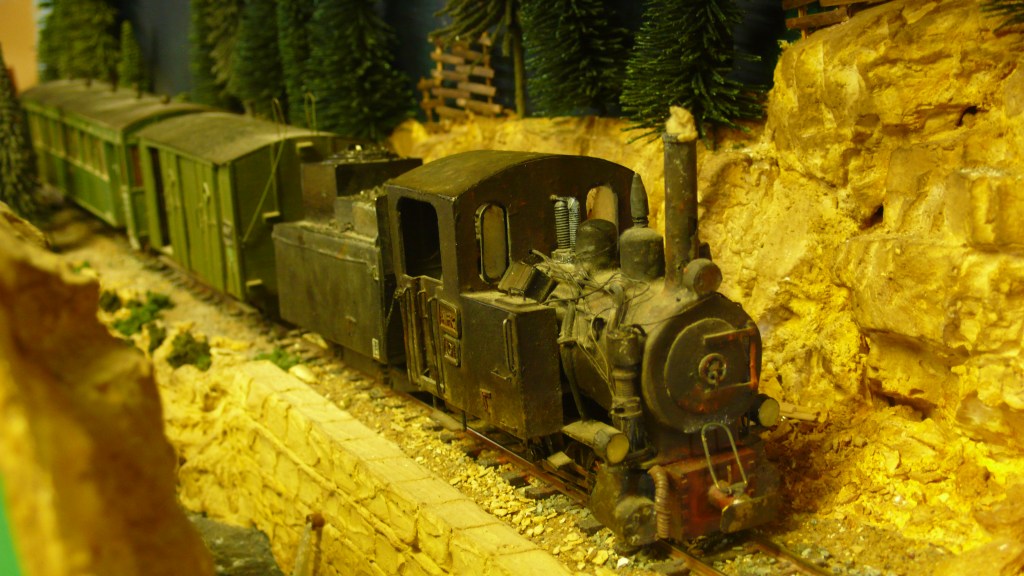
39. The line enters the Aepto Gorge alongside the fast flowing stream.
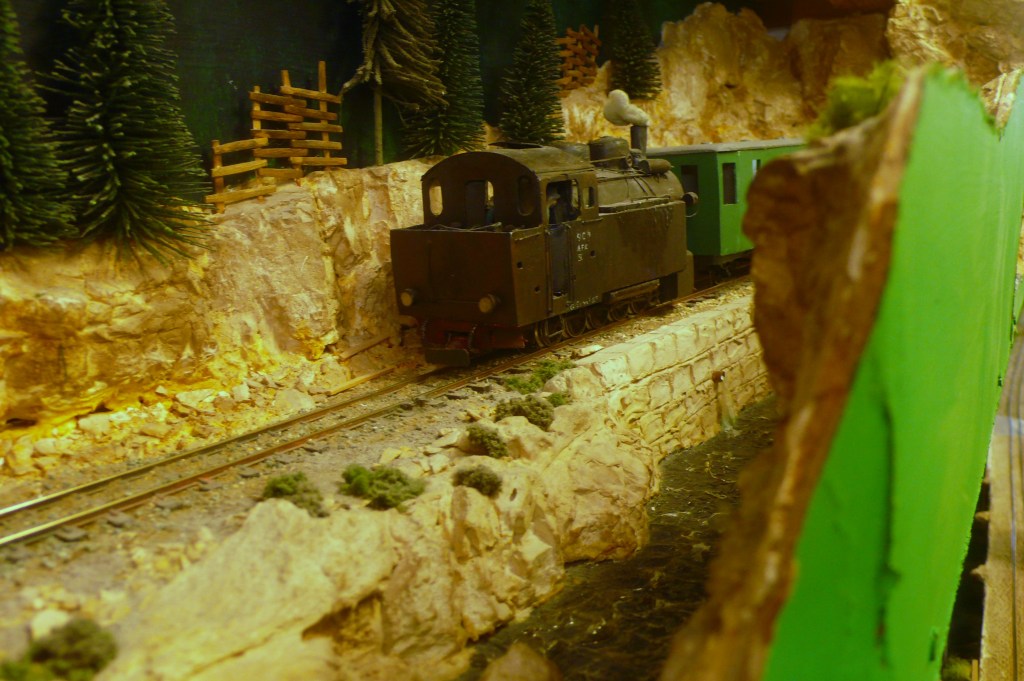
40. Heavy trains have to be banked over this section of line. The fences are there to stop minor rock falls.
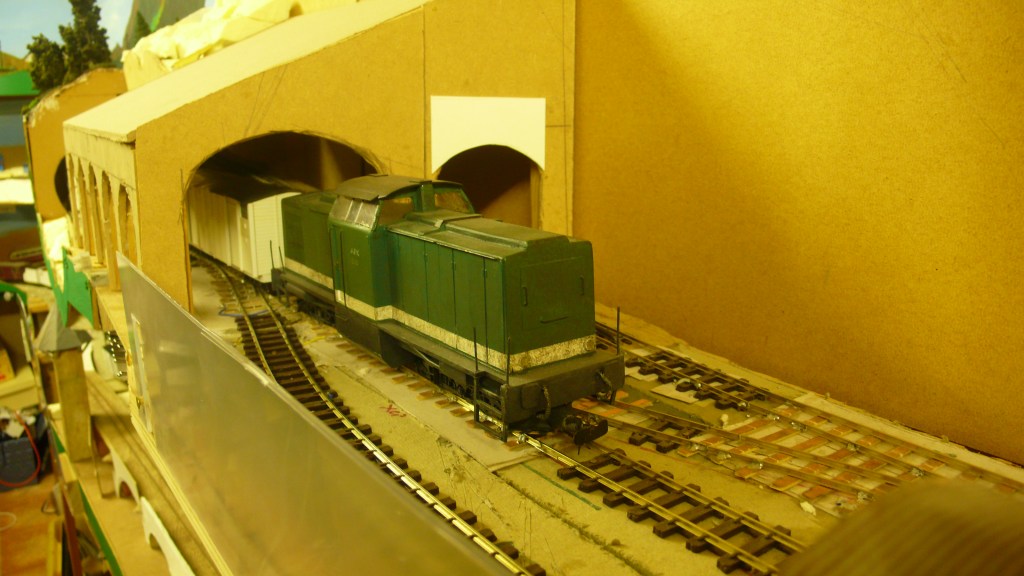
41. Trains enter Ithilarak from an avalanche shed. The station is largely incomplete at the moment. It is also the lower terminus for the rack branch which comes in to the right of the train.
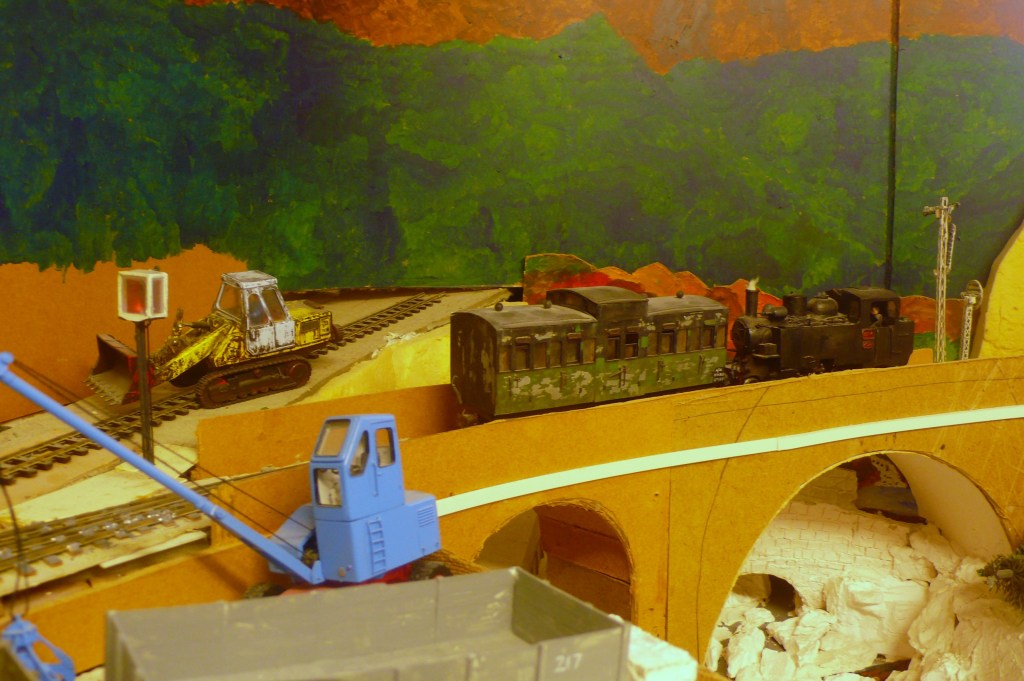
42. The colliery spur, where the digger is standing, is served by a ropeway crossing the hills. The branch train, which is shunting, stands on the viaduct over the upper reaches of the Aepto. The line shortly leaves Altonia to enter Rolnth canton.
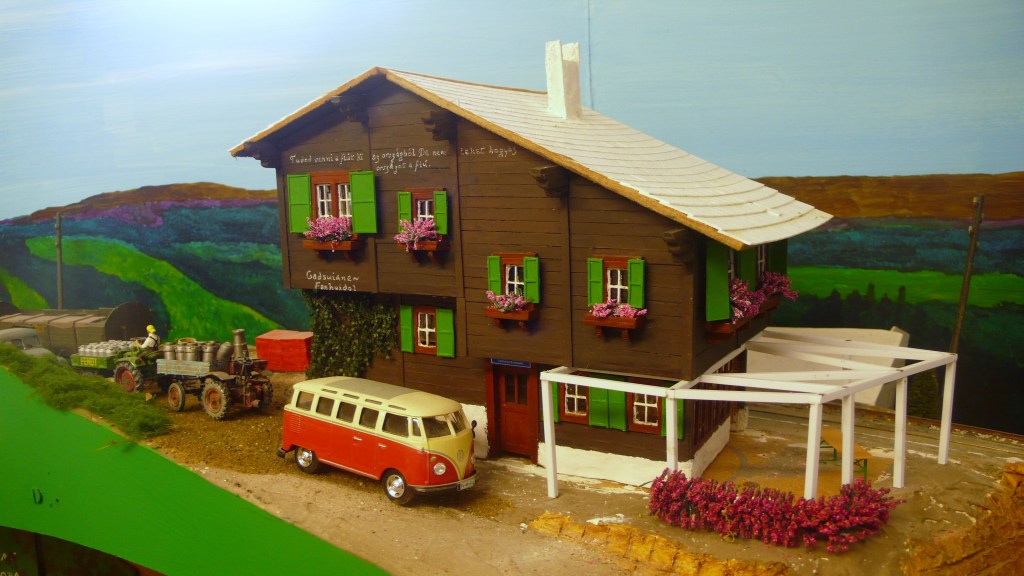
43. The line runs along the alps, the shoulders of the valleys, at high altitude to reach Cadsuiane-Fanhuidol. One village stands in the valley and the other is perched above the railway.
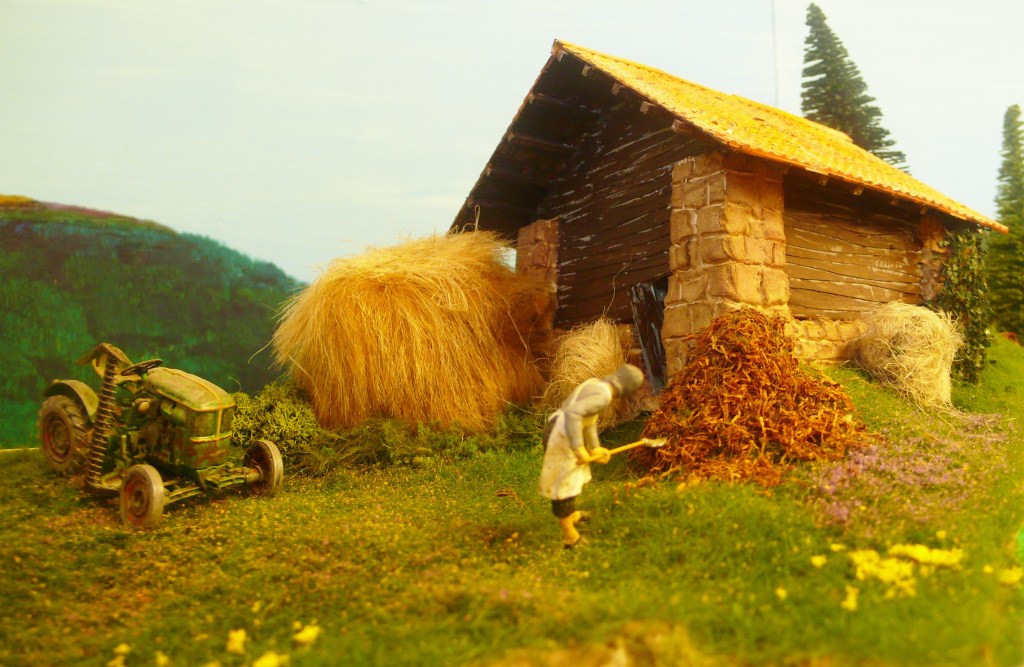
44. Mountain life is hard and the youngsters tend to move away. A peasant woman mucks out a byre. The manure will fertilise the thin mountain soils.
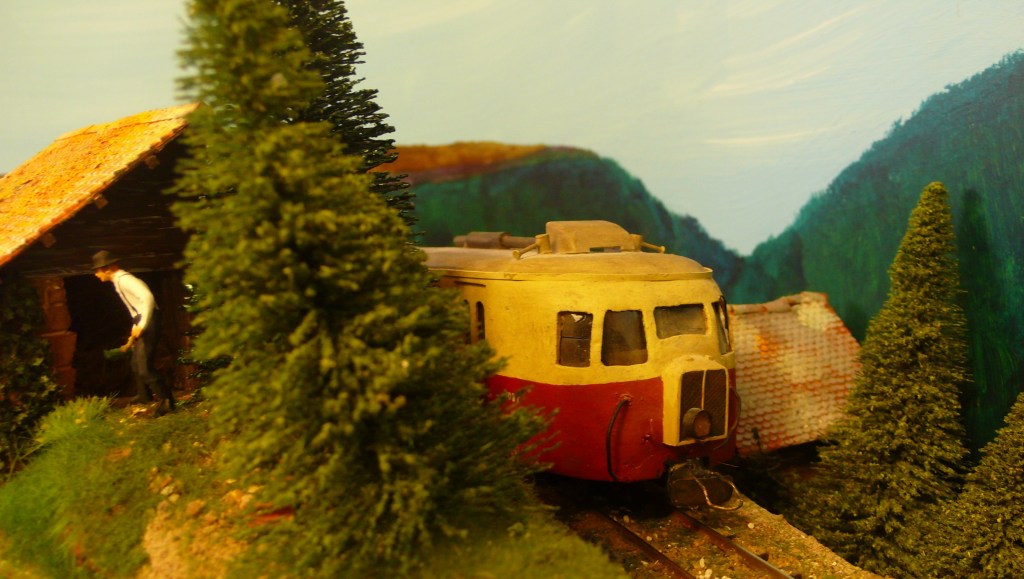
45. The line dodges between barns to turn into the maejoroältyrn, a hanging valley well above the main valley floor.

46. The schools’ railcar crosses the high alpine pastures on its way to the Helcaraxë Pass. The cattle are part of a transhumance farming system and will retreat to the kasatritikakamparoj for the winter. The maejoroältyrn is well known for its very cold microclimate.
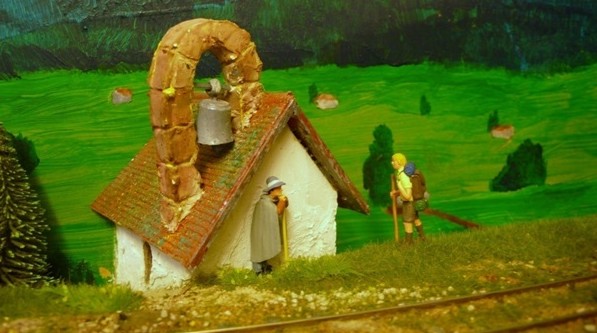
47. Our Lady of the Snows is way station 87 on the via poenitentibus, a long distance pilgrimage footpath crossing the province. Ayleha halt is used by schoolchildren going to Fenditavalat lyceo. Wolves can be a problem here in a cold winter.
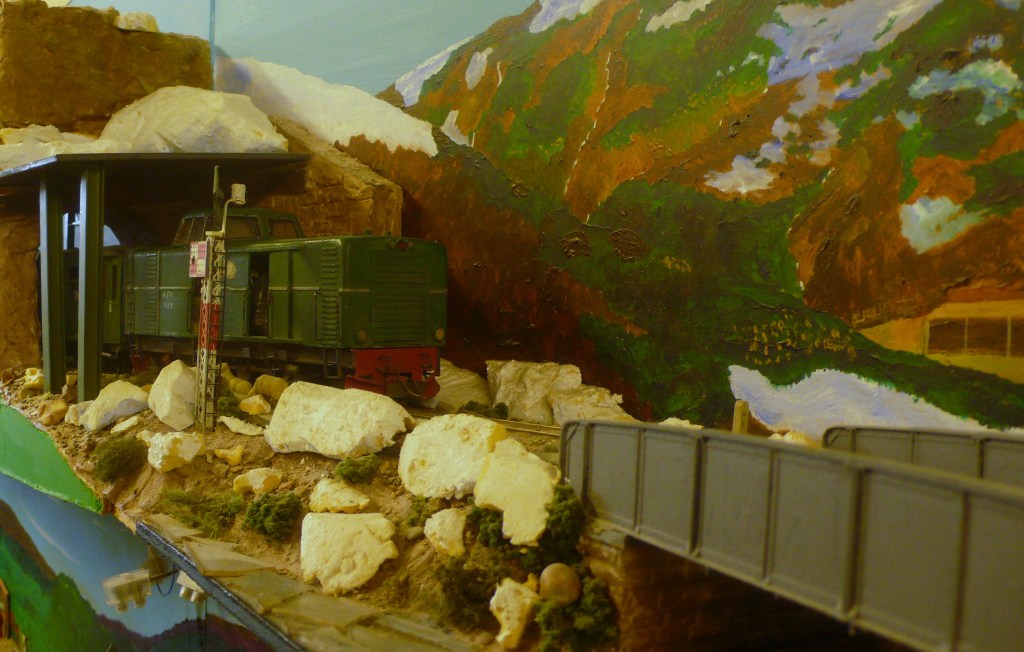
48. The home signal at Ospicio d’Helcaraxë is known as “The Star of Bethlehem” because it marks the end of the long climb from Relforka. The area is modelled in the snow melt period.
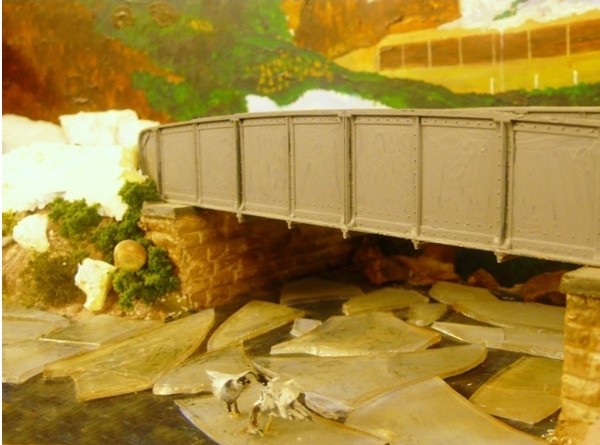
49. Winters are long and hard in the Helcaraxë. The ice is melting in late April as two birds squabble over a fish amongst the ice floes.
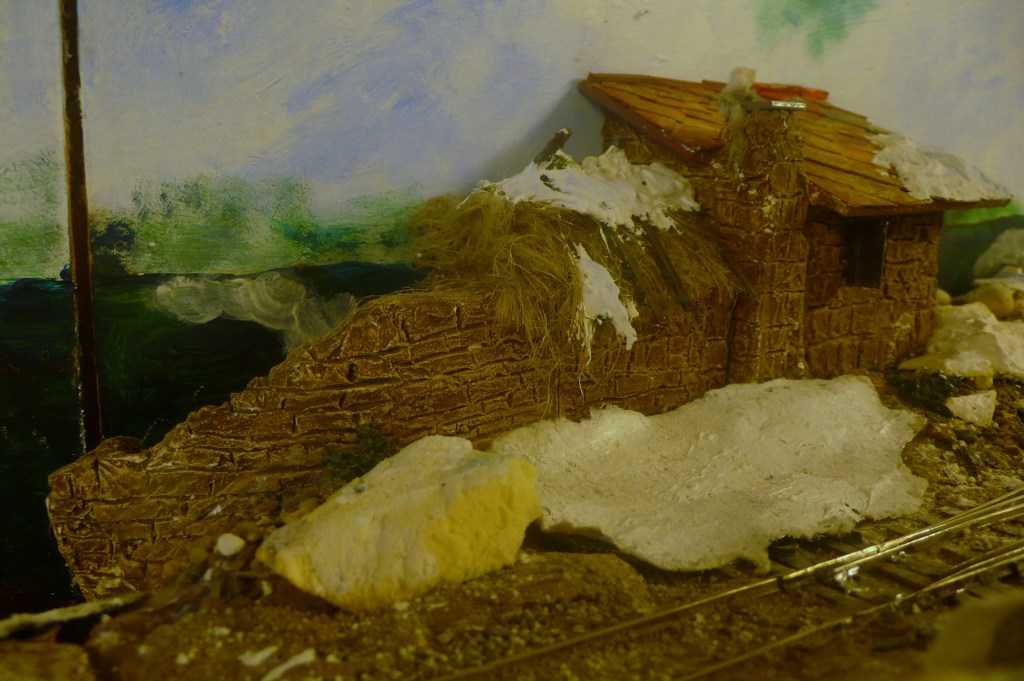
50. The shepherd’s shieling and the adjacent barn have withstood many hard winters. The hut hides the light switches for the room.
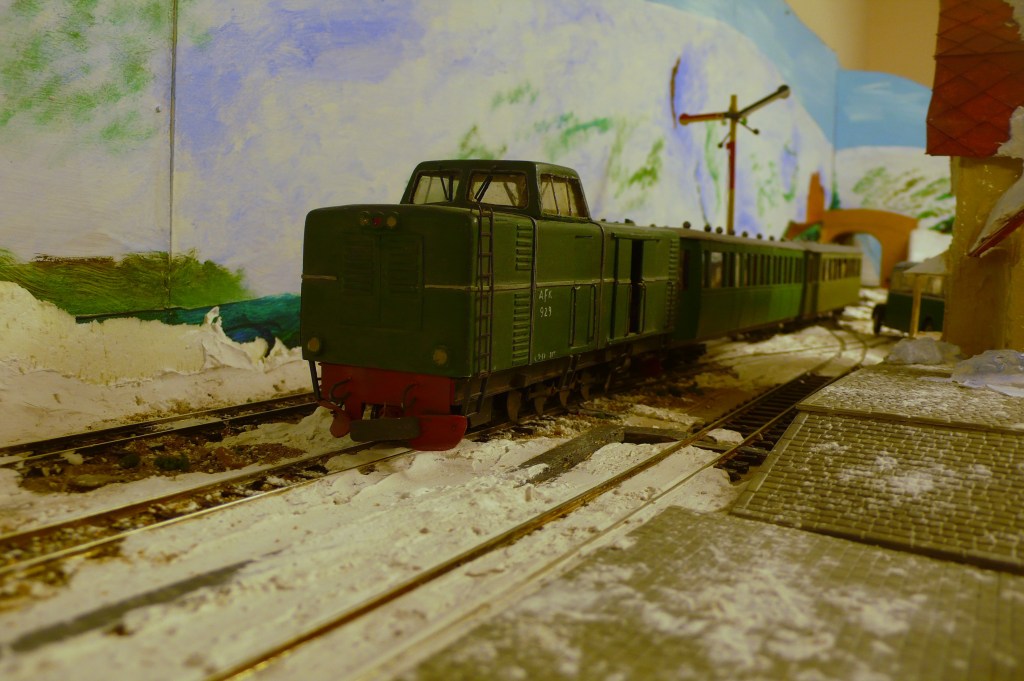
51. The Post Bus from the lower valleys connects with the trains during the summer months. Helcaraxë sees much military traffic for the training grounds in the summer.

52. The line enters the Caladonno enclave of Narnia. As would be expected it is always winter here and the river and lake are frozen. The railway has crossed the watershed and entered the Orbon valley.
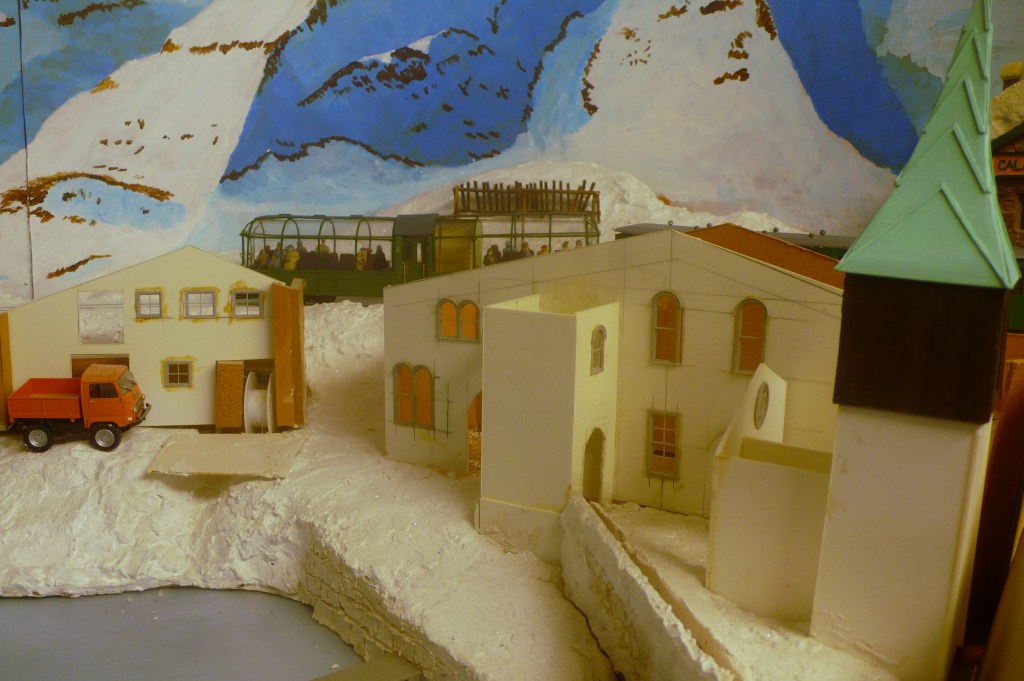
53. St Anaktix is a fortified church, reflecting the lawless history of the province. The twisted spire was caused by the sun heating one side whilst the other was covered in snow.
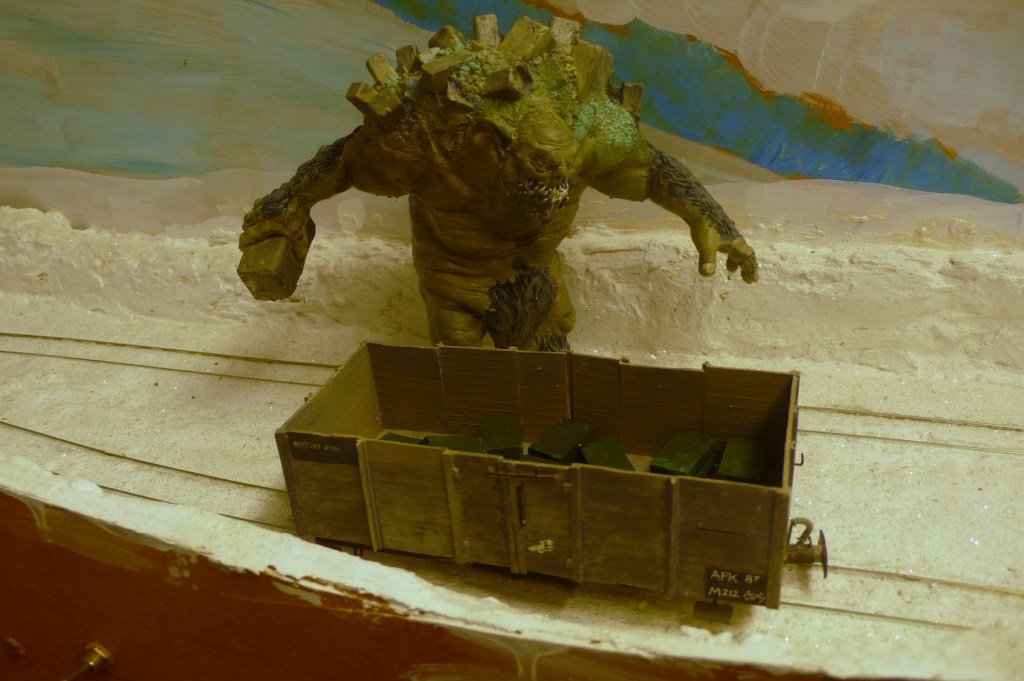
54. Strange characters inhabit Narnia. This is Steinkastir the troll who is loading Narnite (a form of fossilised Marmite which turns into stone) into a wagon. Those of a nervous disposition need not worry, however, as trolls only come out at night.
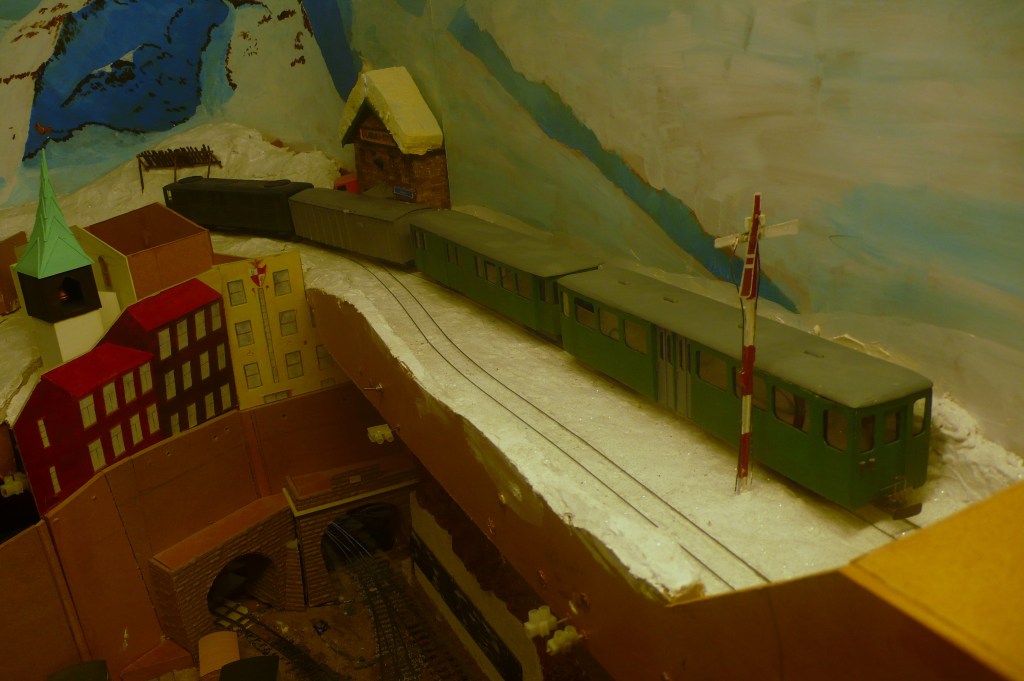
54. The station stands above the village. This part of the layout overlays Lacono.

55. The railway has reached its destination at Fenditavalat. This was the original Roman capital known as Vallisfissura. The city is known as Isuritakaharano in the Marronĝacan language, although this is usually shortened to Isuri in conversation.

56. The AFK connects with the CFS in the town square. The CFS is electrified on the three-phase system. The electric railcar is departing with the Post van and the through coach for Krelm on the Ruritanian mainline.
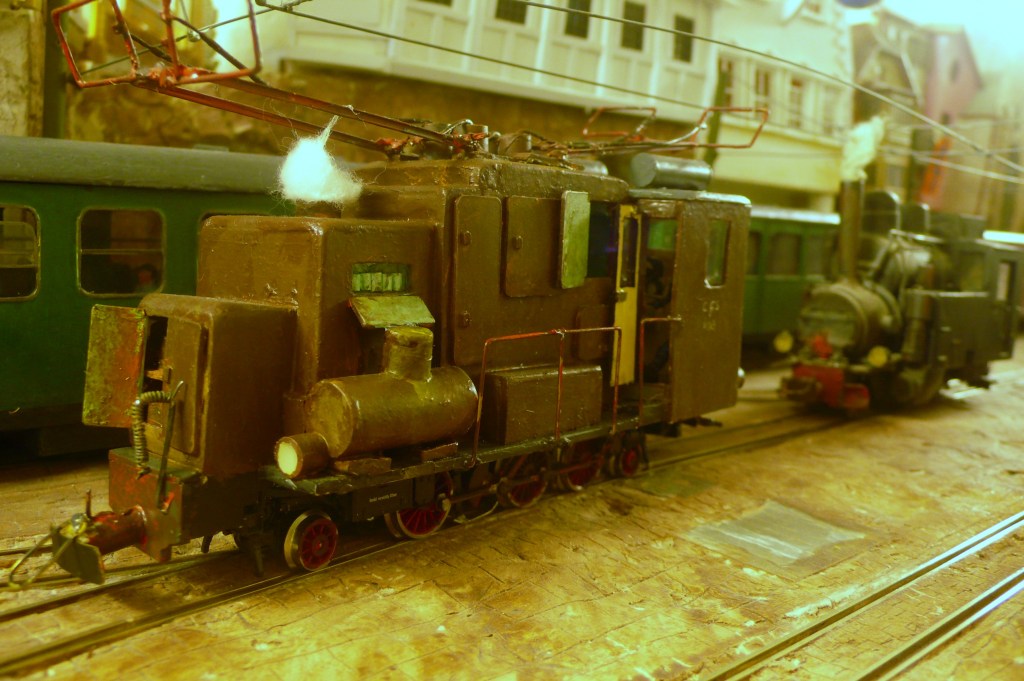
57. The three-phase system was hardly known for the pulchritude of its locomotives, although the AFK’s Brotan boilered tank could give this 2-6-2 a run for its money! The steam was generated from the liquid resistances which had to be topped up from a water crane.
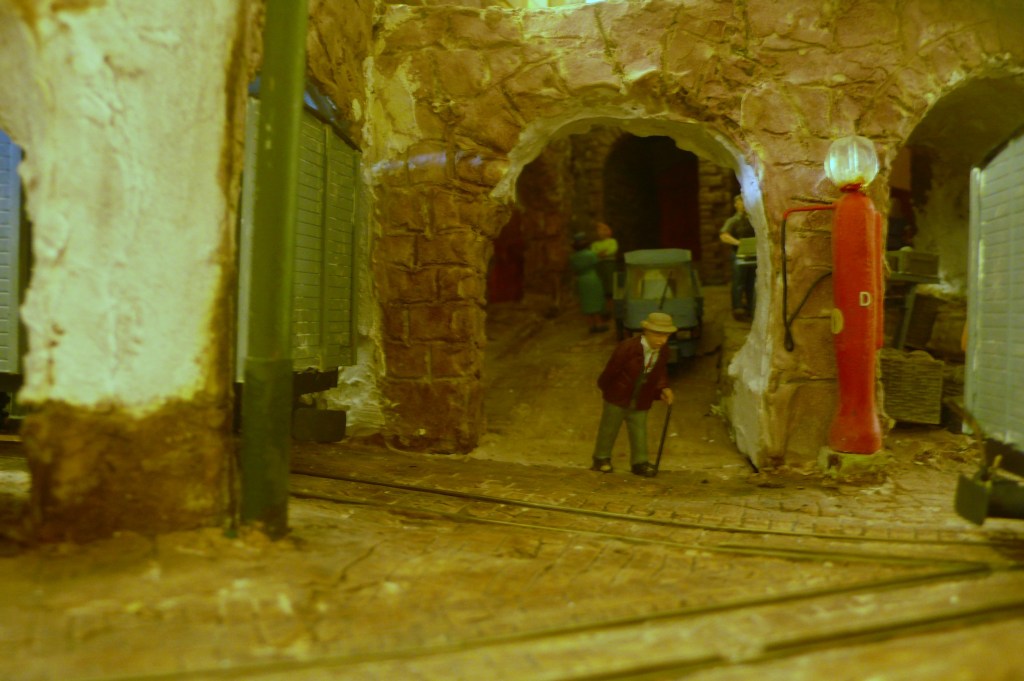
58. Y Brottuca, or Steep Street, leads into the warren of alleyways that characterise this Mediaeval University city.
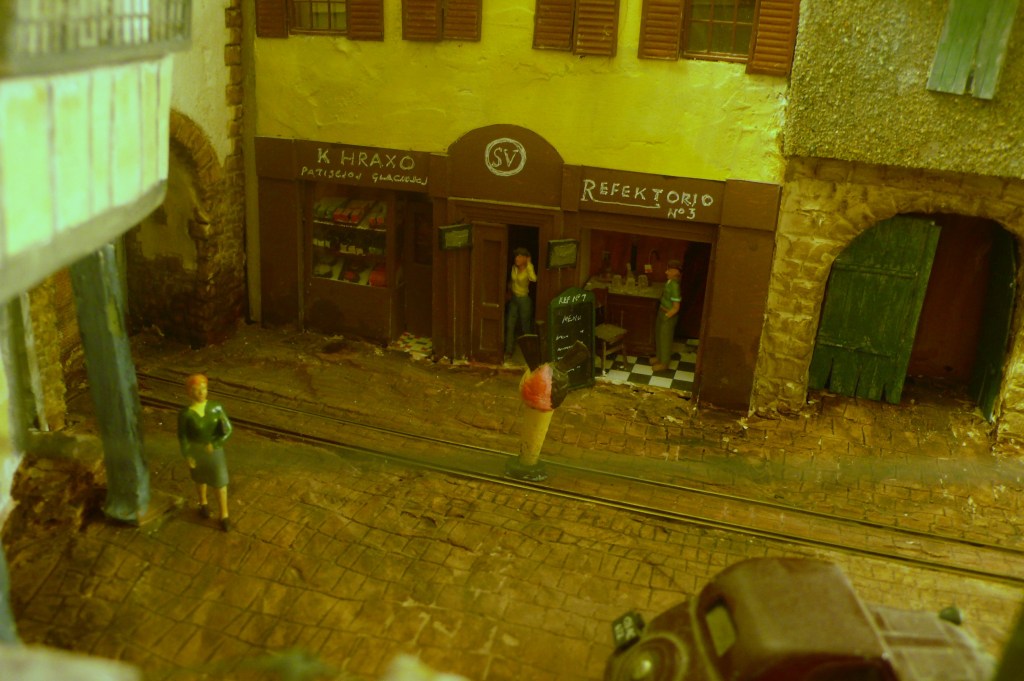
59. The scolari, or students of the University, are the usual carefree lot typical of my youth. One of them has decided that Mr Hraxo’s advertising ice cream cone should direct traffic in the merkat ubaxu or Lower Market. This is the Basabazaro in Thalnian.
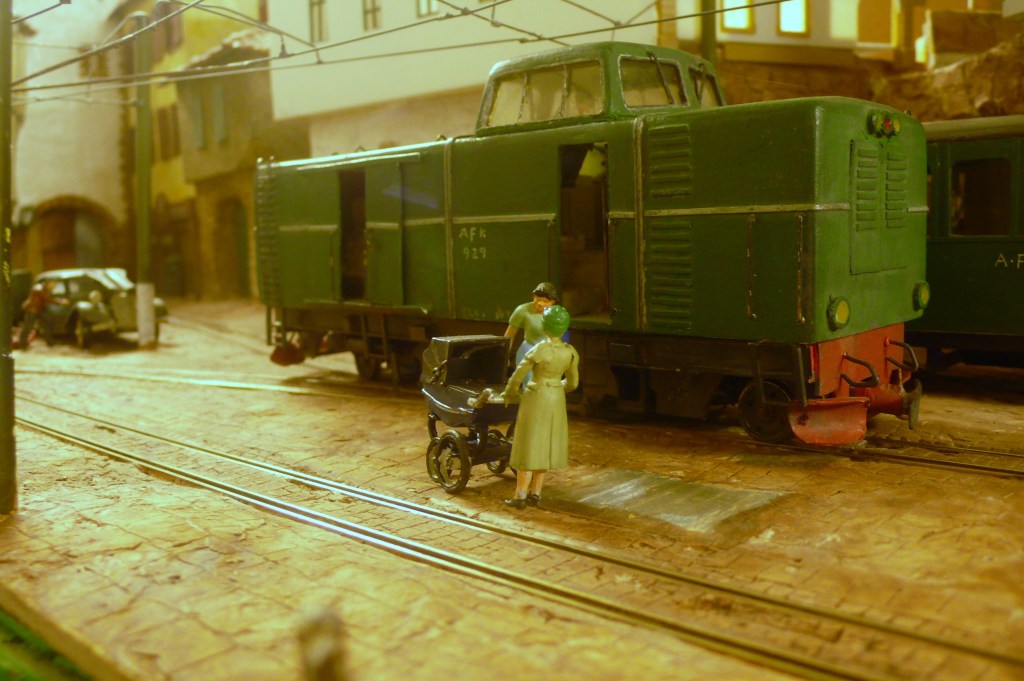
60. The driver casually leaves the loco, with the cab door wide open, in the middle of the square whilst he grabs some lunch. The two matrons will most likely discourage the wilder elements of the scolari from having a joyride.
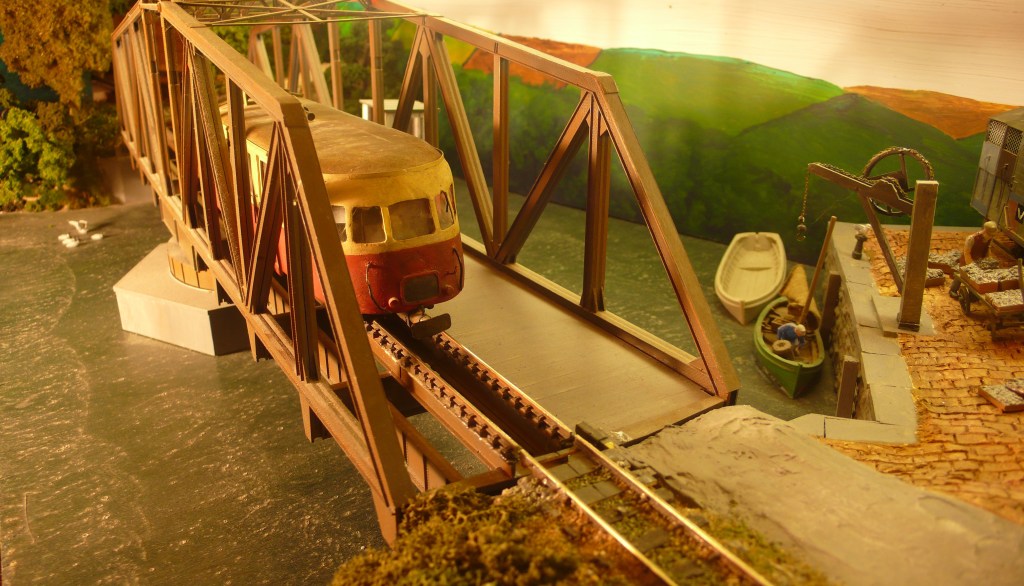
61. A railcar crosses the swing bridge to enter Eromarbordo, the ancient Roman port of Errundum which served the province.
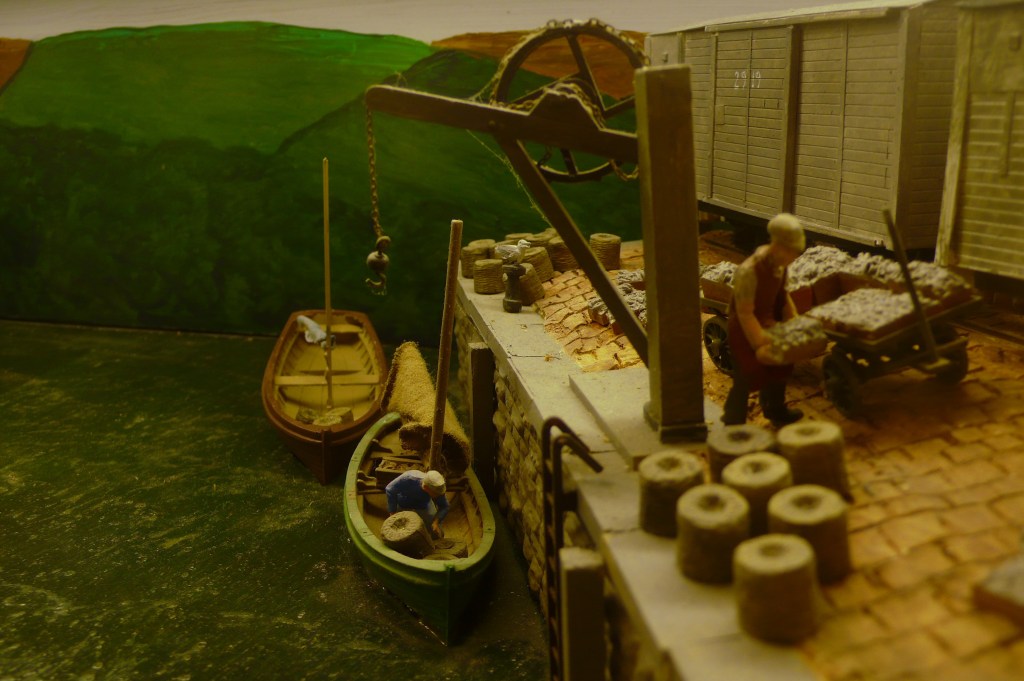
62. Fish is landed from small boats at the Town Staithe.
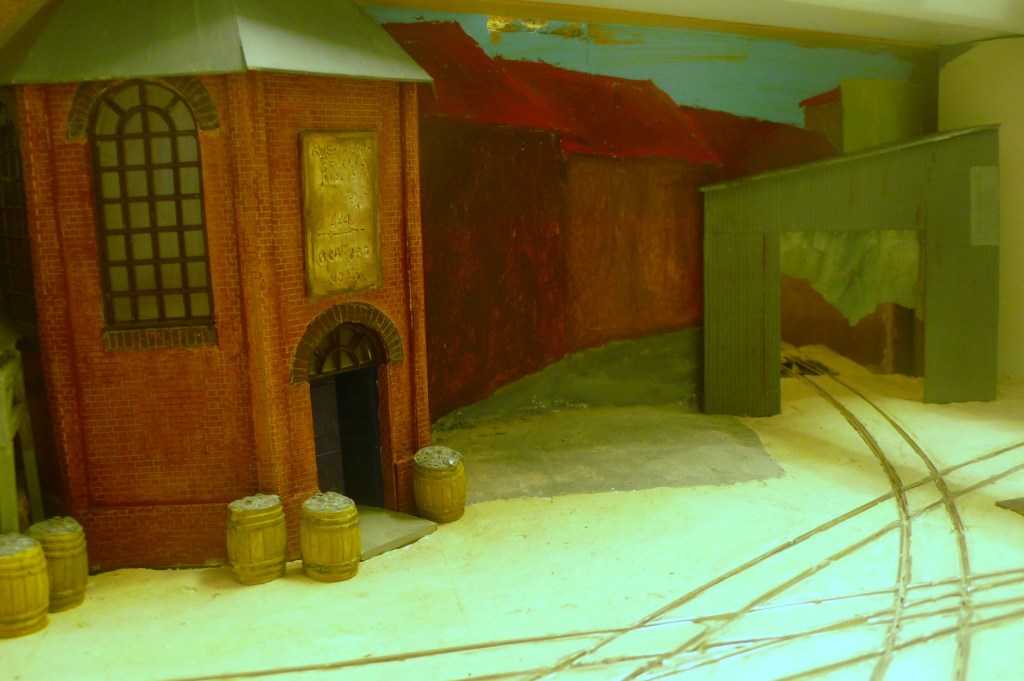
63. The ancient chapel is Way Station 1 on the via poenitentibus. The complex trackwork reflects the intense competition for space in a quayside environment. The siding leads into a grain unloading bay.
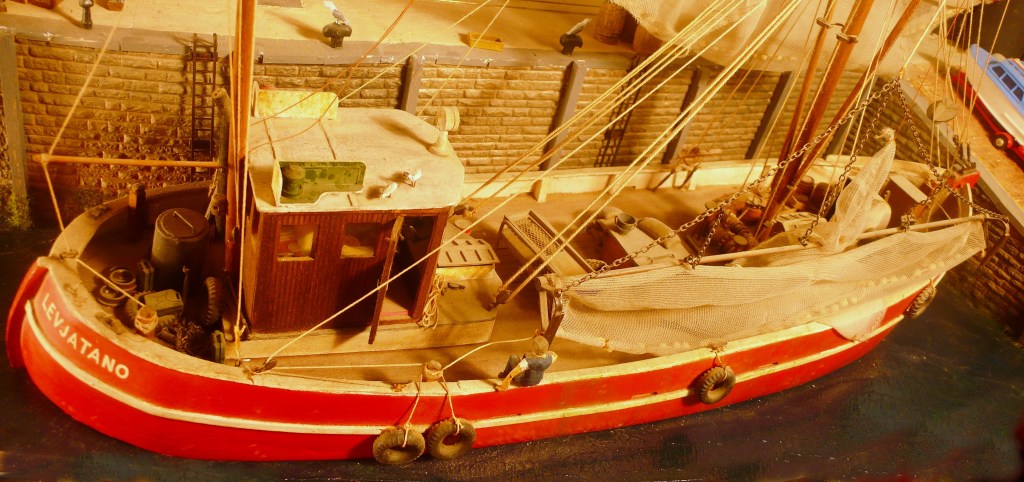
64. Larger vessels use the harbour rather than cause the swing bridge to open.
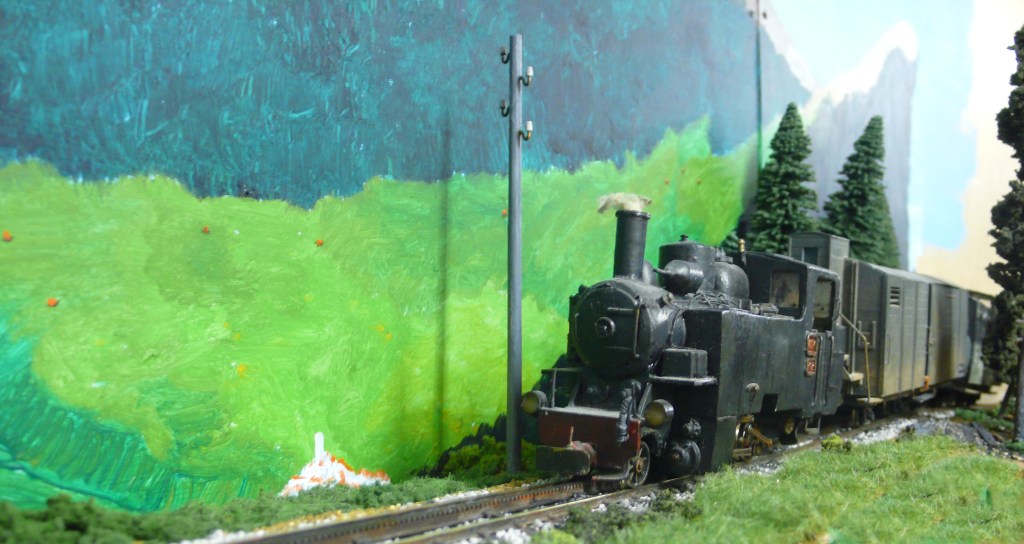
65. The 2-6-0RT locomotive works hard to pull its train up the rack section. The line uses the Strub system.
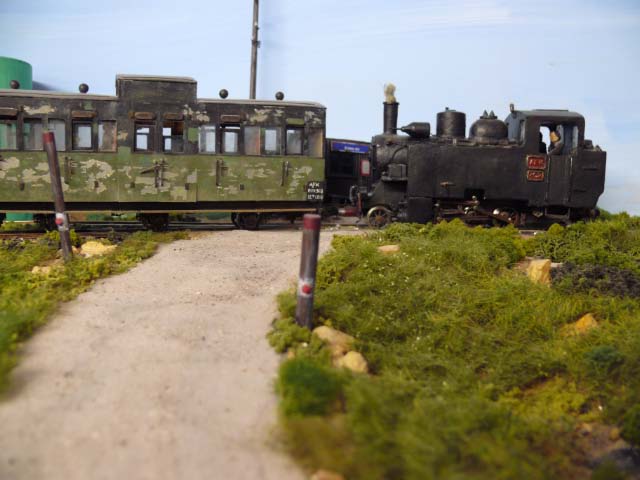
66. The train stops at Győrsmorabŭ, a halt named for the entire upland moor area. This is known as La Tegmantadelamondo, or Roof of the World, in Thalnian.
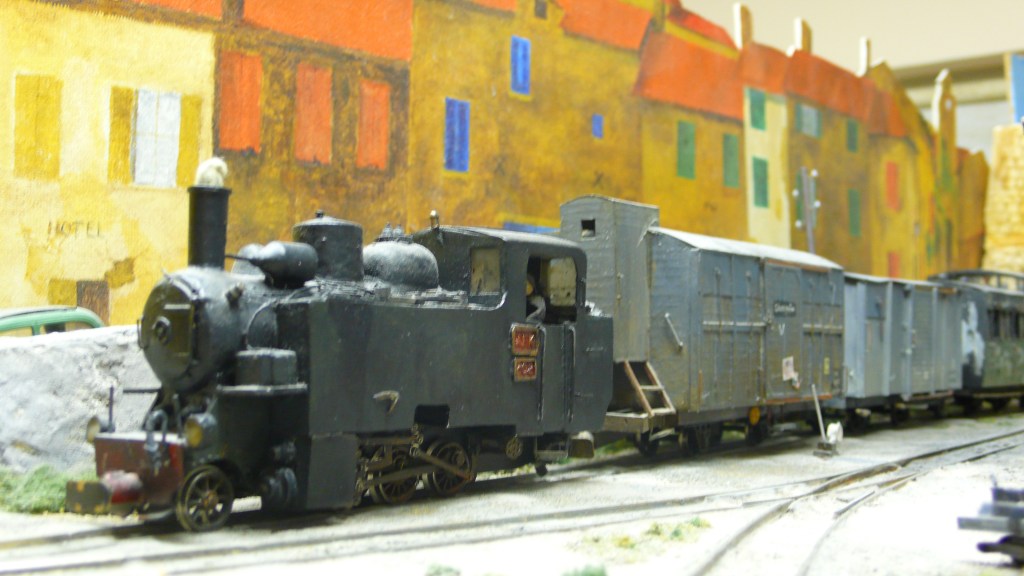
67. The train pulls into Jakarutu, the terminus of the branch.
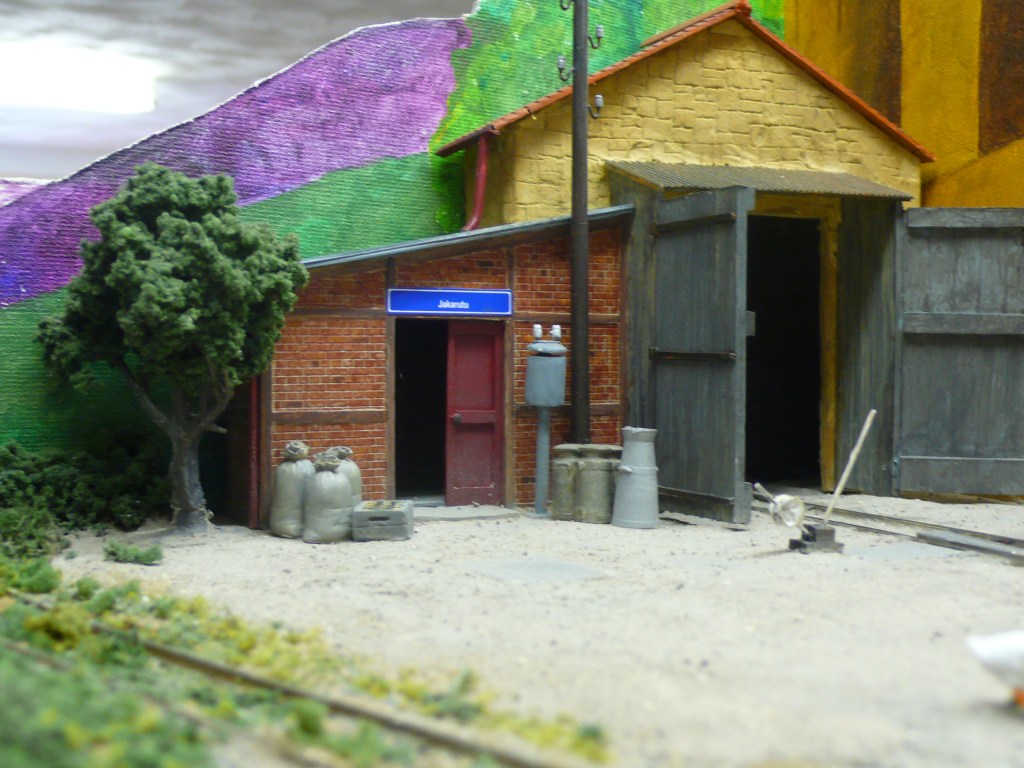
68. The station building and the loco shed are combined.
 Altonian Complementary Railways